Wild Bill [Hickok]: Hollywood fact or fiction?

IN THE FILM ‘Wild Bill’, Wild Bill Hickok is admirably portrayed by Jeff Bridges but it bombed at the box office (took $2 mill but cost $30 mill) so you probably haven’t even seen it. The majority of the film deals with the last days of Hickok’s life at Deadwood with the odd b&w flashbacks which do cover some reportedly true aspects of his life – well maybe – let’s just say what has been recorded (perhaps exaggerated) in the newspapers. However, the historical truth of his last weeks/days are rather vague in any event and so the film seems to make them up, particularly with regard to Calamity Jane, and even more particularly with regard to Hickok’s killer, Jack McCall. But, based on my previous observation that you probably haven’t seen the film, I won’t go on about its failings.
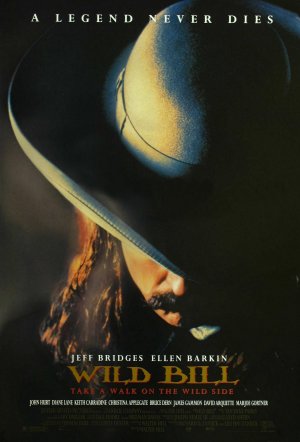
Wild_Bill_(film_poster)

So, what was Hickok really all about? Well, firstly, his name wasn’t Bill – he was really James Butler Hickok. There are one or two stories revealing how/why he became ‘Wild Bill’ but none of them can be substantiated. Whilst in Nebraska, it has been suggested that he was derisively referred to as ‘Duck Bill’ by David McCanles – he later shot McCanles, but for  different reason (maybe). Hickok claimed that he had been nicknamed ‘Shanghai Bill’ whilst part of General Jim Lanes’ ‘Free State Army’ (the Jayhawkers) in 1855 because of his height (he was tall) and slim build. One source says Hickok simply changed this to ‘Wild Bill’ in 1861. It was as a Jayhawker that he meet a 12 year old U.S. Army scout called William Cody – later known as Buffalo Bill.
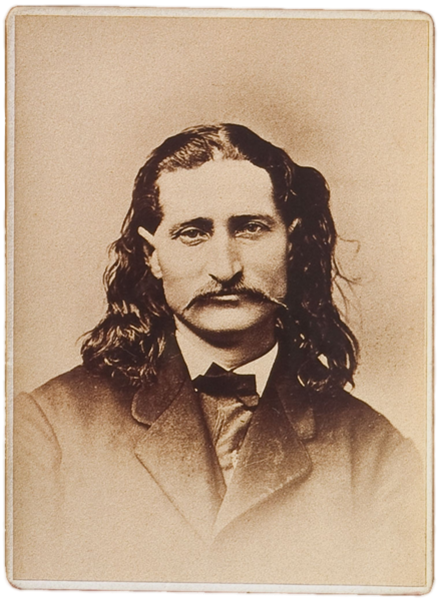
        hickok 1

‘Wild Bill’ Hickok (1837-76) 

He spent his early life as a ‘freight driver’ and then as a packer/wagon-master for the Union army when the Civil War broke out in 1861. The following year he was discharged for an undisclosed reason. He joined the Springfield Missouri detective police counting troops in uniform found drinking on duty (exciting, huh!). He was then hired by General John B. Sanborn as a scout, but by the end of the war, in 1865, he spent his time gambling in Springfield.  According to the History of Greene County, Missouri published in 1883, Hickok at this time was “by nature a ruffian… a drunken, swaggering fellow, who delighted when ‘on a spree’ to frighten nervous men and timid women.” ……. yawn.
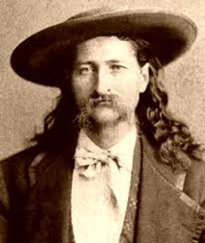
hickok 2

Hickok and hat

Lawman and gunfighter notoriety

Now down to business. Well, perhaps. Like most of the Wild West ‘heroes’ it is sometimes difficult to distinguish fact from fiction – especially when, as was Hickok, they became famous through the ‘dime novels’. He allegedly shot and killed 39 men (the dime novels suggest many more). But let’s have a look at what is believed, and most likely, to be true.

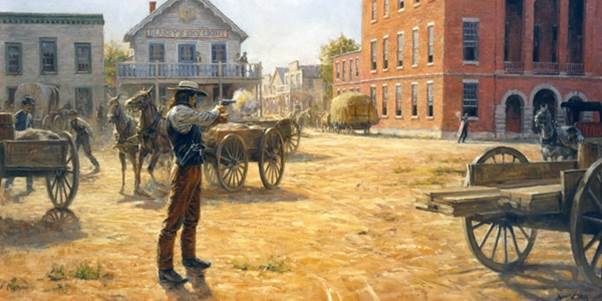
In Springfield, Missouri, Hickok had a long standing dispute with a Dave Tutt over Hickok’s girlfriend, Susannah Moore. Naturally, the dispute arose because Tutt thought she was his girlfriend. In July 1865, in a card game, Hickok gave Tutt his watch as collateral but told him not to wear it. Tutt wore it in the street and was called out by Hickok – it was a gunfight waiting to happen. Allegedly they were 75 yards apart (a long distance for a duel [1]). Tutt shot first and missed; Hickok shot second and didn’t. Tutt collapsed and died; Hickok got his watch back – but not the girl.
hickok 3

Painting of Hickok shooting Tutt at 75 yards (allegedly)

Hickok was arrested for the killing and the charge reduced from murder to manslaughter (I don’t want to get technical about the law but manslaughter implies a non-intent to kill – perhaps at 75 yards he didn’t expect to hit Tutt!). The jury went for an acquittal on the grounds of a fair fight. This was not a popular verdict at the time – presumably because Hickok was not a popular character – or because there was never such a thing as a fair fight with Hickok unless he had no gun!

In July 1869, Hickok was elected sheriff of Hays City, Kansas. Within a month he was involved in a couple of altercations, one where he ended up shooting and killing a Bill Mulvey, and other doing similar to a Samuel Strawhun. Then, in July 1870, he had a bar fight with Jeremiah Lonergan and John Kyle, two soldiers from the 7th Cavalry (Custer’s famous unit ‘to be’). Lonergan had Hickok on the floor and fired his gun at Hickok’s head. The gun misfired allowing Hickok to gather his own guns. He killed Kyle with two shots and wounded Lonergan with a shot in the knee. Hickok had a reputation for trouble and failed to get  re-elected sheriff. Perhaps they expected their sheriffs to fight with pillows …….

hickok 5

Painting of Hickok with his famous ivory handled Colts

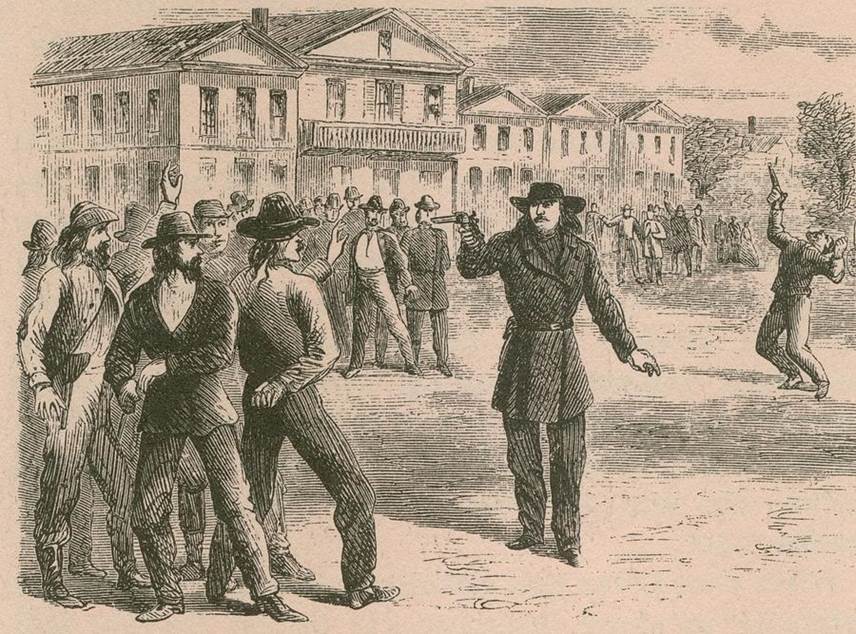
In October 1871, Hickok was marshal of Abilene when he encountered Phil Coe, a saloon owner, following a fracas in the street outside Coe’s saloon. Coe had fired a couple of shots into the air and Hickok demanded his gun. Stupidly, Coe turned his gun on Hickok but Hickok was quicker, fired first and killed Coe. Then Hickok heard a shout behind him, turned and fired, killing the figure running towards him. The figure was his own deputy marshal, Mike Williams, coming to his aid. Hickok was relieved of his duties as marshal as a result. There are no further reports of Hickok gunfights.
hickok 4

Newspaper picture of Hickok having shot Coe (far right) and turning his gun on the drunken crowd just before Williams appeared

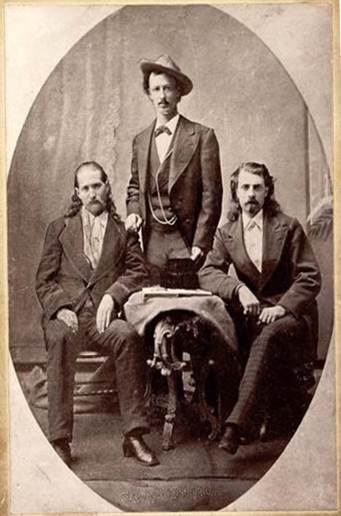
In 1873, Hickok joined Ned Buntline’s Wild West show, Scouts of the Plains, with Buffalo Bill Cody and Texas Jack Omohundro. But Hickok was no actor and was always forgetting his lines. He was soon to give this up, as did Texas Jack.   Cody went on to form his Buffalo Bill’s Wild West Show in 1882, which had appearances by Calamity Jane and Annie Oakley.
hickok 6

          buffalo bill 2

Hickok, Omohundro, Cody (1873)                                             ‘Buffalo Bill’ Cody (1875)

In 1876, in Kansas City, Missouri, Hickok was diagnosed with glaucoma and likely to lose his sight and his health generally was in decline. In March of that year, in Cheyenne, Wyoming Territory, he married Agnes Thatcher Lake, a 50 year-old circus performer. But before very long, in the same year, he headed, alone, to Deadwood, in the Black Hills of South Dakota, to make his fortune (well, that’s what he supposedly told Agnes). He arrived in July and met up again with Martha  Jane Cannary (aka Calamity Jane). Jane alleged she had been married to Hickok but this was wishful thinking on her part – it is believed he had little time for her.

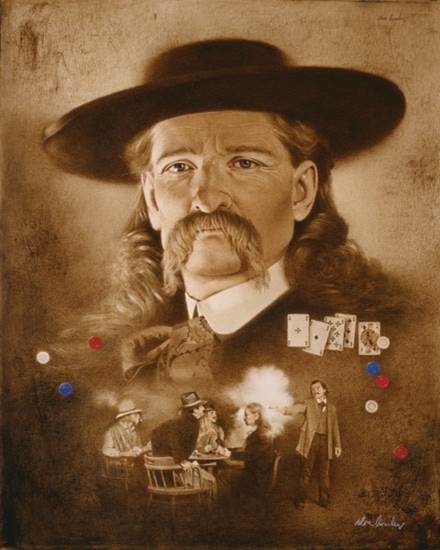
On 2nd August, 1876, Hickok was playing cards at Nuttal & Mann’s saloon in Deadwood. He had his back to the door – unusual for him as he liked to see who was coming in. Well, one Jack McCall was coming in and came up behind Hickok and shot him dead at point blank range. Hickok was playing five card stud and was holding a pair of aces and a pair of eights (the fifth card had been discarded and not replaced) – now known as ‘Deadman’s hand’ – not his lucky night.
hickok 7

Deadwood, 2nd August 1876

It is not known why McCall killed Hickok, although, at his trial, he did say it was in revenge for Hickok killing his brother, Lew (who had been killed by a lawman in Abilene but it was not know who the lawman was). The jury in Deadwood accepted this and acquitted Jack. Is that retrospective defence of another?! McCall left town but had to brag about the deed and was arrested again in Yankton, Wyoming. His trial in Deadwood was not recognised as the town was still in Indian territory and not part of the USA. This time McCall was not so lucky – he was found guilty and hanged.
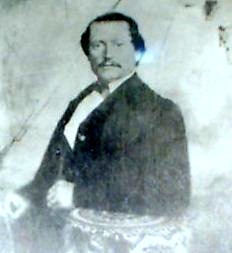
Jack_McCall

‘Not so second time lucky’ Jack McCall

Hickok was buried in the Ingelside Cemetery in Deadwood, but in 1879 he was moved by his friend, Charlie Utter, to the new Mount Moriah cemetery. His original wooden grave marker went with him but was eventually destroyed by souvenir hunters who whittled bits off it! It was replaced with a statue of Hickok which was also destroyed by relic hunters. Then came a life-size statute which was defaced. So the grave area was enclosed in a cage for protection. But in the 1950s this was broken into by more relic hunters and the statue stolen. Finally a cast-iron fence was erected along with a new bust of Hickok.
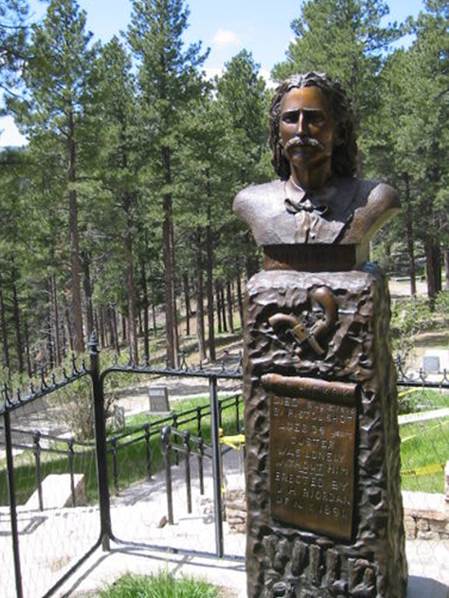
Hickok 11

Hickok’s grave at Mount Moriah cemetery

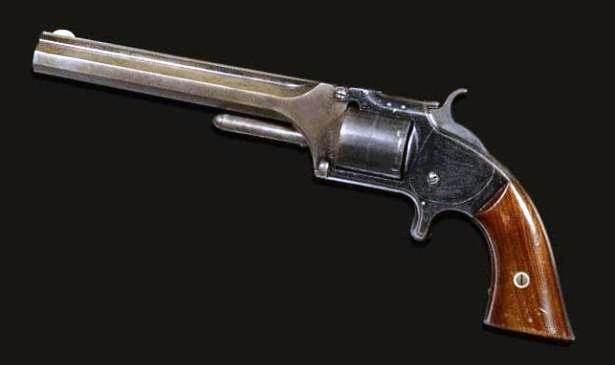
Hickok’s favourite guns were a pair of ivory handled cap-and-ball 1851 Colts .36 Navy Models pistols (if that means anything to anyone). They were sold to two separate people after his death to pay off his debts. They were supposedly reunited and appeared in the Buffalo Bill Museum in Cody, Wyoming – but there are some sceptics who suspect they are not the genuine items. In fact, he had several guns. The gun he had when he was shot was a Smith & Wesson No.2. This gun went up for auction in November 2013, at Bonhams, San Francisco, California. The final bid was $220,000 – which failed to meet an undisclosed reserve (ca. $300,000). Wow, some expensive gun!

hickok 9                    hickok 8

Possibly Hickok’s Colts                                                       Hicock’s Smith & Wesson at his death

Footnote:

[1]  Hand gun accuracy was notoriously bad – at the OK Coral, Wyatt Earp & C0 were missing at 10 yards (well, some of them were) – so, although Hickok was a supposed to be a pretty good shot, 75 yards is a bit over-optimistic!

Next week: Okay, enough Wild West, let’s go back to some archaeological characters: John Pendlebury, Hollywood fact or……. no, Hollywood didn’t make a film of him, but it should do. Not just because he was an archaeologist of great courage, determination and non-fiction, but because ….. ah, find out next week.


Artemus Smith’s Notebooks

I continue my research of the notebooks of Dr Artemus Smith, archaeologist of great courage, determination and fiction. Here is another extract:

Whilst in Italy, I was reviewing some oddments of Roman pottery when I met a most agreeable and charming Italian archaeologist. Unfortunately, the time I chose to seek his learned advisement, his sister had just produced twins, a boy and a girl, and I could gain little sense from him over his understandable excitement at being an uncle.  I enquired as to what they were called.

“Ah,” his grin filled the room, “leetle girl is Denise”

“That’s nice”, I said, “and the boy?”

“He is de nephew.”
Art Smth

The Alamo: Hollywood fact or fiction?

THERE WAS an Englishman, a Scotsman, an American and a Mexican on an aeroplane. The engines began spluttering and the pilot came back and said, “We have lost power. Unless three of you jump out of the plane we will crash and we’ll all die. The problem is there are no parachutes.” The Englishman jumped up and shouted, “Remember Trafalgar” and threw himself out of the plane. The Scotsman jumped up and shouted, “Remember Bannockburn” and threw himself out of the plane. The American jumped up and shouted, “Remember the Alamo” and threw the Mexican out of the plane.
Samolet-13

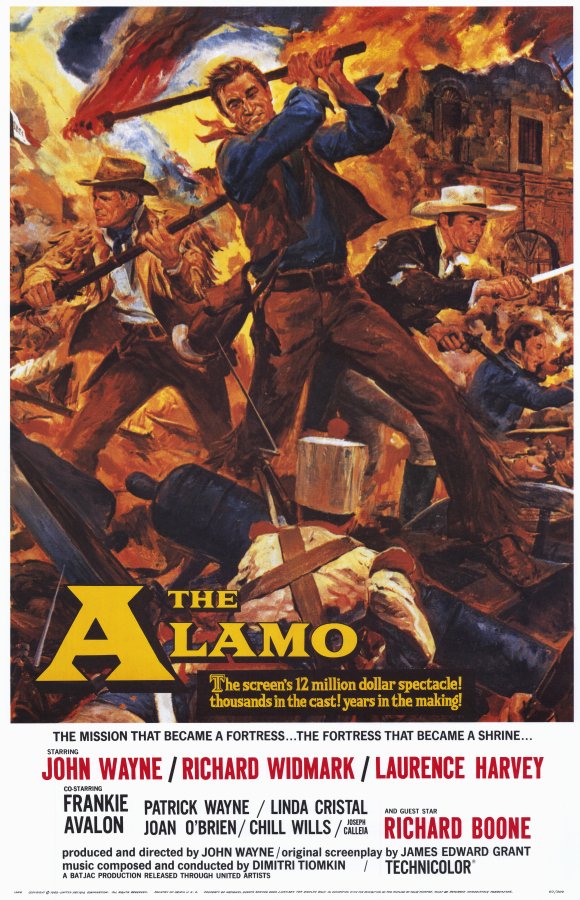
So was Hollywood’s ‘The Alamo’ anything like the true facts? Well, first of all, which Hollywood Alamo? Since 1915 there have been about 12 movies on the Alamo, the latest being the rather rambling (but slightly more authentic) Billy Bob Thornton effort in 2004. But the only great version, which most people relate to, is the John Wayne version in 1960 (okay, that’s my opinion – and yes, I’m a John Wayne fan). Big John starred in it of course, but he also produced and directed it. In fact, initially, he only intended to play the small part of Sam Houston so he could concentrate on directing but the money-providers would have none of it. And rightly so – only John Wayne could have played Davy Crockett.

Alamo_1960_poster

 The Alamo – ‘fighting for freedom’ …..?

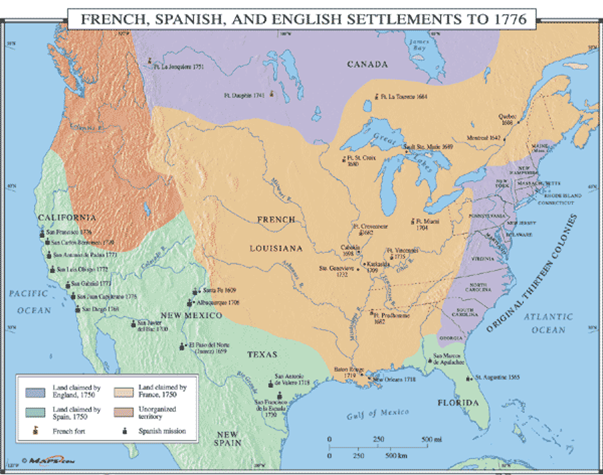
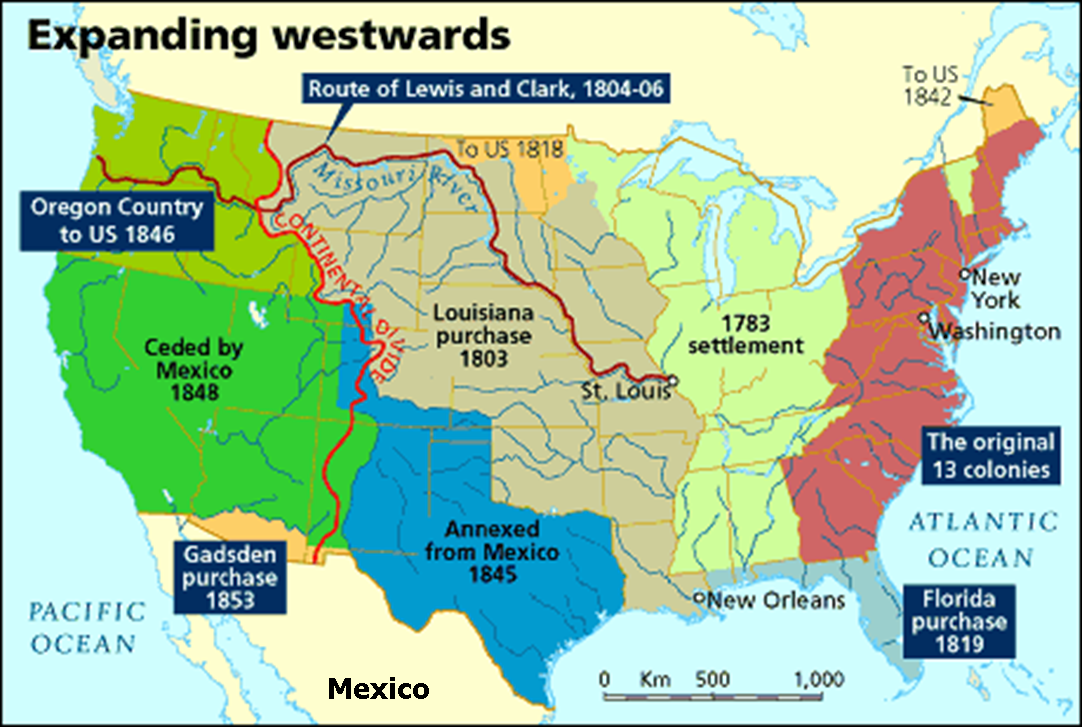
So what really happened? Well, more to the point how did it come about? Hollywood will have it the ‘Texans Fighting for Freedom!’  Well, not exactly. It’s quite complex but let’s try and keep it simple. In the early 1800s there were these American ‘mercenaries’ called filibusters looking around for land and Florida and Texas, both owned by the Spanish, were targets. America bought Louisiana from the French in 1803 but the borders into Texas were ill-defined. In 1813, the filibusters wandered into Texas to try and redefine these borders in America’s favour but set up their own Green Flag Republic, independent of the US – and Spain. The USA was none too happy and so withdrew its support and the new GF Republic was crushed by the Spanish. In 1819 Spain negotiated with the USA wherein the latter was able to purchase Florida in return for giving up any claim on Texas.

 alamo spain

America before the Americans – Spain in green, France in brown, England in purple (or is it mauve)

So that is all fine until Mexico obtained Independence from Spain in 1821. And Texas became part of Mexico. There followed a flood of American settlers into Texas (Anglo-colonials) and Mexico decided to encourage this new immigration to allow the land to be developed which they were unable to do themselves (Mexican mistake no. 1).  An ’empresario system’ was set up with the Mexican government by Stephen F. Austin wherein 300 immigrant families would settle in Texas (Austin’s father, Moses, had made a similar deal with the Spanish but died and then Spain gave up Texas before it all came about). Empresarios (American immigrants in Texas) were appointed by the Mexican government to sell land to immigrants at $30 (on credit) for 4000 acres (the cost in the USA would have been $5000 cash – a pretty good deal if you ask me!). In return, immigrants would become Mexican citizens and Catholic.

austin

Stephen Austin –  the ‘Father of Texas’ – one man and his dog

Then trouble began. First of all, one Haden Edwards decided that he would to go independent but he was put down by Austin who wanted to keep the peace with Mexico (makes sense bearing in mind the deal). Then, in 1829, Mexico abolished slavery. Unfortunately most of the immigrants were from the southern States of America (mainly Tennessee, Kentucky and Missouri) and so had slaves themselves. But the Mexican allowed them to keep them. Enter William Barret Travis (played by Lawrence Harvey in the film), a lawyer who had fled his hometown of Claiborne in Alabama, and his wife and child, to avoid debt. He was pro-slavery (and had with him his slave, Joe – one of the few who survived the Alamo, but didn’t appear in the film) and openly challenged the Mexican officials on the topic and was arrested. On his release he emerged as a rebel against Mexico. But alone he had little impact.

 travis

Col. William B. Travis 

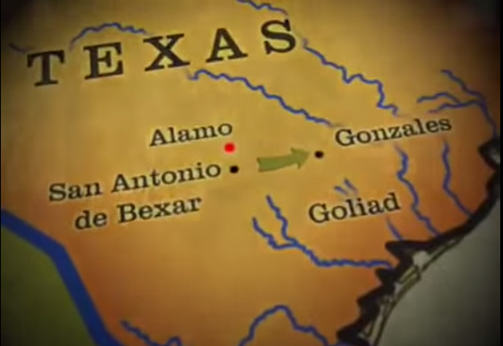
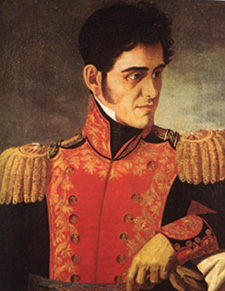
If you were paying attention above, the original deal was limited to settling 300 families – we are way passed that figure now. So, in 1830, Mexico decided to curb immigration into Texas as it was concerned it was losing control. This was ignored by the American immigrants (there’s a surprise). By this time Mexico was having its own internal squabbles between centralists and federalists. Antonio de Padua Maria Severino Lopez de Santa Anna y Perez de Lebron – known as Santa Anna – (his father must have been an ardent supporter of some Mexican football team) was leader of the federalist but when he took control as President in 1833 he became a centralist, then a dictator. Zacatecas objected so Santa Anna sent a force and destroyed the city and all the inhabitants. Texas (particularly Travis) supported the federalists and was now very concerned about Santa Anna’s intentions regarding Texas (bearing in mind what happened at Zacatecas – he thought it was next). Likewise, Santa Anna was concerned about the intentions of the immigrants in Texas (independence) and decided to begin to remove their arms. This began in October 1835 with a single canon at Gonzales, which had been given to the town by the Mexicans to defend against Indians. The Mexicans marched on Gonzales and demanded the return of the canon (Mexican mistake no 2). The Texans replied “Come and get it”. There was  a bit of a skirmish but the Texans held onto the canon and sent the Mexicans home. The Texas Revolution had begun.

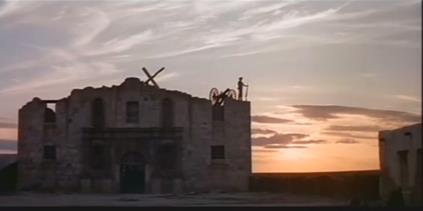
alamo

Mexican march on Gonzazales

 Re-enter Stephen Austin. He now objected to Mexico adding neighbouring Coahuila to the Texan State and was imprisoned for 18 months (Mexican mistake no 3). This was to also to spur the Texans to rebellion.

 000145710

Santa Anna ‘FC’

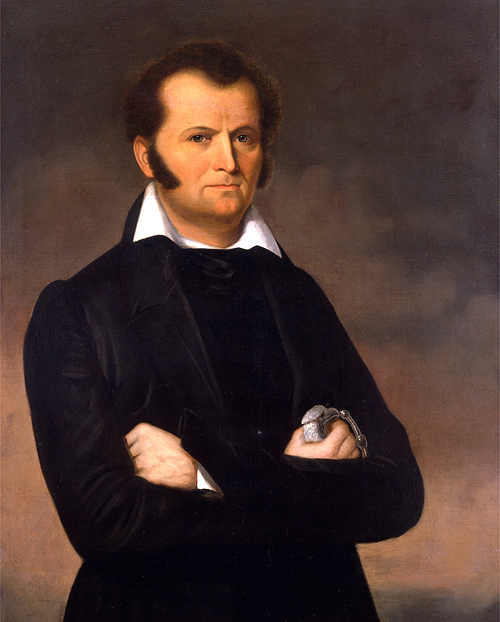
Then enter Jim Bowie (played by Richard Widmark in the film). Whatever impression you got/have of him, he was a large scale Kentucky criminal escaping his past of land-grabbing frauds in Louisiana. (By the way, he didn’t invent the Bowie knife – he just used it a lot and the name stuck). He headed to Texas in search of more opportunities (to perhaps defraud more people). Anyway, he claimed large areas of land through the empresario system which were subsequently taken away from him by Santa Anna. This caused Bowie to support Texas independence. In the film, whilst defending the Alamo, he hears of the sad news of the death of his wife (Maria Ursula) of the plague. She did die of cholera, but three years before the Alamo. Perhaps news just travelled very slowly in those days.

 Jimbowie

Col. Jim Bowie 

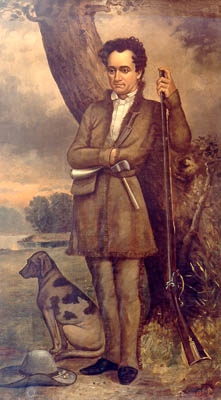
Finally, enter Davy Crockett (played by …. oh, you know). He had been elected for US Congress in 1827 and hoped for an opportunity at the presidency. Unfortunately he was not re-elected to Congress for a fourth time  in 1835 and so left for Texas in the hope of more opportunities. He had said, and forever repeated it, that if he wasn’t re-elected “you may all go to hell, and I’ll go to Texas.”  He wasn’t and he did. He was a true frontiersman and larger than life character. Perfect for John Wayne to play – in fact, if  I was making a film about John Wayne I would cast Davy Crockett to play him – although, admittedly, that would prove somewhat logistically difficult. Anyway, I digress, Crockett joined Travis and Bowie at the Alamo to hold up the Mexican army under Santa Anna until help arrived. It did not quite work out like that.

 crockett

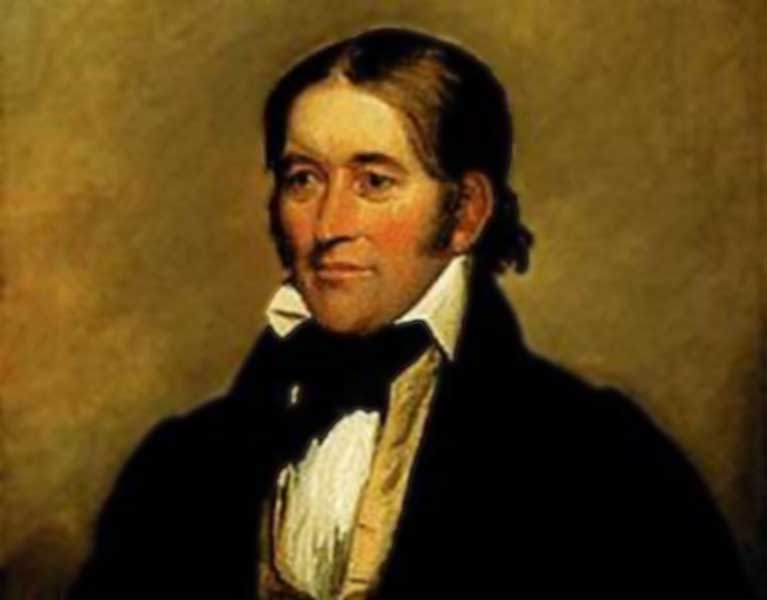
Col. Davy Crockett 

The battle

The rebels (that’s the Texans and Mexican allies, the Tejanos), led by Ben Milam, first took San Antonio Bexar (we’ll call it Bexar cos it’s easier – but it’s now just known as San Antonio – see map above). It was a five day battle and, as the rebels were on the verge of retreating, the Mexicans surrendered! But, on the 3rd day, Milam had been shot and killed by a sniper (Felix de la Garza – who was also shot and killed in return – fair’s fair).  Frank Johnson had taken command. 150 Mexican casualties against 5 rebel deaths. Then the Alamo was taken by the rebels without a fight. When Santa Anna heard the news he was greatly vexed. He said, “Ungrateful rebels had humiliated their mother country” and gathered his force and marched on Bexar.

 ben milam

Ben Milam

End of December 1835, Johnson left Bexar and Lt Col James Neill took command. By January he had only 85 men.  Jim Bowie and 30 volunteers arrived, then Travis with his ‘regulars’. Davy Crockett and his men from Tennessee joined shortly afterwards. On hearing of Santa Anna’s approach the rebels vacated Bezar and headed over the river to the nearby fortified Alamo.

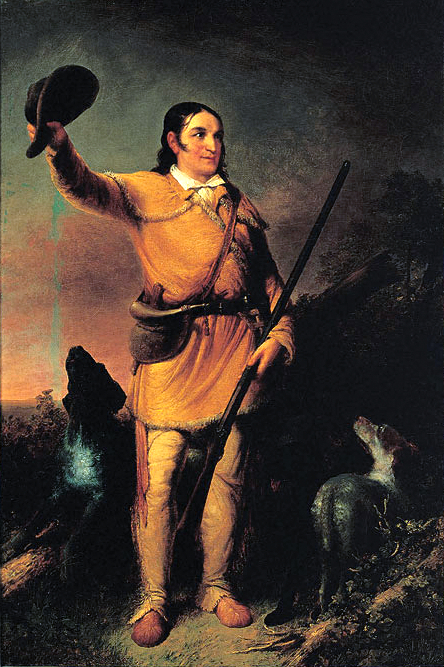
 Davy_Crockett_by_John_Gadsby_Chapman

Davy Crockett in his more famous buckskin outfit

San Antonio de Valero was originally built as a mission to Christianised the Indians (sorry, native Americans) but it was closed, unfinished, in 1794. It was later garrisoned by a presdial company from Alamo de Parras, in Mexico, and renamed the Alamo.

alamo protest

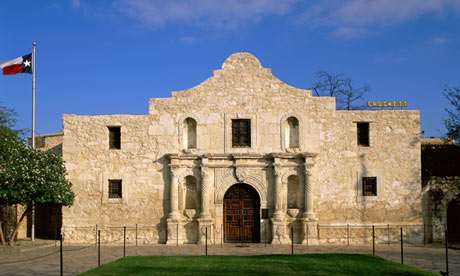
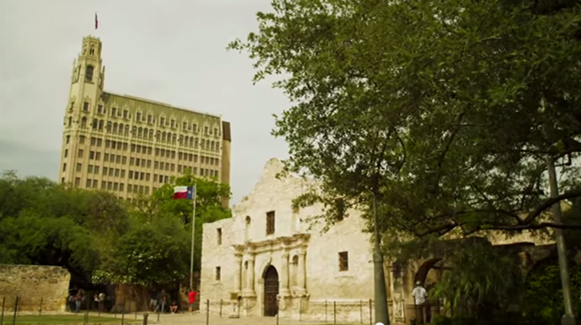
The church of the Alamo today

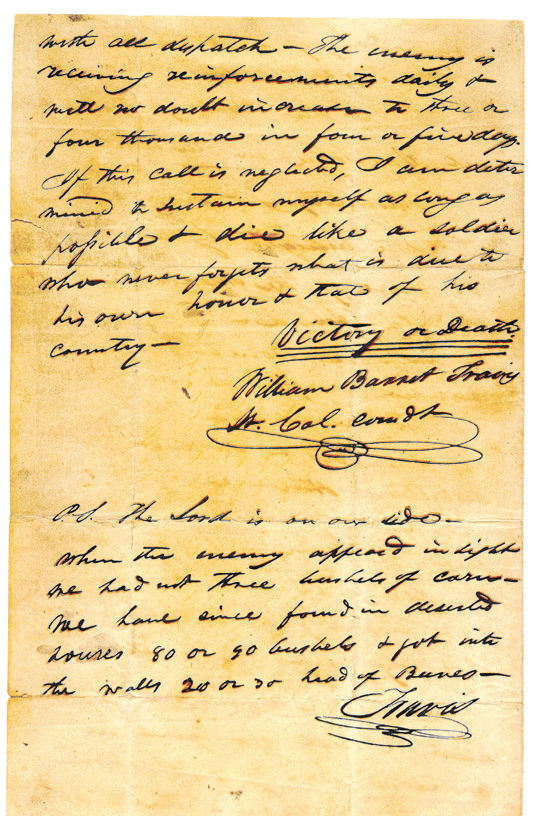
O’Neill had to leave as he had heard of illness in his family (he wasn’t stupid – get out of there asap!). Admittedly, he did expect to be back before Santa Anna’s arrival but no one realised how close Santa Anna was. Bowie was left in charge but was taken ill (possibly TB) and in no fit state to command (so, unlike in the film, he wasn’t much involved in the siege or the battle). Travis (aged only 26) took over and wrote many letters pleading for reinforcement – all ignored.

 travisLetter_pg2

One of Travis’ many letters pleading, in vain, for reinforcements at the Alamo – he always signed them of ‘Victory or death’

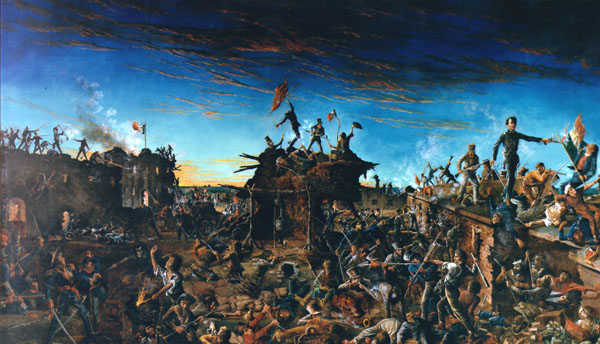
The numbers at the Alamo vary from source to source – 160, 180, 200, 250. If we go with 200 we can’t be far out. Santa Anna had anything from 2000-6000 men (that figure varies as well – he may have had around 6000 in total, but used only 2000 on the attack on the Alamo). The Mexican weakness was its artillery – it only had two 8 pounders, two 6 pounders and two 4 pounders. These were not much use for breaking up the thick walls of the Alamo. The siege began on 23rd February and lasted just under two weeks. Santa Anna could have waited another four weeks or so and starved the rebels out but he feared rebel reinforcements at any time. So the attack began at 5.00 am Sunday 6th March and lasted just about an hour and a half before all the rebels were killed. Travis was shot and killed at the very beginning; Bowie was killed in his bed, unable to move due to his illness; and Crockett was killed towards the end (it’s not known exactly where, when or how – some say he was captured and executed, but I doubt that). What is certain, unlike in the film, he was not killed blowing up the powder magazine and taking a load of Mexicans with him. Robert Evans was given this task but he was shot and killed before he managed it.

alamo-painting

Dawn at the Alamo – the man standing with hand gun on the right is William Travis – about to be treacherously stabbed in the back by a cowardly Mexican (18th century anti-Mexican propaganda) – Travis was actually shot in the forehead

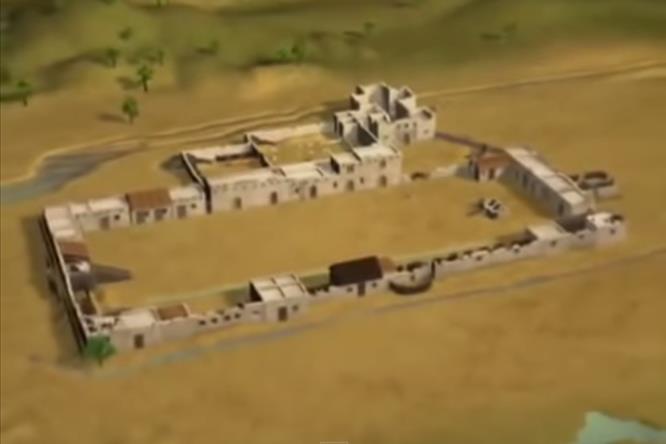
alamo 1

The mission of the Alamo before the battle (north to the left)

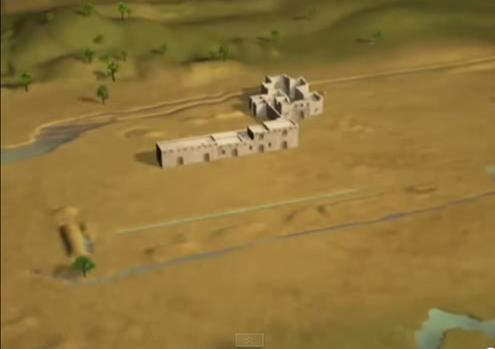
alamo 2.

What was left of the mission after the Mexicans had destroyed most of it 

alamo 2

Today the Alamo church is right in the centre of San Antonio

The General Council (of Texas) decided it couldn’t (or shouldn’t) raise an army to send to the Alamo until it had declared Independence for Texas. This was eventually done on the 1st March but, due to numerous spelling mistakes, it was not signed until two days later! If that delay wasn’t enough, Sam Houston was involved and was to be given command of the Texan army and, after signing the Declaration, he and some of the other delegates went on a two day drinking spree to celebrate – never mind the Alamo.

Sam_Houston_

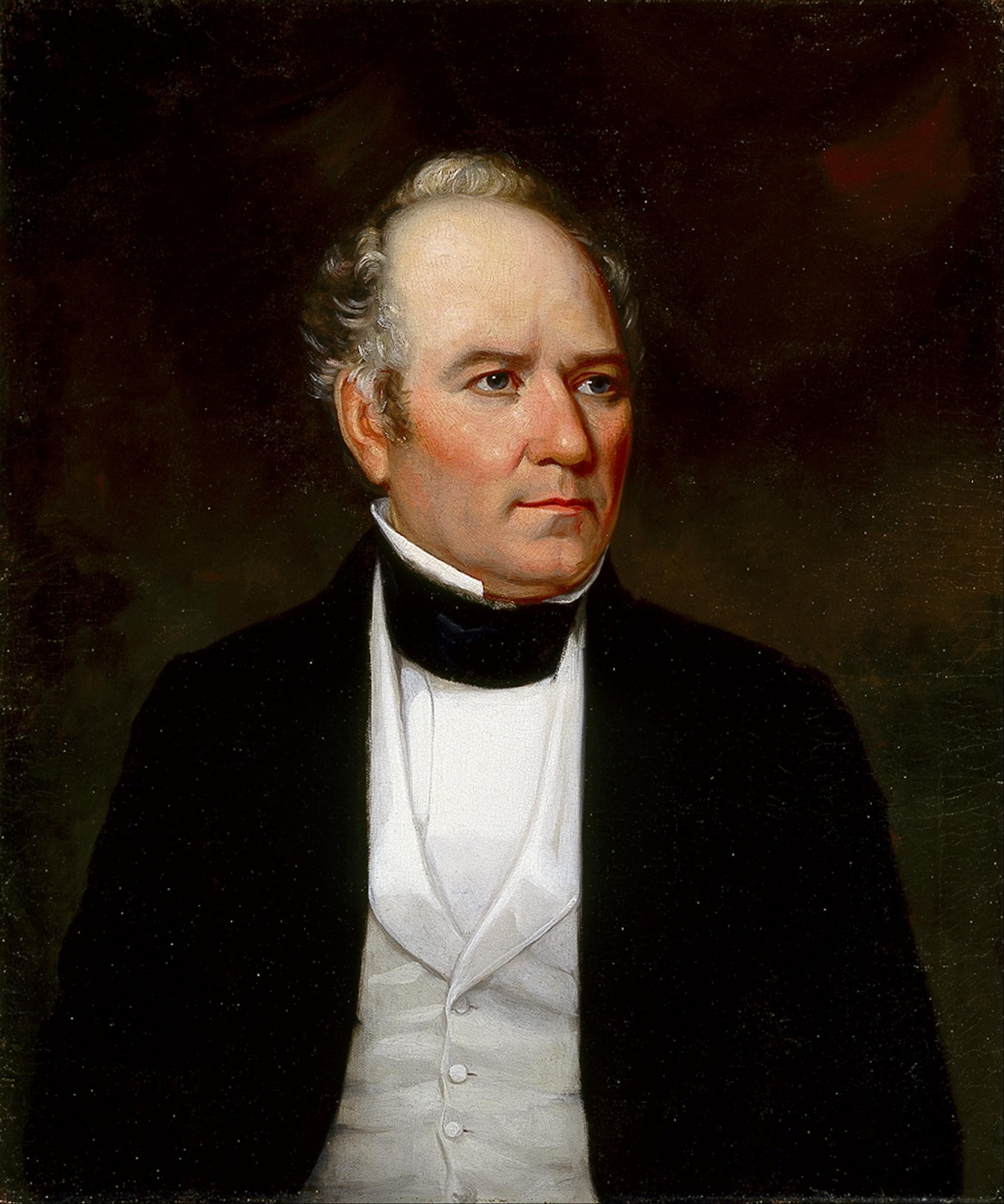
Sam Houston (played by Richard Boone in the film)

Aftermath

Santa Anna then sent a force against the rebels at Goliad (see map way above). By the time the Mexicans got there the rebels had fled, but due to the incompetence of their commander, James W. Fannin, who dillied and dallied, the Mexicans caught up with them. They surrendered but Santa Anna sent a message to execute them all – some 400 (Mexican mistake no 4). In the film, this defeat happened before the fall of the Alamo and used, by Hollywood to excuse Fannin for not coming to the rescue. In truth, he just couldn’t make a decision (at one point, he did start off for the Alamo but changed his mind). Anyway, this atrocity of the execution of Fannin’s army woke the Americans up. It sparked an out-pour of sympathy for the rebels and thousands of volunteers began their way to Texas. In the meantime, Santa Anna was in pursuit of Houston and his newly formed army – which, due to the Alamo, had gained time to prepare itself (despite Houston’s drinking). Santa Anna came upon Houston with only half his (Santa Anna’s) army – he thought Houston and his rabble force would be easy pickings (mistake no 5 – final mistake). In fact, Houston made a surprise attack on the siesta sleeping Mexicans and defeated them at San Jacinto river (the attack itself lasted only eighteen minutes but carnage followed with 600 Mexican casualties against 11 rebel deaths). Santa Anna was captured and used as a hostage to gain a Texan Republic under the Treaties of Velasco.

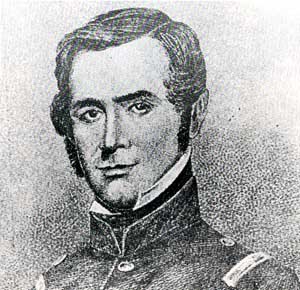
JamesWFannin

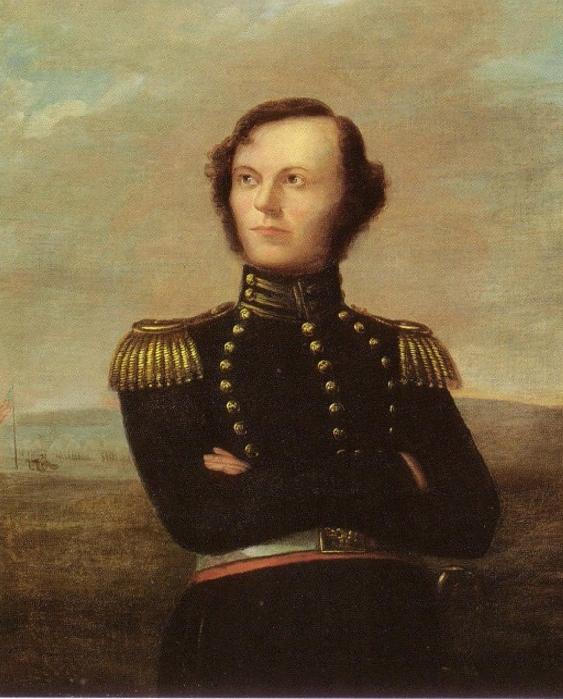
James W. Fannin – his execution on the order of Santa Anna led to much support for the Texan cause

Santa Anna was eventually allowed to return to Mexico where, amazingly, he remained in power on and off for several years until, in 1855, the Mexicans finally got fed up with him and chucked him out. He died, a cripple (he had had a leg amputated in 1838), almost blind with cataracts, and in poverty, in 1876. Interestingly, he was a devoted fan of Napoleon and collected books, statues and images of the Frenchman. He was especially proud of his own nickname ‘Napoleon of the West’ after the Telegraph and Texas Register referred to him as such. Which part of the minor detail that Napoleon lost did he miss?

santa anna 1870

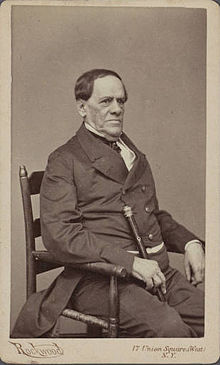
Santa Anna in 1870

Texas became the 28th State of the USA in 1845 but Mexico had never accepted the Treaties of Velasco as valid. This led to the Mexican-American War of 1846-48 when Mexico was finally defeated.

So, was the Alamo about ‘Texans fighting for freedom’ as the film depicts? Well, ‘freedom’ can sometimes be muddle with self-advancement at the expense of someone else.  However you argue it, Texas belonged to Mexico and the  Mexicans did a noble thing in offering land to a limited number of immigrants (300) at a ‘next-to-nothing’ price in return for becoming Mexican citizens. That ‘limited number’ was ignored by the immigrants and eventually they demanded independence. Fair or what? Okay, Santa Anna was a despot and a tyrant so only had himself to blame.

 mexico2

American expansion

The rebels argued that “legitimate political authority rested on the consent of the governed, who had the right to withdraw that consent and change their government if it threatened those inalienable rights it was formed to protect.” As they saw it, that was exactly what Santa Anna (the government) was in the process of doing. Well, that’s okay if your country is run on a democratic process, which theirs (Mexico) was not. If such an argument is to succeed then the whole of Mexico should have rebelled against Santa Anna, not just a bit of it. Oh well, that’s politics ……. or is it just land-grabbing?

It must be an ‘American thing’ – a few years before the Alamo, around 1775-83, didn’t immigrants in America demand – and take by force – independence of a country that belonged to someone else? ….. but we won’t go there.


alamo pic


POSTSCRIPT

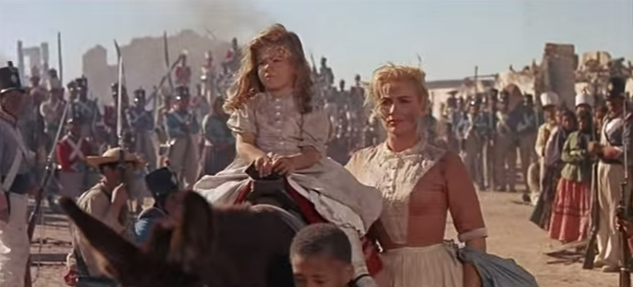
Alamo trivia: One of the women survivors was Capt. Dickinson’s wife, Susanna Dickinson, and also their daughter, Angelina (named Lisa in the film and played by John Wayne’s daughter, Aissa). Other than Travis’ slave, Joe, who was also allowed to leave, Susanna was the only one able to say what happened at the Alamo – but, like Joe, she didn’t see very much. Nor did she grieve for her husband (who had died at the Alamo) very long, remarrying the following year. That didn’t last and the year after that she divorced him for cruelty and married again. That husband died of alcoholism, so she married a fourth time in 1847, but that ended in divorce due to her adultery. Then she married a fifth and final time in 1858, which lasted to her death in 1883, aged 68. Her daughter, Angelina, was certainly as active, but not as fortunate. She had two husbands and four children before becoming a prostitute and died of a uterine hemorrhage in Galveston, in 1869, aged 34. I wonder if John Wayne bothered to check what she became before he cast his young daughter in her role?!

alamo 4

Lisa (actually Angelina) (played by Aissa Wayne) on mule with her mother, Susanna Dickinson, leaving the Alamo at the end of the film. 

Next week: Let’s stay with the Wild West (sorry girls) and have a look at ‘Wild Bill’: Hollywood fact or fiction? – that will be Wild Bill Hickok (although his real name wasn’t Bill)


Artemus Smith’s Notebooks

I continue my research of the notebooks of Dr Artemus Smith, archaeologist of great courage, determination and fiction. Here is another extract:

One of my new colleagues came into my local hostelry and ordered three pints of bitter and sat next to me.

I commented, “You know, a pint goes flat after awhile. It would taste better if you bought one at a time.”

He replied, “Well, you see, I have two brothers. One is in America, the other in Australia, and I’m here in the UK. When we all left home, we promised that we’d drink this way to remember the days we all drank together.”

I admitted that this was a jolly nice custom, and left it there.

He became a regular in the bar and always drank the same way – ordering three pints and drinking from each of them in turn.

One day, he came in and ordered only two pints, sat down and began to drink from each of them.  This caused me concern and I said, “I don’t want to intrude, but has one of your brothers died?”

He looked at me and laughed. “Oh, no,” he said, “Everything is fine with them. It’s me ….. I’ve quit drinking.”

Art Smth

Lawrence of Arabia: Hollywood fact or fiction?

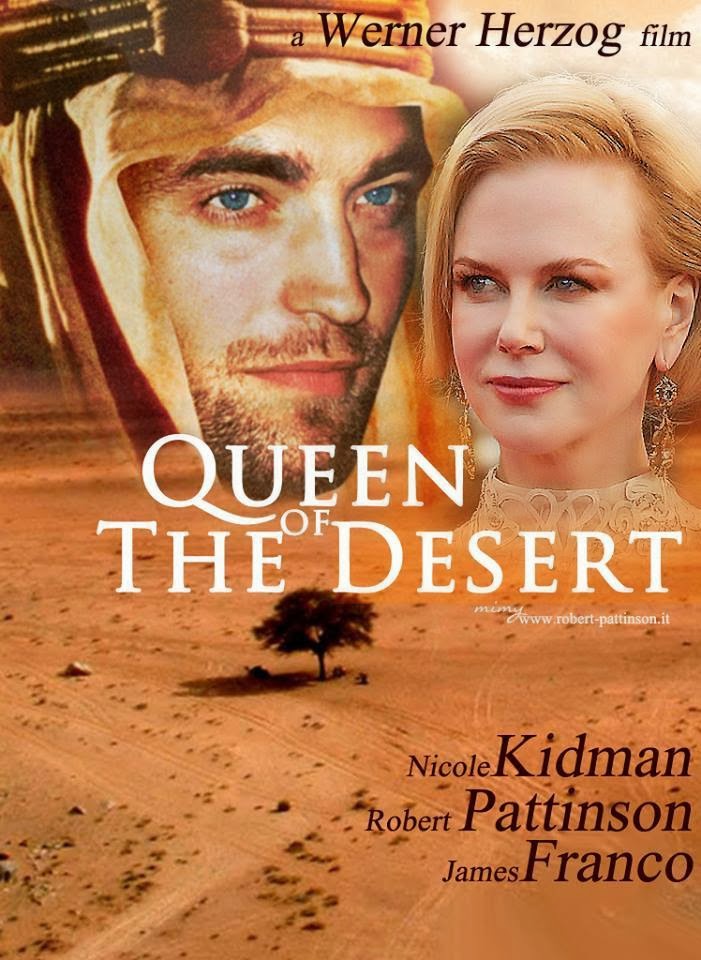
NICOLE KIDMAN (well, that’s got the chaps’ attention) is about to appear in the starring role of a new film about Gertrude Bell called ‘Queen of the Desert’ (not to be confused with ‘Priscilla …’).

queen o desert

Coming to your cinemas soon

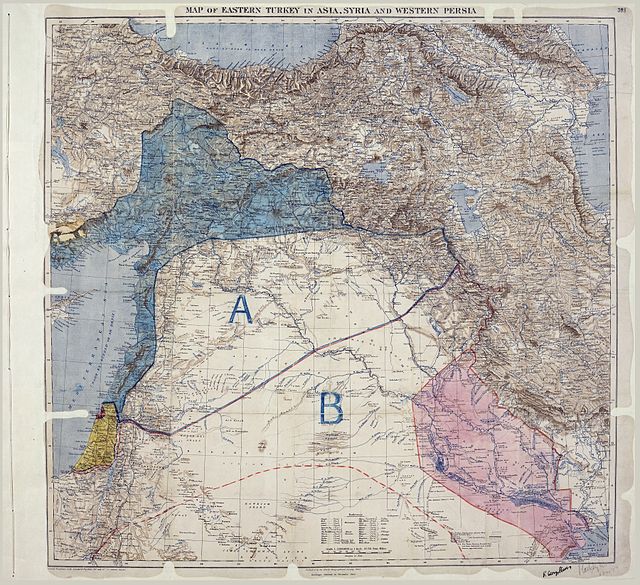
Gertrude (certainly not Priscilla) was an archaeologist and heavily into the first World War Arab Revolt and in restoring Iraq to self-rule. A task the archaeologist, T.E. Lawrence, attempted to do after the First World War. In fact, Lawrence wanted all of Arabia restored to the Arabs – it had been taken over by the Turks (Ottoman Empire) some 500 years before.  In 1915 the British Government promised Sherif Hussein of Mecca an independent Arabian State if he revolted against the Turks and help win the war. However, the following year the British Government then entered into the secret, and rather presumptuous, Sykes-Picot Agreement with France, wherein Syria and part of Arabia would be divided up between the two once the Turks had been defeated. Nobody bothered to tell the Arabs about this.

Sykes_Picot_Agreement_Map_signed_8_May_1916

Sykes-Picot map 1916 – blue  for France; pink for Great Britain (Area A = French influence; Area B (above red dotted line) = British influence)

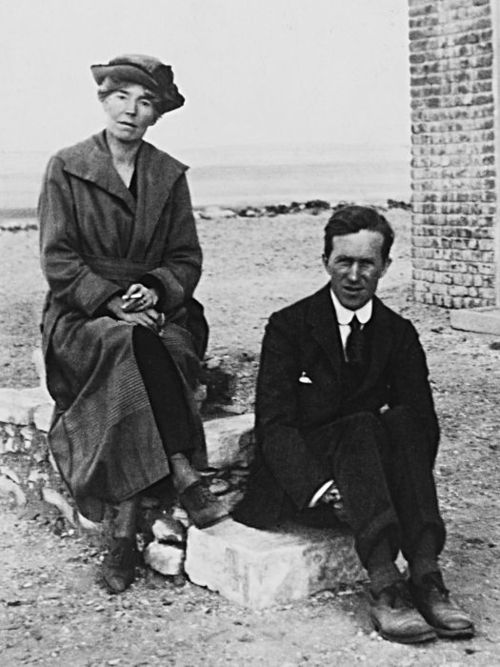
gertrude-bell           gb te l

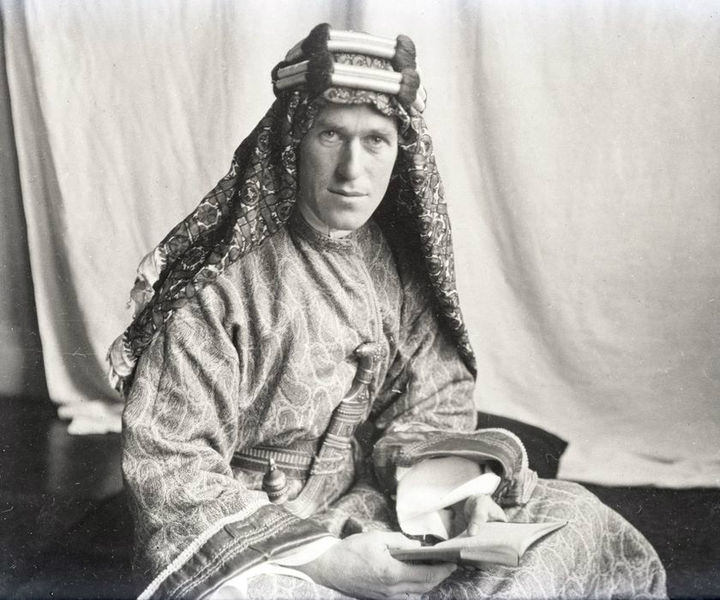
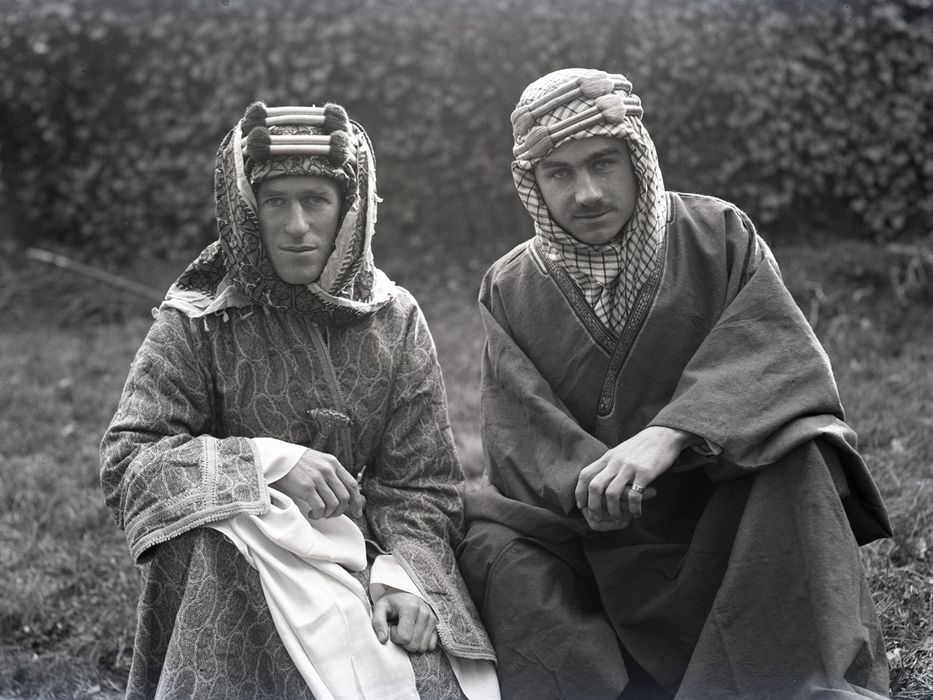
Gertrude Bell                                                                           Bell and T.E. Lawrence (Egypt 1921)

What’s Gertrude Bell got to do with Lawrence of Arabia I hear you mutter. Not much, other than I’ve been reading Bell’s biography, Daughter of the Desert, by Georgina Howell , who said that “Lawrence agonized, faltered, and final abandoned the Arab issue and tried to escape from his own tortured personality, to reappear in the nondescript persona of one Aircraftsman [sic] Shaw”. Rather harsh, and untrue.

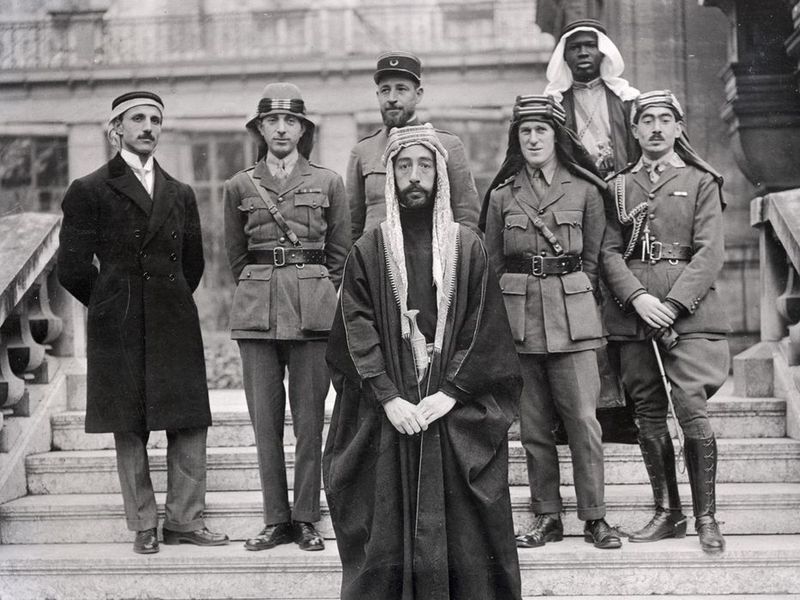
‘Harsh’ because of what Lawrence had been through for around two years in Arabia (1916-18) and the frustrations he went through  leading up to and during the Paris Peace Conference in 1919 when Syria was split between Great Britain and France – and the Arabs got nothing. Certainly Bell was involved behind the scenes in the Arab Revolt but she hadn’t been physically battling the Turks in the desert for two years. And it certainly wasn’t Lawrence’s fault that the French kicked Feisal out of Damascus in 1920 as a result of the Paris conference and the Sykes-Picot Agreement. Feisal, the son of Sherif Hussein, had led the Arab revolt with Lawrence on the understanding he would be given Damascus (and title King of Syria – which he took, very briefly, before the French intervention).

FeisalPartyAtVersaillesCopy

Feisal (forefront) (played by Alec Guinness in the film) and his  party at the Paris Peace Conference in 1919 (Lawrence third from the right)

 ‘Untrue’ because Lawrence did, indeed, carry on after the 1919 failure. He worked (reluctantly after Paris) with Winston Churchill (then British Colonial Secretary) on the Middle East problem which culminated in the Cairo Conference in 1921 when it was agreed that Feisal should be made the first King of Iraq (Turkish Mesopotamia). Both Lawrence and Bell were part of that Conference and I came across one article that reads: “Thirty-nine British men and one British woman, Gertrude Bell, attended the conference in Cairo, but none – probably including Churchill – had more influence upon its outcome than T.E. Lawrence.”

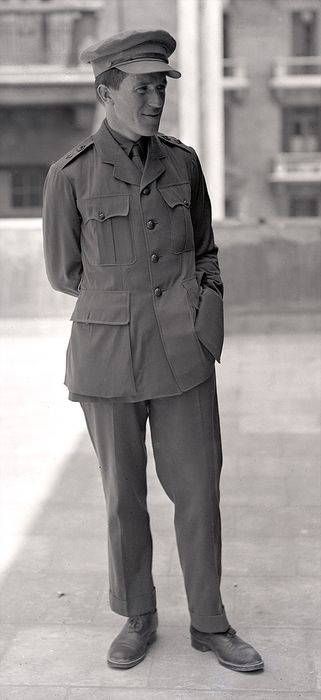
col lawrnce

A rather innocuous Lt. Col. Lawrence in Cairo

Added to that, Michael Korda (Hero: The Life and Legend of Lawrence of Arabia, 2010) said, “If anything, [Lawrence] underplayed the importance of his role in the war and as Churchill’s adviser on Middle Eastern affairs after the peace.”

cairo

Cairo Conference 1921 (Bell  – the only woman –  1st row standing, second on the left; Churchill, sitting in the middle, hat on knee; Lawrence, in suit, 1st row standing, just behind Churchill to the right)

Cairo1921

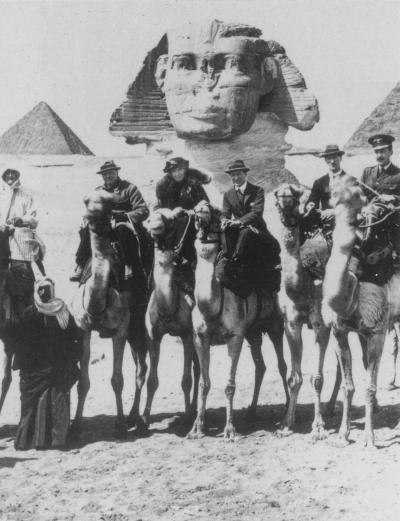
On camels in Cairo in 1921 – Churchill (2nd from left – obvious really!), Bell and Lawrence next two in line

So, to some extent Lawrence had achieved some of his purpose but he was still pretty disillusioned about the powers that be. By now he was  a Lieutenant Colonel but decided to leave the army and was given a Research Fellowship at All Souls, Oxford, to begin writing about the Arabian revolt. It was around this time that he probably had a bit of a breakdown desperately looking for obscurity. He told the writer and poet, Robert Graves, that he hoped being “ordinary in a mob of likes” would cure his mental exhaustion. He didn’t want any more responsibility (but he needed an income), so, in August 1922, to the ranks of the relatively newly formed (April 1918) RAF he went as Aircraftman John Hume Ross [1].  However, in February 1923, he was forced, after his true identity had been discovered by the press, to change his name again to T.E. Shaw and transfer to the Tank Corps. He was later, in August 1925, able to transfer back to the RAF and became a great influence in speed boat design (for rescuing aircrew ‘downed’ in the sea). He left the service at the end of his enlistment in March 1935, only to die following an accident on his motor bike in May 1935 (although, of course, there are some conspiracy theories about that).

Lawrence_of_Arabia_Brough_Superior_gif

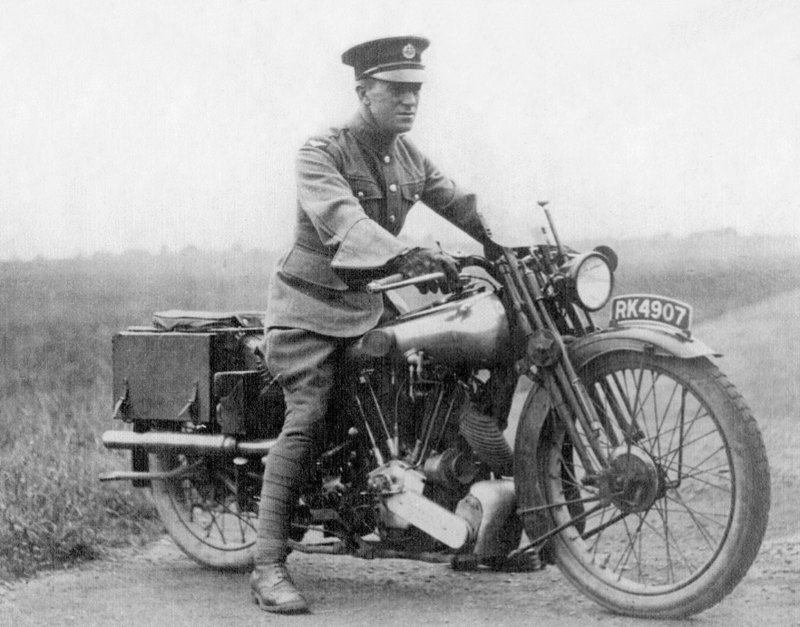
Aircraftman T.E. Shaw (aka T.E. Lawrence) on his Brough Superior motorcycle (1927) – he was later killed on a similar bike

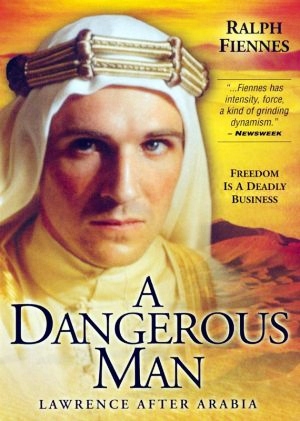
What’s this got to with the film, I hear you mutter. Okay, the film: I’ve also been reading Lawrence’s autobiography in Arabia, The Seven Pillars of Wisdom and it does bear some resemblance to the 1962 film. Although, T.E. Lawrence’s brother, Professor Arnold Lawrence (also an archaeologist), said he didn’t recognise his brother when he saw the film! To be fair that may have something to do with Pete O’Toole’s performance – outstanding as it was, I don’t think it much resembled Lawrence. Let’s see what Robert Pattinson (who?) does to the character in the new Gertrude Bell film. You might also want to check out Ralph Fiennes’ portrayal of Lawrence (slightly less maniacal than O’Toole’s)  in ‘A Dangerous Man: Lawrence after Arabia’ made in 1990 on the Paris Peace Conference (and meet Gertrude Bell).

A_Dangerous_Man_-_Lawrence_After_Arabia

          next installment: Paris Peace Conference – intriguing film

Lawrence was clearly losing it towards the end of the campaign and he was, to say the least, eccentric. But he had to be – he was, as Bell observed, “exceedingly intelligent”.  He had achieved a First Class Honours degree  in History at Jesus College , Oxford; began a postgrad degree at Magdalen College, Oxford, but gave it up to go to the Middle East;  finally, as mentioned above, he took up as a Research Fellow at All Souls College, Oxford. He translated Homer’s Odyssey from the Greek [2] and The Forest Giant from French – and, of course, he was an archaeologist (must be intelligent …. or eccentric). In fact, it was as an archaeologist that he went to the Middle East rather than finish at Magdalen – and worked with the likes of Flinders Petrie, David Hogarth and Leonard Woolley.

woolley

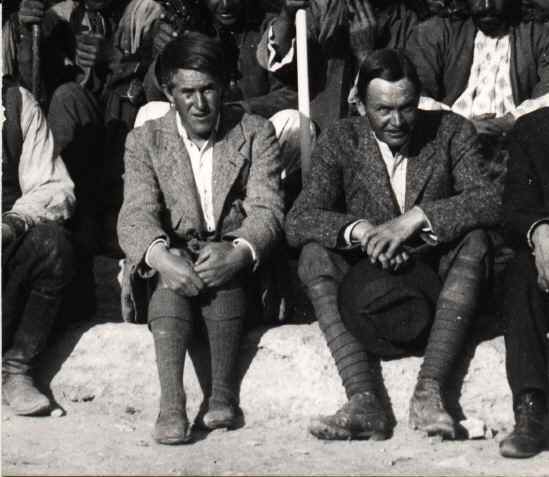
Lawrence (left) with Woolley excavating (well, not at that moment) at Carchemish, Syria, 1913

The reason Lawrence got the job at the Arab Bureau (part of Great Britain’s Foreign Office) in 1914 was because of his knowledge of both the Arabian language and the geography resulting from his archaeological work in the Middle East. In anticipation of the war, he had already been sent out, with Woolley, through the Palestine Exploration Fund, to survey the Negev Desert as it was a strategic point for any Ottoman/Turkish advance on Egypt. So he was also a spy!

_lawrence_with_lawrence_in_arabia

Thomas Edward Lawrence – of Arabia … a spy!

Back to the film. It makes no mention of Gertrude Bell’s involvement in the plans of the Arab Revolt. Hollywood obviously decided to wait on that one …… for another fifty-two years! However, it got the idea across regarding Lawrence’s activities and made him famous again. I say ‘again’ because he had already been made famous because of the American journalist, Lowell Thomas, who travelled UK and USA telling of his (Lawrence’s not Thomas’) courageous antics in Arabia.  But that was between 1919-1924 – long before any of your time so you would have missed that bit. Hollywood represented Thomas as a chap called Jackson Bentley (don’t ask) who followed Lawrence throughout most of the film. In fact, Thomas only met Lawrence briefly in 1918 – but made the most of it afterwards.

te-and-lowell-thomas3

Lawrence (left) with Lowell Thomas in 1918

The film did suggest that Lawrence was not initially aware of the Sykes-Picot Agreement when he persuaded the Arabs to revolt which was not true. Lawrence knew right from the very start and had a guilty conscience about it all the way through the revolt. It was one of the reasons he refused a knighthood in October 1918 – he was so disgusted with his government’s intended treatment of the Arabs with false promises (well, who isn’t disgusted with the government some of the time …. most of the time …. but no reason to be silly about it).

te-lawrence-pose

Lawrence posing for Thomas in his famous white robes and his golden dagger made for him in Mecca (only a matter of time, Hollywood)

The film shows a very dramatic charge on Aqaba (Akaba). In fact, the actual battle took place several miles inland at Abu al Lasan, which controlled entry into Aqaba, which, itself, was taken without any trouble. The initial charge on Abu al Lasan was led by the magnificent Auda ibu Tayi. According to his official biographer, Jeremy Wilson, Lawrence missed it all because, in the excitement, he accidentally shot his camel in the head and was thrown to the ground. Careless or what?! Strangely, he didn’t mention this incident in his Pillars of Wisdom book – must have forgotten due to the bump on his head.

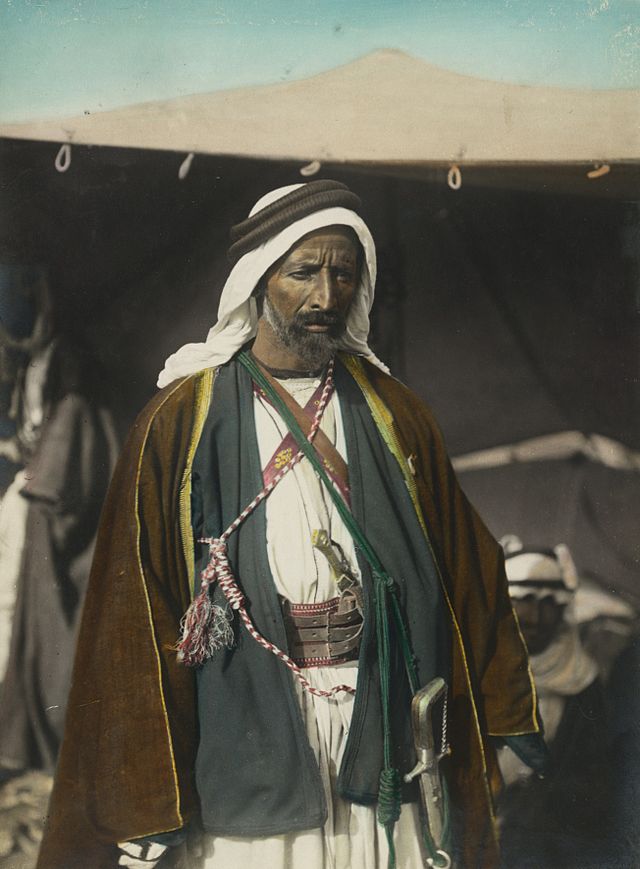
640px-Auda_ibu_Tayi_colorized

Hand-coloured photo of the real Audi ibu Tayi (played by Anthony Quinn in the film)

One of my favourite scenes in the film is when, after Aqaba, Lawrence drags his companion, Daud, into the British HQ and to the bar and orders two large glasses of lemonade to the horror of the barman and all the officers present (click here). Unfortunately, that didn’t happen. In the first place, Lawrence was with eight Arabs on the journey to report on Aqaba (not just Daud) and at the Suez he sent all of them to Kubri. Alone, in a hotel at the Suez he did get a cold drink (six in fact).When he did, finally, meet General Allenby in Cairo, he was, indeed, still in his Arab attire – but only because his replacement British uniform hadn’t arrived in time for the meeting.

allenby2

General Allenby (played by Jack Hawkins in the film) 

Also in the film, the guy, Gasim, Lawrence rescued in the desert was not the same guy he executed for shooting a fellow Arab – that was a chap called Hamed – but who cares, I’m just nit-picking. But let’s carry on anyway. His two young companions, Daud and Farras, did exist but were not killed in the way depicted in the film. Daud died of illness, not in quicksand (but mere illness was not dramatic enough for Hollywood), and Farras …. well, okay, he was shot by Lawrence to prevent him being captured and tortured by the Turks, but he had not been wounded by blowing himself up with a detonator, he had charged a group of Turks guarding a bridge and was shot off his horse. I suppose, either way, he was a bit dumb.

Peter_O'Toole_in_Lawrence_of_Arabia

Peter O’Toole as  a maniacal Lawrence of Arabia

Film trivia: the actor who played Farras, Michel Ray, gave up acting to attend Harvard and became a billionaire businessman – oh, and he married, Charlene de Carvalho , the Heineken heiress. Who needs Hollywood?!  New boy, O’Toole, wasn’t the first choice to play Lawrence, it was Marlon Brando but he didn’t want to spend months up to his whatever in sand. There was another new boy on the set called Omar Sharif who I understand did quite well afterwards. More on the film’s trivia, click here

rolls royce

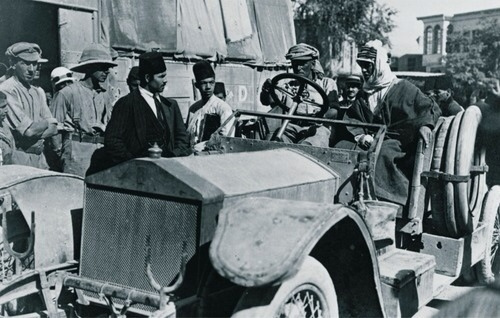
Lawrence in his Rolls Royce 40/50 Silver Cloud – sometimes he travelled in style – in Damascus, 1918

Back to archaeology (and Rolls Royces), John Winterburn, an archaeologist at Bristol University, recently noticed a photo of Lawrence and his Rolls Royce armoured car at a camp in Arabia (pic below) in the National Archives and went in search of the landscape pictured. He eventually found the site and various artefacts. Click here for more details.

camp

Lawrence in camp with his armoured Rolls Royce – and rather conspicuous scenery noted by Winterburn

Footnotes:

[1] When Lawrence changed his name to Ross and applied to the RAF, the recruiting officer did not believe him and was convinced he was lying and so sent him away. After awhile, Lawrence, or Ross, came back to the same recruiting officer with an order that he be enlisted with no questions asked (one assumes from someone high up at the Air Ministry)! The recruiting officer obviously realised that this wannabe aircraftman had important contacts, asked no more questions and enlisted him. (Well, he had to pass a medical which caused more complications but we won’t go there). Anyway, the recruiting officer was W.E. Johns, the writer of the ‘Biggles’ tales.

Biggles_Delivers_the_goods

[2] It was as T.E. Shaw that he translated Homer’s Odyssey. Reprints after his death were in Lawrence’s name for obvious reasons – they’d sell better because hardly anyone knew who the heck T.E. Shaw was! Ironically, those editions in Shaw’s sole name are now worth more money.


POSTSCRIPT 1

If you are not too keen on the French, you’ll like them even less after this: they were indirectly to blame for all the horrendous casualties at Gallipoli. Lawrence, amongst others, suggested landing the allied troops at Alexandretta, in Syria, which would have been a much safer place. But, if you have been paying attention, you will remember that the very arrogant Sykes-Picon Agreement gave Syria to the French if we won the war. The French did not want  British troops in Syria as a result and vetoed the landings there. The Britsh had to look elsewhere and Churchill (then the First Sea Lord) fatally chose Gallipoli (see Scott Anderson interview on this).


POSTSCRIPT 2

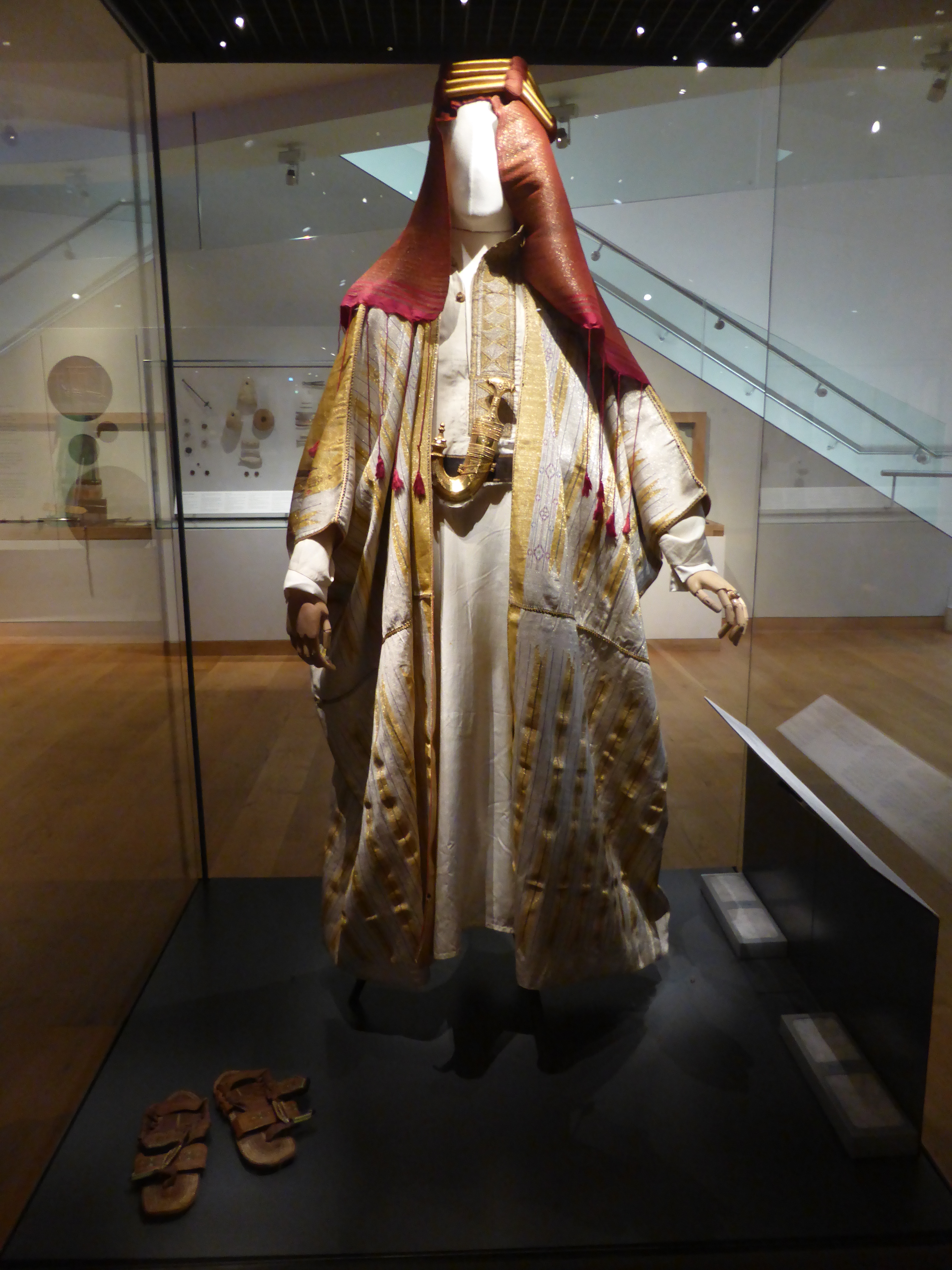
One of Lawrence’s Arabian robes can be seen at the Ashmolean Museum in Oxford.

P1000457

Circa 1916


POSTSCRIPT 3

The motorbike on which Lawrence was killed was the Brough Superior SS100s. One came up for auction in London the other day and sold for £315,100. It is the most expensive bike ever sold at auction.

brough21929 Brough Superior  sold at auction


POSTSCRIPT 4

A few of blogs ago (‘Tombs of Mycenae’ – July 12) I gave you two examples of snakes appearing in archaeology. Well, I have a ‘thing’ about snakes – I have a shuddering horror of them!  In Lawrence’s Seven Pillars of Wisdom he refers to an incident at Sirhan:

“… the valley seemed creeping with horned vipers and puff-adders, cobras, and black snakes. By night movement was dangerous: and at last we found it necessary to walk with sticks, beating the bushes each side we stepped warily through on bare feet.  A strange thing was the snakes’ habit, at night, of lying beside us, probably for warmth, under or on the blanket. When we learned this our rising was with infinite care, and the first up would search round his fellows with a stick he could pronounce them unencumbered.”

&MaxW=640&imageVersion=default&AR-309289963

wakey, wakey!

Agggggh  .. who would be ‘the first up’?? And what about turning in your sleep? I think I would lie motionless …… and awake ….. all night.

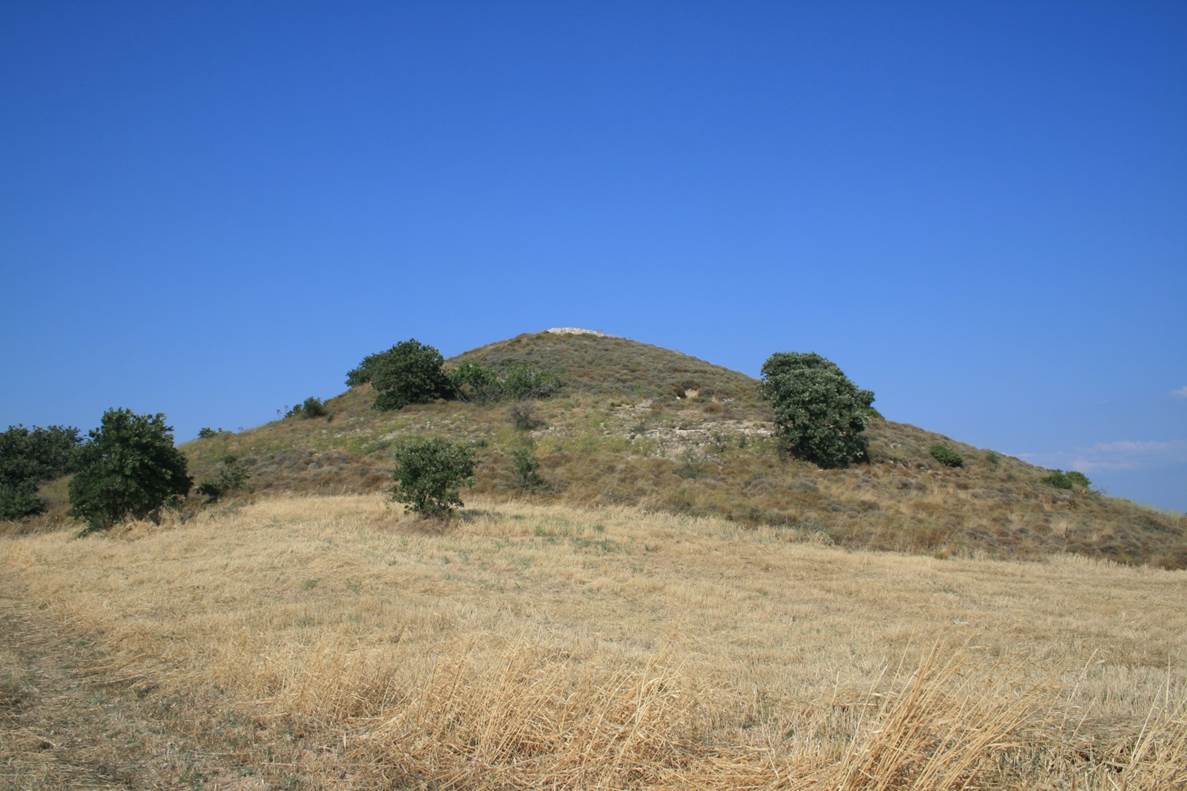
And talking of snakes: When visiting Troy a few years ago, I remember ascending Kesik Tepe, aka the ‘Tomb of Achilles’ [1], with Sarah and a colleague, funnily enough, named Laurance. I went ahead with a stick in case of snakes [2]. No problem on reaching the top. On our descent by a slightly different route, again I went ahead with the ‘snake’ stick. All of a sudden  Sarah, who was behind me, slipped and tumbled down all the way to the bottom – on her bottom – leaving a flatten path. I turned to Laurance and said, “well, we don’t need the stick anymore!”

achilles vtmb

The Tomb of Achilles – new game: ‘snakes and bottoms’

Postscript 4 Footnotes:

[1] It’s been dated to the Hellenistic period (post 323 BC) so cannot be the ‘Tomb of Achilles’! Although it has to be a little earlier than Hellenistic if, as alleged, the Persian king, Xerxes, visited it in 480 BC and Alexander the Great visited it (he died in 323 BC).

[2] In Bettany Hughes’ book, Helen of Troy (2006, p.176) she visits this mound and says, “Braving vipers and brambles I scrambled to the top …”.

.

Next week: Staying on the Hollywood fact of fiction theme, let’s go look at ‘The Alamo’

.


Artemus Smith’s Notebooks

I continue my research of the notebooks of Dr Artemus Smith, archaeologist of great courage, determination and fiction. Here is another extract:

My esteemed colleague, Professor Bradley Wunderghast, had been terribly overweight but when I saw him after a leave of absence he had lost several stone. I asked him how he had achieved such success.

“Well,” he said, “my doctor told me he wanted me to eat regularly for 2 days, then skip a day, and repeat this procedure for two weeks and I would notice a marked difference. He was right but I nearly dropped dead in the first week.

“From hunger?” I asked

“No,” he replied, “from the skipping”

Art Smth


The Great Escape: Hollywood fact or fiction?

OF COURSE the Great Escape at Stalag Luft III did take place, but was it like the story depicted by the MGM film?   Well, yes and no.

Yes, 76 out of an intended 200 escaped; 3 got ‘home’; 50 were shot.

steve McQ

(The bike should have been a BMW but it was a Triumph!)

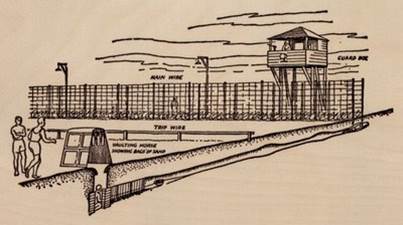
No, Capt. Hilts did not exist and there was no motorbike chase (sorry Steve McQueen fans) – in fact, there were no Americans in the escape at all.  The tunnels, Tom, Dick and Harry were begun in April 1943 in the north compound and did, indeed, involve Americans. However, in June 1943, the Germans started work on a south compound especially for American POWs. Digging was stopped on Dick and Harry and all efforts focused on Tom to try and finish it before the American POWs were moved to the new compound. Unfortunately, as the film depicted, Tom was discovered – but not the Tom in the film!

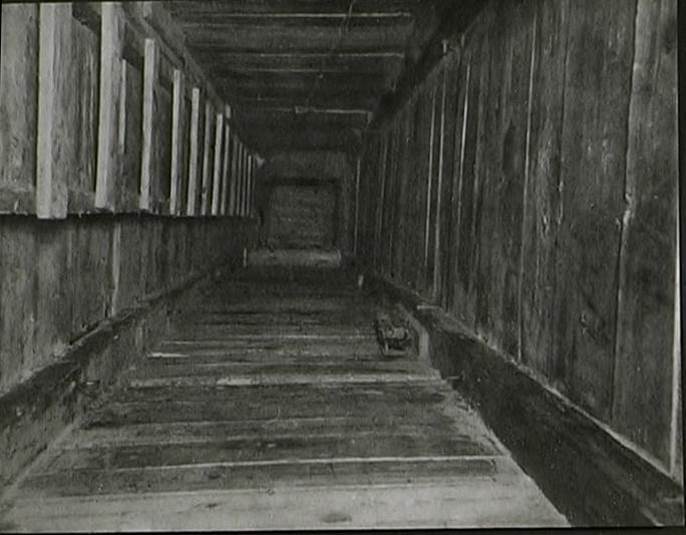
The Tom in the film was under the stove. In actual fact, that was Harry which was the real tunnel used for the escape.

tom        Tom having been discovered (the guy is a German guard – a ‘ferret’)    

 harry 2

Harry (or Tom in the film)

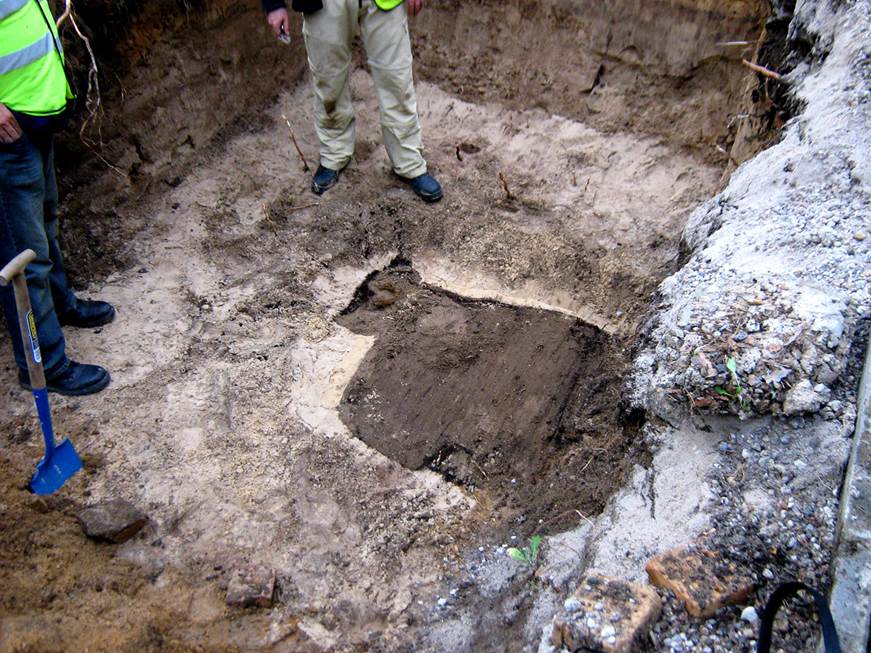
The tunnel used in the film for the escape, in the washroom, was Dick. Dick was only ever used for storage and not discovered until fairly recently (2003 to be exact).

Dick                       Harry in the film was actually Dick

dick 2

        Dick’s entrance being excavated in 2003 (the excavator is standing on the ‘home-made’ concrete entrance slab to the tunnel – in the ‘drain’ to the shower)

So, in the film, Harry was Dick; Tom was Harry;  Dick was Tom. And Bob’s my uncle. Get it?

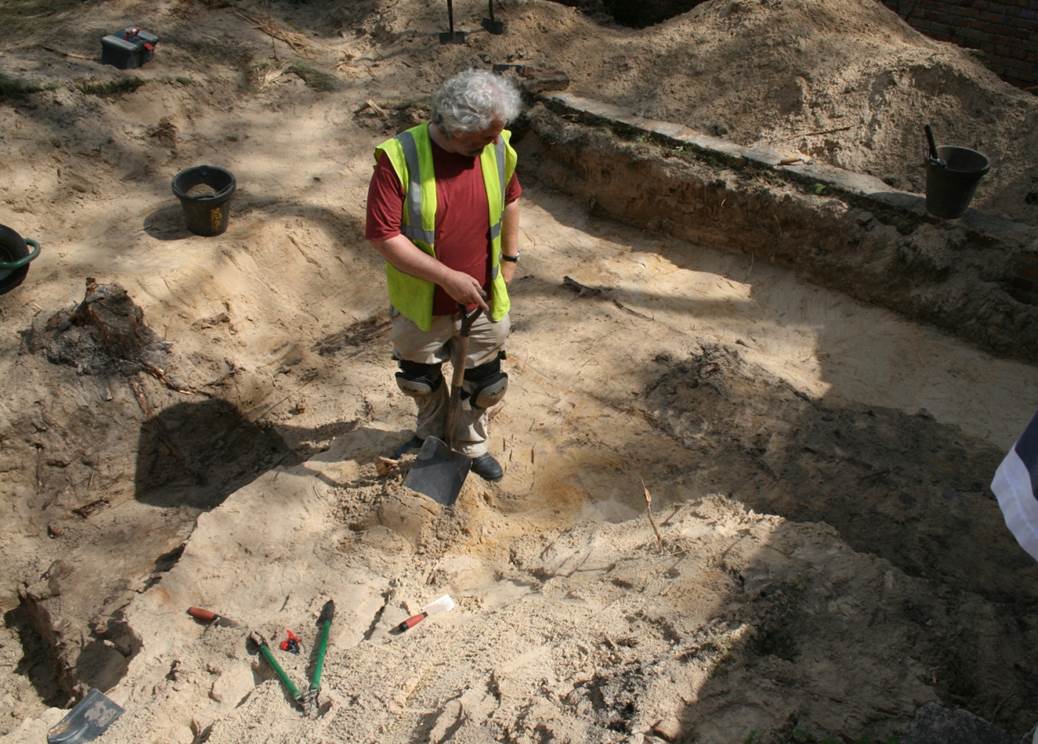
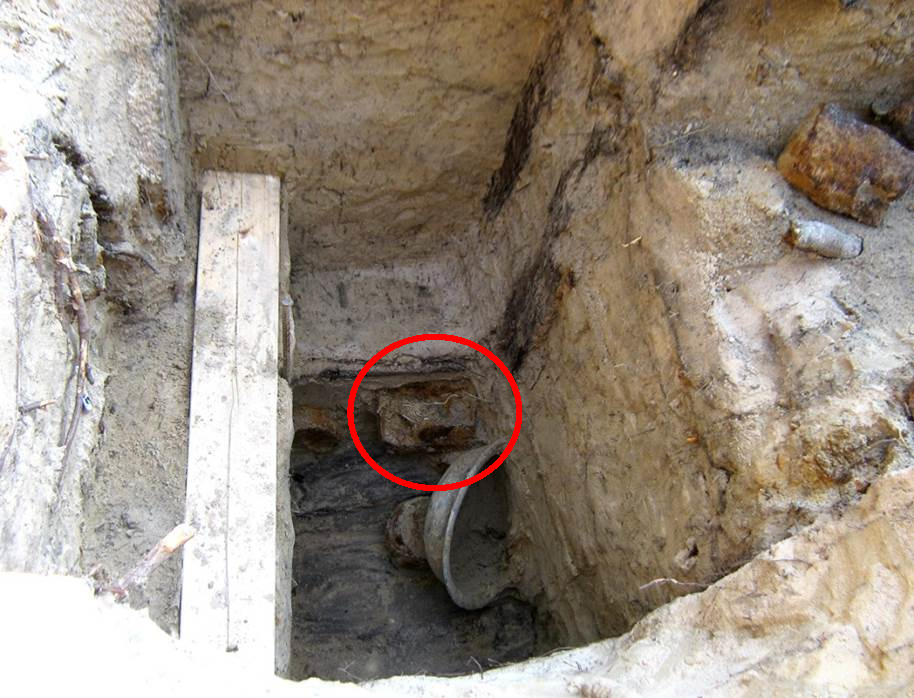
More recently Harry was discovered by the archaeologists (2011 to be exact – I know ‘cos I was there). It wasn’t fully excavated because it was too dangerous to dig down any further – but an exciting find (honest!). There was nothing to find of Tom because, after its discovery, the Germans had blown it up (dislodging the foundations of a nearby guard-tower in the process – ha!!).

harry excav

Harry’s entrance discovered in 2011 – not much to look at but exciting (honest!)

Then there was a fourth tunnel, George, begun in September 1944. This was kept a secret but not intended as an escape route. It was heading towards the German compound and its weapons store in case of emergency needs. The war was coming to an end and the POWs were concerned about German reprisals. The tunnel was not discovered until 2011 – same time as Harry (I know ‘cos ….. yes, you know, I was there).

george 2

George (the tunnel not the archaeologist – that’s Iain Banks) – the tunnel is the right angle trench behind Iain. Behind and below Iain’s right arm you can just see cable used for lighting the tunnel (when it was being dug by the POWs – not in 2011!)

north cmpnd

Plan of north compound: Tom is in hut 123 and goes west; Dick is in hut 122 and also goes west; Harry is in hut 104 and goes north; George is in the theatre (just above football pitch) and goes east 

theatre

Plan of the theatre – red line is excavated George; dotted line  is presumed route of tunnel heading towards the German compound (unexcavated)

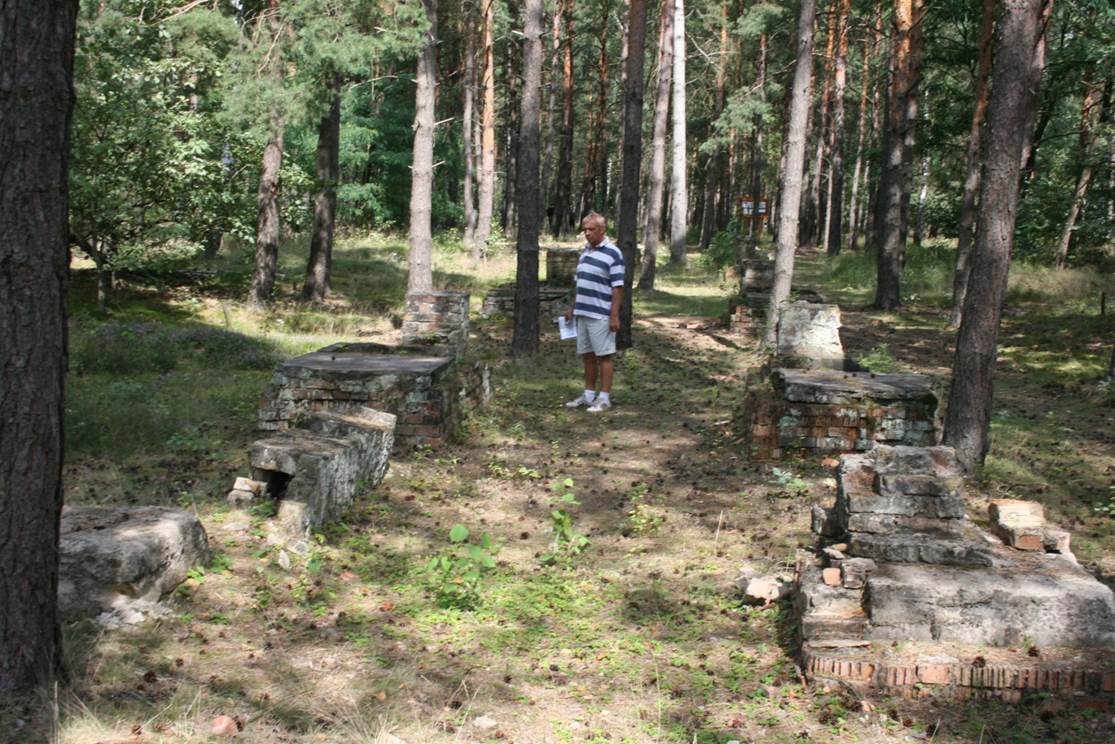
Very little remains of the huts in the north compound as nature and looters have taken their course. Below pic is one of the ‘better preserved’ (if that is the correct phrase!)

119

Remains of one of the ‘better preserved huts’ – only brick pillars visible (my bruvver is there as scale)

One of the reasons I know all of this is simple – my dad was there. He drew the above pictures of the north compound and the theatre. He flew a Wellington bomber but his engines seized up returning from a night raid over Germany and he crashed, eventually ending up in Stalag Luft III. His involvement in the escape was making the ‘goon’ lamps (oil lamps to light the tunnels before electricity was used – after some chap stole sufficient electrical cable to do the job); he was also a look-out (when the tunnels were being dug, each tunnel hut knew exactly where German guards were at any one time due to an incredibly efficient look-out system).

So my father was the reason my brother and I were visiting Stalag Luft III in 2011 when we came across the archaeologists excavating Harry and George. We happened to have dad’s POW log book with us (to show the museum curator at the site) and the archaeologists were very pleased when we produced the above map of the theatre which they were excavating!

dad

                      Picture1

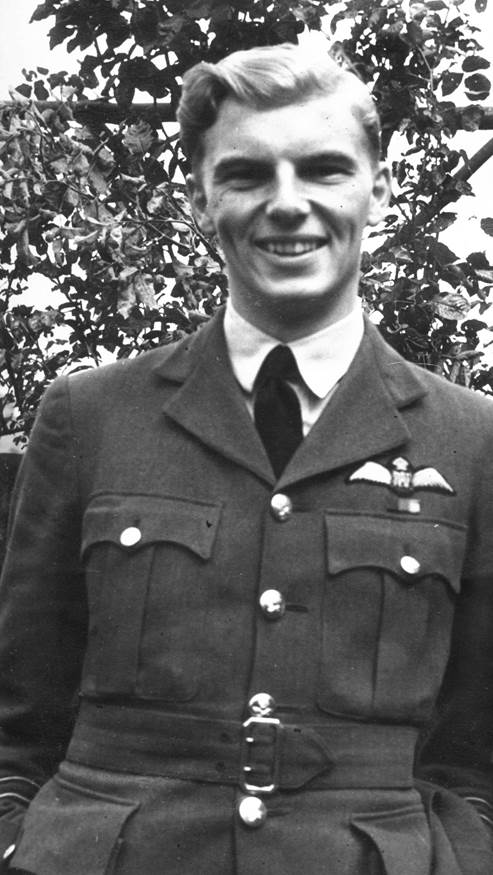
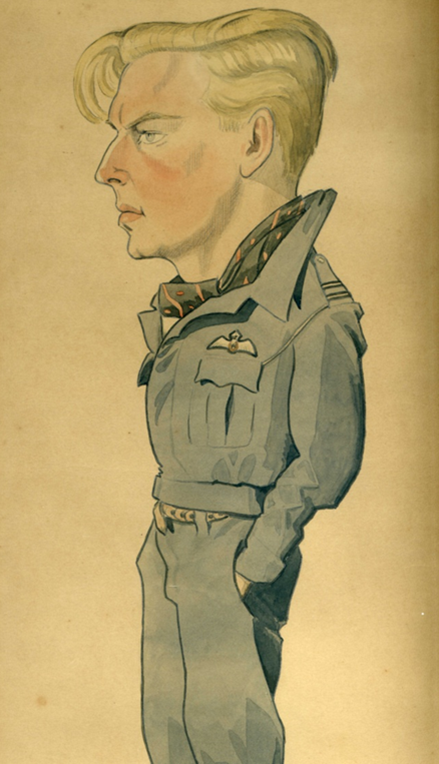
My dad, Flt/Lt Bill Moore – if you have been following my  blogs you may remember the caricature on the right (Artemus Smith). It is in fact of my dad and painted by Henri Picard (click on his name for more details of him), a Belgian POW at Stalag Luft III, but very sadly one of the 50 who were shot following the escape


POSTSCRIPT 1

Whilst my brother and I were at Stalag Luft III in 2011 we met a veteran, Frank Stone. He had told Dr Howard Tuck (who was in charge of the excavations) that he remembered putting a radio set in George. The following week, when they were excavating the  entrance to George, guess what they found?

radio 1        radio

                                    Frank’s radio set


POSTSCRIPT 2

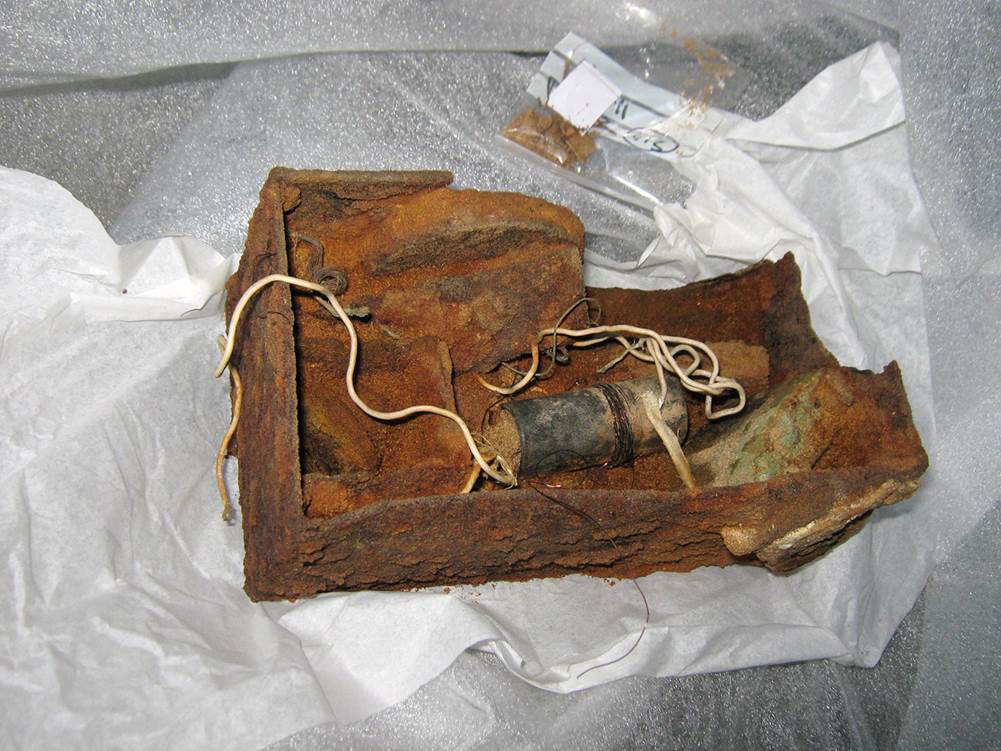
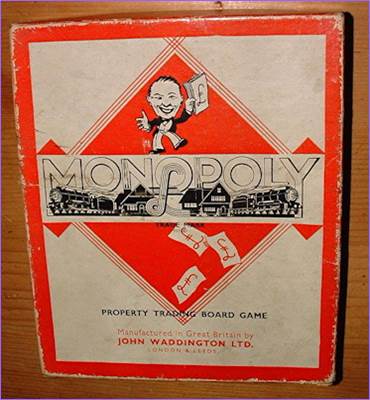
Money and silk maps were smuggled into the camp via Monopoly games. Such secret activity could not be carried out through Red Cross food parcels otherwise, if found out, the parcels would stop. So, an independent organisation had to take up the task – John Waddington Ltd. If the Free Parking square had a red dot on it, the box contained escape equipment. Silk maps were stuffed into the metal game figures and real money was coated with monopoly money (which could be washed off). Because of official secrets (and the possible need to use this form of ‘smuggling’ again), Waddington not was allowed to make it public and bask in the credit – until 2007 (although I think mention was made of it around 1985).

monopoly


POSTSCRIPT 3

 After the escape, the Germans took an inventory of what was missing.  Apart from 76 POWs there were:

30 shovels, 34 chairs, 62 tables, 69 lamps, 76 benches, 90 beds, 192 bed covers, 246 water cans, 478 spoons, 582 forks, 600 feet of rope, 1000 feet of electric cable, 1219 knives, 1400 milk tins, 1700 blankets, 2424 towels and 4000 bed boards.

How could you miss that lot?!!

Klim

Some of the 1400 KLIM tins used for the air ‘pipes’ for the tunnels – it took me a while to realise that KLIM was MILK spelt backwards (dah!)

harry 3

Looking down Harry – some of the 4000 bed boards used for supporting the tunnels


POSTSCRIPT 4

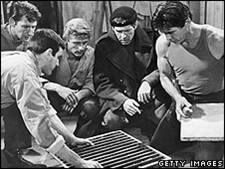
The other great escape, also from Stalag Luft III (so much for it being an escape-proof camp!), was more successful – three escapees and all three got home (Oliver Philpot,  Eric Williams, Michael Cundar). It was, of course, the escape made famous by the film ‘The Wooden Horse’.  In fact, Oliver Philpot was once a room-mate of my father’s in the camp prior to the former’s premature departure.

wooden horse                    butterworth

What is interesting is that one of the ‘helpers’ in the actual escape was the film actor (to be), Peter Butterworth (photo above) who was a POW at the time. He was one of the athletes jumping over the wooden horse for hours whilst the tunnel was being dug.  A few years later, when he heard the the film was to made he, naturally, wanted to be in it. His request was refused because the casting director said he “didn’t look convincingly heroic and athletic enough”  !!!!

Next week: Lawrence of Arabia: Hollywood fact or fiction?


Artemus Smith’s Notebooks

I continue my research of the notebooks of Dr Artemus Smith, archaeologist of great courage, determination and fiction. Here is another extract:

I met this remarkable female archaeologist, named Imogen, at a charity ball the other evening. She was wearing a ripping diamond ring and I happened to remarked upon it.

“Oh, that”, she replied, “It’s the famous Haggenflacht diamond.”

I was bedazzled by it.

“ Unfortunately it has a curse attached to it,” she added.

“A curse?” I enquired with some intrigue, “What curse?”

“Mr. Haggenflacht,” she responded.

Art Smth

Travels in Turkey: House of the Virgin Mary

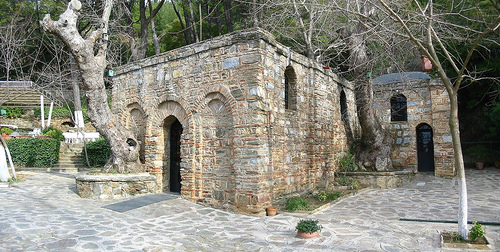
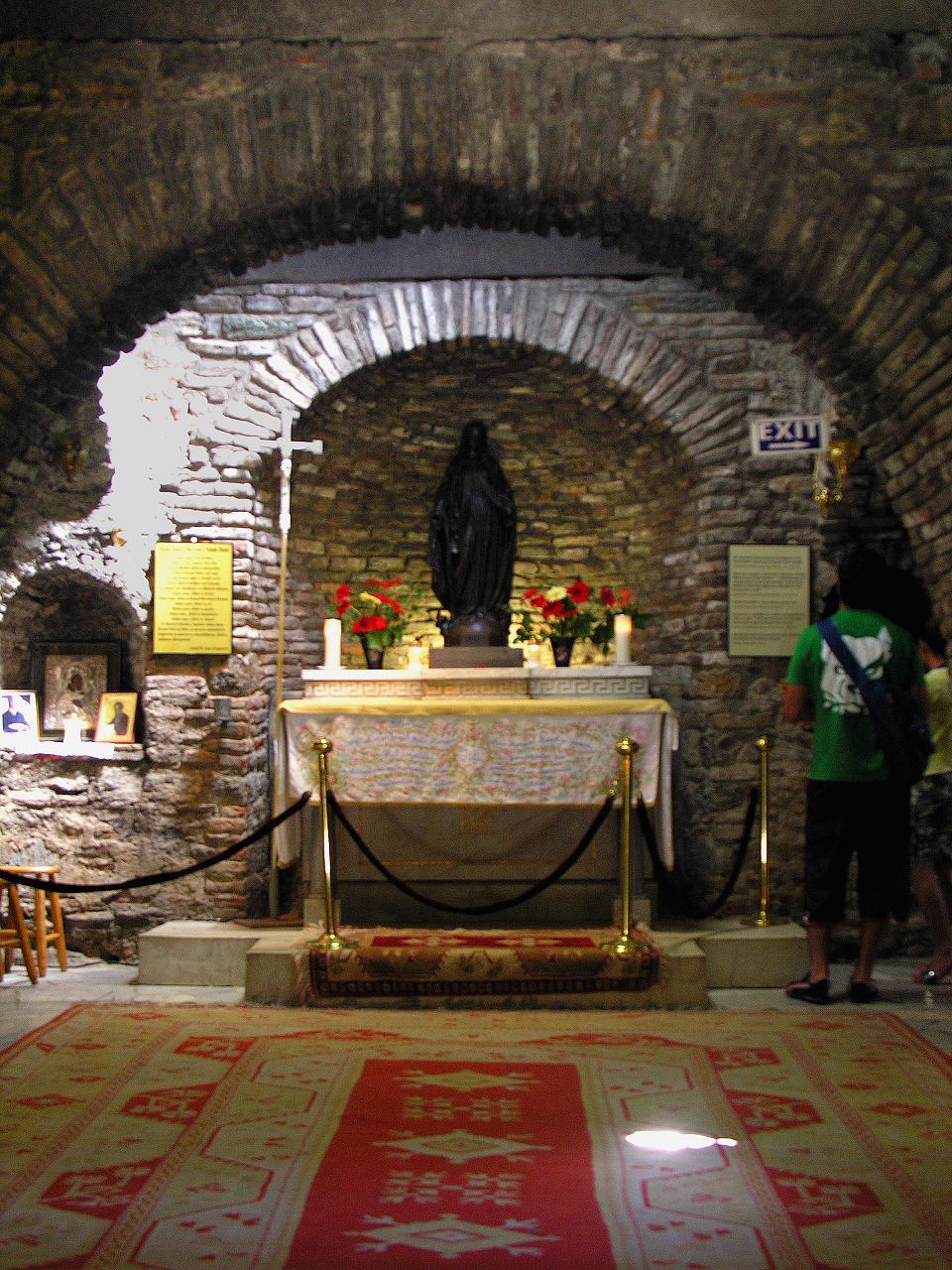
ON THE MENTION OF EPHESUS the impressive Roman town leaps immediately to mind. But everyone knows about that. However, there is another most intriguing place to visit in the vicinity. It is the house of the Virgin Mary. I say intriguing really because I had never known of it. One might say that is not surprising being that I am not particularly religious, but as Mary is a well known celebrity I thought her house would be ‘up there’ on the famous tourist list.

267e7bd2-f56c-4d61-b7da-484b3133a814

Virgin Mary’s House at Ephesus

Its discovery is an interesting tale but not, perhaps, for the sceptical ‘doubting Thomases’. The starting point, not surprisingly, is the Bible and the last mention of Mary before she disappeared. But it gives us a clue. It comes from St John, 19: 25-27:

“Now there was standing by the cross of Jesus His mother and His mother’s sister, Mary of Cleophas, and Mary Magdalene. When Jesus therefore saw his mother and the disciple standing by, whom he loved, he saith unto his mother, Woman, behold thy son! And from that hour the disciple took her unto his own home.”

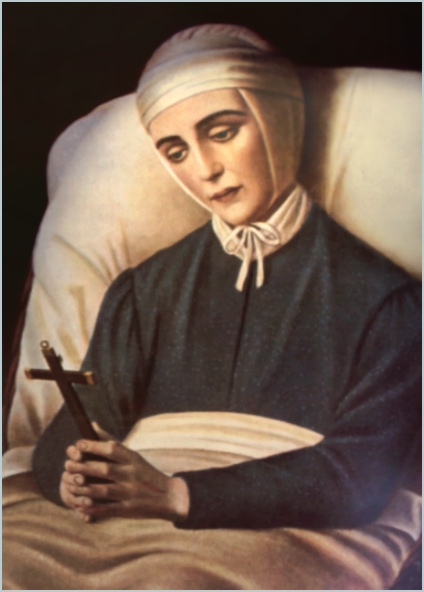
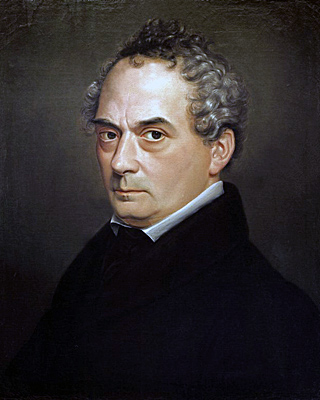
Obviously the disciple was John (as he was writing the Gospel, remember!), and he would have looked after Mary in his ‘own home’ which became Ephesus. Needless to say he would not have made a song and dance of it as Mary would have been in danger and wanted to play a low profile. However, it took until the late 19th century for someone to strike out to find where she might have lived in Ephesus. This someone was a Parisian priest, Father Julian Gouyet. Some may say this is the dodgy bit. His information came from the vision of a bedridden German nun, Sister Anne Catherine Emmerich, who had died some 60 years earlier in 1824. The visions were recorded by a German Romantic poet, Clemens von Brentano, who was at her bedside on and off from 1818 until her death.

emmerich

Sister Anne Catherine Emmerich

Visions, romantic poets. I can hear alarm bells going off. But without some beliefs in the, let’s say, ambiguous, some ‘Tales of the Unknown’ would remain unknown. Look at Heinrich Schliemann’s belief in Homer’s ‘mythical’ Trojan War – it led him to discover Troy. Okay I can’t think of any more (although John Turtle Wood found Ephesus by following a description of a procession found on a stone fragment). But Emmerich was quite remarkable and there are reports that, whilst suffering from high fever, she began bleeding (stigmata) from her hands, feet and side. She had never been to Ephesus but described Mary’s house in some detail and it fits the house believed to be hers today.

brentano-clemens3

Clemens von Brentano

Needless to say Brentano’s publication of Emmerich’s visions were treated with little interest. That is until 1880 when Gouyet came across them. Using Emmerich’s description, he went to Ephesus in search of the house. Indeed he found a ruin of a house and landscape at Panghia Capulu on ‘Nightingale Mountain’, just south of Ephesus, which bore a remarkable resemblance to Emmerich’s portrayal.

Gouyet returned to Paris and informed his superiors and the Vatican of his discovery. They were not so convinced and Gouyet was hushed up. Ten years later, Father Poulin, whilst visiting Smyrna in Turkey, read Emmerich’s visions and, although an anti-mystic, debated the phenomenon with his fellow priests. The sceptics remained in the majority but it was agreed to go and visit the house. This was not an easy task in those days as no road existed from Ephesus into the mountains where the house was situated. However, they were not to be disappointed and the scepticism faded. Old tombs were also in evidence, and one of the priests, Father Jung, asked his guide if he knew the whereabouts the tomb of the Virgin Mary. No, the guide replied, but he could take him to the tomb of Mary Magdalene. The priest was in his element.

House_of_Virgin_Mary2

Inside the House

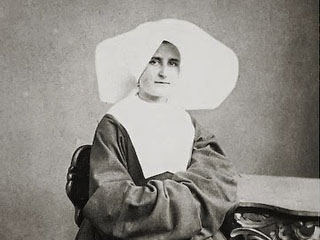
Conservation was the next issue. Isn’t it always. How would they protect it? They had to buy it. The owner, the Bey of Avarai, was found relatively easily – somebody knew somebody who knew somebody who knew him. The money was found relatively easily – Sister Marie de Mandat Grancey, the mother Superior of the Sisters of Charity in Smyrna had always been a believer in the house and produced money (31,000 French Francs) from her own wealth. The Bey messed about a bit but eventually the deal was done in November 1892. The following month, Archbishop Timoni, on behalf of the Church, announced that the house was indeed that of the Virgin Mary.

Sister_Marie_de_Mandat_EWTN_World_Catholic_News_1_26_11

Sister Marie de Mandat Grancey

A road was built up to the site and the building was restored in 1950. With the restoration it was discovered that the house had been restored several times before yet never been expanded on or improved. This led those concerned to believe that it had for many centuries been a unique place of Christian worship (well, maybe). In fact, it transpired that excavations in 1898-9 found many artefacts relating to religion and burials and Ottoman archives refer to the house as ‘The Three-Doored Monastery of the All Holy’.

The house itself is dated to the 5th century AD (from coins found) but its foundations go back to the 1st century AD. In August 1898, excavators working inside the house unearthed soot blackened fragments of stone of the 1st century AD – exactly where Sister Emmerich had said there was a fireplace.

The Vatican (Holy See) has taken no official position on the authenticity of the location yet, but in 1896 Pope Leo XIII declared it a pilgrimage. The first papal visit was by Pope Paul VI in 1967.  The next papal visit was by Pope John Paul II in 1979 who celebrated mass outside the house. Pope Benedict XVI went there in 2006 and treated the house as a shrine.


Next week: The Great Escape: Hollywood fact of fiction?


Artemus Smith’s Notebooks

I continue my research of the notebooks of Dr Artemus Smith, archaeologist of great courage, determination and fiction. Here is another extract:

I have just given evidence at the local assize court, on behalf of a colleague of mine, Jeremiah Archer-Hatchett, who had been quite unjustly accused of removing a small collection of valuable artefacts from an excavation site. On remitting its verdict, the chairman of the jury rose and announced to the judge:

“Not guilty, your Honour, provided he returns the artefacts.”

The judge’s face reddened with anger and he went into an oratory reflecting the purpose and excellence of the justice system which should not be taken lightly. The jury were then instructed, in no uncertain terms, to return a proper verdict.

Having repaired to its room for 10 minutes, the jury reseated itself in the courthouse and the chairman arose again with the reconsidered verdict:

“Not guilty, your Honour – and he can keep the artefacts.”

Art Smth

Troy: Hollywood fact or fiction?

DID TROY really exiats? and if so was there a Trojan War as depicted in Troy? It would appear that Heinrich Schliemann (1822-90) found, at Hisarlik, in northwest Turkey, what is believed to be Troy (in fact, he had considerable help from one Frank Calvert – but that’s another story). From archaeological evidence, whether Homer’s Trojan War ever happened is not so clear.  To gain any idea it is useful to compare archaeological evidence from known areas and then see whether it links in with the literature of the Iliad – composed by Homer in the 8th century BC of a war that may have taken place in the 13th century BC at Troy.

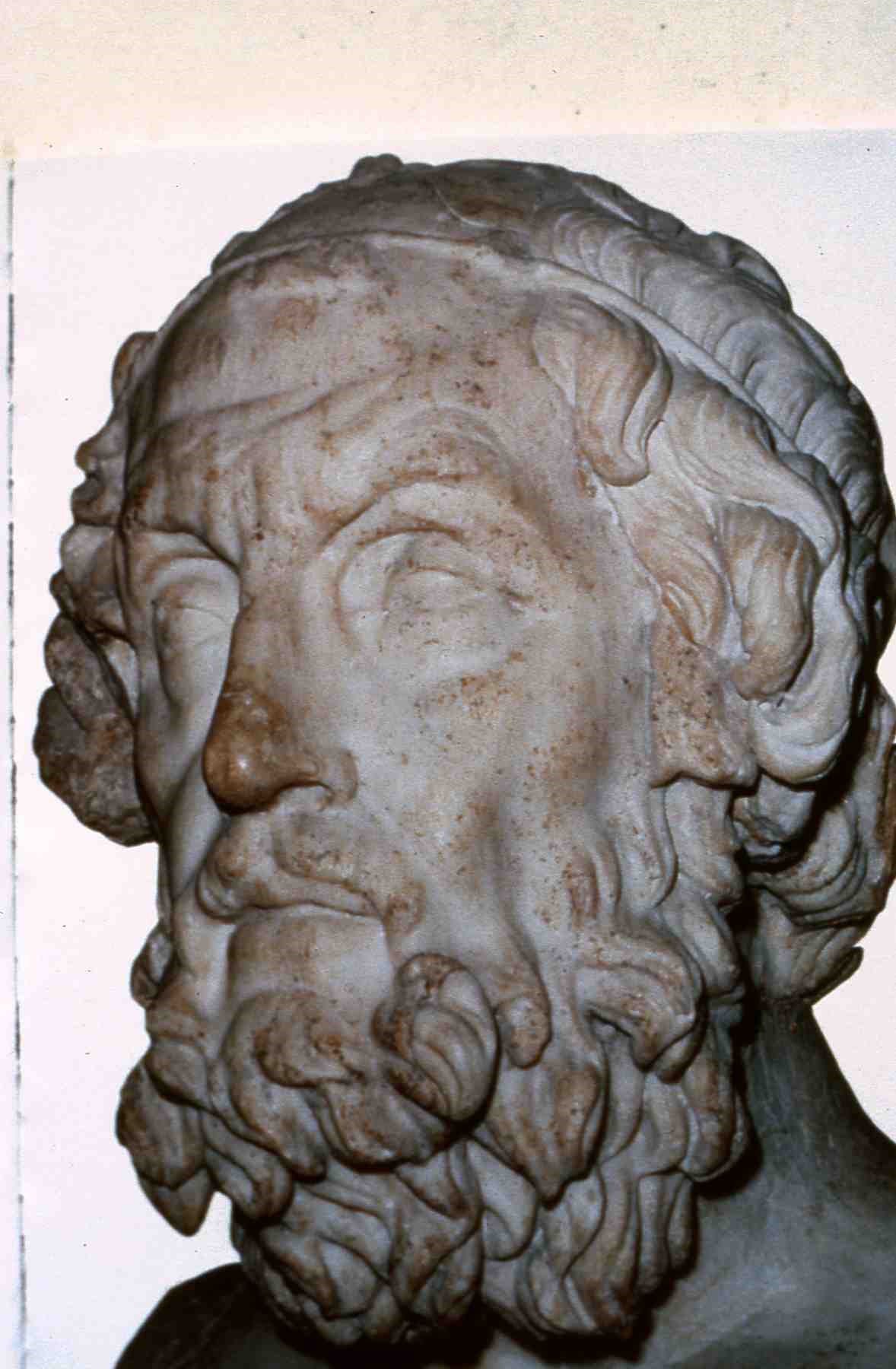
 homer

Homer

Mycenaean comparisons

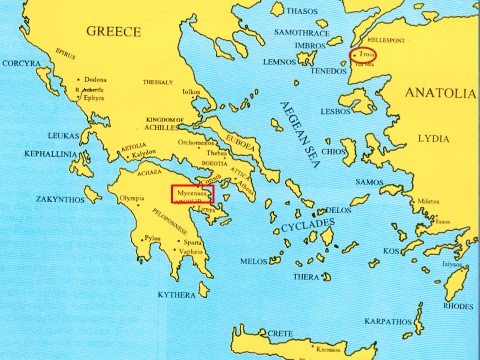
According to Homer, the Greek (aka Achaean) expedition against King Priam of Troy was led by Agamemnon, king of Mycenae (but you know all that if you have been reading my previous blogs). Homer tells us Agamemnon was a man of great wealth, the lord of deep-golden Mykenai and led a powerful navy of 100 ships – a larger force than all others.  Although there is no archaeological evidence of the existence of Agamemnon, we know the city of Mycenae existed around 1600 – 1100 BC and that it was a city of great wealth – this was realised from excavations of finds of gold in the burial chambers (a previous blog – I can’t keep saying this) and the evidence (pottery) of industry (oil merchants) in the foundations of surrounding buildings.

map

Map of the Aegean with Troy (Troia) and Mycenae

Some buildings in the city were substantially two-storied with interconnecting drainage.  The site itself indicates a ruling and military class – massive fortifications on a hill top overlooking a rich agricultural plain and the town of Argolis.  All these factors picture a city of the aristocracy and the prosperous. Excavations also showed that the city and its civilisation were destroyed (by fire) in around 1230 BC.  So, if Agamemnon of Mycenae was going to invade Troy it had to be before this date.  The city was later rebuilt to last until around 1100 BC and producing a different style of pottery, but not as the city it once was (so we are not very interested in it – well, I’m not).

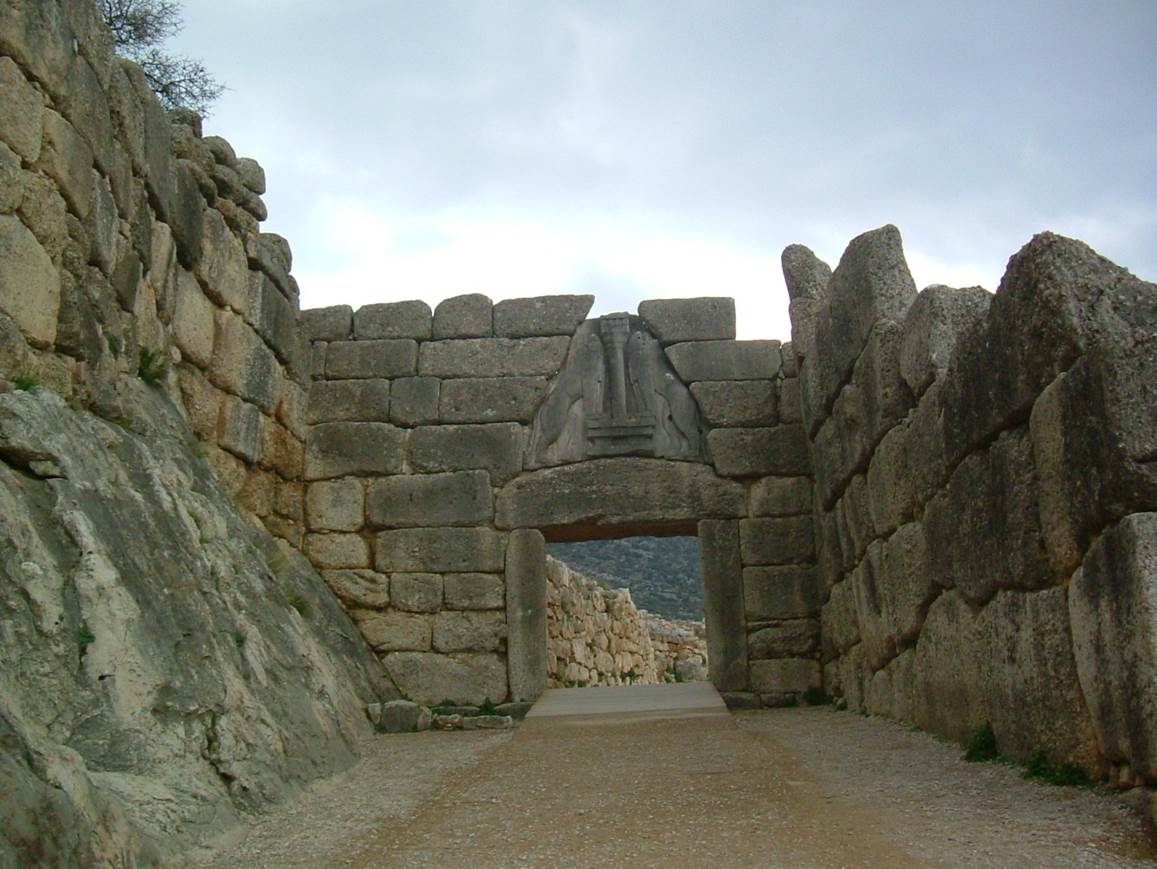
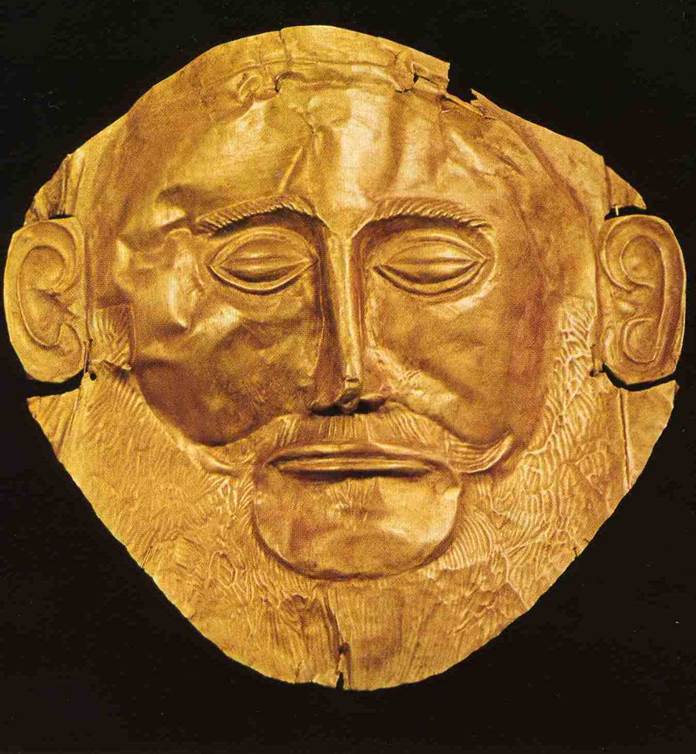
When Schliemann excavated Mycenae, he found many treasures in the shaft graves adjacent to the great Lion Gate entrance (see prev …. no, I’m not going to say it).  He was overwhelmed with the finds, particularly the gold masks, one of which he believed to be of Agamemnon.  The problem was the dating.  The shaft graves, in which Schliemann found the treasures, were constructed in 1600 BC, some four hundred and fifty years before 1250 BC, the considered date of the fall of Troy – a detail Schliemann overlooked (but you know that from previous …. no, no, I’m not going to say it).  However, the artwork and design of the masks and jewellery made it clear that the Mycenaean civilisation was highly sophisticated (and ‘deep-golden’ or ‘rich in gold’ as another translation has it).

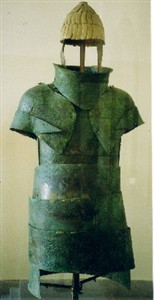
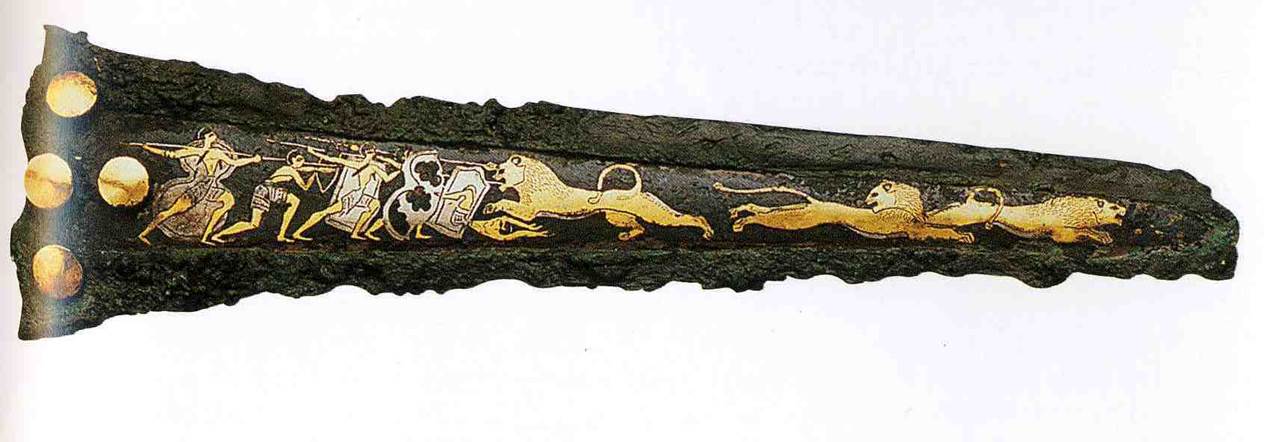
There are some connections in Homer with Mycenaean artefacts, particularly with the Iliad and armour  For example Odysseus “put over his head a helmet fashioned of leather … and on the outer side the white teeth of a tusk-shining boar were close sewn one after the other …” (Iliad 10.261) – the very kind of helmet found at Dendra, near Mycenae (see pic below).  Also, “Now Aias came near, carrying like a wall shield of bronze and sevenfold ox-hide” (Iliad 7.219) – a Mycenaean shield (see the body shields engraved in the dagger at Grave Circle A – pic below). Unfortunately, not all the references in the Iliad follow archaeological patterns and there are discrepancies. There is reference to “locking spear by spear, shield by shield, so buckler leaned on buckler, helmet on helmet, man against man … so dense were they formed on each other …” (Iliad 13.131), which infers the operation of the phalanx, but it was not used by the Greeks until around the 9th century BC.  Homer refers to types of armour of various periods and iron of his own period, as if comparing the Mycenaean culture with his own.

 Dendra_armour_2

Dendra armour (c 1400 BC)

dagger

Dagger from Grave Circle A (c 1600 BC) at Mycenae showing ‘wall shields’ covering whole body 

The finding of the Linear B tablets at Mycenae (and at Pylos and Knossos) by Sir Arthur Evans (and interpreted by Michael Ventris as Greek in 1952) was both encouraging and discouraging.  They indicate a developing culture with a written language within Mycenaean Greece during the period leading up to Homer’s siege of Troy.  However, they relate to administration of ‘royal’ palaces and make no mention of Homer’s royal heroes by name, which limits their value to prove the existence of Homer’s Trojan War but they do refer to Mycenaean forays into Aegean (Lesbos) which puts them in situ.

Troy

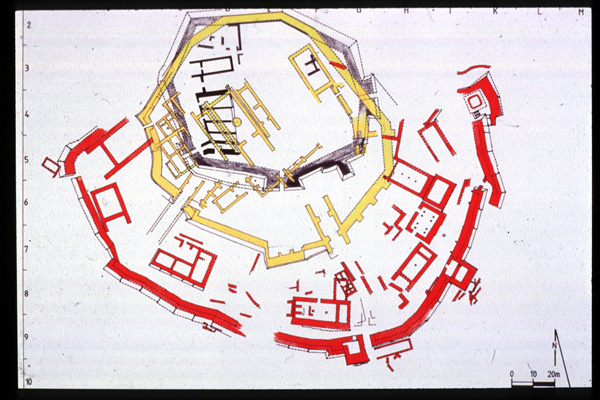
Following the discovering of Troy, nine main settlements (I-IX) have been excavated over the years. Troy VI and VIIA bear a certain resemblance to Mycenae – Troy VI is high and wealthy, Troy VIIa is heavily fortified.  How do we know the dates of these cities?  Styles of Late Helladic IIIA pottery (1400 -1300 BC) and Late Helladic IIIB pottery (1300 -1200 BC) have been found by Carl Blegen, in Troy VI.  So although this ‘Mycenaean’ style pottery was made in Troy, Troy VI has a definite link with Mycenae.  This style disappeared from Troy around 1250 BC, the believed date of its destruction.  In Troy VIIb, a completely new style of pottery, alien to Mycenae, was found.  This originated from across the Dardanelles in the 12th century BC and possibly suggests new people at Troy.  So, if Homer’s Troy existed, it was prior to this period.

TroyCompPl

 Plan of citadels of Troy (grey is Troy I; yellow is Troy II; red is Troy VI)

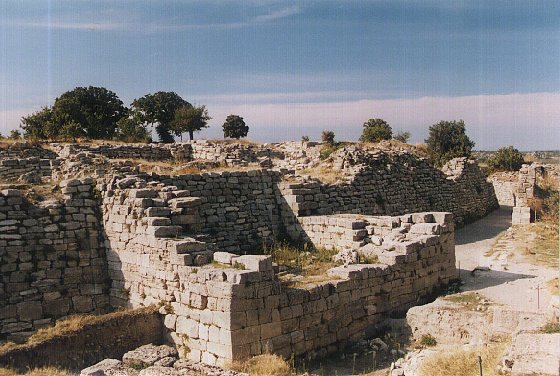
However, Blegen was convinced that Troy VI was destroyed by an earthquake, as the walls had shifted, and Troy VIIa by fire (although he accepted that there had been a fire at Troy VI at some stage) and, therefore Troy VIIa was Homer’s Troy.  But Donald Easton has suggested that, although there was an earthquake, it possibly destroyed Troy VIIa and Blegen simply misinterpreted the signs of the wall movements.  Unfortunately, he refused to confirm that Troy VI was the city destroyed by the Greeks, commenting, “it simply gives us a nice opportunity for belief” (I just love that!).

troy

Troy VI tower and east entrance to right

 Looking at Troy VIIa, it is very similar to Troy VI in build – as a fortification – with houses illustrating continuation of sturdy masonry in period of rebuilding.  In fact, it has been suggested that Troy VIIa is just another rebuilding of Troy VI. It does have ear-marks of siege about it – closely packed houses (unlike Troy VI), incorporating storage pithoi (large containers) let into floor for, perhaps, a special need for storage – even to the extent of restricting space within the building.  Was it preparing for siege?  Blegen believed so and this was another reason for his conclusion that Troy VIIa was Homer’s city of the Trojan War.  However, this preparation for siege at Troy VIIa may have be in defence against some other intruder (perhaps the later Sea People, as referred to by the Egyptians).

One problem with this, is that the whole of Troy VIIa is divided up into small enclosures and there is no Royal Palace, as there was (probably) in Troy VI.  This sounds rather like the King (if that is what he was) and his family are no longer in residence at Troy VIIa.


Troy_City_VIh_02_full

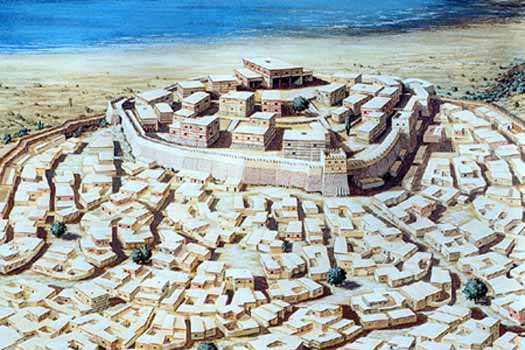
What Troy VI and its lower city may have looked like in the 13th century BC (270,00 sq m)

The next problem is dating.  Late Helladic IIIC pottery has since been found at Troy VIIa, which means it must have been in existence after 1190 BC which is too late for Homer’s War (the date of Homer’s War at 1250 BC is based on the fall of Mycenae shortly afterward in 1230 BC).  In this respect, Troy VIIa is unlikely to be Homer’s Troy which makes Troy VI favourite for Priam’s city. We also rely (not necessarily reliably) on the 5th century BC historian, Herodotus, and his dating of Homer and his Trojan War – the former, 400 years before his own time, and the latter, 800 years before his own time (but where he gets these dates from is anyone’s guess).

In addition, there have been excavations at Besik Bay, an inlet to the south of Troy, by Professor Korfmann (who, until his death, was working on the lower town at Troy VI).  This produced Mycenaean pottery and cremated bodies of the period around the Trojan War.  The cremations support Homer’s references, otherwise considered inconsistent with the believed Mycenaean practice of burial.  The Greeks may well have cremated their warriors to prevent the bodies being exhumed and despoiled by the Trojans.  The site is near to where the beach would have been in the 13th century BC, and close enough to Troy for a Greek encampment.  It is, of course, mere speculation and Korfmann is cautious about linking Homer and archaeology.  However, it does allow the imagination to wander.  He said, “I am sure, in the 13th century [BC] there several wars around and about the city of Troy but which one was Homer’s War, we will never know”.

besok

Besik Bay – harbour controlled by Troy but where Mycenaean/Achaean fleet may have beached for the siege of Troy

So, what d’yer reckon?

It is clear that a large fortified city existed at Hisarlik in or around 1250 BC, at the time of Homer’s Trojan War, but because of its location at the entrance of the Dardanelles, it had control of a trade route to and from the Black Sea, and so such a fortification would not be particularly unusual. It would also be a very profitable city having such control and open to ‘take-over’ by wealth-seeking powers (of which Mycenae would have been one – having already taken over Minoan Crete in 1450 BC). Schliemann discovered its wealth in Troy II of 2500-2300 BC (click here for the Treasures of Troy) – too early for Homer’s Troy). However, there was, certainly, in existence in the 13th century BC, the wealth that Homer refers but whether it belonged to Homer’s heroes is unknown and will never be known unless something of reference to them appears in future excavations.

Archaeology shows that, if there was a Trojan War, Mycenae and the other cities named in the Iliad were, in the 13th century BC, large and strong enough to invade Troy.  However, there is very little in either Trojan or Mycenaean archaeology – or writing (Hittite texts and Linear B respectively) – to support the existence of Homer’s heroes or Homer’s Trojan War (the Hittites texts do stretch the imagination a bit – but that’s another story). Nor any mention of Helen ‘of Troy’ (well, of Sparta actually, being the wife of Menelaus, King of Sparta, until Paris, Prince of Troy, got his hands on her – if we are to believe Homer of course). All we can say is that Troy and a wealthy and powerful Mycenae existed and must have had its own warrior heroes.

So there you have it …. or not.


Next week: Travels in Turkey – going south from Troy, down the west coast of Turkey, to Ephesus, is the House of the Virgin Mary – not alot o’ people know that ……


Artemus Smith’s Notebooks

I continue my research of the notebooks of Dr Artemus Smith, archaeologist of great courage, determination and fiction. Here is another extract:

I have made a sensational discovery that the Ancient Greeks played golf some two thousand years before us. The reference to the game comes from some further work of Homer (c750BC but writing of the time of the Trojan War, c1250BC) that I fortuitously came upon in Alexandria. My translation of a passage is as follows:

And aged Chryses, priest of Phoibos Apollo,
did forsake prayer to his lord of the silver bow
and in secrecy went forth to play golf.
His first shot he smote strongly,
for it was blameless and he holed in one.
Such a stroke was from the hand of Zeus, gatherer of clouds.
Far striking Apollo spoke in anger to mighty Zeus,
‘Father Zeus, indeed I have done favour among mortals,
but why honour so this unworthy wretch
who steals away in secret to play golf
and avoids loyal duty of prayer to the gods?’
And in reply spoke Zeus, son of Kronos,
shaking his head with dark smile,
‘It is not with honour that I guided his ball,
but in frustration I have stricken him deep,
for in such secrecy of his play
to whom shall he dare boast of this great shot?’

Art Smth

Tombs of Mycenae: the Forgotten Five

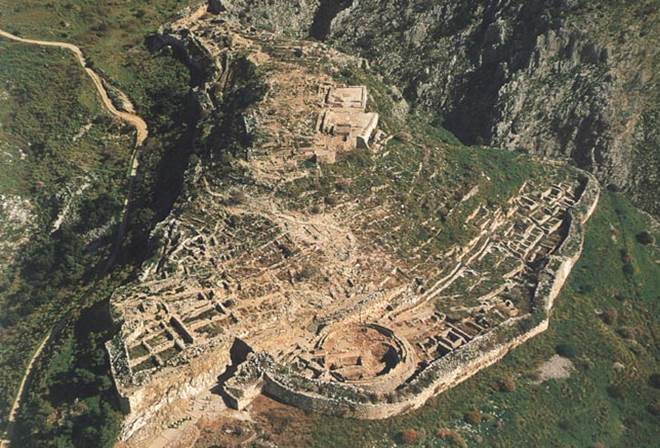
VISITORS TO MYCENAE will always stop off at the Treasury of Atreus (aka the tomb of Agamemnon – see previous blog) to be awed by its size and magnificence. Nor will they be able to miss the intrigue of the tombs of Clytemnestra and Aegisthus and the Lion Tomb – still impressive even if remaining less robust in construction than Atreus. What they all have in common is their accessibility and visibility (and closeness with regard to the last three). Their names bear no relation to whom may have been buried there – they are just ‘labels’ conveniently coinciding with mythical characters from Homer’s 8th century BC poem’s the Iliad and the Odyssey (Atreus’ son, Agamemnon, led the forces against Troy; Clytemnestra was his unfaithful wife who murdered him on his return from Troy; Aegisthus was her lover). The Lion Tomb is so named simply because it’s near the Lion Gate (see previous blog).

atreus3

What the marbled entrance to the Treasury of Atrues (aka Tomb of Agamemnon) may have looked like in the 13th century BC

Klytemnestra

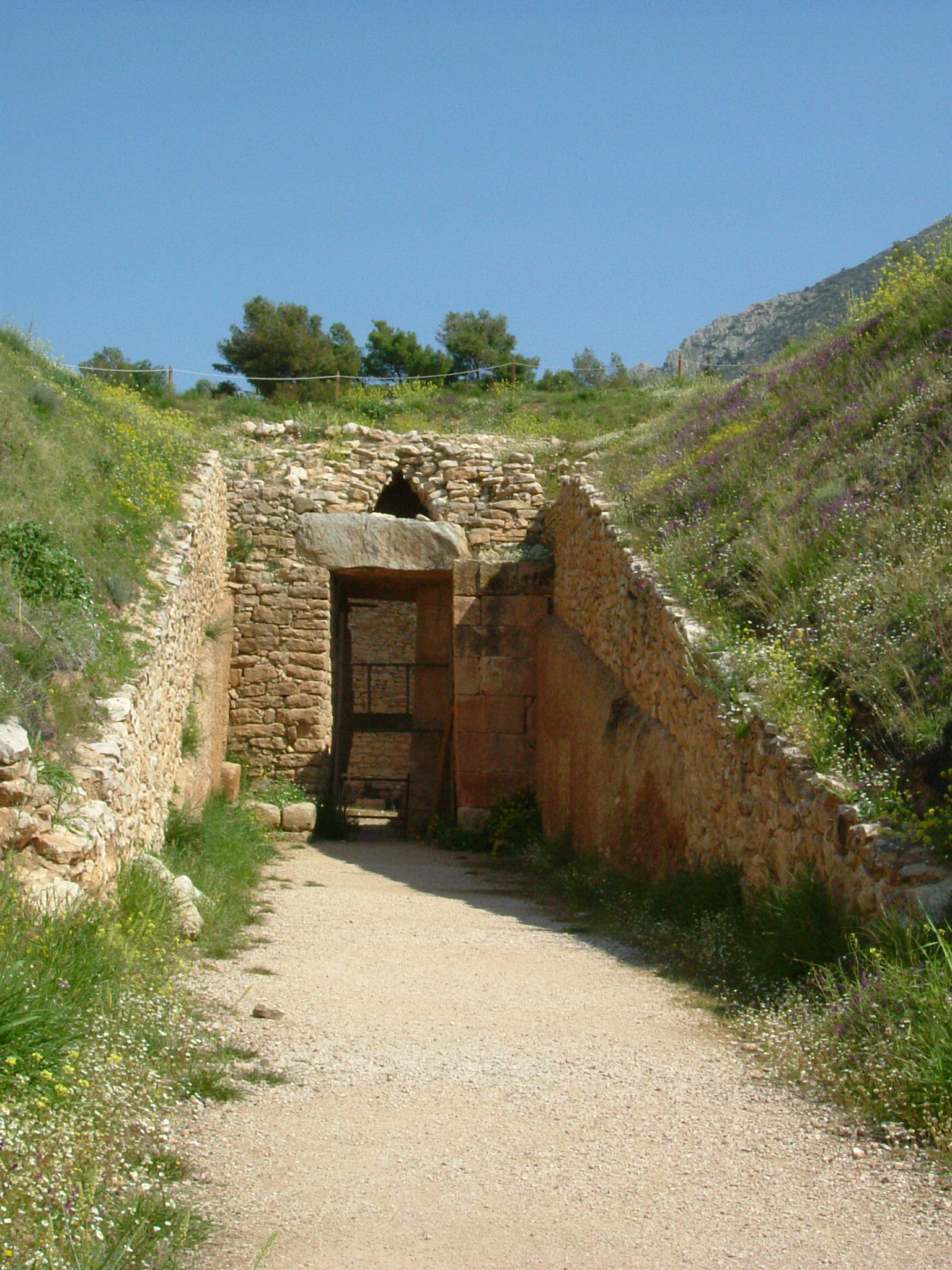
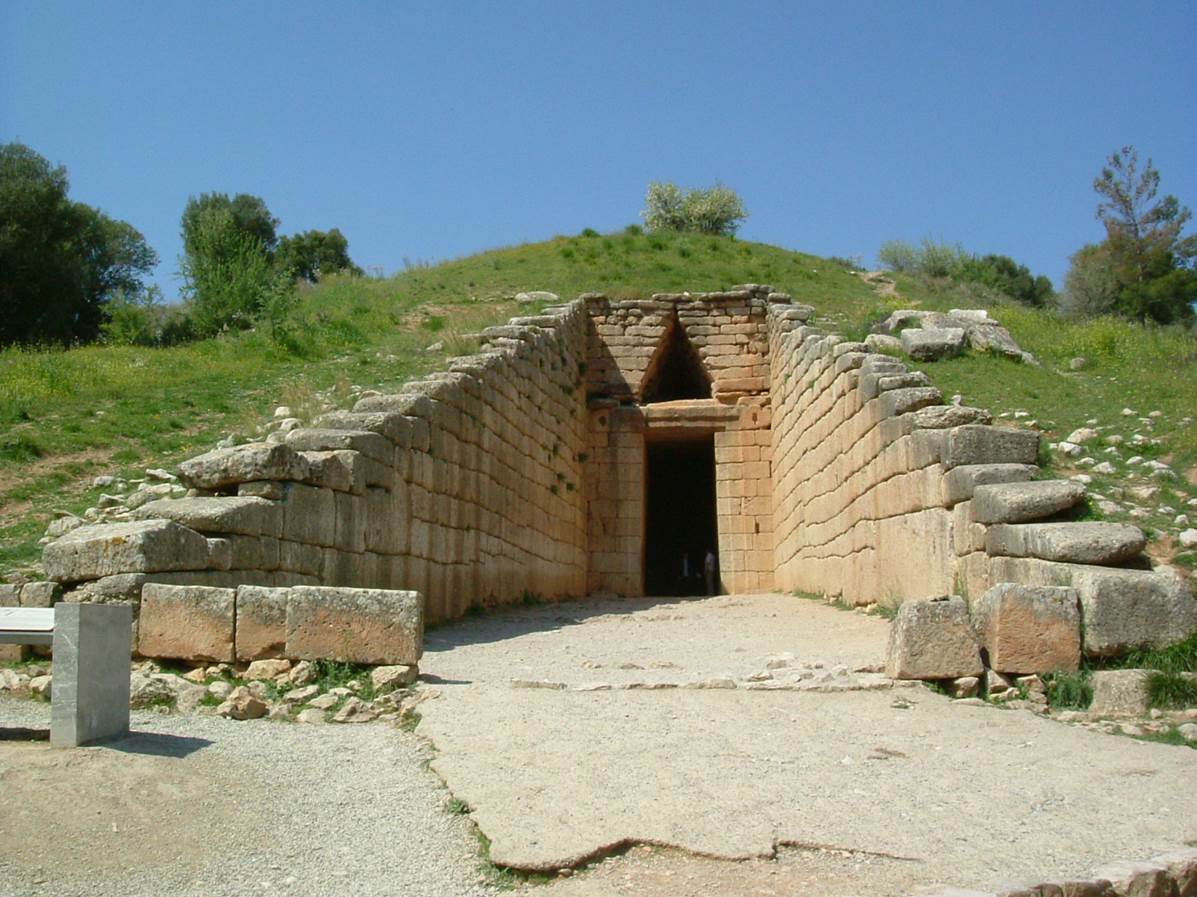
Tomb of Clytemnestra (much the same size as Treasury of Atreus – see previous blog for its scale) – triangular hole above the entrance lintel is a relieving triangle to take the weight of the the roof  

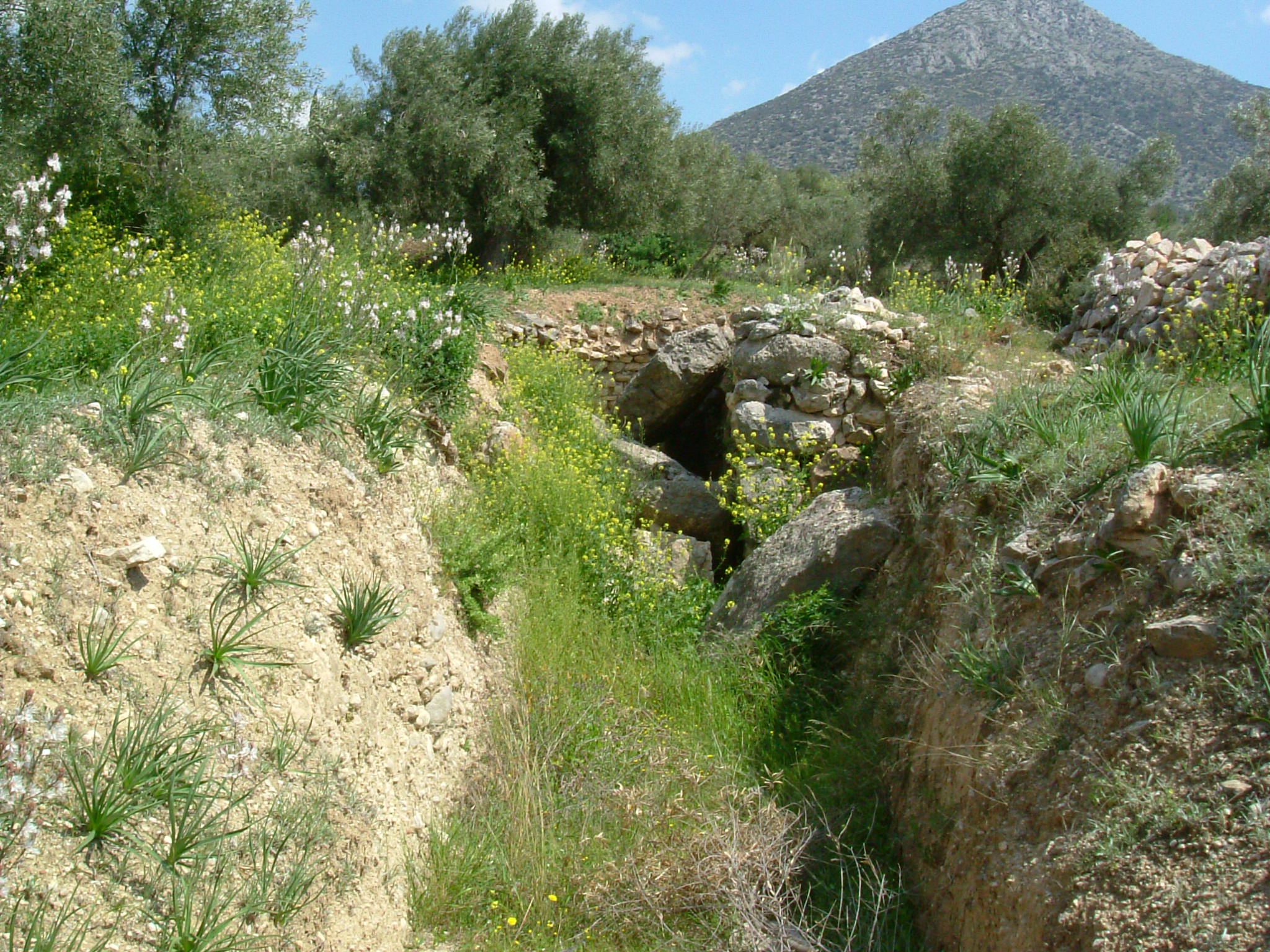
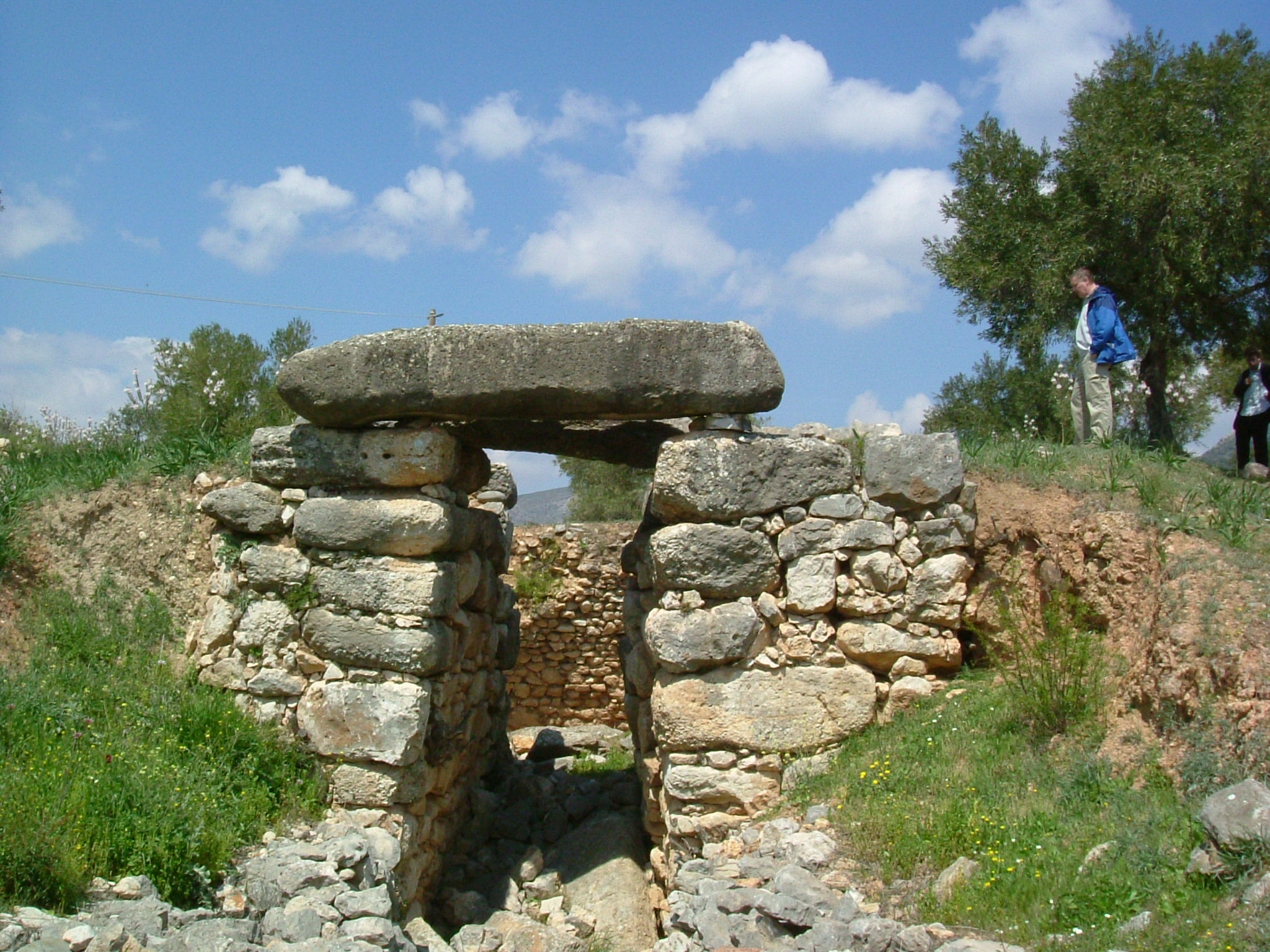
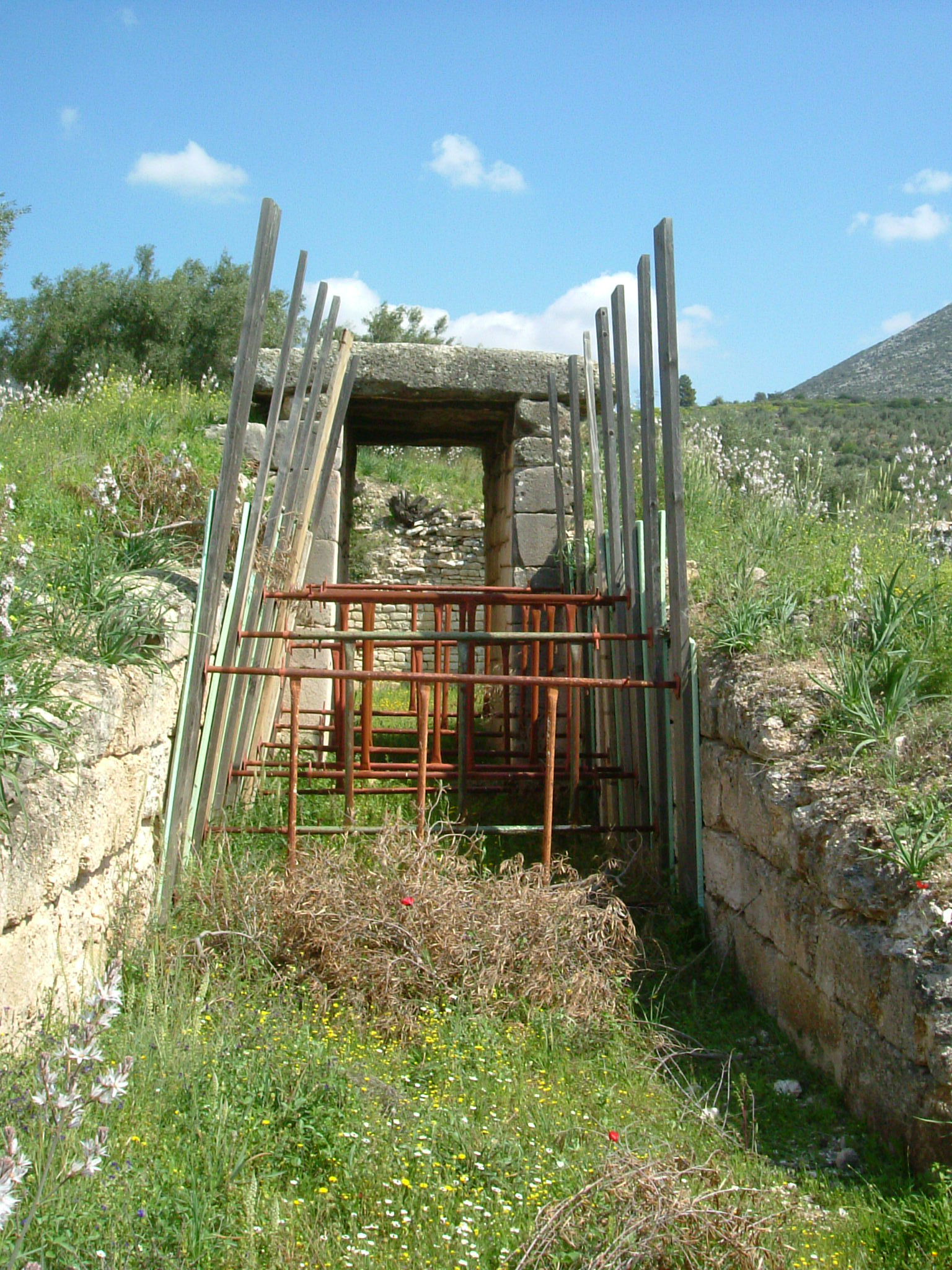
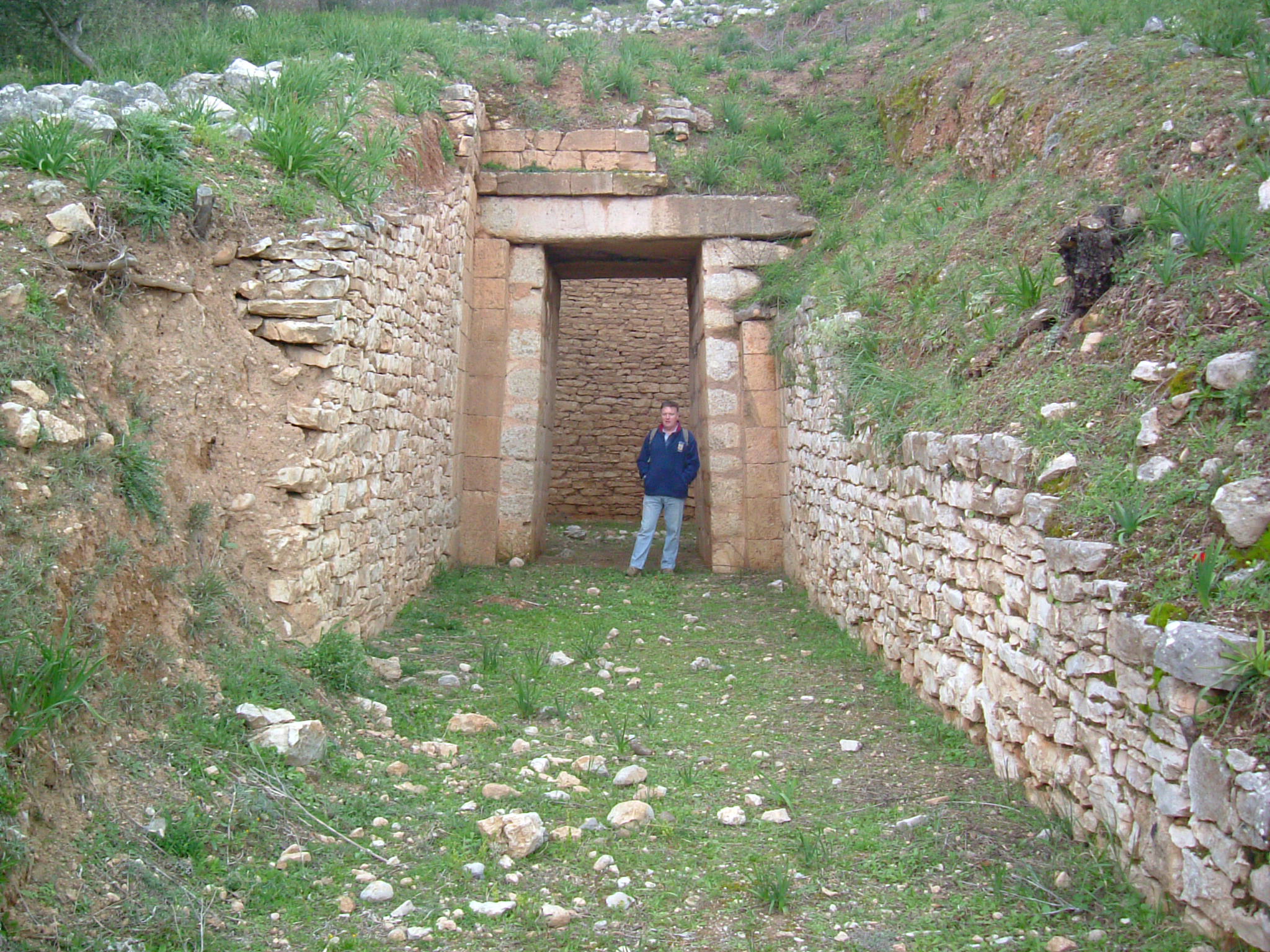
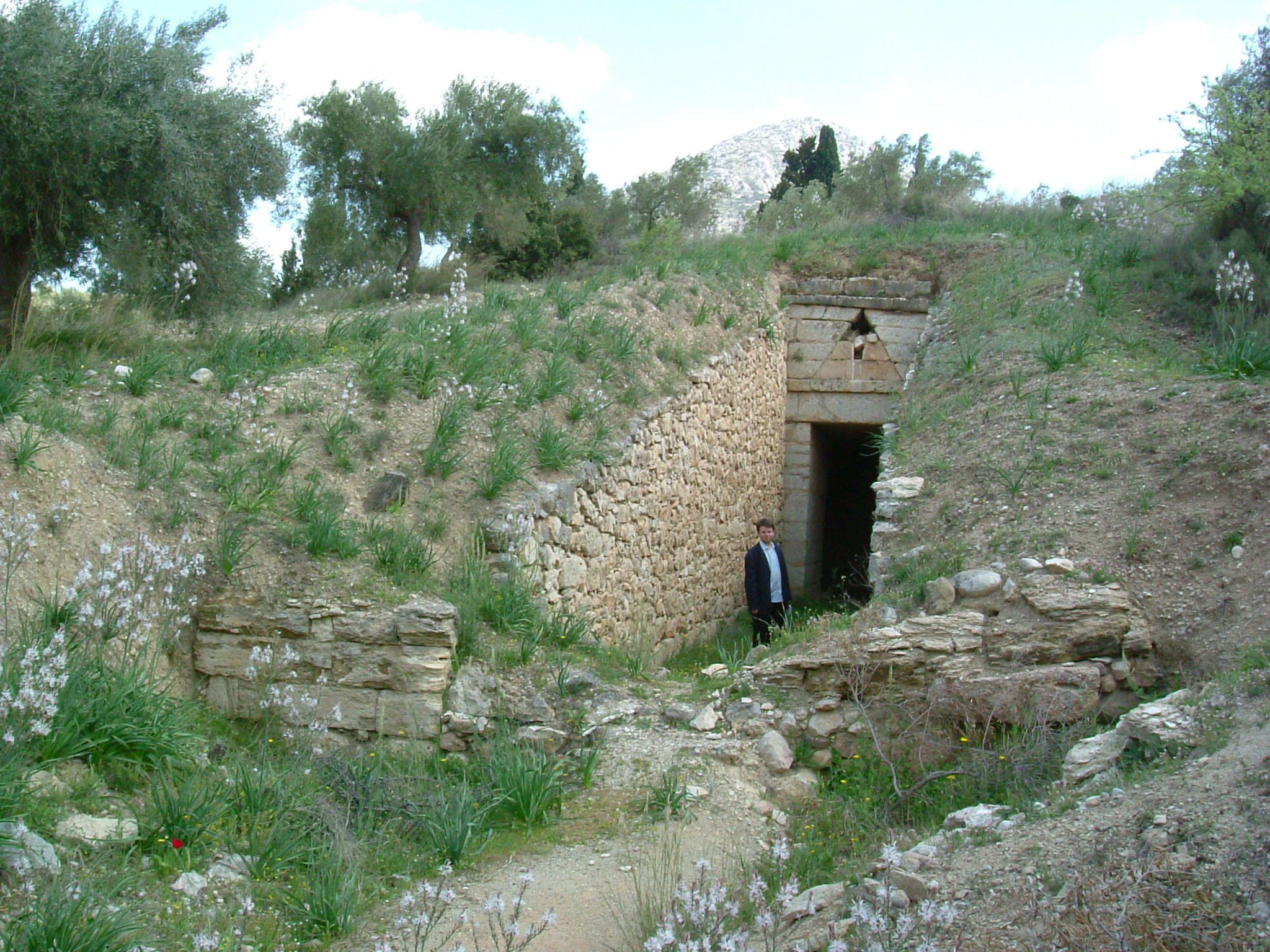
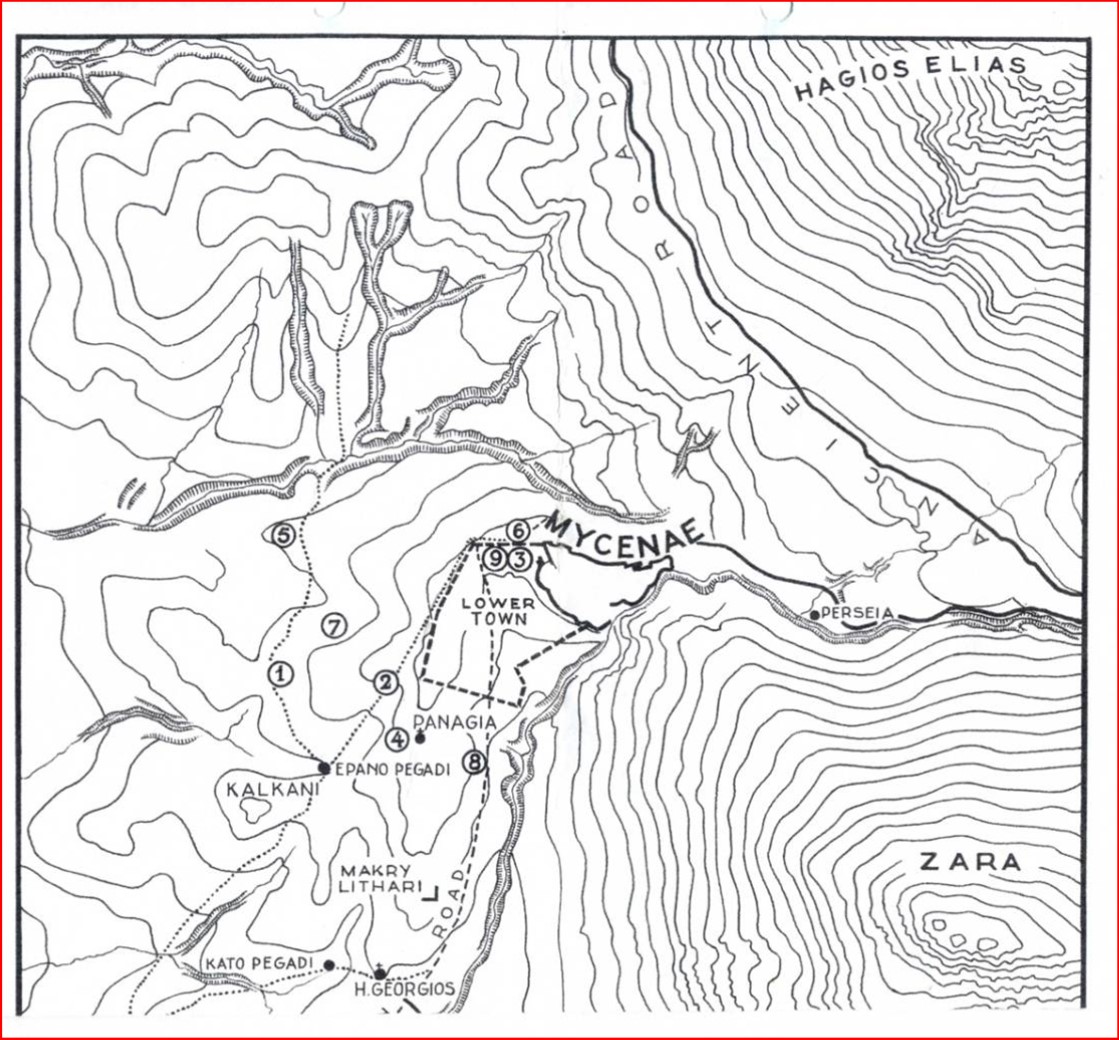
What coach encumbered members of the public do not set their eyes upon are the sad cousins of Atreus and Co – the lonely tholos tombs slumbering over the hill of the Panagia ridge, namely the Cyclopean, Epano Phournos, Kato Phournos, Panagia and Genii (the Forgotten Five). In their own rights they bear silent witness to the development of funerary architecture of the Bronze Age of Greece and deserve more attention. Admittedly less impressive in statue to the other four but still no less important for archaeology.

Aegithus

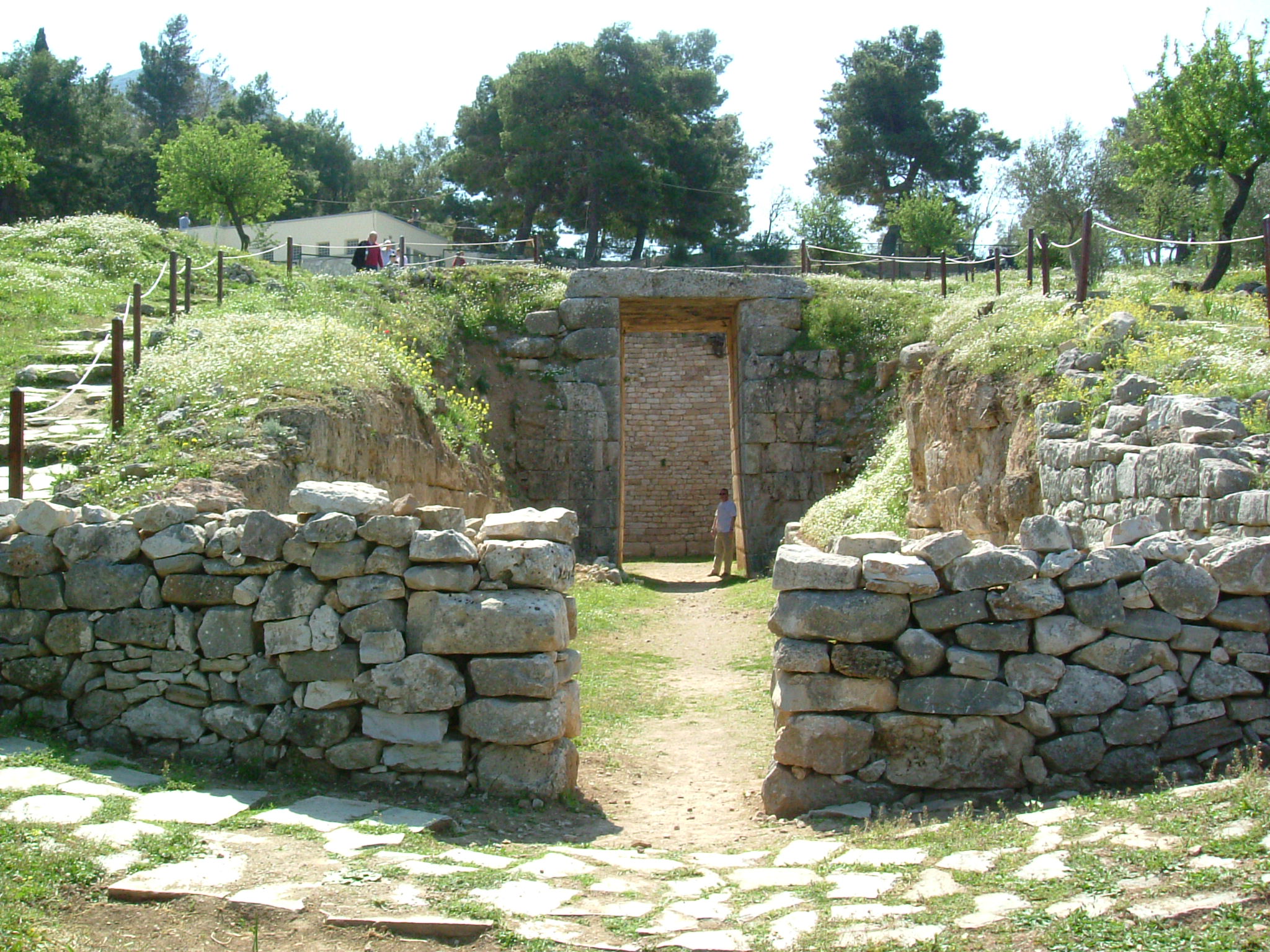
Tomb of Aegisthus (smaller than Clytemnestra) – also with small relieving triangle above entrance lintel

LionTomb

Lion Tomb 

The size of these five tholoi are very similar with their tomb bases varying between 7-10 metres in diameter (the Cyclopean being the smallest, Epano Phournos the larger – comparing with Atreus’ base diameter of 14.50 m) and their scale can be seen from the figures in the pictures. They are also in varying states of disrepair – Cyclopean being the worse for wear whereas Genii is reasonably complete including its roof (it also has three pit graves – sadly empty, so no clues there).

Cyclopean

Cylopean Tomb – definitely seen better days

Heinrich Schliemann and his wife, Sophie, excavated the Treasury of Atreus and Tomb of Clytemnestra in 1876 and Christos Tsountas excavated the others during the 1890s (he discovered Aegisthus at this time but it was not excavated until 1922). The British archaeologist, Alan Wace, divided all the nine tombs into three groups for dating and characterized them accordingly:

Group 1 (1510-1460 BC): Cyclopean, Epano Phournos, Aegisthus

Group 2 (1460-1400 BC): Panagia, Kato Phournos, Lion

Group 3 (1400-1300): Genii, Atreus, Clytemnestra

Epano Phournos

Epano Phournos Tomb

Kato Phournos

Kato Phournos Tomb

Looking at the sites today it might be considered that grouping into three is too limiting. Since Wace’s work, a relieving triangle has come to light on the Aegisthus tomb putting it into a category of its own. It is not entirely clear what may have been situated above the lintels of the other two earlier tombs as the roofs have not survived. Genii is hardly in the same category of grandeur as Atreus and Clytemnestra yet it appears in the same grouping (it is of similar but less complex construction). The Tomb of Clytemnestra may have been built after Atreus due to  the fact that it may be slightly more technically advanced with its row of curved stones continuing round the structure at the same level as the lintel (forming a more solid base for the roof structure). It may, of course, have been constructed for the queen of the occupant of the Atreus tomb.

PanagiaTomb

Panagia Tomb

All nine tombs had been robbed in antiquity making dating and interpretation difficult. Only in the dromos of the Tomb of Clytemnestra was a woman’s grave found by Tsountas, along with accompanying artefacts (two mirrors, ornaments and beads) but it helped little in revealing the secrets of the inner domain. However, there is still doubt as to the actual dating of Atreus and Clytemnestra – if the later dating of the mid-to-late 13th century BC (LH IIIB) is correct, then neither may have ever been occupied, their intended occupants having fled following the destruction of the city.

Genii

Genii Tomb

Next time, or if/when, you plan a visit to Mycenae, take along some walking boots and ‘head west young man’ – well, westward one and all, over the Panagia ridge (see plan below) and follow the path from which the Cyclopean, Epano Phournos and Genii are visible. Genii needs a bit of tracking in from the path but perseverance will find it. Likewise with the Panagia tomb – the most difficult to find – drop down from the Panagia church, but be careful not to literally drop into the tholos itself (as I nearly did!) as it has no roof (forget health and safety….)

Picture2

Plan of tomb as at Mycenae (from Wace, 1949): 1. Cyclopean, 2. Epano Phournos, 3. Aegisthus, 4. Panagia, 5. Kato Phournos, 6. Lion, 7. Genii, 8. Atreus, 9. Clytemnestra


Next week: Let’s go to Troy


ASIDE

A friend of mine has just been visiting a Mycenaean site presently under excavation on the mainland of Greece. He reported back to me of the finding of an exciting new tholos tomb. However, as much as he wanted to go and see it, he was unable as it was full of snakes! This was a similar problem encountered by excavators of a tholos tomb at Phourni in Crete in the 1960s.  Who said archaeology is not like Indiana Jones!

IJ snakes


Artemus Smith’s Notebooks

I continue my research of the notebooks of Dr Artemus Smith, archaeologist of great courage, determination and fiction. Here is another extract:

My three College chums, Ginger, Bunty and Rowley, and I were so confident of our knowledge that the weekend before finals, we decided to go up to the West Country and party with some other friends who lived up there. We had such a jolly time and didn’t make it back to College in time for the examination.

We all agreed on the same story for our Professor – we had gone to the country for the weekend with the plan to study, but, unfortunately, we had a flat tyre on the way back, didn’t have a spare, and couldn’t get help for just ages. As a result, we missed finals.

When we put it to him, our Professor thought it over and then agreed we could make up the finals the following day. We were elated and relieved. The next day at the time of the exam our Professor, rather oddly we thought, placed us in separate rooms and handed us each identical question booklets and told us to begin.

The first question on the first page, for 5 marks, was something remarkably simple regarding the identification of the style of Mycenaean walls. No problem I thought and I answered it with a flourish.

 On the next page was written the second question: ‘(For 95 marks)  Which tyre?’

AT


Mycenae

SO WHAT EVER HAPPENED to Minoan Crete? Well, we don’t really know. All the palace sites, bar Knossos, we destroyed around 1450 BC but whether by man or nature is unclear. If by earthquake then why not rebuild as had been done before? It was once thought that the volcanic eruption at Thera (now Santorini, the island due north of Crete) may have caused the downfall of the Minoan civilization (either by volcanic ash or tsunami) but the dating doesn’t fit (the volcano was either between 1627-1600 BC according to radiocarbon dating or 1550 BC if you go along with Egyptian dating references).

mycenaean_greece-map[1]

Bronze Age ‘Greece’ 

What we do know is that the Mycenaeans from mainland Greece took over at Knossos. This is evidence by, amongst other ‘things’, Linear B (ancient Mycenaean Greek writing) which was found at Knossos. We need to be careful with the use of the word ‘Greek’ here. Greece didn’t exist as a country during this period (Bronze Age 3000-1100 BC); it was made of various kingdoms, one of which was Mycenae in the Argolid on the Peloponnese of mainland ‘Greece’ (or maybe Ahhiyawa – a name on Hittite texts which could possibly be the Mycenaeans -or Achaeans as Homer referred to them). Remember, this is prehistory so we can never be sure of anything. You can almost make it up as you go along and few could dispute you. Well, as long as you were vaguely sensible about it all……..

Now the citadel of Mycenae was impressive. It was a fortress and constructed by warmongers.

 mycn aerial

‘bird’s eye’ view of the citadel of Mycenae – very defensive (Grave Circle A is foreground centre – the circular bit, get it? – and the Lion Gate entrance is to the left of it in the shadows)

It’s not surprising that it took over Minoan Crete. It was a war-machine. And Crete was positioned central to three continents: Europe, Asia and Africa; so whoever controlled Crete, controlled a major trade link and have been very wealthy. Mycenae would have liked that idea.

lion gate 1

The Lion Gate entrance

lion gate2

and just to give you an idea of the size of the stones leading up to the actual Lion Gate, Sarah is a scale

Heinrich Schliemann excavated at Mycenae in 1876. But he didn’t discover it as its Lion Gate entrance had been open to the world to see from at least the beginning of the 19th century (the Brit. Edward Dodwell had drawn a picture of it in 1805). However, Schliemann opened up the entrance and the Grave circle A just inside the entrance. Here he found treasures buried with the dead, including the ‘Mask of Agamemnon’. Had he gazed on the face of Agamemnon as he claimed (allegedly). Well, no. If Agamemnon had existed it would have been around the destruction of Troy circa 1250 BC (more on that another day). The mask was dated to 1600 BC. Maybe Agamemnon’s great great great ….. grandfather. Maybe not.

gca sch

Grave Circle A as excavated (we’ll use that term loosely) by Schliemann in 1876

mask of aga

The ‘mask of Agamemnon’ – well, not really

Also at Mycenae we can find the impressive tholos tombs of Agamemnon (aka Treasury of Atreus – but it’s not a treasury) and Clytemnestra (circa 1250 BC). Clytemnestra was Agamemnon’s wife who did away with him on his return from the Trojan War (woman scorned and all that). This is according to Homer, an oral poet of around 750 BC (more on him later). They are, indeed, tombs but probably not of Agamemnon or Clytemnestra – it’s poetic licence (sorry, I’m being a spoilsport). On the other hand, check the dating out …………

 atreus

The Tomb of Agamemnon, aka The Treasury of Atreus – well, neither actually

atreus insde

19th century drawing of the inside of the Tomb

So what happened to the Mycenaeans. Well we don’t really know (heard that before somewhere). They just came to an end and that’s that. If a Trojan War really did take place with the Mycenaeans and allies besieged Troy then it may well have weakened its position on the home front. Whilst the ‘cats are away’ in Troy, ‘the mice do play’ at home. The ‘mice’ may have been disgruntled peasant taking advantage of their masters’ absence. Who knows……


Next week: the forgotten tholos tombs at Mycenae


Artemus Smith’s Notebooks

I continue my research of the notebooks of Dr Artemus Smith, archaeologist of great courage, determination and fiction. Here is another extract:

In December, I had been visiting the Ashmolean Museum in Oxford to deposit some finds I had recently discovered in Tiryns.  On departing, I observed a member of the constabulary writing a parking ticket. I approached him and said, “I say, Officer, it’s Christmas, give a chap a break.”

He ignored me and continued writing the ticket.

“What a cad”, I uttered.

He stared at me, then at a worn tyre on the vehicle and wrote another ticket.

“Bounder”, I exclaimed.

He noted a cracked light and wrote another ticket.

“Scoundrel” I yelled.

He wrote another ticket for a faulty bumper.

Well, this went on awhile – the more abuse I gave him, the more tickets he wrote.  By the time I had run out of expletives he had planted some dozen or so tickets on the windshield of the vehicle.

Of course, it was no concern to me as my vehicle was parked around the corner.


AT


Crete: the island that tipped


spratt

Thomas Spratt

CAPTAIN THOMAS ABLE BRIMAGE SPRATT RN (you’ll know of him by now if you have been paying attention), in 1851, visited Crete for surveying purposes which involved an archaeological exploration of the island. One of his interesting discoveries was the way in which relative levels of land and sea had changed over the island in historic times.  Following a meeting with the geologist, Sir Charles Lyell, he wrote to him to clarify a point about the island’s movement:

“Dear Sir Charles, Fearing you may be impressed with the idea that the eastern end of Crete had gone down as much as the west. I am induced to write a line to rectify it, if so; and to state that movements in the eastern half of the island have neither been as great nor apparently as uniform as the western movement. Both are subsequent to the historic period and the evidences are in both instances indicated by the elevation or partial submergences of some ancient Greek building or city.”

The letter was written on the on the 28th of February 1856, which was a Thursday. The two must have met the previous evening because the following day Spratt wrote again to Lyell confirming the situation, perhaps as an afterthought:

“My dear Sir Charles, You understood me quite right on Wednesday evening in respect to the fact that the western half of Crete having been elevated, and the eastern half depressed or gone down a few feet.”

The submergence of the east coast can be seen today at the Minoan palace site of Kato Zakros – part of it is underwater even in mid-summer (pic below).

zakros

Kato Zakros (eastern Crete) flooded store rooms in July

However, the movements were not restricted just to the east and west tips of the island. Spratt observed that there was a maximum elevation of nearly 26 feet occurring on the south coast at the base of the White Mountains to the west of Sphakia, 17 feet to the extreme west of the island and declining to 6 or 7 feet along the north coast to Suda Bay.  He added that “all the ancient cities included in this line of coast have been affected by the elevation by the conversion of their ancient ports into dry land.”

At first, for some reason, he found this puzzling, not thinking until a little later, that the elevation must have “occurred subsequent to the existence of these cites” (all in the letter, Spratt to Lyell, letter, 29th February 1856)

map crete

Crete

Spratt had discovered this movement when searching for evidence of the ancient port of Kutri at Phalasarna on the western end of Crete.  He noticed possible ancient activity, some distance from the sea and wrote to his friend (a seasoned traveller of the Greek mainland), William Leake:

“On going to Phalasarna I looked for its ancient port, mentioned by Scylax … but I could find no artificial work in the sea. There is however, a long ledge of rocks, or rather an islet which lies off it, helping to form a natural but not an artificial harbour. This satisfied me in part, till, on examining the ruins, I saw in the plain a square place enclosed by walls and towers, more massive and solid than those of the city … I was instantly impressed, for several, reasons, that here was the ancient port or artificial port, although full 200 yards from the sea and nearly 20 feet above it. My first idea was, that the ancients had a means of hauling their vessels into it as a dry dock; but at last the coast elevation was uncumbered(sic?) and on measuring the sea mark at its upper level here I found that the bed of this anc[ient] port is now 3 or 4 ft below that level.” (letter Spratt to Leake, letter, 18th September 1853).

Then Spratt recalled a visit to the island of Cerigotto (Antikythera) where he had noticed an elevation of coastland and it occurred to him that the same may have taken place on Crete. He then measured the sea-marks at Phalasarna which convinced him that it had – the new sea marks were three feet below the old marks (plan below). This justified his theory that the inland “quadrangular space enclosed by the unusually massive Hellenic [Hellenistic] walls upon the plain in front of the chapel of Aghios Giorgis” was, indeed, the port.

Picture1

Spratt’s plan of the Phalasarna harbour with pre-5th century AD and 19th century AD sea levels

In his above letter to Leake, he originally dated this movement of the island to a date prior to history (that will be prior to Greek writing of 776 BC). but was unsure, suspecting a more recent date due to a possible change in the markings on the landscape – concluding with a period “subsequent therefore to the decline of the Roman Empire [5th century AD]”.  In his journal he dated it to the late Roman period. Indeed, the tectonic displacement has been dated to the 5th century AD.

phalas

View to coast from the now ‘inland’ harbour at Phalasarna today

Crete being in an earthquake zone it is hardly surprising that it has moved about somewhat over the centuries, much to the initial confusion of earlier ‘investigators’ such as Spratt. But he was made of sterner stuff and was admirably able to resolve the inconsistencies before him.


Next week: Lets’s go to Mycenae


Artemus Smith’s Notebooks

I continue my research of the notebooks of Dr Artemus Smith, archaeologist of great courage, determination and fiction. Here is another extract:

Whilst travelling in Greece, I was invited to play cricket for the British School [of Archaeology] at Athens. My very good friend, Sir Mortimer Double-Dealer (a rival sportsman) needed to contact me and he telephoned the clubhouse where I was playing. He was told that I had just gone in to bat. “That’s all right,” he replied, ”I’ll hang on.”


AT


The Labyrinth of Crete

IN THE LAST BLOG I looked at the myth of Theseus, the Minotaur and the Labyrinth of Crete. If there was such a Labyrinth, where could it have been?  Its mythical position was Knossos and the finding of many basement rooms at the site by Sir Arthur Evans appeared to have been its origin. However, there is a collection of ‘underground’ passages or caves similar to a labyrinth cut into a hill near Gortyns in the Messara, south of Mount Ida, mid-Crete. This has been a ‘tourist spot’ for several centuries but up until relatively recently (pre-20th century). The labyrinth and its association with a maze held fast during the ancient Greek world and the earliest pictorial example of a maze appears on the reverse of a Linear B tablet (remember linear B? see a prev. blog) from 15th century BC Pylos, presumably a doodle by an idle scribe since the drawing has nothing to do with the list on the reverse (see pic below).

OLYMPUS DIGITAL CAMERA

Linear B tablet with labyrinth ‘doodle’

Several non-British individuals have visited the ‘caves’, including Buondelmonti (1415), Belon (1585), Tournefort (1700), Bonneval and Dumas (1783), Sieber (1817). They have all pondered on its use, the favourite being a quarry, although Tournefort considered there was no evidence for a quarry. Some have made plans of its intricate passages but all were different.

 British visitors

In 1596, Fynes Moryson visited the labyrinth and shortly afterwards, in 1611, George Sandys was there. He believed it was a quarry supplying stone for both Knossos and Gortyns.

IMG_1645

The entrance to the Gortyn’s labyrinth – in the ground by the tree – not that you will ever find it (the hillside that is)

At the beginning of the 17th century, the Scot William Lithgow (1582-c.1654) saw the entrance into ‘the labyrinth of Daedalus’ in the foothills of Mount Ida but did not venture into the cavern: “… I would gladly have better viewed, but because we had no candle-light we durst not enter, for there are many hollow places within it. So that if a man stumble or fall he can hardly be rescued.”

thom

Thomas Waldman going into the SE ‘entrance’ of the labyrinth at Gortyns – he has a smile on his face because he knows I am to follow …

So what was this mass of passages at Gortyns actually built for? The most likely purpose was a quarry. But there have been other suggestions. Thomas Spratt (1843/51) speculated that it was more likely use was that of a prison for the youths of Athens as tributes for the death of Minos’ son. They would be detained and cultivated as teachers of Minos’ law to the inhabitants of Crete rather than food for the Minotaur (but he didn’t say when). He concluded that the myth had developed from that aspect of fact.

lab

inside the Gortyns’ labyrinth – rather unstable roof!

At the end of the 19th century both Charles Edwardes and R.A.H. Bickford-Smith believed the labyrinth to be both a quarry and prison. Around the same time, Charles Cockerell dismissed it as a mine due to its insufficient mineral in the walls, but concluded that “this wonderful excavation was as a secure storehouse for corn and valuables from attack of robbers in the day of Minos.” In true Thesian style he said he “brought a quantity of string for a clue, which we rolled on two long sticks, then lit torches and went in.” He was quite descriptive of the interior:

“At first one enters a vestibule out of which lead several openings. Two of the three, perhaps four, dark entrances are blocked up, but one remains open. This we followed, and for three mortal hours and more we groped about among intricate passages and in spacious halls. The windings bewildered us at once, and my compass being broken I was quite ignorant as to where I was. The clearly intentional intricacy and apparently endless number of galleries impressed me with a sense of horror and fascination I cannot decide. Every few steps one rested, and had to turn to right or left, sometimes to choose one of three or four roads. What if one should lose the clue [the string]!”

Its date is uncertain although most likely to be of Roman origin which would put pay to any ideas that it was the labyrinth of King Minos (who, if he did exist, would have been in the Bronze Age c3000-1250 BC). For dating and use purposes it may be interesting to compare the structure with the Beer Quarry Caves in East Devon which date back to the Roman period in Britain (click here)

lab map

Thomas Waldman’s plan of the labyrinth (see link below)

The cave structure is some 2.5 km in length and certainly of ‘labyrinthian’ style (see plan above). The southwest entrance was used by the previously mentioned travellers. However, during the last war, the Germans abandoned this and made the southeast entrance but it is now rather more of a pot-hole (3rd pic above). This entrance area was used for ammunition storage and, on their departure, the Germans blew it up, destabilizing the whole of the underground structure (my guide, Thomas, did not tell me this until we were inside the cave structure!). Shortly afterwards the Greek army built a tunnel into this entrance and removed some of remaining ammunition. Some shells were left and are still there today (see pic below), as are the labyrithian tunnels themselves (2nd pic above).

shells

 ammunition shells scattered in the labyrinth – not very safe!

Recent activity

The cave was explored by the Speleological Exploring Group in 1982, and then the Hellenic Speleological Society, led by Anna Petrohilou, in 1984.  In 1999 the Cretan department of the Hellenic Speleological Society recorded all the signatures on the walls of the cave. In 2004, following a major investigation of the underground structure at Gortyns, Yiorgios Patroudakis prudently commented:

“From ancient times until now, many guessed and argued the position of the labyrinth, but none ever proved his/her theory. The labyrinth of Gortyne became the biggest tourist scene for 600 years, exactly because it was assumed that it was the ‘true’ labyrinth. Furthermore, from our knowledge, a clue to prove that this was the labyrinth never appeared. However, a clue to prove the opposite never arose either.”


IMG_1637

SW entrance isn’t much better

Certainly the most comprehensive and more recent investigations of the site have been by Thomas M. Waldmann – to whom I owe eternal thanks for showing me around the site in 2010. It has now been closed to the public due to its dangers (but you won’t find it anyway!). However, if you are interested in more information on it, see Thomas’ very extensive findings and photos click here.


Next week: Crete: the island that tipped


Artemus Smith’s Notebooks

I continue my research of the notebooks of Dr Artemus Smith, archaeologist of great courage, determination and fiction. Here is another extract:

Today I gave a talk at my club, the ‘Wig & Trowel’, regarding my truly remarkable discovery in respect of the actual existence of Adam and possibly Eve.  I came across an inscription on clay tablet of a conversation between Adam and God, which I have translated as follows:

 ‘And the Lord did approach Adam and sayeth: “I’ll give you woman, and she will attend to your every need.”

“That sounds fantastic, God, what’s the catch?” sayeth Adam in response.

“Well, she will be expensive,” replieth God unto Adam, “she will cost you an arm and a leg,”

“Hmmm,” Adam did think and replieth unto God, “What have you got for a rib?”

 AT