Myth and the Minoans

King Minos and the Minotaur

THOMAS ABEL BRIMAGE SPRATT RN (see first blog on Crete) said of Crete, “A charming land without legend, some may feel, is like a bird of bright plumes without song.” Legend or myth would be used to explain the unexplainable but it might be said that anthropologists would now consider that myth holds some information relating to fact. To some extent such recognition owes its credence to the likes of Heinrich Schliemann with his discovery/publication of Troy and Mycenae (more on these later) giving a ‘ring of truth’ to the Homeric poems (on the Trojan War), and Sir Arthur Evans for the discovery/publication of the ‘Minoan civilization of King Minos’.

So was it King Minos who colonized Crete and built up a supreme navy (Minoan thalassocracy), clearing the Aegean of pirates? Well, we have no evidence to say he did, but we have no evidence to say that he didn’t. As the tale goes, he built a labyrinth (although labrys, in Greek, means double-axe, and labyinthos is house of the double-axe) and deposited in it the Minotaur. This creature had the head of a bull and the body of a man and was the off-spring of Minos’ wife’s dalliance with a bull (don’t ask). Minos’ wife was Pasiphae and a bit of a ….. well, lets leave it there. Each year seven girls and seven boys, on reaching maturity, were sent from Athens to Minos as ‘blood tributes’ (for the death of King Minos’ son, Androgeos, killed in Athens during the games) and they were thrown into the labyrinth to be savaged by the Minotaur. Seems a bit severe if you ask me. You get the impression that Minos was not the sort of bloke you argued with. Minoan Mafia.

labrnth gortyns

The ‘labyrinth’ at Gortyns in Crete (more on this next week)

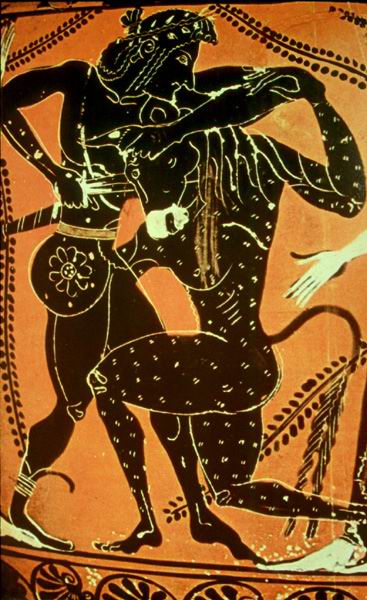
Theseus, son of Aegeus (the King of Athens) volunteered to be one such sacrificial offering. But when he arrived, Minos’ daughter, Ariadne, fell in love with him (as girls do in myths), gave him a sword and some string to tie to the entrance to find his way out of the labyrinth. He duly slayed the Minotaur and escaped with Ariadne. And everyone lived happily ever after. Well, not quite.

Minotaur

Theseus killing the Minotaur (6th century BC pottery)

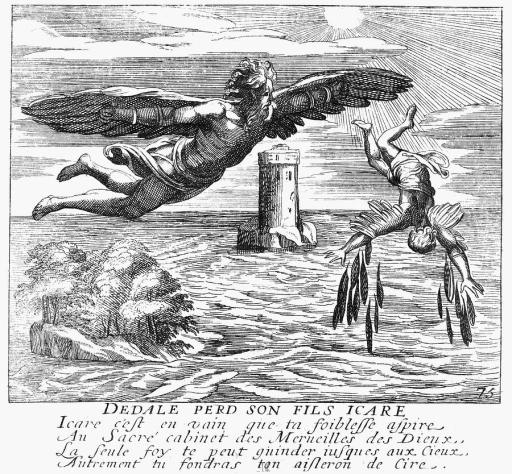
Daedalus, the architect who built the labyrinth and had given Ariadne the idea of the string, was in trouble with Minos. So he (Daedalus), and his son, Icarus (or Ikarus if you want to be Greek about it), escaped by making wings of feathers stuck together with wax. Unfortunately, contrary to his father advice, Icarus flew to close to the sun; his wax melted and he fell to his death. No surprises there. Daedalus did get away but Minos pursued him. He found him by setting a task for whoever he visited, believing only Daedalus would resolve it. He produced a shell and challenged anyone to work out how to get a spider through the middle of it. On arriving at Kamikos in Sicily, where Daedalus was hiding, the shell was given to the architect, who threaded a piece of cotton through a hole in the centre of the shell and covered it in honey – off went the spider through the hole. Oops, Daedalus had given himself away and must be doooooomed. But no. The daughters of the King Kokalos favoured Daedalus and his tricks and so killed Minos by pouring boiling water over him whilst he was in his bath. Nasty (‘don’t mess with the female of the species’ comes to mind). Then everyone lived happily ever after. Well, not quite.

daedalus-and-icarus

no need to translate – you get the idea

Theseus sailed home to Athens but unceremoniously dumped Ariadne off at Naxos, an island just north of Crete. There’s gratitude for you. She overcame her grief and took up with the god, Dionysus (some tales say she was already married to him before meeting Theseus but that would be naughty). On approaching Athens Theseus forgot to change his sail from black to white – the sign to his father, King Aegeus, that he had lived. His father, seeing the black sail, assumed his son had died and threw himself off a cliff into the Aegean Sea (hence its name, clever, huh?). There is a moral here somewhere (probably ‘don’t mess with the female of the species’). Then everyone lived happily ever after. Well, if by ‘everyone’ we mean Theseus as he was the only one left, the answer is no, he was later thrown off a cliff in Skyros by Lycomedes. Ho hum.

So there you have it. Or not.


Next week: The real ‘labyrinth’ of Crete


Artemus Smith’s Notebooks

I continue my research of the notebooks of Dr Artemus Smith, archaeologist of great courage, determination and fiction. Here is another extract:

I recall as a student I had again failed to complete my tutorial topic for discussion. I thought that maybe if I acted strangely my tutor would send me home. So I hung upside down on the ceiling. On this occasion, there were two of us in the tutorial and my colleague, Edward, asked me what I was doing? I told him that I was pretending to be a light bulb so that the tutor would think I was losing my mind due to working too hard and suggest I go home for a rest.

A few minutes later the tutor came into the room and asked, “What are you doing Smith?”

I told him I was a light bulb.

He said, “You’re working too hard – go home and rest.”

I jumped down and walked out of the room suitably relieved.

When Edward followed me, I heard our tutor ask him, “And where are you going?”

He replied, “I can’t stay here in the dark.”


AT


Bronze Age Crete: the Minoans

Chronology of Bronze Age Crete (3000-1450 BC)

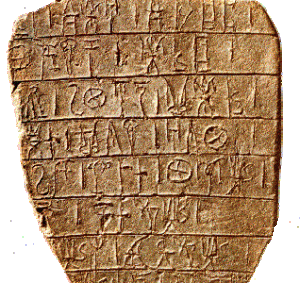
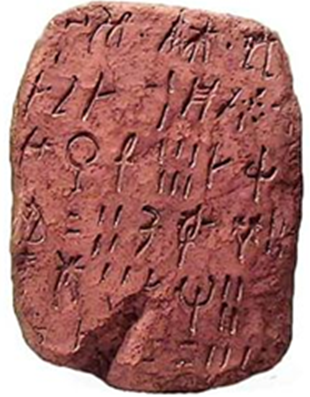
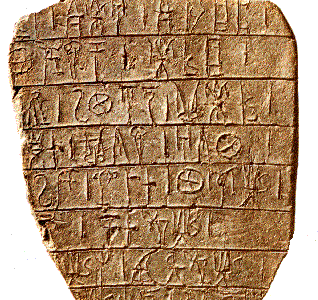
UNLIKE the Egyptians, the Babylonians and the Hittites, the Cretans of the second millennium BC left little written history. What they did leave were inscriptions on clay which have become known as Linear A and Linear B. Linear A is as yet undeciphered, but probably developed from Cretan hieroglyphics (c.1900-1600 BC) and is possibly a form of the Cretan/Minoan language, from which Linear B most likely evolved. Linear B was deciphered by Michael Ventris in 1952 as an early form of ancient Greek and of Mycenaean origin (Mycenae is on the mainland of Greece) rather than Minoan. It does not help a great deal with the historical background of Crete as it is administrative by nature but it does give an insight into the island’s commercial activities. Sort of annual accounts. Okay, better than nothing. But it can lead to some ambiguous (well, unproven) conclusions on Minoan life. But it’s fun to guess.
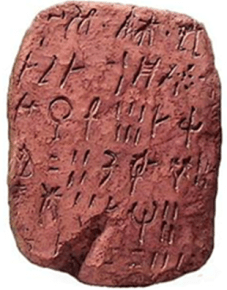
image001                              linear-B

Minoan Linear A                                                                           Mycenaean (Greek) Linear B

We’re not sure what the ancient Cretans were called in the Bronze Age, although it appears they may have been known as the ‘Kleftiu’ by the Egyptians. ‘Minoan’ Crete was a name given to the ancient islanders by Sir Arthur Evans simply based on the myth of their ancestor and founder, King Minos (more on him next week). Evans said, “To this early civilization of Crete as a whole I have proposed – and the suggestion has been generally adopted by the archaeologists of this and other countries – to apply the name ‘Minoan’.” In fact, he wasn’t the first to come up with the name but we won’t go there.

 sir-arthur-evans-at-knossos-in-l907[1]

Arthur Evans at Knossos (painting from the Ashmolean Museum, Oxford – the museum is well worth a visit for a ‘taste’ of the Minoan world)

It was Evans who first used the pottery styles found at Knossos to divide the Minoan civilization into three phases: Early, Middle and Late Minoan (EM, MM, LM respectively). The phases run nearly parallel to the tripartite division of Egyptian history into Old, Middle and New Kingdoms from 3000-1100BC. This does make it simpler ….. honest.

The basic tripartite scheme was further subdivided, based on pottery styles and stratigraphy, such that each of the three periods contained three or more divisions (EM I, II, III). These were then further subdivided into units indicated by letters of the alphabet (for example, LM IB). As additional excavations and studies have been undertaken this system has come under criticism for being too inflexible and partly inaccurate. But we won’t dwell on this.
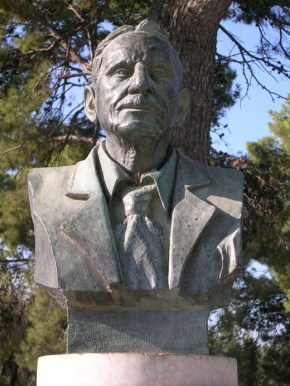
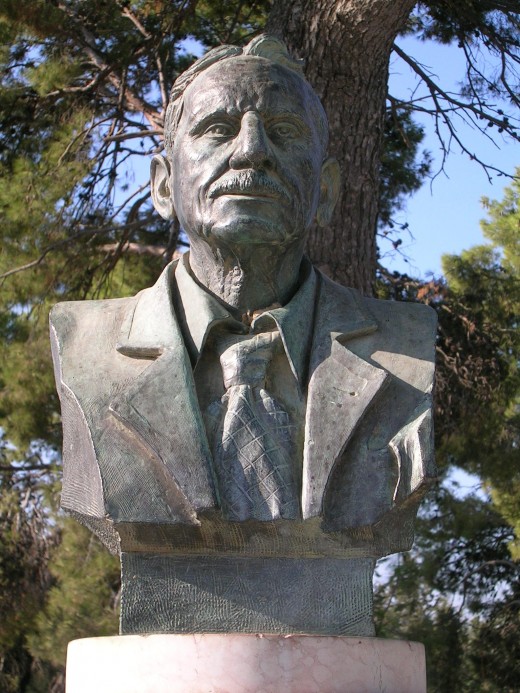
evans

Sir Arthur Evans immortalized at Knossos (and rightly so)

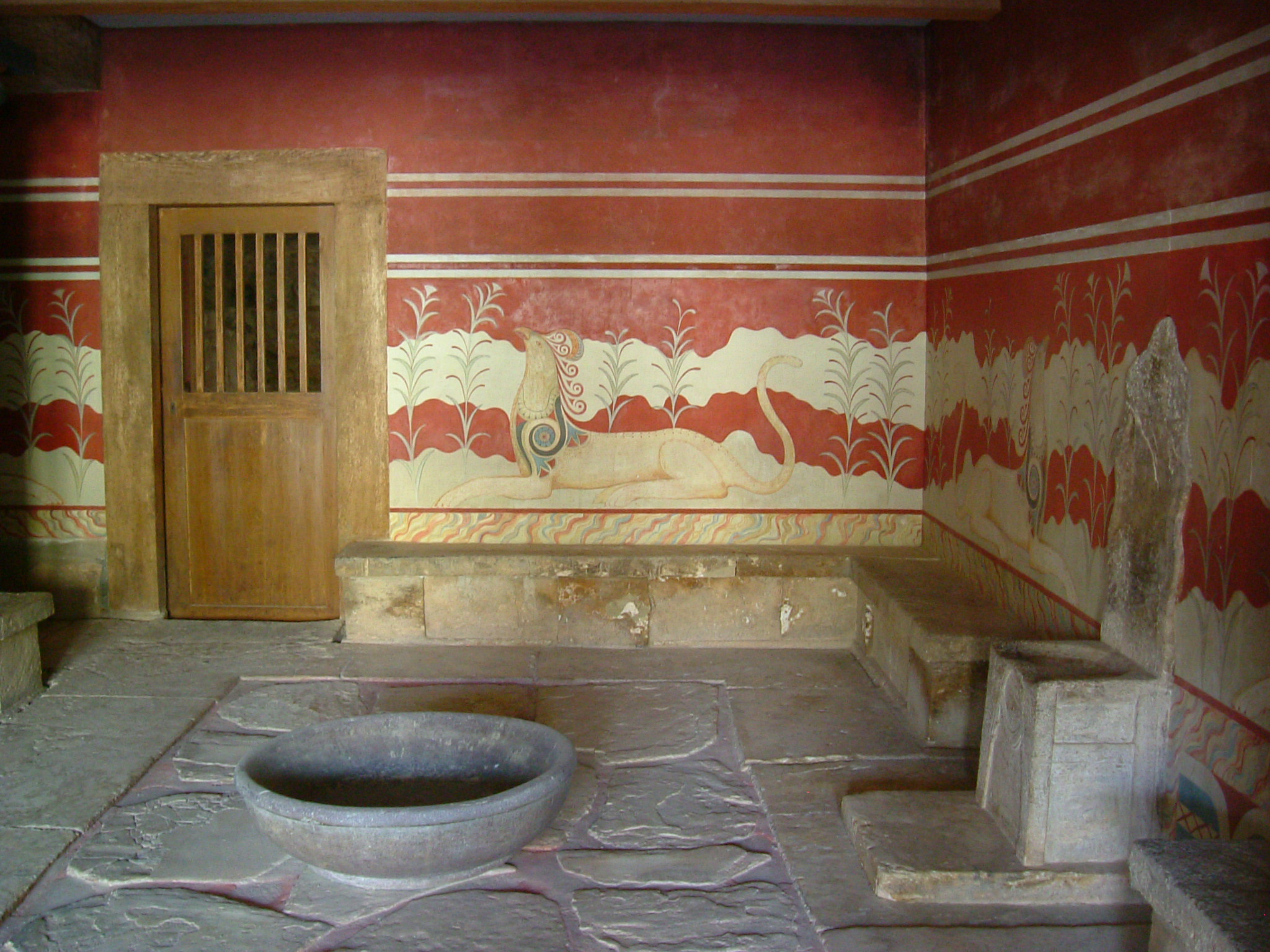
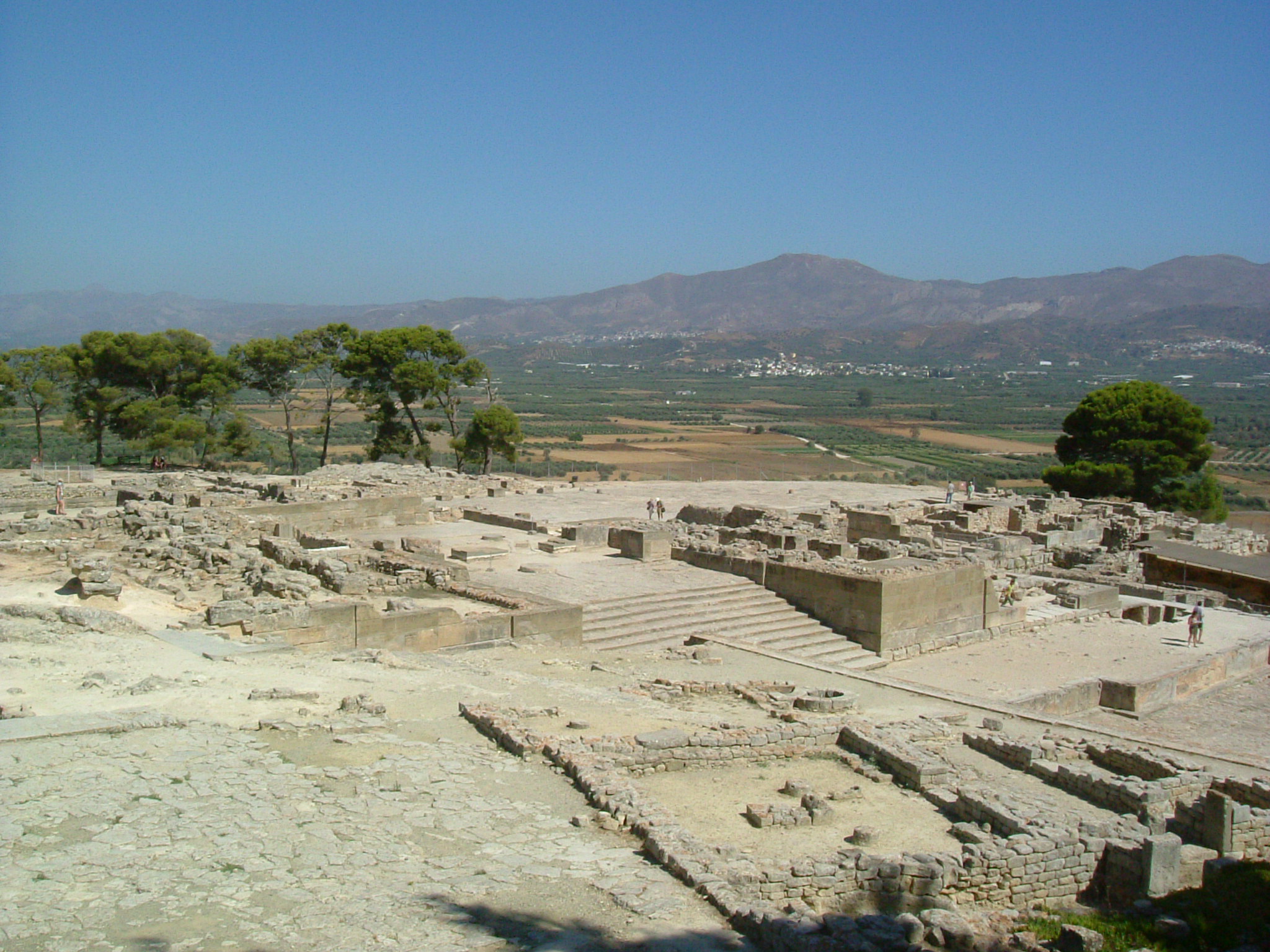
Chronology identity was not all Arthur Evans did. He made some groundbreaking discoveries on the Minoan civilization as a result of his excavations at the ‘palace’ site of Knossos, funded by his own wealth. However, he proceeded to reconstruct the palace using his own imagination of how it may have looked. This was partly for his own interest and partly for conservation purposes. This has proven somewhat controversial as, of course, it may be inaccurate. Also it has restricted further excavations at the site. But there are those who like it as it gives the site some perspective. You can make your own mind on that if you have been there or ever go there. Compare it with the non-reconstructed sites of Malia and Phaistos. Anyway, I digress.

Emergence of ‘palaces’

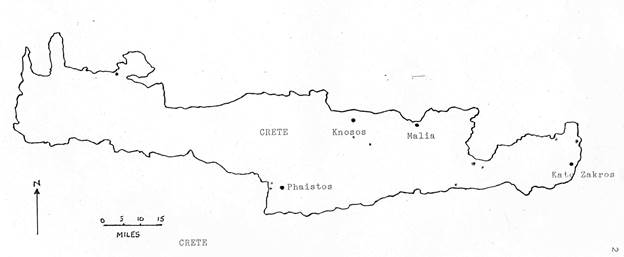
The Middle Minoan (MM) civilization has become known as a highly developed hierarchical society culminating in ‘palace’ buildings. But how did this come about? What must first be considered is what is meant by the word ‘palace’ in relation to the Middle and Late Minoan periods of Crete. A modern-day understanding of the word is a large and impressive residential building for a wealthy royal family. Minoan ‘palaces’ were certainly large and for the wealthy, but not necessarily for royalty, as it is not known who lived in them other than that they must have had some authority. They may have been Priests – or Priestesses – or Priest Kings if the ‘palaces’ were of a religious nature (they appear to have been involved in cult practices).  However, for convenience sake these Minoan buildings will be referred to as ‘palaces’ as their architectural design warrants the word. So there. The main palace sites (in descending order of size) were Knossos, Phaistos, Malia and Kato Zakros. Also, recent discoveries at Galatas, and possible Petras, indicate smaller palatial residences. Of course, there are possibly more, as yet, undiscovered.
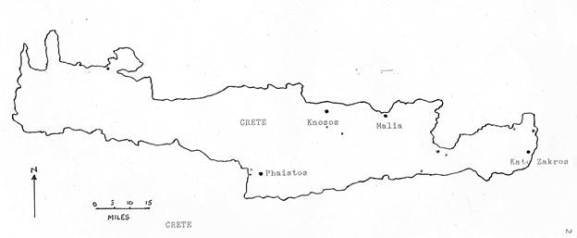
 image001

Minoan ‘palace’ sites on Crete

The old palaces of the proto-palatial period (c.1900-1700/1650BC) may have incorporated nearly all the basic features and infra-structures of the new palaces of the neo-palatial period (1700/1650-1450BC). These ‘features’ being a central court, west court, storage magazines, residential quarters, banquet hall, public/administrative apartments, cult rooms, theatral area and workshops. It is difficult to be certain due to the destruction of most the old palaces to make way for the new. Little of the old sites remain in evidence other than the foundation to the west façade of Phaistos, as here the new palace was not built immediately above it. After the destruction of the old palaces the neo-palatial sites, particularly at Knossos, Phaistos and Malia, were all enlarged with grander and more imposing styles.

The building of palaces required large surpluses of wealth, and it is this emergence of wealth that must account for the emergence of palaces. ‘Wealth’ may be defined as possession of goods for their desirability and not for their usefulness. For example, gold is desirable but not always of great use compared with practical or domestic items of bronze or ceramics. Okay, it’s otherwise known as ‘greed’.
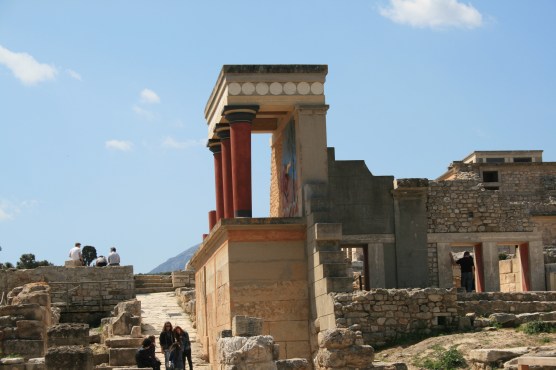
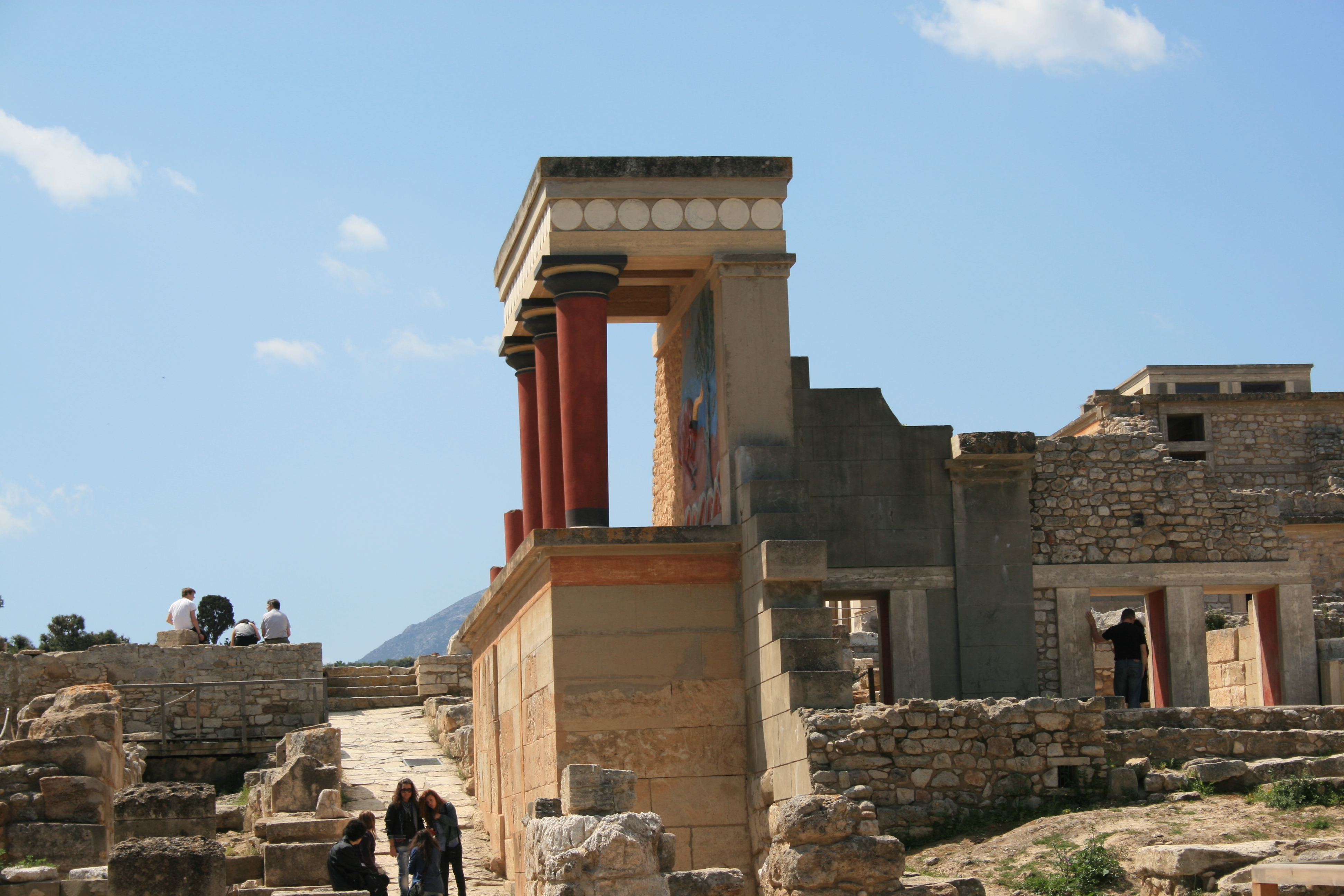
IMG_2043

North entrance to the ‘palace’ of Knossos … er, well, not exactly 3000 years old, but about 100 years old as this was the reconstruction by Sir Arthur Evans – so it may not have look anything like this (useful, huh?)

But how was this wealth obtained? When land no longer becomes readily available to all due to an increase in population, inequalities develop and those with no land become labourers. This leads to the possibility of the beginning of a hierarchy. As time goes on, specific individuals who are able to best exploit the ‘inequalities’ become the elite. These elite ‘families’ then compete within themselves for power and one way to exercise power is to display wealth by way of hospitality through dinner parties or gift-giving (xenia). So the elite needed investment and this leads to a revolution in agricultural products, centralization, movement of surplus, redistribution, rapid population growth and a more organized/controlled settlement. Otherwise known as ‘power’. You know the feeling …..
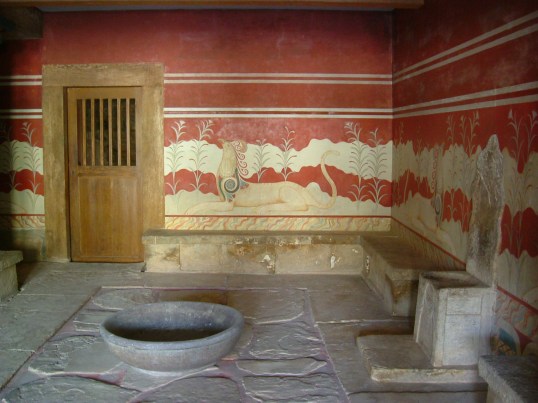
Knossos_ThroneRoom3

Here’s the throne room at Knossos, created …… er, 100 years ago by Arthur Evans
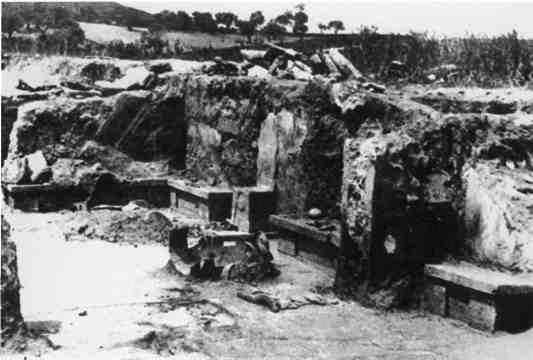
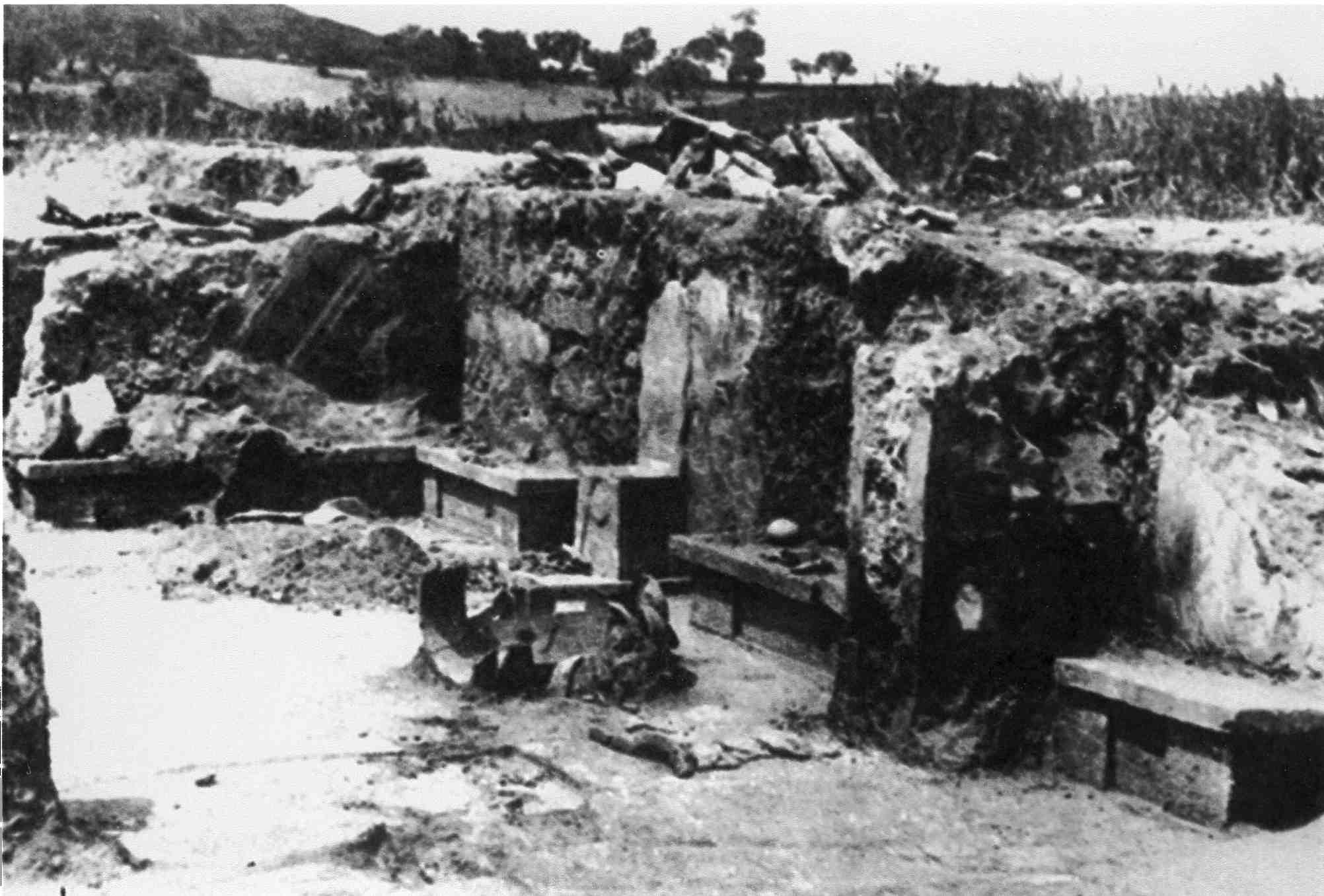
throne rm

Here’s the 3000 year old throne room at Knossos as Evans found it 100 years ago (1900 actually) – the throne and benches were there but that’s about it

Initially farmers only needed to grow only enough to keep the immediate family alive from year to year which may assume some surplus to ensure survival. Also the family produced domestic goods such as pots and utensils for their own use and essential to their own needs. This would extend to less domesticated luxury goods. As farms increased in size, both in acreage and population, so too did the community, and distribution of excess produce and luxury goods led to wealth. Yummy.
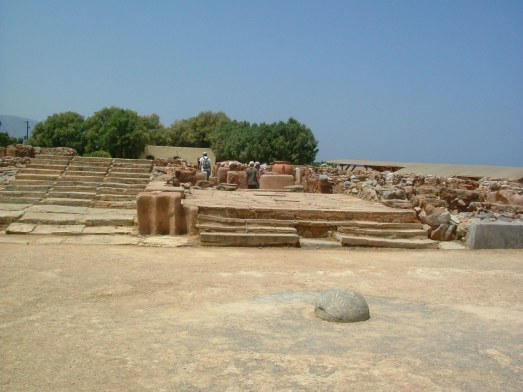
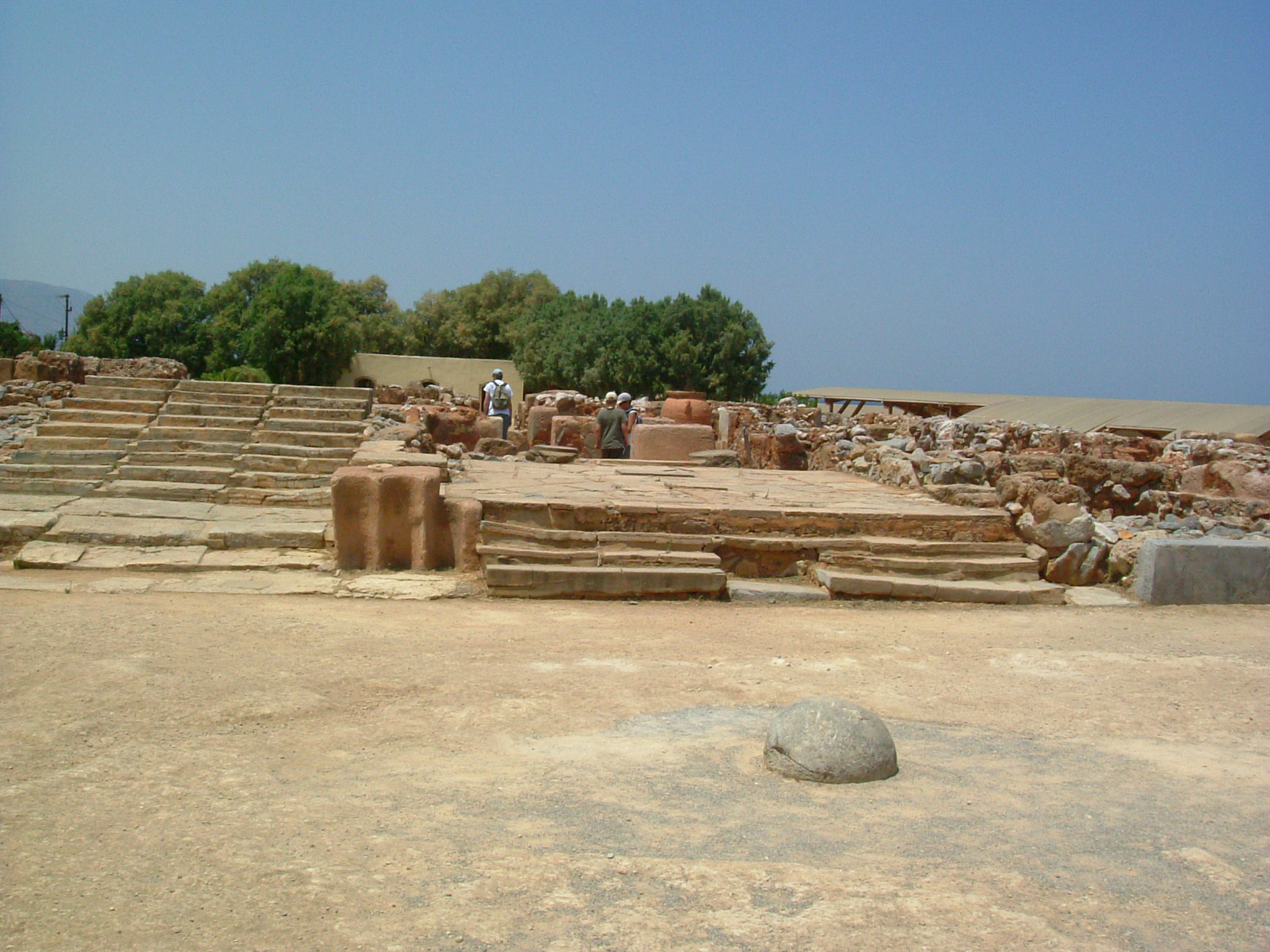
Malia_CentralCourt_03

The possible ‘throne room’ (or area as ‘el fresco’) at Malia from the central court – this is something like Knossos may have looked like if Evans hadn’t reconstructed some of it (ignore the object centre/right foreground – it’s a cannon ball but Venetian, not Minoan!)

Due to its position in the Mediterranean, Crete would have had some contact with overseas travellers from the surrounding continents, Asia, Africa and Europe, and there is evidence of trade connections with these regions. There must be a close link between social and commercial progress: trade in various products with other countries brought in new ideas which led to more trade, both within Crete and outside, which led to an increase in wealth for the traders. The finding of sealstones (mostly by Evans) on some sites indicated movement and identification of goods, which required development of administration in a land becoming more organized (Linear A – pay attention: see above). Such development would require employment of labourers and craftsmen to keep up with the volume of demand. Larger houses would have been built to accommodate the wealthy. Get it?
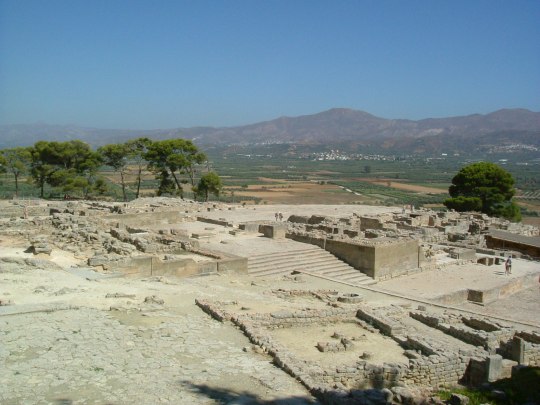
Festos_ViewEastJPG

The palace site of Phaistos (central court in far background) – also without Arthur Evans reconstructions

Destruction and coming of the Mycenaeans

It is not known for certain what caused the demise of the Minoan civilization. One suggestion was a tsunami from the Theran volcanic eruption but the dating doesn’t match; another is earthquake but the island has survived those before. All that is known is that around 1450BC a disaster struck the island of Crete and its civilization came to an end and the Mycenaeans from the Argolid of the eastern Peloponnese on mainland ‘Greece’ appeared to have taken control of Knossos (possibly taking advantage of earthquake-weakened Minoan defences). Whether the Mycenaeans were a part of this destruction is not clear but they may well have been covetous of the Minoan wealth and trade links. Makes sense.
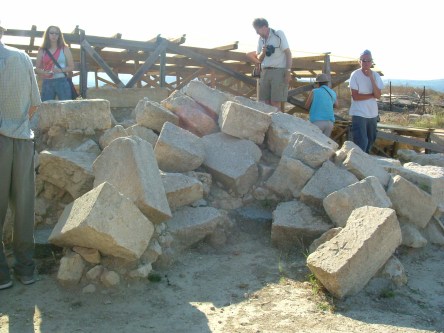
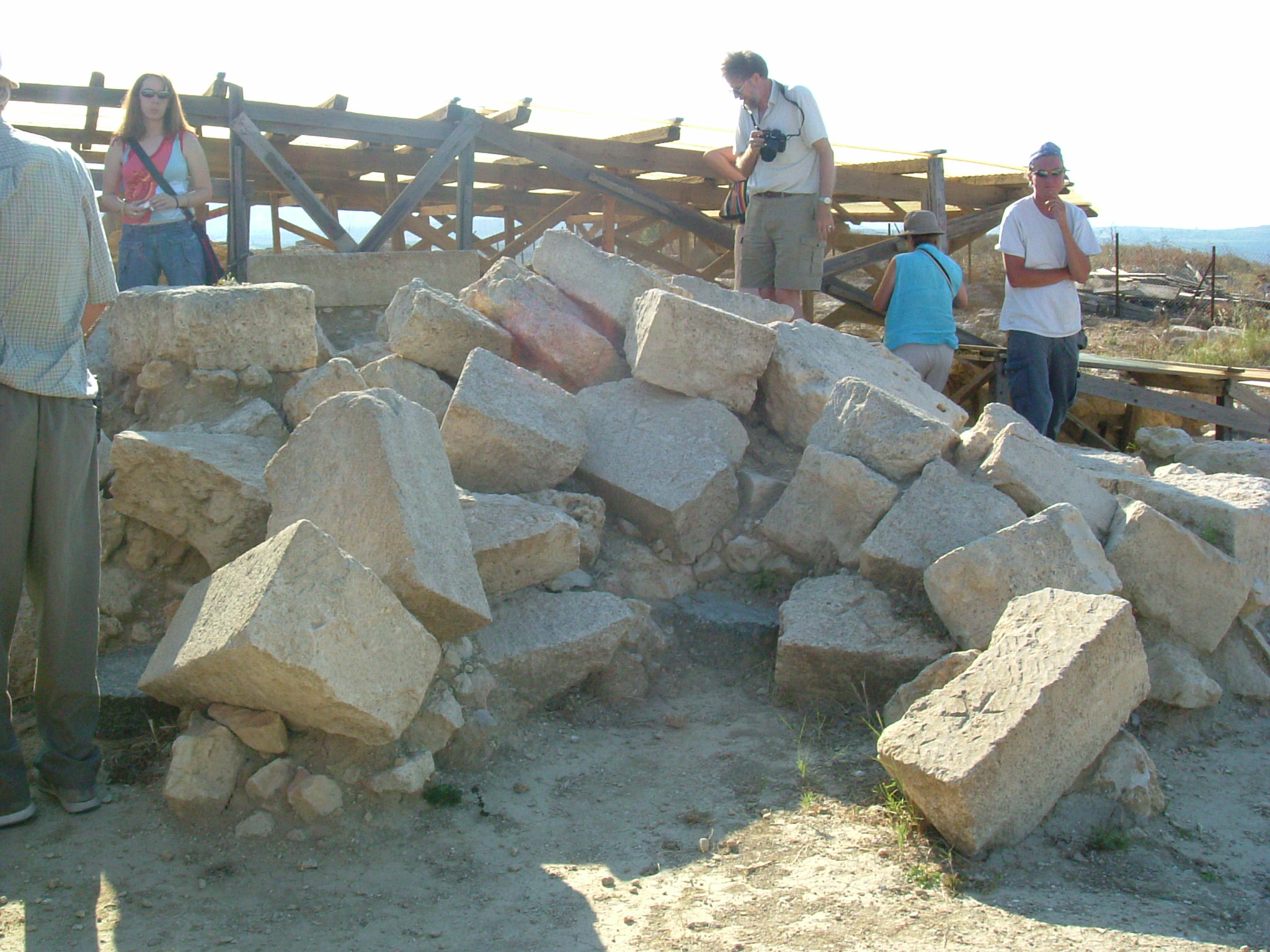
 gaklats

Earthquake damage at the small palace site of Galatas

The Mycenaeans remained in Knossos for around 200 years before another unknown disaster brought an end to the island’s civilized world. But more on the Mycenaeans another day.

For more info on various Minoan sites in Crete click here


Next week: The Minoans and mythology


ASIDE

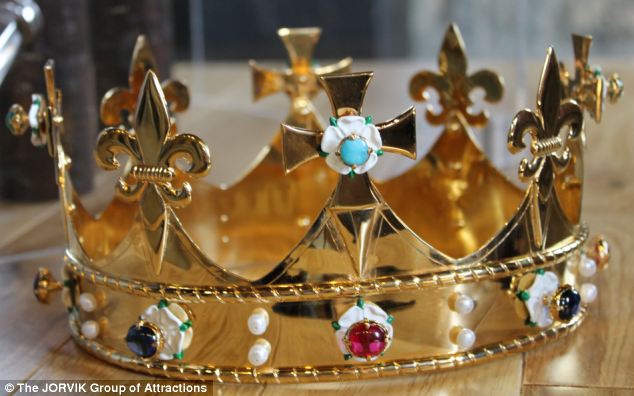
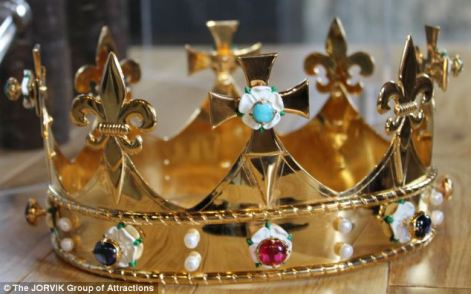
I see that the Plantagenet Alliance has had the same result as Richard III did at Bosworth – failure. At the Judicial Review hearing the High Court decided that it was not necessary for consultation with ‘other parties’ about the reburial of Dick’s bones. One of the judges, Lord Justice Ouseley, remarked: “Richard III would have raised an eyebrow if he’d been told there would be public consultation on his reburial 500 years on. Kings of that era weren’t democrats.”  Humour from a judge? … or cynicism for the whole lengthy process … or just stating a fact?. So Leicester Cathedral it is. A 15th century-style gold-plated crown has even been commissioned by the historian, Dr John Ashdown-Hill, for the funeral ceremony. Nice touch but merely ‘gold-plated’? – it is hardly befitting a monarch! Anyway, it is/was being displayed in York just to show its connection has not been forgotten before going ‘on tour’ around the UK.
crown

Richard III’s gold-plated funeral Crown


Artemus Smith’s Notebooks

I continue my research of the notebooks of Dr Artemus Smith, archaeologist of great courage, determination and fiction. Here is another extract:

I met my good friend Jasper Rochweiller yesterday and he said to me:

“I say Artemus, old boy, close shave the other day. My good lady sent me out to purchase a bag of fresh snails from our local delicatessen. She was determined to expand our culinary delights. Well, I bought the bag of snails but on the way back I meet some of my students who insisted I went for drink with them. Rude to say no and one, of course, lead to another, and so it went on for over two hours. Got back home a little worse for wear. As I put my key in the door the bottom fell out of the bag containing the snails – it had been sitting on a beer covered table and got rather wet – and all the snails fell to the ground. At the very same time the good lady opened a window and asked me in no uncertain manner where the devil I had been all this time.

Ignoring her, I looked down at the snails on the ground and said in very loud voice, “Nearly home boys.””
 

AT

Travels in Crete 1: Mochlos

LET ME tell you about CRETE. It’s a paradise island and the Cretans are wonderful people (well, most of them ….).

Sarah and I began our adventures in Crete in 2001 in search of the archaeology of the Bronze Age of the Minoans (c.3000-1100BC – I’ll tell you about them next time). Sarah had dragged me ‘shouting and screaming’ (maybe a slight exaggeration) into archaeology when she came home one Friday evening and, over a glass of wine or two, asked me if I wanted to learn about archaeology (she had studied it at university in the 1980s and wanted to start up again). Anyway, I said I might be and she replied, “Good, because I have booked us both into a course on ‘Practical Archaeology’ at Sussex University starting on Monday”…….. the rest, they say, is history – well, ancient history, actually.

CSC_0019

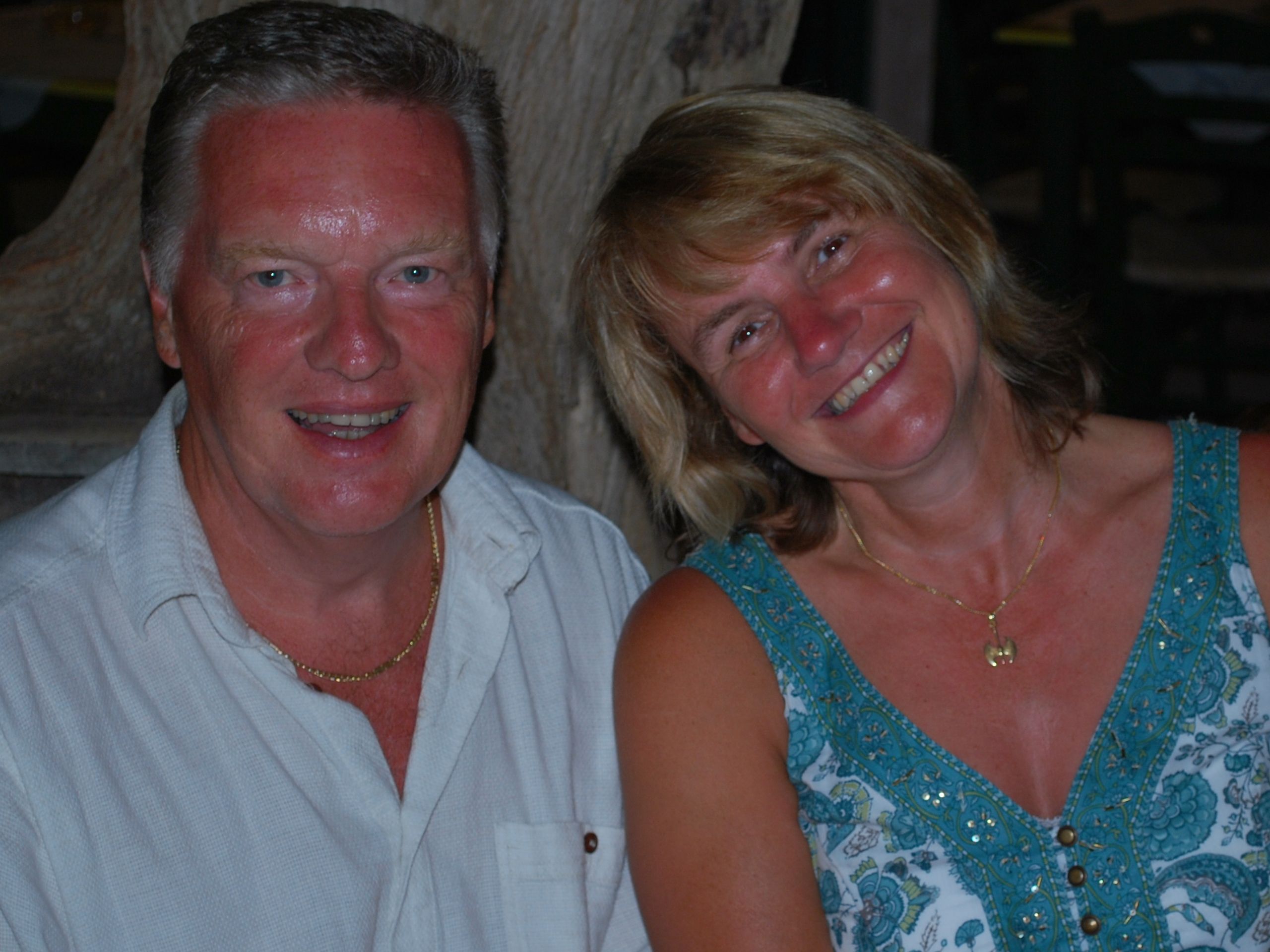
myself and Sarah always smiling in Crete!

We have been visiting Crete almost each year ever since 2001, and in 2005 I began researching early British travellers to the island, particularly Richard Pococke (18th century cleric), Robert Pashley (19th century barrister) and, my favourite, Thomas Abel Brimage Spratt (19th century Royal Naval officer – with a great name!). My plan was to try to establish what, if anything, they may have discovered of the Bronze Age during their visits. Sarah and I spent five summers following these three guys footsteps around the island using their published journals. It was awful work, you understand ….. !! Oh, and you can read my book on my results – see Dawn of Discovery in ‘My Publications’ (or just click here).

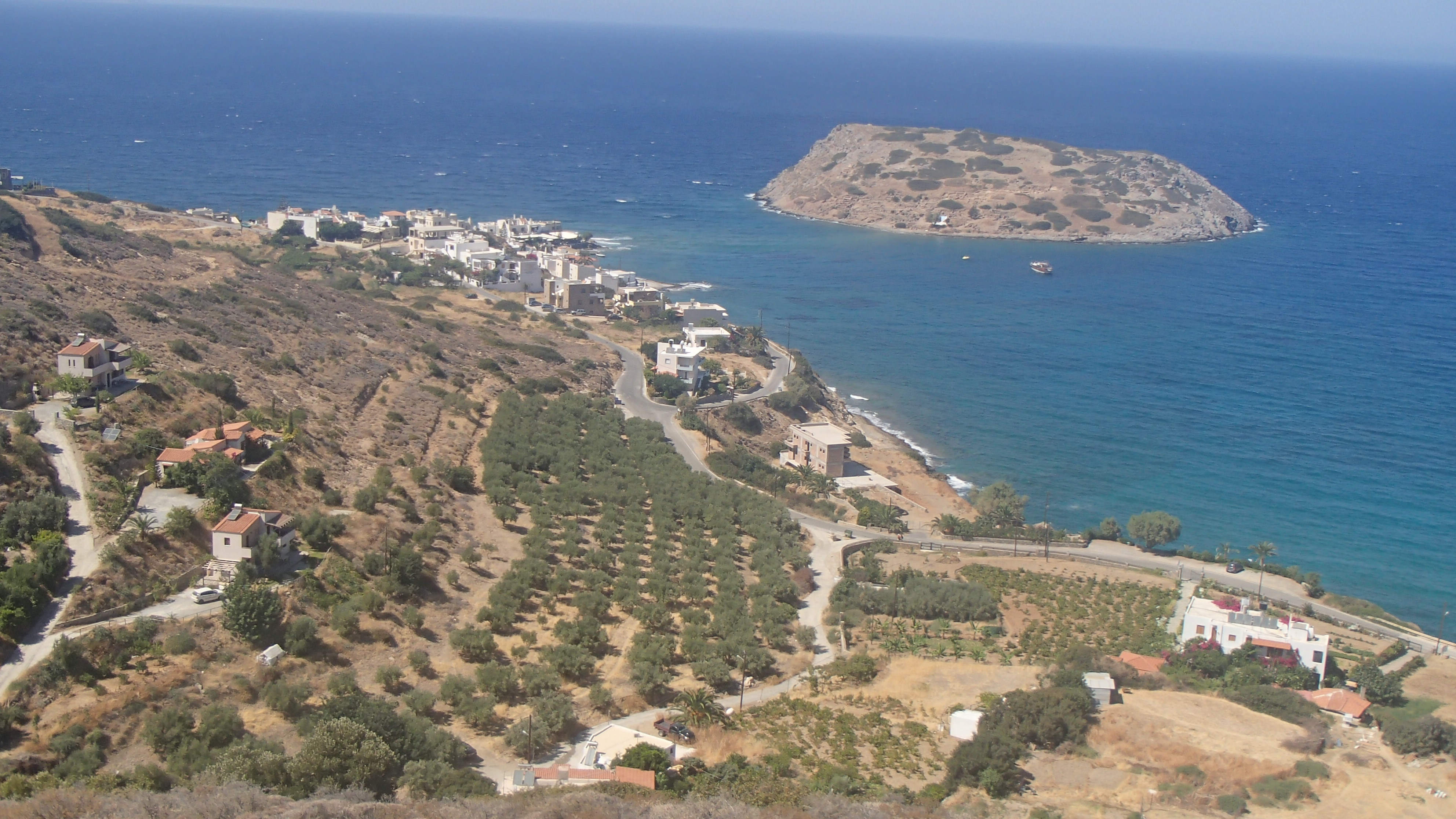
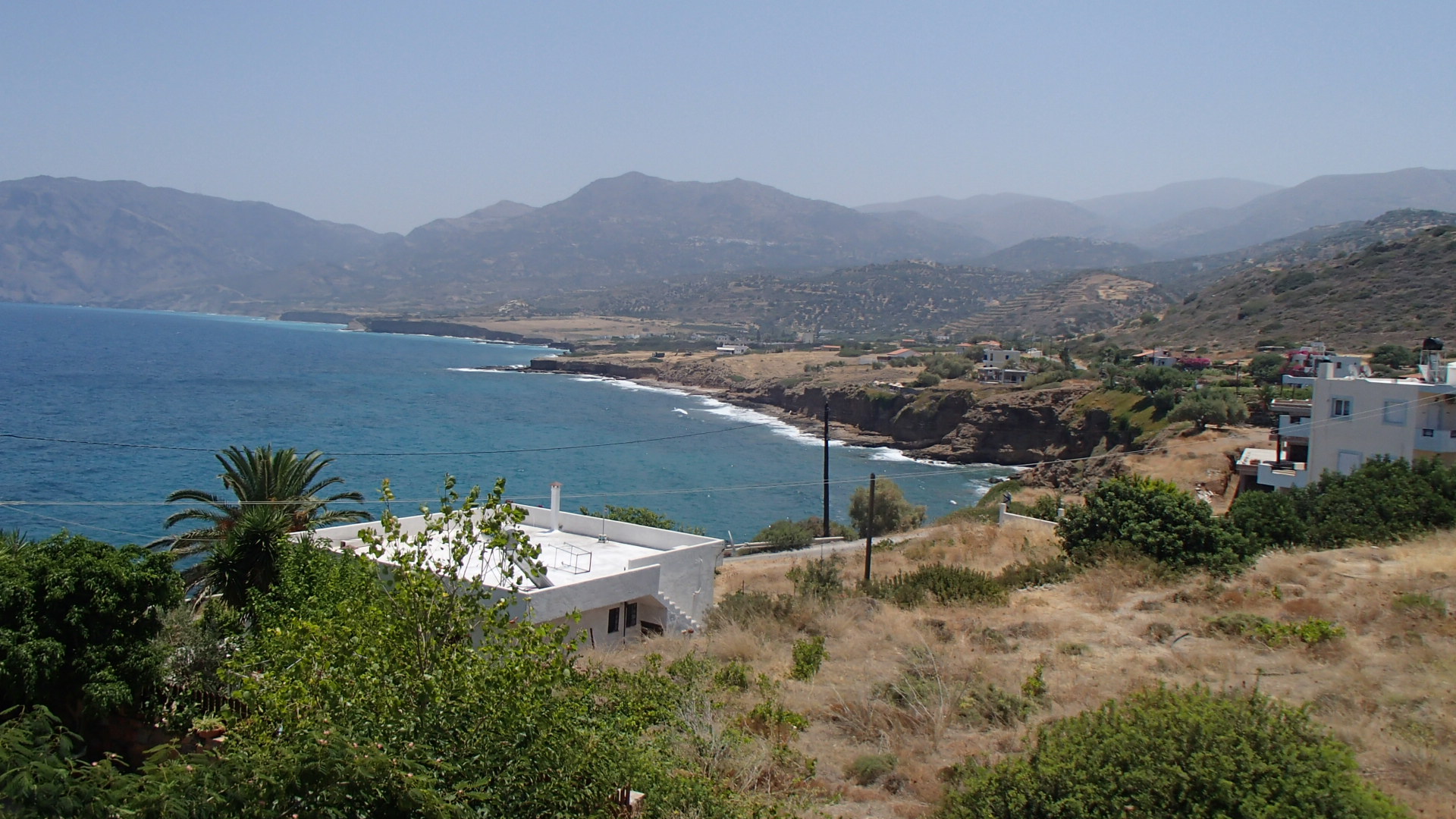
Then we really discovered paradise …. Mochlos. This is a small ‘fishing’ village on the north coast of the island about an hour and a half east of Heraklion and 5km off the main road. It’s no longer a fishing village as such, but, as yet, reasonably unspoiled by tourism. It also dates back to the Bronze Age Minoans when it (and its island just off its shores) was a thriving settlement. We struck it very lucky with our first accommodation, Mochlos Mare (click on name for link). This is a very picturesque set of apartments in a beautiful whitewashed building owned by an incredibly generous and lovely couple, Panayiotis and his wife, Sterie. They have this enormous garden which grows practically anything you can think of and they share everything in it with their visitors.

OLYMPUS DIGITAL CAMERA

Mochlos from the little church on the hill – Mochlos Mare is bottom right

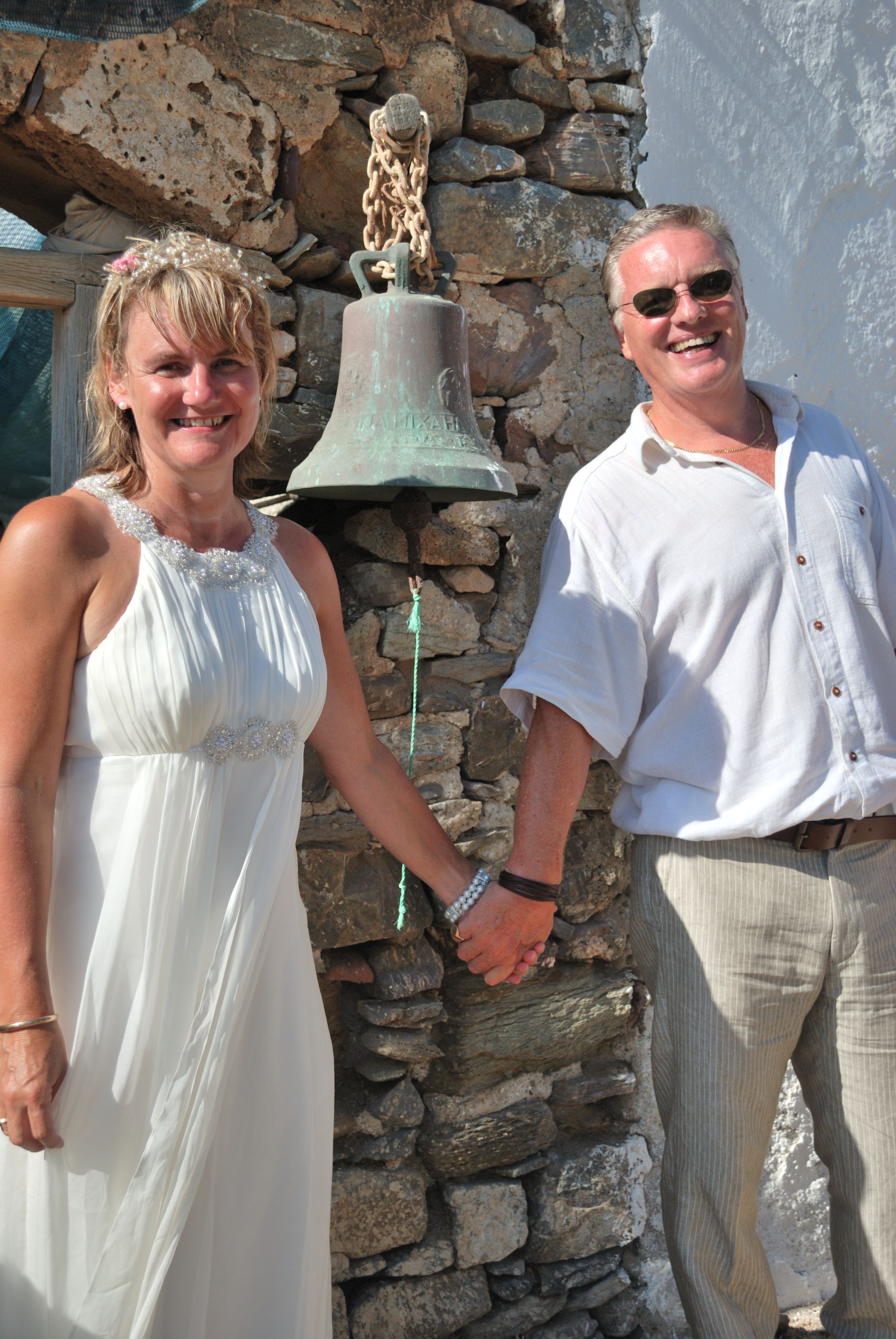
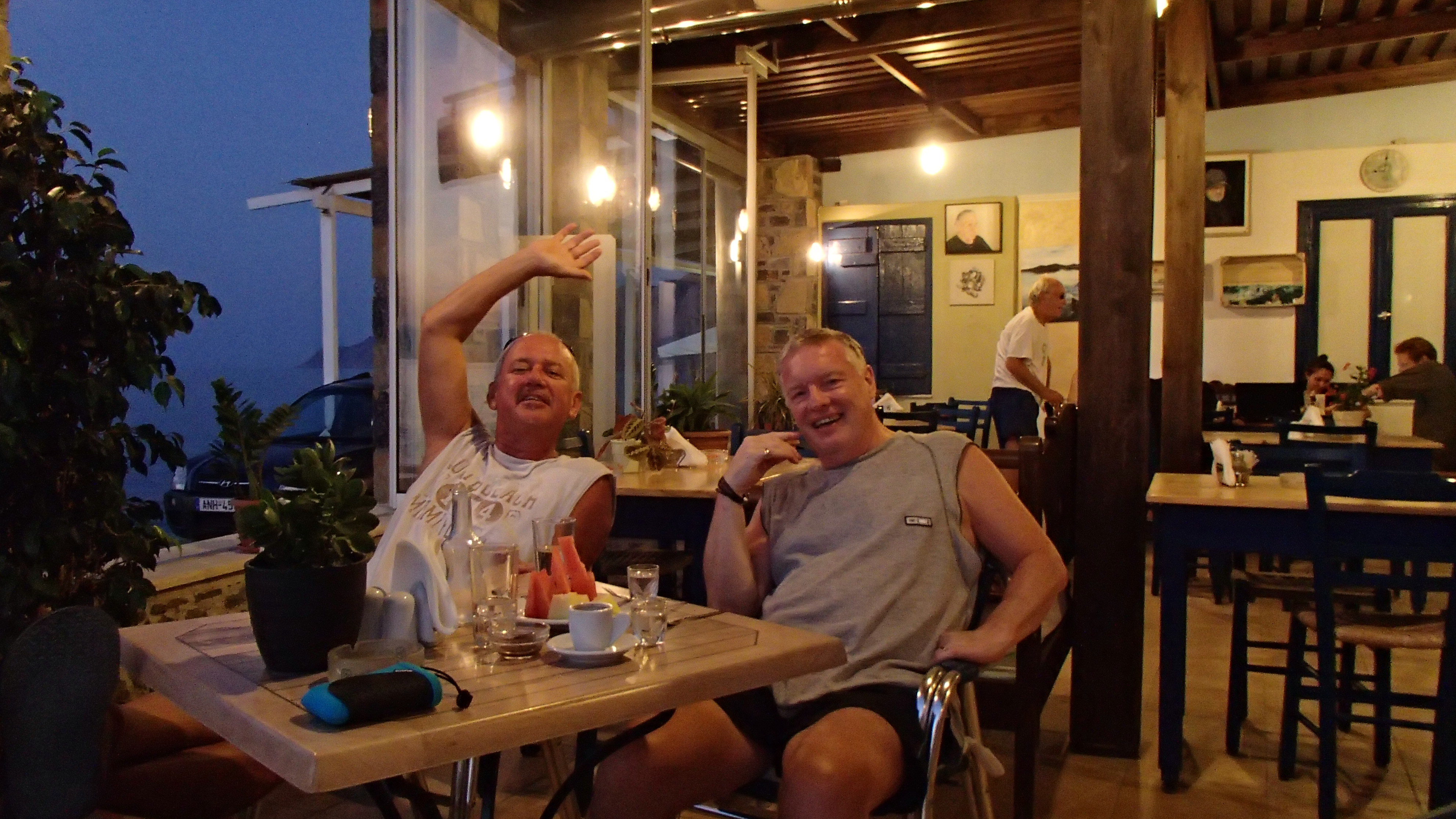
We loved the place so much that we decided to get married in Crete in 2011. We were actually married by the lake in Agios Nikolaos but went back to Mochlos on Nick’s boat to the Minoan island (top right in pic above) just off the mainland for champagne and then to Taverna Kokylia (on the mainland), for the ‘reception’.  (click on name for link) – now there’s a place to reckon with. Owned by the fabulous Yiorgo (George) it is simply the best! He did us proud on our wedding day and has done so ever since on our anniversaries ……. and all the other times we have been there!

 DSC_0244

Celebrating our wedding on Mochlos island 


CSC_0219

Nick’s boat that brought us from our wedding at Agios Nikolaos to the Mochlos island

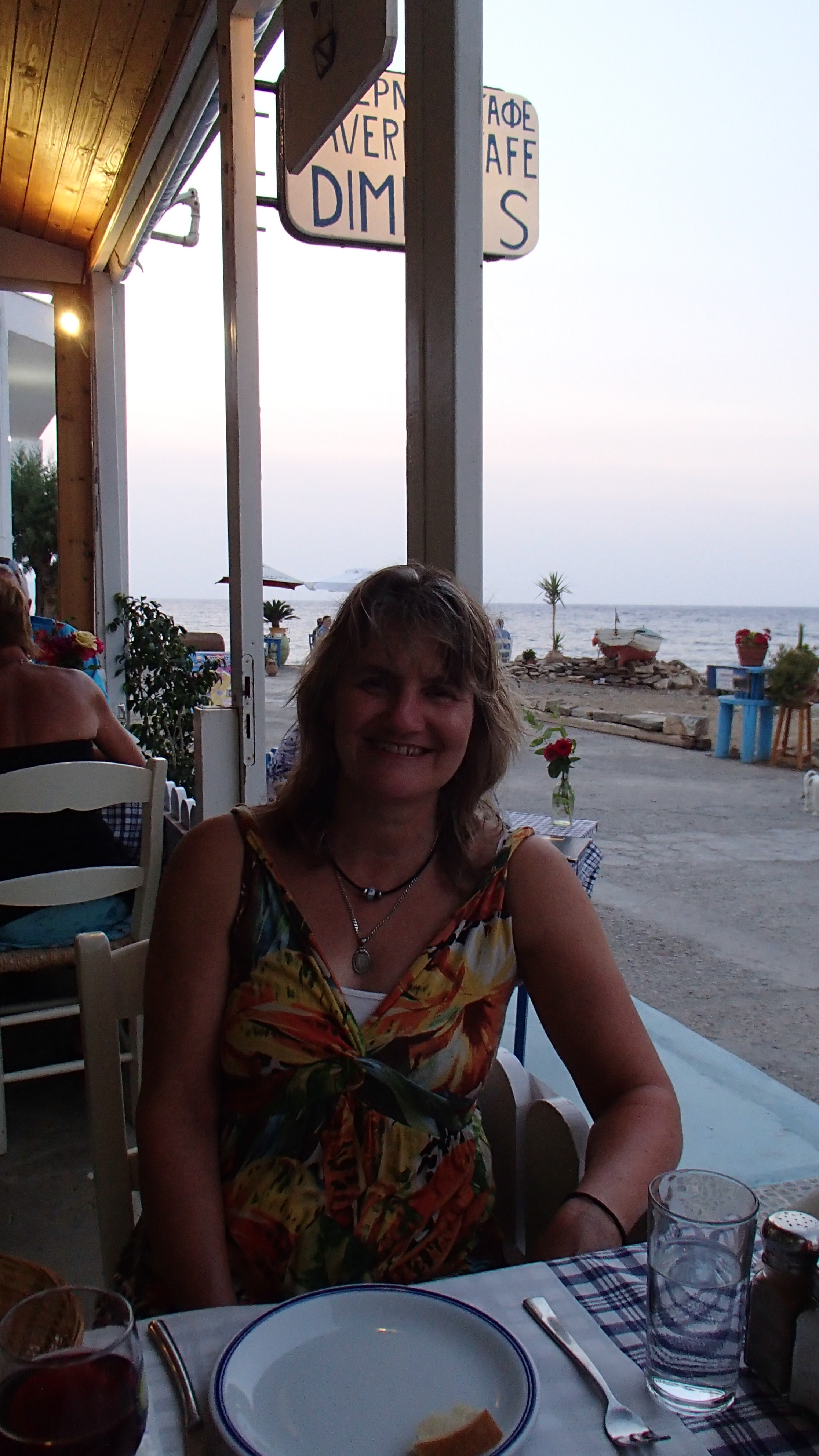
Then there is Dimitri’s (click on name for link), which is also a great taverna. He is a lovely chap and his food is excellent. I recall one wonderfully musical night there last year when our good friend, Warner (visiting us from UK), played his violin, whilst a young chap from Sweden played his guitar and his girlfriend sang. It just wouldn’t happen in the UK!

OLYMPUS DIGITAL CAMERA

at Dimitris’

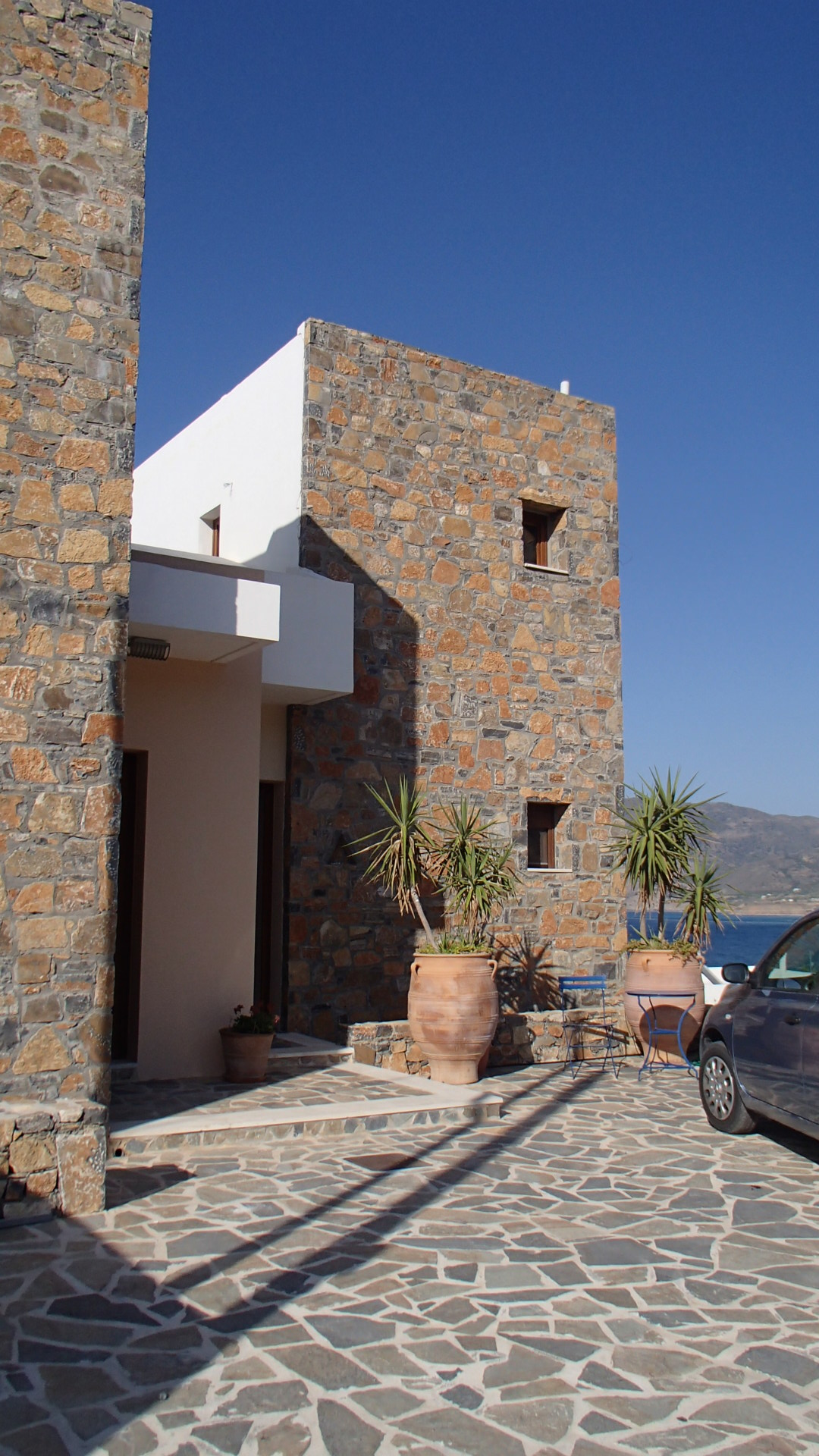
In 2012 we decided to stay the whole summer holidays in Mochlos (3 months) and came to the conclusion, sadly, that Mochlos Mare was not big enough for a stay of this length of time. We needed a bigger kitchen at least as we planned to cook-in on occasions (had to for this period of time!!). However, we found an absolutely fantastic apartment, Alexandros (click on name for link – you should be getting the idea now), just up the road from Mochlos Mare. It is owned by two lovely Australians, Peter and Rosa – Peter has Cretan connections hence his desire to buy a property on the island. Fortunately for us he and Rosa chose Mochlos!

OLYMPUS DIGITAL CAMERA

Alexandros

OLYMPUS DIGITAL CAMERA

 looking east from balcony of Alexandros

2013 also saw us in Mochlos (and Alexandros) for another 3 months over the summer again – and Nick’s fantastic villa was finally completed (he had bought the plot some 6 years ago!). The last time I had seen Nick and Heather (other than in Mochlos) was over 20 years ago in Wales. Then, 20 years later, I heard they had bought a plot of land in Crete – in Mochlos!! Small world or what?

OLYMPUS DIGITAL CAMERA

Nick and I relaxing at Kokylia

So that’s how I found Crete.

Sarah produced blogs on our time in Crete in 2012 and 2013 (click on dates if you are really interested or just suffer from insomnia).

Next week let me introduce you to the Bronze Age Minoans of Crete.


Artemus Smith’s Notebooks

I continue my research of the notebooks of Dr Artemus Smith, archaeologist of great courage, determination and fiction. Here is another extract:

I recall as a student, at my weekly tutorials at Oxford, it was a requirement to produce an essay for discussion. One week, I fear I neglected to make such an effort and I decided to ‘blag it’.  On appearing before my tutor, Professor Sir Lucius Bodmin-Wallbanger, I opened my notebook and with, I have to report, some skill and imagination, pretended to read from it, turning the blank pages at appropriate intervals. Following a formidably inventive conclusion, I shut the notebook with great satisfaction, thankful that the performance had passed off smoothly, and awaited Sir Lucius’ comments.

He stared into the open fire for a couple of minutes, then turned to me with a congenial smile and said, “Read it again, Mr Smith.”


AT


St Mary’s House, Bramber

THE TUDOR HOUSE of St Mary’s is a must to visit if you are in Bramber between May and September on a Thursday or a Sunday. I’m not really a rep for the Bramber Tourist Board, honest. (Actually, I think I AM the Bramber Tourist Board).


hse

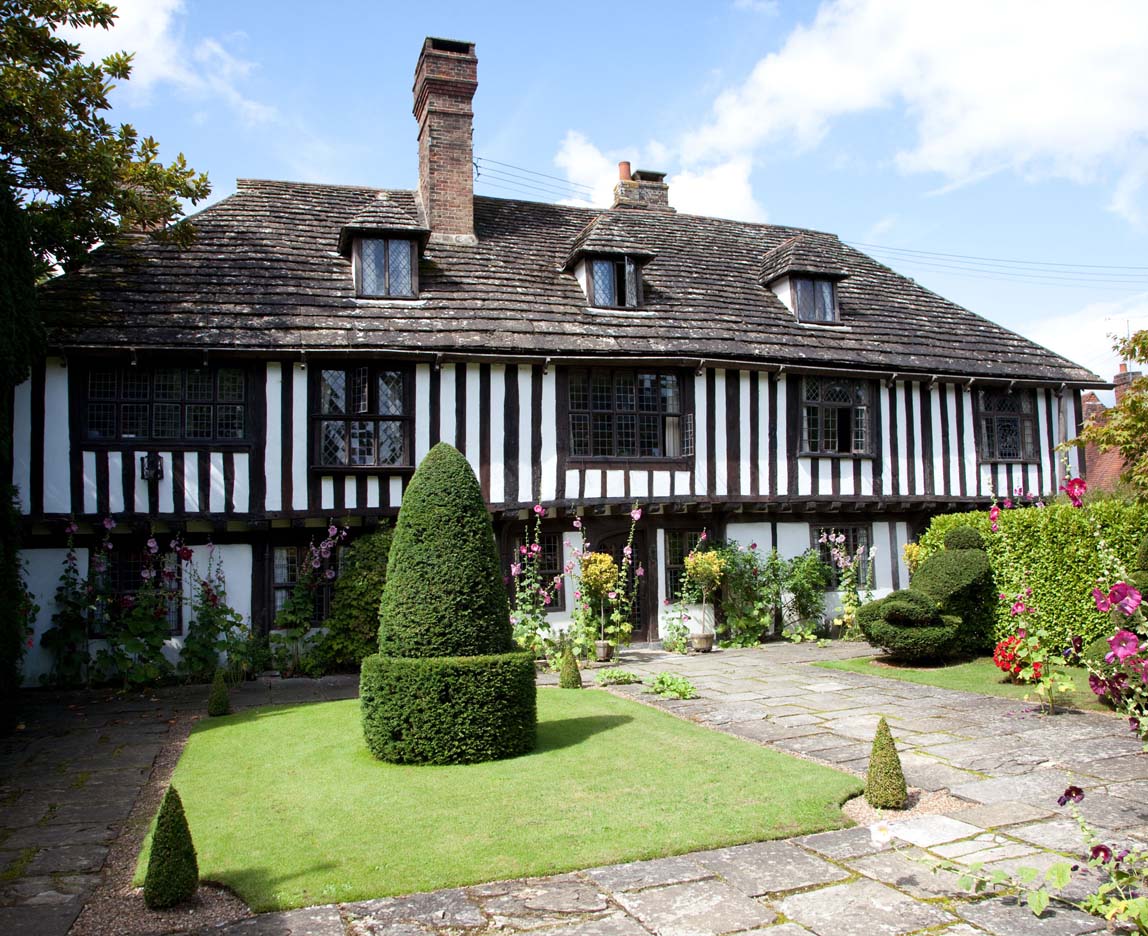
St Mary’s Tudor House

St Mary’s was built around 1470. The land had original belonged to the Knights Templars who remained in Bramber until 1154. The house took its name from the late 12th century chapel of St Mary’s that had been built on the central pier of the old stone bridge between Bramber and Beeding.

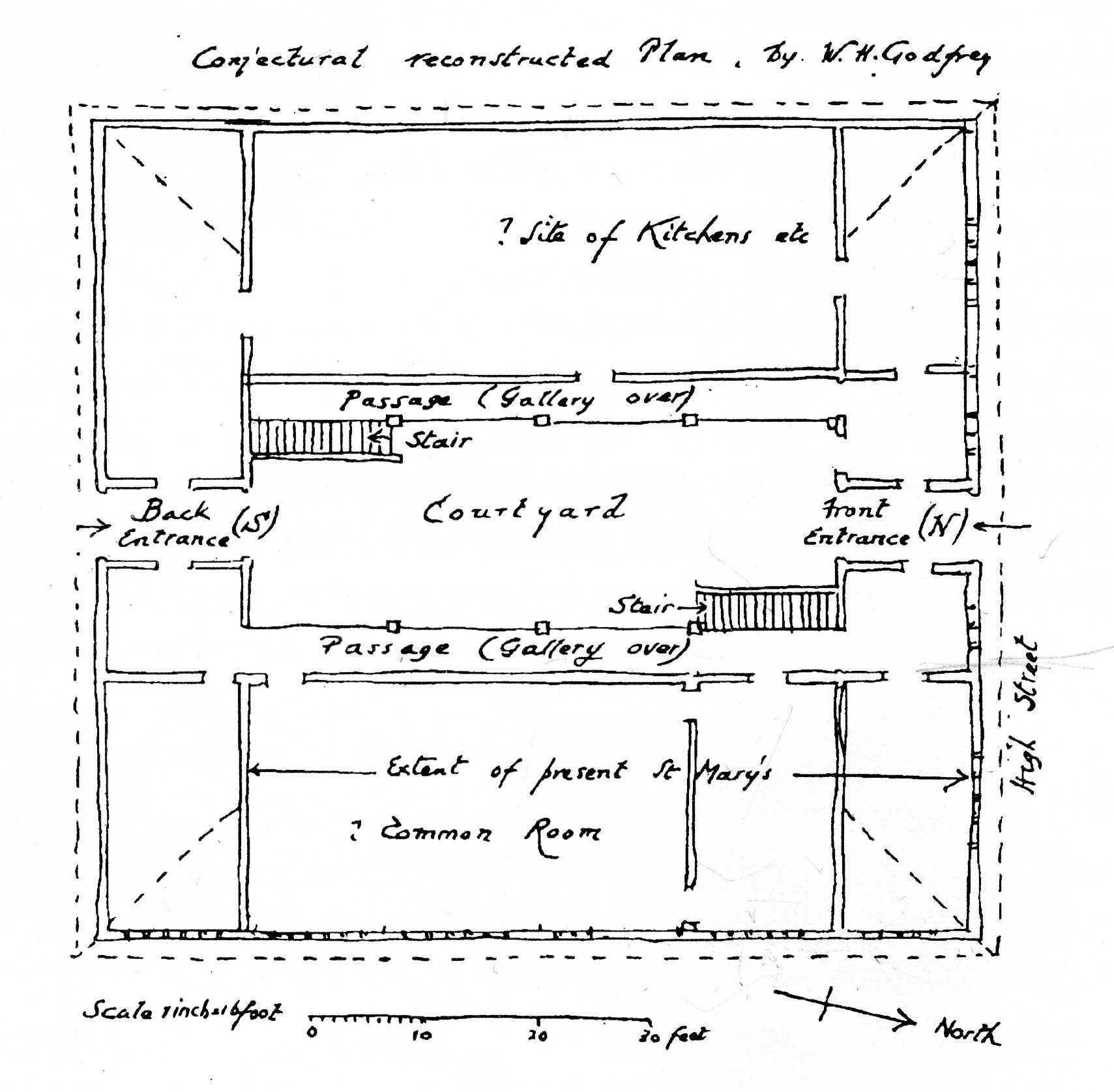
The house became a sanctuary (or Inn) for pilgrims travelling from Canterbury to Winchester (as you do) and was controlled by the Monks of Sele (Sele Priory was in Beeding in case you missed previous blog). It is likely it would have been a four-sided, two-storied, oak-framed building with a central open courtyard (where the music room is today).

planc

Plan of what the house may have been like as a four-sided building in 1470 (street to right) – by Walter Godfrey (Thorogood, St Mary’s Bramber, 1998, 8)

What remains of the 15th century house is the east wing. During the 17th century the other wings of the house and the south end of the east wing were demolished, either through fire or disrepair (they didn’t have insurance in those days!). If you come out of the music room onto the stairs and look up you will see four entrances which would have been to the travellers’ cells (bedrooms). The fact that one opens into thin air is evidence of a gallery which would have been present in the 17th century (either that or the owner had a sense of humour). If you go into the garden from the door by the kitchen and look back you will see the south wall is of flint and stone. This is a 17th century repair and the old wood beamed wall would have extended further into the garden (by approximately 15 feet).

Although there are two entrances on the east side of the existing wing, the original entrance would have been where there is still a door on the North (the street) side (see pic below). Part of the oak pillar (found in the basement) to this entrance is now on display on a wall within house.

plan b

Plan of what the front (north side) of house may have been like from the street in 1470 (Thorogood, St Mary’s Bramber, 1998, 7). From the middle of the entrance door to the right no longer exists (well, it does, it’s now the flats and St Mary’s Court)

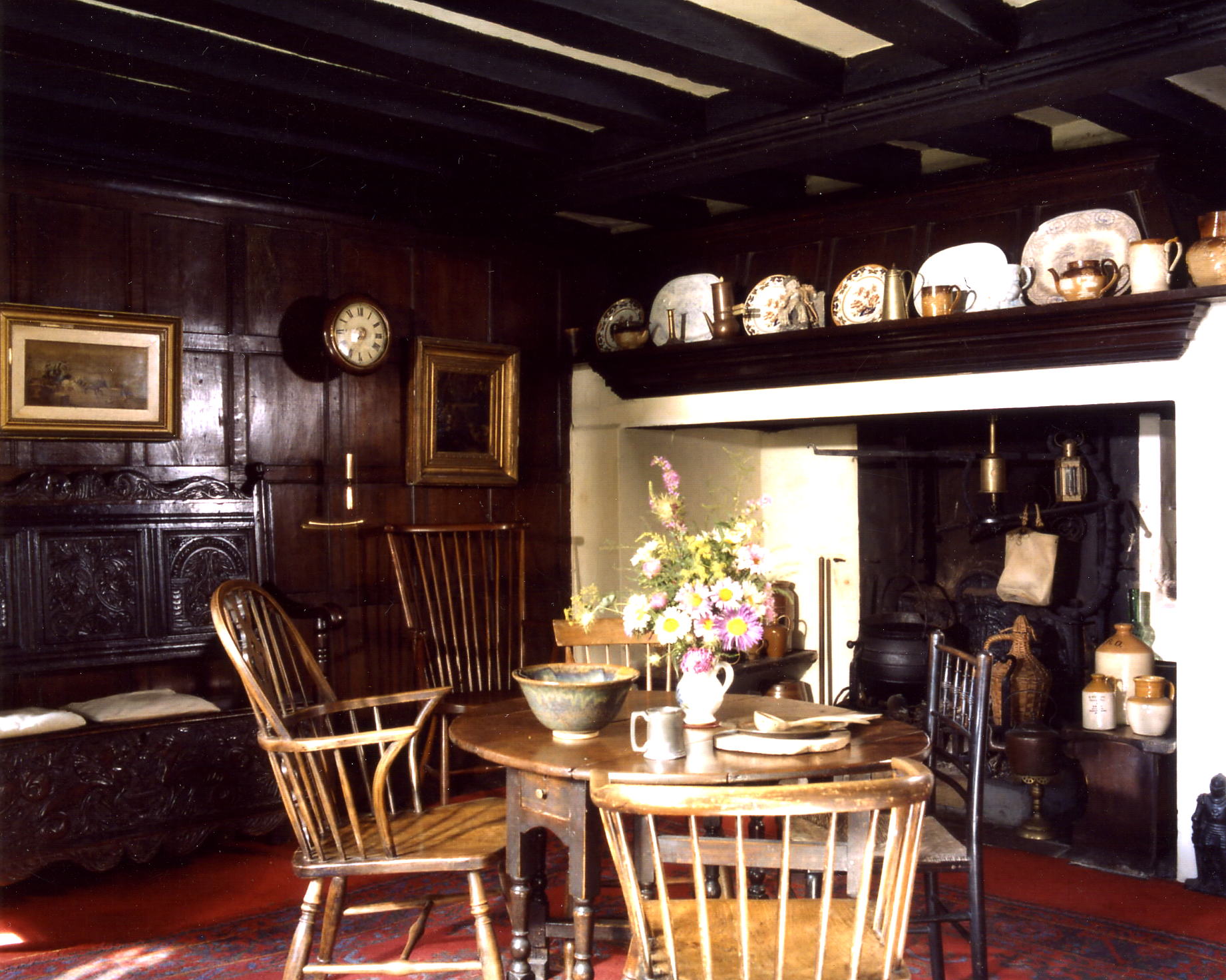
The Warden’s room (or Monks’ parlour) contains some of the earliest oak panelling in the house, dating from the 16th century. There is also a unique massive ‘dragon’ beam carrying the weight of the upper floor. The Elizabethan inglenook would have been used for cooking when the great kitchen in the west wing was lost.

6-Wardens Room1

The Warden’s room (or monks’ parlour) in the first entrance

In the 16th century, following the dissolution of the monasteries, the house was taken over by Sir Ralph Shirley (of Wiston) and he divided the open common room on the ground floor of the east wing into separate rooms and installed the fireplace in the middle entrance hall – as it is today. Also in the hallway is a central table believed to be from the wood of a ship from the battle of Trafalgar.

Entrance_Hall_1

The entrance hall with the ‘Trafalgar’ table

It is possible that the house may have seen the visitation of Elizabeth I on one of her ‘Progresses’ through Sussex and it may be that ‘The Painted Room’ was prepared for her visit (see pic below). It has also be ‘said’ that Charles II stayed at the house during his escape to France, but there is no documenatry evidence of either of these royal visits, just romantic speculation. Nothing wrong with that.

19a-Painted Room

The Painted Room

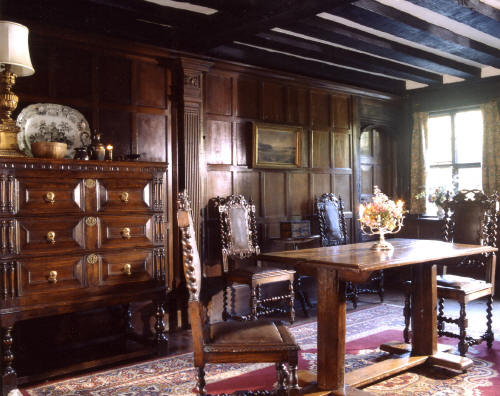
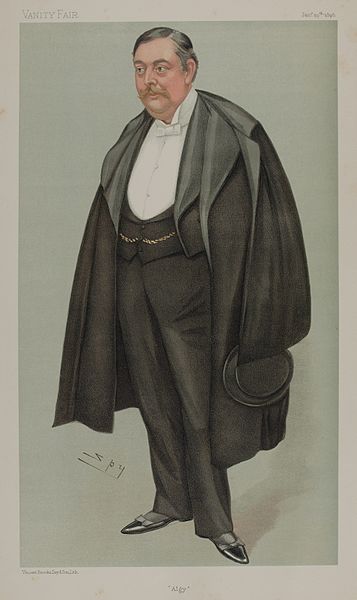
During the 18th and 19th centuries the house was used as a farm and the Tudor oak beams whitewashed over (sacrilege!). Then in 1890 the Hon. Algernon Bourke (second son of the Earl of Mayo) purchased the property and built the music room and accommodation extension (now flats and St Mary’s Court). Algernon was from ‘High Society’ and owner of White’s Club in St James’s and chairman of the Grand Hotel in Monte Carlo. He was also related to the ‘notorious’ Lord Alfred Douglas whose father, the Marquis of Queensberry, had a hand in the fall from grace of Oscar Wilde. The characters, Algernon Moncreiff and Gwendolen Fairfax, in Oscar Wilde’s The Importance of Being Earnest, are believed to be based on Algernon Bourke and his wife, Guendoline.

bourke

Algernon Bourke by ‘Spy’

In 1899 Alfred Musgrove succeeded Bourke as owner of the house. Little is known of him other than that he may have been the inspiration behind Sir Arthur Conan Doyle’s Sherlock Holmes’ tale The Musgrove Ritual which is set in a house very similar to St Mary’s. As with the Conan Doyle tale, there is a cellar which, at present, is blocked off – but what may be down there today?

Between the war years the house was owned by the McConnels and was used on occasions as an American ‘finishing school’. First-hand accounts from the family’s grand-daughters report that the rooms were filled with gaiety, dancing and laughter.

The outbreak of WWII brought the downfall of the house and it fell into disrepair. It was saved by Miss Dorothy Ellis who bought it at auction in 1944, saving it from a builder who would have dismantled it for building materials (omg!). Since 1985 it has been lovingly cared for with expertise and skill by Peter Thorogood and Roger Linton.


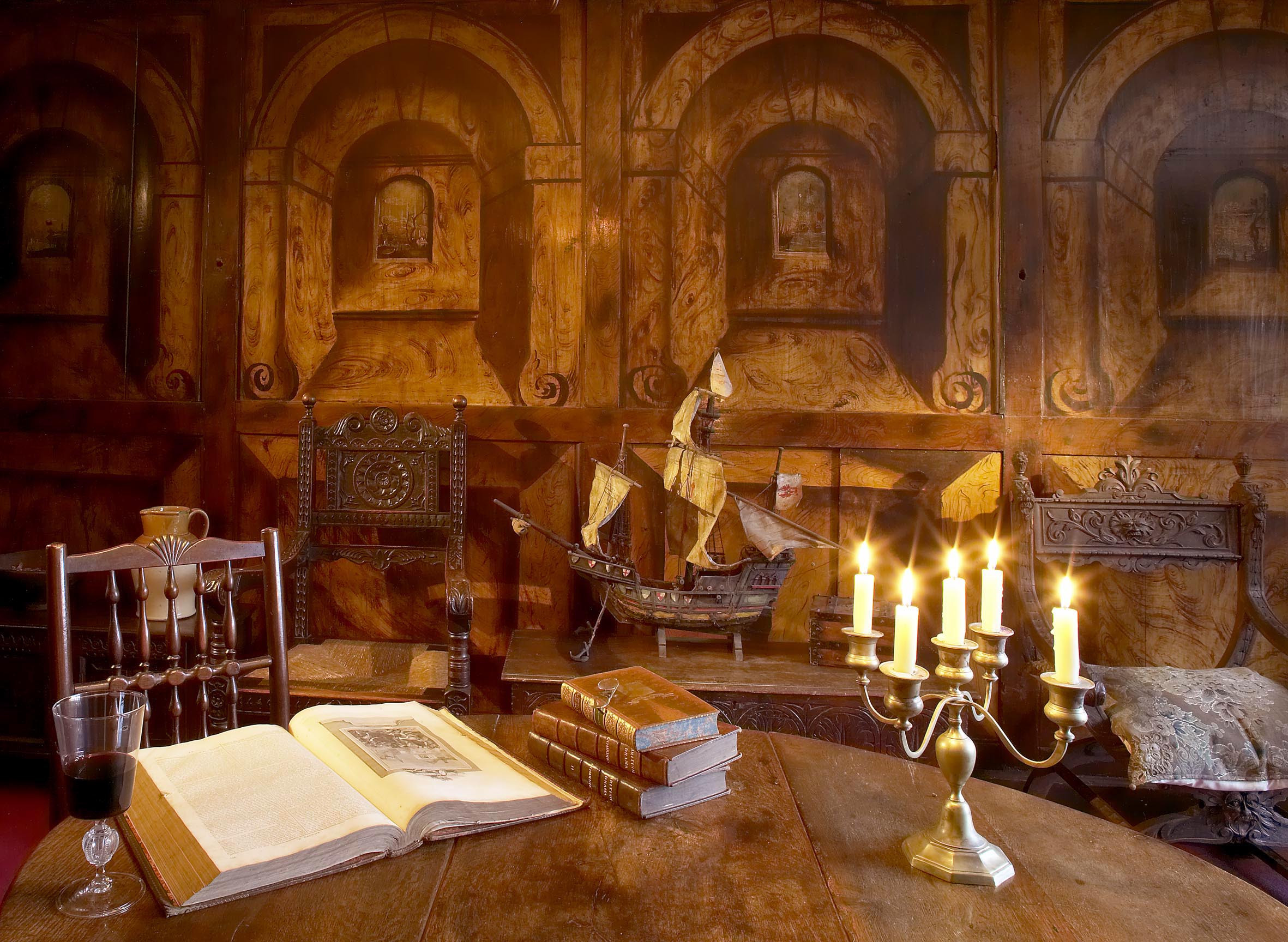
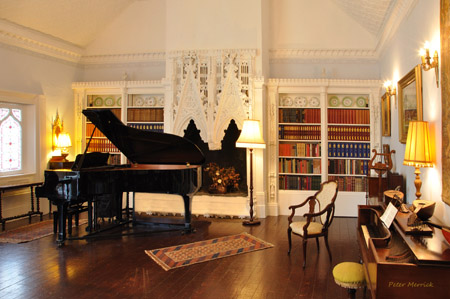
music rm

The Music Room

The Gardens

The five acres of gardens make St Mary’s a very special place to visit. Surrounding the actual house is the Topiary garden to the east, leading to the now front doors and the Terrace garden to the south leading out from the rear door.

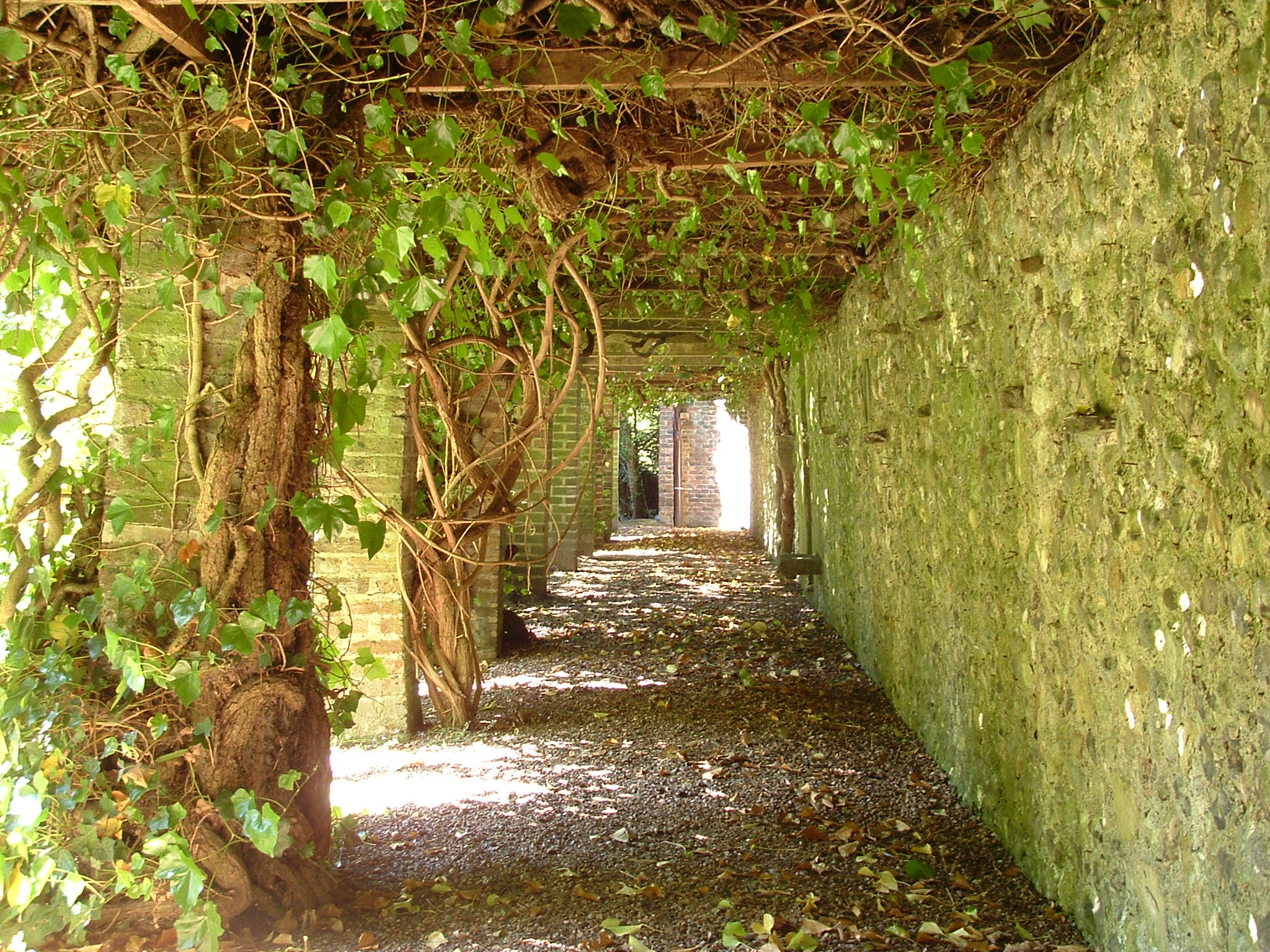
In the Terrace garden is the ‘Monks Walk’ (remember previous blog?) which is an ivy-clad pergola of yew. Some of the ornamental stone fragments in the flint wall are remnants of the old Medieval bridge. The lawn was laid out by Algernon Bourke in the 1890s and was used for croquet. One of the notable features of the garden is the ‘living fossil’ tree, the prehistoric ginko biloba, which is the oldest species of tree in the world.

Behind the Castle pub St Mary’s Victorian gardens were sold off by Dorothy Ellis to pay for the repairs to the house. The present owners, Peter Thorogood and Roger Linton, were fortunate enough to be able to buy them back when the cottage to which they belonged came up for sale. The gardens (aka the ‘secret’ gardens) have now been restored to their Victorian glory by Roger and are a delight to wander around and relax.

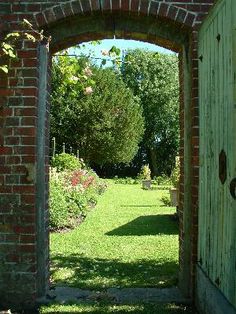
gate

Entrance to the ‘secret’ gardens

There is also a small museum housing various fascinating garden relics and an enchanting and tranquil ‘Poets Corner’.

Dr Who

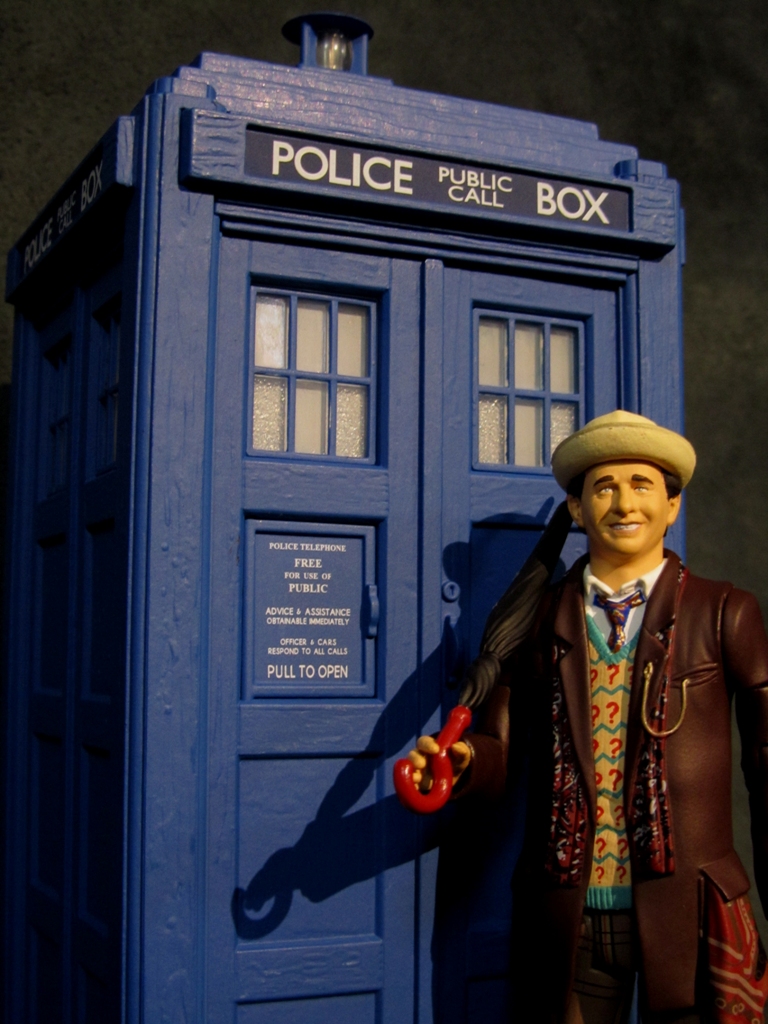
For Dr Who fans St Mary’s is a must. The ‘Silver Nemesis’, with Sylvester McCoy as the Doctor, and his trusty police box, was filmed at the House in July 1988. Click here for article.

polic bx

Events and things

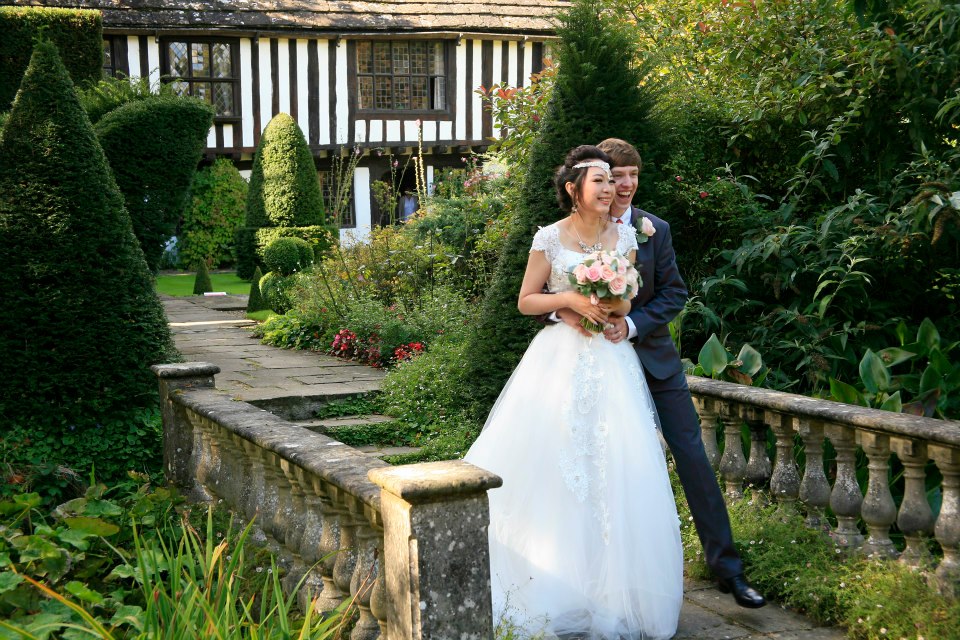
The House puts on various events, including music and comedy which you can all go and see. You can also get married there, as my son, Toby and his wife, Zoe, did in 2012:

t z 2

Toby and Zoe married at St Mary’s

More on the House, click here: stmarysbramber.co.uk


ASIDE

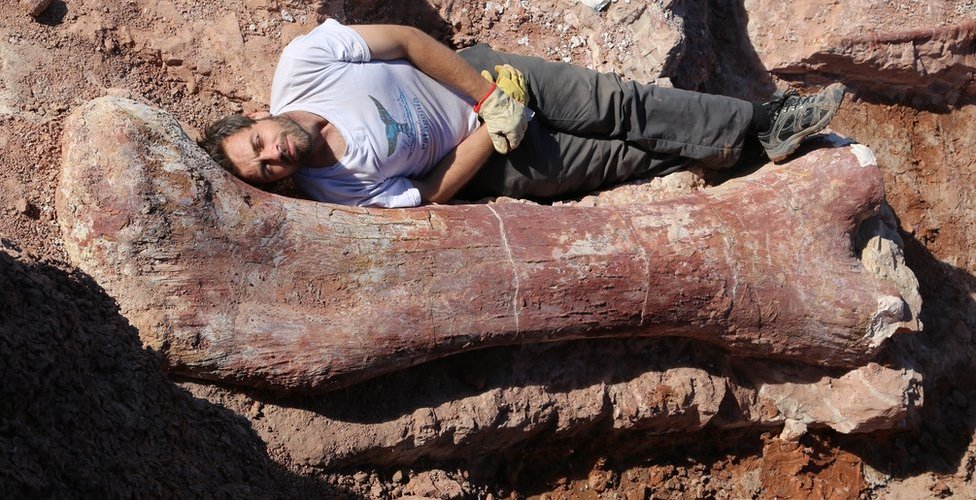
On another topic, did you see the size of ‘dem bones’ found just recently??

bone

The bone in the picture is a fossilised femur (thigh bone) of a new species of dinosaur or titanosaur, dating back to the late Cretaceous period (that’s somewhere between 66 and 100 million years ago to you). It was discovered in a desert in La Flecha in Argentinia and bearing in mind the size of the femur this dinosaur (sorry, or titanosaur) is likely to have been around 40 m in length (that’s 130 ft in English) and 20m tall (that’ll be 65 ft), weighing in at 77 tonnes (much the same as 14 elephants apparently), which is seven tonnes heavier than the previous record holder, Argentinosaurus. Bad luck Argentia, you’re big but not big enough.

Fossilised remains of seven of this enormous fellows, totaling some 150 bones, were excavated by a team of palaeontologists from the Museum of Palaeontology Egidio Feruglio, led by Dr Jose Luis Carballido and Dr Diego Pol. They were discovered by a local farm worker and one assumes he thought better than to give them to his dog.

The real question is, where are they gonna put them?

Honey, we need a bigger garage …….

Next week: Lets’ go to Crete


Artemus Smith’s Notebooks

I continue my research of the notebooks of Dr. Artemus Smith, archaeologist of great courage, determination and fiction. Here is a further extract:

My days searching for early African civilization were fraught with endangerment. I recall being warned by our guide that we were entering a region inhabited by a lion. My colleagues and I commenced enclothing ourselves in heavy boots and a strong robust rig about the body. To my surprise, our guide stripped almost naked and donned only a pair of plimsolls, clearly intent on avoiding any physical contact with the king of the jungle.

“My dear man,” my voice raised with some degree of authority, “I trust that such foolish attire will do you little favour should we encounter the savage beast of the wild. Lightly garmented such as you are, you will never out run the creature.”

His response, which left me a little disturbed, was, “Master, but I only need to out run you.”

AT


Ghosts of Bramber Castle

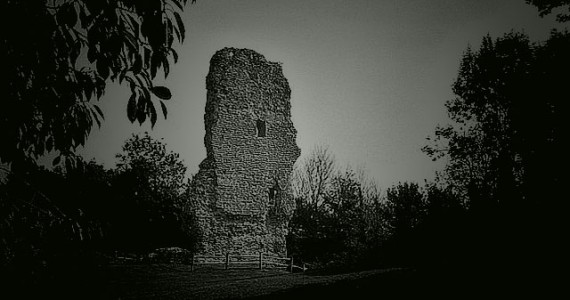
Oooooooooo, do you believe in ghosts? ONCE UPON ANOTHER TIME there was a King called John. He was a bad king and was easily upset by his barons ….. who were just as easily upset by him (if you get the drift). William de Braose, the 4th Lord of Bramber,  was no exception. In 1208, John seized William’s lands and Will de B escaped to France. Bramber-Castle.-Sussex-570x300

Don’t go up to the Castle at night ……

Unfortunately Will’s wife, Maud (or Matilda) and eldest son, William (imaginative with their names in those days), were captured by King John ‘the Bad’ and he locked them up in Corfe Castle (or possibly Windsor Castle) and starved them to death. Easily done. Here the tale slightly deviates as another source says that two of Will de B’s children were captured and starved. It is these two children that are (sometimes) seen wandering the grounds of Bramber Castle at night in search of their father. Admittedly, when I say ‘sometimes’, they are usually seen after the pub has shut. Then there is the white horse A riderless white horse has been heard and seen on moonlit nights galloping around the moat.  Its origin is unknown.  Could it be the horse of the sporting young William de Lindfield? (Yes, another William). In the 15th century, the ill-tempered Lord Hubert de Hurst occupied the castle (supposedly).  He was in his 50s and married to Maud of Ditchling (oh, another imaginative name), a rustic beauty, half his age.  The naughty 25-year-old Lindfield was having an affair with Maud (no surprise there), which Hurst discovered (oops, careless). whitehorse On a fresh September day, Lindfield rode into the castle and dismounted the horse and was never to be seen again.  Hurst had set a trap for him in the pleasure house, in a garden at the rear of the castle, where the young gentleman was awaiting the company of Lady Maud.  It resulted in Lindfield being imprisoned in a vault beneath the house. Hurst proceeded to brick up the vault’s entrance and the entombed Lindfield fell to a dark and solitary doom. Maud died of grief shortly after discovering the fate of her lover and the dastardly Hurst was reduced to a raving maniac (happy days).  Many years later the pleasure house and gardens were supposedly destroyed by the Parliamentarians and a skeleton was found crouched in the corner of the old vault (Lindfield’s?).  Perhaps it is Lindfield’s white horse which, today, roams the moat awaiting the return of its master. bramber_moat

The moat ……. domain of the riderless horse?

I don’t want to be a spoil-sport, but if you read my previous blog on the Castle, you know that it was in ruins during the Civil War which puts a bit of  a dampener on the existence of any pleasure house (or its destruction by Parliamentarians) and any possible truth of this yarn ……

 St Mary’s Down the road to the Castle you may find another ghostly apparition if you are in the right place at the right time (and consumed sufficient champagne). This will be at the old Tudor House of St Mary’s. In fact it has two estranged figures wandering the premises. First there is the ‘mysterious monk’ who has been seen lurking in the Monk’s Walk (obvious place for a monk I suppose) in the back garden of the House. The source of this vision is a Canadian soldier (or two) and the occasion was a revel (involving a certain amount of alcohol so we’ll leave it at that). 48-Garden today- Monks walk

 The Monk’s Walk at St Mary’s (it’s day time that’s why you can’t see the monk)

Ghost-of-monk-seen-in-church

‘Mysterious monk’ on his way to the garden …. perhaps

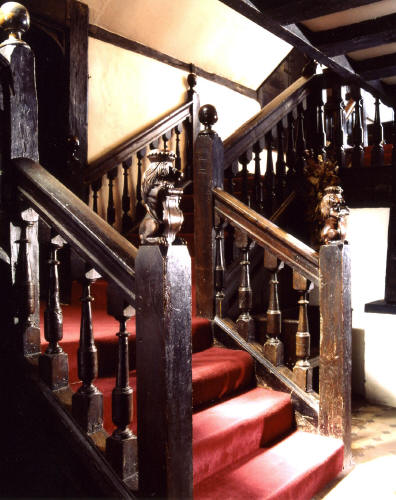
The second is the ‘lady in grey’ seen on the hall stairs of the House by one of the more elderly occupants, Mimi McConnel, during the early part of the 1900s. The source does not mention Mimi’s drinking habit. stairs

The ‘spooky’ stairs (again, day time so don’t expect to see the ‘lady’)

  Next week: More on St Mary’s Tudor House.


Artemus Smith’s Notebooks I continue my research of the notebooks of Dr Artemus Smith, archaeologist of great courage, determination and fiction (see last blog). Here is another extract:

I received a call from my very good friend, Professor Michaelmas Aston-Villa, who informed me of an interesting experience he had just had. He had heard that some very strange crop marks  had recently appeared in a field near his home.  He decided to hire a plane to take a look and photograph them, but he had to be quick as he believed the field was to be ploughed up that very day. He telephoned the local airfield to have a plane ready and waiting.  As he arrived, sure enough, there was a small bi-plane warming up on the runway.  He ran to it, jumped into the passenger cockpit and shouted to the pilot to go. Once airborne, he turned to the pilot and pointed in the direction of the field.  The pilot asked of his interest in the field and Michaelmas explained to him that he was an archaeologist and needed to take aerial photographs before it was ploughed over.  After a long pause, the pilot tapped Michaelmas on the shoulder and said, “You mean you are not my instructor?”

 AT


St Nicholas’ Church at Bramber Castle

st nich

St Nicholas’ Church, Bramber

EDWARD THE CONFESSOR (1042-1066) gave the parish of Bramber (and nearby Steyning) to the Abbey of Fecamp in Normandy. As seen in the first blog (if you have been paying attention), when William the Conqueror took his place as King of England he granted the ‘Rape’ of Bramber to William de Braose but the monks of Fecamp still claimed rights to the land (see ‘Historical Note’ below). In 1073, de Braose, in competition with the Abbey of Fecamp,  built the church of St Nicholas, just outside his castle’s gatehouse, for Beneditine monks of the Abbey of St Florence (Florent) at Sanmur in Anjou.  In 1080, those monks moved from St Nicholas and established themselves at the Priory of Sele in Beeding (village next door) but St Nicholas remained as a religious centre for the occupants of Bramber.
Historical Note (not that the rest of this is not historical you understand): After Edward the Confessor died, new king, Harold, decided to cut Fecamp’s ties with St Cuthman in Steyning (along the road from Bramber – pay attention). William of Normandy (he hadn’t been upgraded to ‘Conquerer’ yet) was furious and planned retribution.  And so Steyning maybe accountable for the cause of the Norman Conquest ……….

King2

Anyway, in 1085, William le Conq belatedly re-confirmed Fecamp Abbey’s claim to St Cuthman Church (now St Andrew’s in Steyning). This was not a good thing as it was to lead to various disputes between the Abbey’s monks at St Cuthman  and Billy de Braose (we’ll call him Will de B). In fact, 3 court cases came to pass in 1086. The first involved the monks successfully stopping Will de B charging a 2d toll at Bramber bridge for boats to pass through to the Steyning port. In the second case, Will de B was ordered to fill in ditches he had dug to allow water from a tributary of the River Adur to flood the east side of the moat of his castle and to make it easier for water transportation to the castle. In both cases the monks of St Cuthman claimed they had the rights to the river – and the court obviously agreed. In the third case, the monks considered they had the rights to bury the Bramber dead at St Cuthman – and receive the burial fees. Again they were successful and burials at St Nicholas had to be dug up and reinterred at St Cuthman – along with payment of the burial fees. Monks with a mission!

conj map2

Conjectural map of 12th century Bramber/Steyning (yellow circle is St Cuthman, white circle is Bramber Castle [ditches from tributary NE & SE], red circle is Bramber bridge)

st nic plan 2

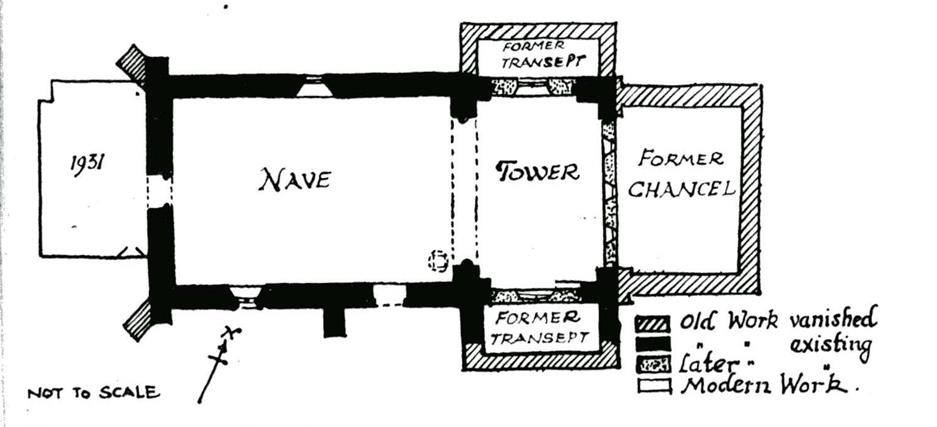
Plan of St Nicholas over the years

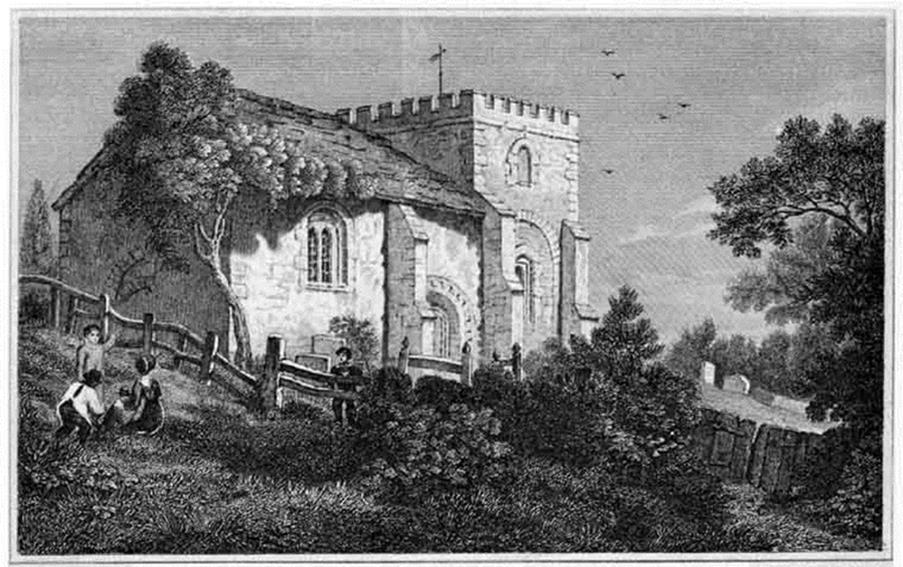
See the above plan of St Nicholas over the years. The north and south transepts have disappeared entirely and the east apse was replaced with a chancel (in or around 1250), which has also since disappeared (after the civil war in the 17th century).  Arches of all three are still visible on the outside walls.  The single aisle and tower are original structures (well, the tower has needed some repairs – see pic below).

st nics 1770

St Nicholas c 1770 – towerless

In 1459, the Priory link with monks was dissolved and the church (& Priory at Sele) was granted to St Mary Magdalen College, Oxford, by Henry VI (at bequest of William of Waynflete, Bishop of Winchester).  It had now obtained full status as a parish church.

As a result of the dissolution of monasteries in 1538 the church became  the property of the Crown, who granted it to Richard Andrews and Nicholas Temple, who sold it to Owen and Clement Oglethorpe, who re-granted it back to Magdalen College in 1546, where it remained until 1952.  It then passed to the Bishop of Chichester, who holds it today.

 st nic 19th c

St Nicholas in the 19th century

The church was damaged during Civil War (c1643) and it took many years for it to be fully repaired.  The materials from the wrecked chancel were utilised to repair the tower.  In 1931, the vestry was added to west side of the church.

Inside the church is a fine arch with two original Medieval carvings on its capitals. The left column said to be one of only three examples of Norman 11th century figured sculpture in the country. The right column carving is most likely 14th century and has a Maltese cross which associates the church with the Knights Templars who occupied the village around that time (see pictures on link below).

As is rather obvious, the church has fared somewhat better than the castle (see previous blog if you don’t believe me) and is still in use today.

Click here for another link to a site regarding the church.

Next: Ghosts of Bramber Castle …….. and another extract from Artemus Smith’s notebooks (talking of which …..)


Artemus Smith’s Notebooks

I continue my research of the notebooks of Dr Artemus Smith, archaeologist of great courage, determination and fiction (see last blog). Here is another extract:

I had been working on a survey of a churchyard in Vienna.  On the first day I could hear music which was emitting from the gravestone of none other than Ludwig van Beethoven.  Being familiar with his work, I soon realized was that it was his Ninth Symphony, but it was playing backwards!  After luncheon, I returned to hear his Seventh Symphony, again, playing backwards.  Curious as I was, I sought the graveyard’s caretaker.  On our return to the headstone, the Fifth Symphony was playing, as I expected, backwards.  I asked the caretaker whether he could provide a suitable explanation. 

“Nothing to worry about” he said, “He’s just decomposing.’’

AT


Artemus Smith

Whilst on the subject of Bramber and archaeology, but just as an aside, I would like you to meet Artemus Smith – and my apologies to any USAS members reading this – I’m just introducing him to the others!

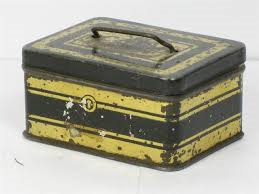
AS THE TALE GOES, a few years ago the, then, vicar of St Nicholas Church in Bramber had been clearing out a dust laden cupboard in the vestry of the church. There he came across an old tin box containing various documents of an archaeological nature. He thought I might like to look through them. Amongst the miscellaneous papers were notebooks of a certain Artemus Smith. I decided to research him.

box

DR ‘ARTEMUS’ SMITH was an archaeologist of great courage, determination and fiction.  He was born Ambrose William Dermot Smith in 1901, the only son of Brigadier Sir Hartley Archibald Jefferson Smith and Lady Constance Louise Smith (nee Carter-Bazeley). He reluctantly studied the Classics at school and is remembered for his frustration with the ancient languages, “It’s all Greek to me” he had said (this may have been where the expression first came from – or not).

 AT

Artemus Smith

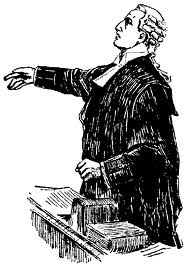
He went up to Oxford to study Law but spent most of his time hunting, shooting and fishing. It was as a result of this that he picked up from his colleagues his nickname ‘Artemus’ (male version of Artemis, Goddess of hunting in case you were wondering) and the name has remained with him. Despite these activities he successfully completed his degree but on coming down from Oxford he took a break before professional study and travelled Europe with his cousin, Horatio Smith (see below). It was during these travels that he first became involved with archaeology but was put off it as a career due to the derisory pay (nothing changes). After various trips with his cousin and various ‘dallying’ in archaeology both abroad and in England, he qualified as a barrister and was Called to the Bar to practise law (not to be confused with being called to the public bar to practise drinking – although it is rumoured he did that as well).

barrister

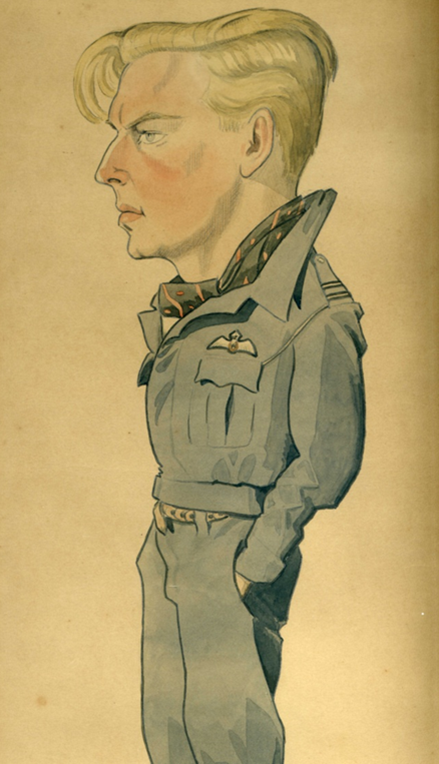
This career (the Bar, not drinking) was interrupted by the Second World War and he volunteered to join the Royal Air Force and was soon to be piloting a Wellington bomber. His service was cut short after he flew into a German spotter plane over Germany (“well, strap me, it was dark and I didn’t see him,” he had said, adding, “and anyway, who was supposed to be doing the spotting?”[1]). He ended up in a German prisoner of war camp, Stalag Luft III (better known for ‘The Great Escape’ – in fact, it has been suggested that the character played by Steve McQueen in the film was based on Artemus Smith[2]).

 Picture1

Believed to be Flight Lieutenant ‘Artemus’ Smith at Stalag Luft III (drawing by Henri Picard – sadly one of the 50 shot after ‘The Great Escape’)

His experience as a prisoner of war – digging – gave him a more intent interest in archaeology. After the war, he abandoned the legal profession and went up to Oxford again but this time to study Archaeology (he was now a man of substantial inherited means after the death of his father so ‘derisory pay’ was no longer an issue). He went on to obtain his doctorate and then spent some time supervising and thereafter quelling disruptive and rebellious excavators on the ancient site of Arcadia in Greece – obtaining another nickname, ‘Smith of Arcadia’ [3].

His cousin, Professor Horatio Smith, was an archaeologist and lecturer at Cambridge University and gave Artemus much encouragement in the field. An account of Horatio’s heroic and equally fictitious activities is reflected in the excellent 1941 film Pimpernel” Smith  (click on name for film) wherein Horatio (played admirably by Leslie Howard) helps victims of nazi persecution escape from Germany during the build up to WWII. A ripping yarn highly recommended.

b29a3e8d-4e98-4521-ada0-143ca92248c9

Prof. Horatio ‘Pimpernel’ Smith

When Artemus asked Horatio about working in archaeology, the latter replied, “Well, an archaeologist is a person whose career is in ruins.” He added, “Such a person may be relied upon to make wise, intelligent and coherent analysis – having exhausted all other alternatives”[4].

Interestingly enough, Dr Henry Walton Jones Jnr (better known as ‘Indiana’ Jones) would have been a contemporary of Artemus Smith (certainly copying Smith’s flair). It is, therefore, somewhat surprising that I have not found any mention of Jones in Artemus Smith’s notebooks. I’m sure, because of their similarities, the two would have met up or, at least, been in communication. This makes me query the actual existence of Indiana Jones or whether he is just the figment of someone’s  extravagant imagination (oh me of little faith).

The rest, as they say, is history – well the notebooks at least (see below) – other than to add that Artemus sadly died in 1988, at the age of 87, from a fall from his motorbike whilst dirt-track racing on the Sussex Downs.


Footnotes

[1] Letter to his cousin Horatio Smith

[2] Letter from Sir Dandelion (now Lord) Attenboot to Artemus Smith saying that he knew someone who knew someone else  who had heard this – so it must be true  (Attenboot added, “they got some young American fellow to play the part to disguise the fact that the character was a Brit”)

[3] Sometimes confused with some chap called Lawrence

[4] From his unpublished autobiography entitled: Wot ho! Dig it all up


Artemus Smith’s Notebooks

Anyway, if you believe all that then you’ll believe this: as I have been perusing Artemus Smith’s archaeological notebooks, I will bring you extracts from them on each blog hereafter. Here is the first one:

I have just returned from a camping excavation of the city of Troy, with my very agreeable companion, Barratt Holmes, a relative of the famous Sherlock Holmes.  Barratt, too, is a detective of some fame and with similar deductive powers conducive to archaeology.  On the first night we camped outside the romantic ruins and having fortified ourselves with fine wine, we retired to our tent.  Some hours later, I awoke and nudging my colleague, enquired, “Barratt, my dear friend, look up and tell me what you see.”

Barratt replied, “I see hundreds of stars.”

“What do you deduce from that?” I asked.

Barratt thought for a minute, then responded, “Astronomically, I deduce that there are millions of galaxies and potentially billions of planets.  Astrologically, I deduce Saturn is in Leo.  Horologically, I deduce that the time is three o’clock.  Theologically, I deduce that God is all-powerful and we are but small and insignificant.  Metrologically. I deduce we will have a beautiful day tomorrow.  Why, my good friend, what do YOU deduce?”

“My dear boy,” I replied, “I deduce that some bounder has stolen our tent.”


Next blog (next Friday): St Nicholas’ Church at Bramber Castle – and another extract from Artemus Smith’s notebooks

Bramber Castle – architecture and archaeology

So, last blog I waxed lyrical and briefly about the history of the Castle. ‘Briefly’ because, although its been around a long time, it hasn’t had much excitement. This is probably a good thing if you happened to have lived there. But it doesn’t make a good story and could be classed as a bit boring.

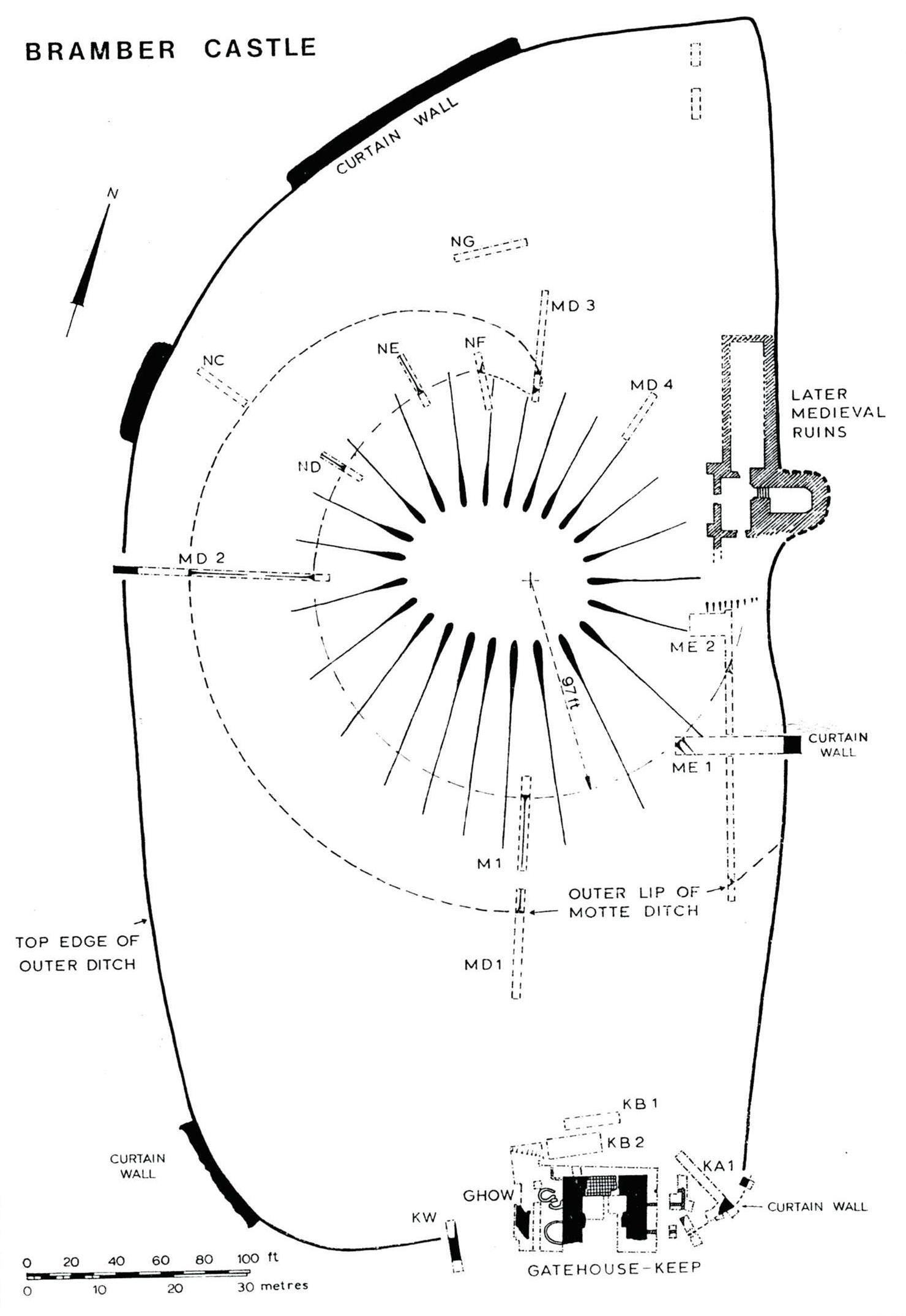
plan

Plan of Castle grounds  (Barton & Holden, ‘Excavations at Bramber Castle’ Sussex 1966-7′, Archaeological Journal, 1977: 14)

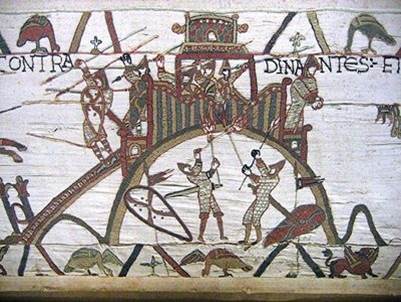
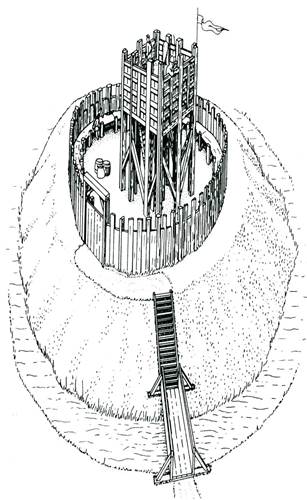
Boring it may have been but what did it look like? It was a ‘motte and bailey’ structure. That’s a French thing. The motte, now the tree covered mound in the middle of the site (well sort of middle), would have been the location of the wooden dwelling of the baron (initially William de Braose if you remember last blog). The bailey is the flat grass area around it. How do we know this? Well, the great lump in the middle of the castle grounds is not the result of giant moles so it’s a bit obvious. Also the Bayeux Tapestry gives us an indication of what such a castle motte may have looked like. See pic below – the wooden structure on top of the motte mound is being defended and it has a ditch around it (see pic further below for what the Bramber motte may have looked like). There is archaeological evidence that Bramber motte once had a ditch around it.

bayeux

 Bayeux Tapestry – defending the wooden dwelling on top of the motte surrounded by a ditch

The main excavation of the Castle’s gatehouse, curtain wall, motte ditch and sections of the bailey was carried out by K.J. Barton and E.W. Holden in 1966-67.  A great many finds were uncovered, some dating back to the 11th century.  They included various types of pottery, bronze tools, iron arrowheads, horse fittings, buckles, clay pipes and 917 fragments of animal bones were identified.

motte

What Bramber motte may have looked like – with surrounding ditch (not with water in it)

What is, perhaps, equally interesting (so as to make it not too boring – see above) is what was not found. As mentioned in the previous blog, it was generally believed that an explosion, in a skirmish during the Civil War, destroyed the Castle.  However, Barton & Holden report that no traces of Cromwellian destruction were recovered. Admittedly, this does not mean it definitely did not happen – but why blow up something that is already a ruin? (I know, the Venetians blew up the ruins of the Parthenon on the Athenian Acropolis because the Ottomans used it an ammunition store …. but that’s another story).

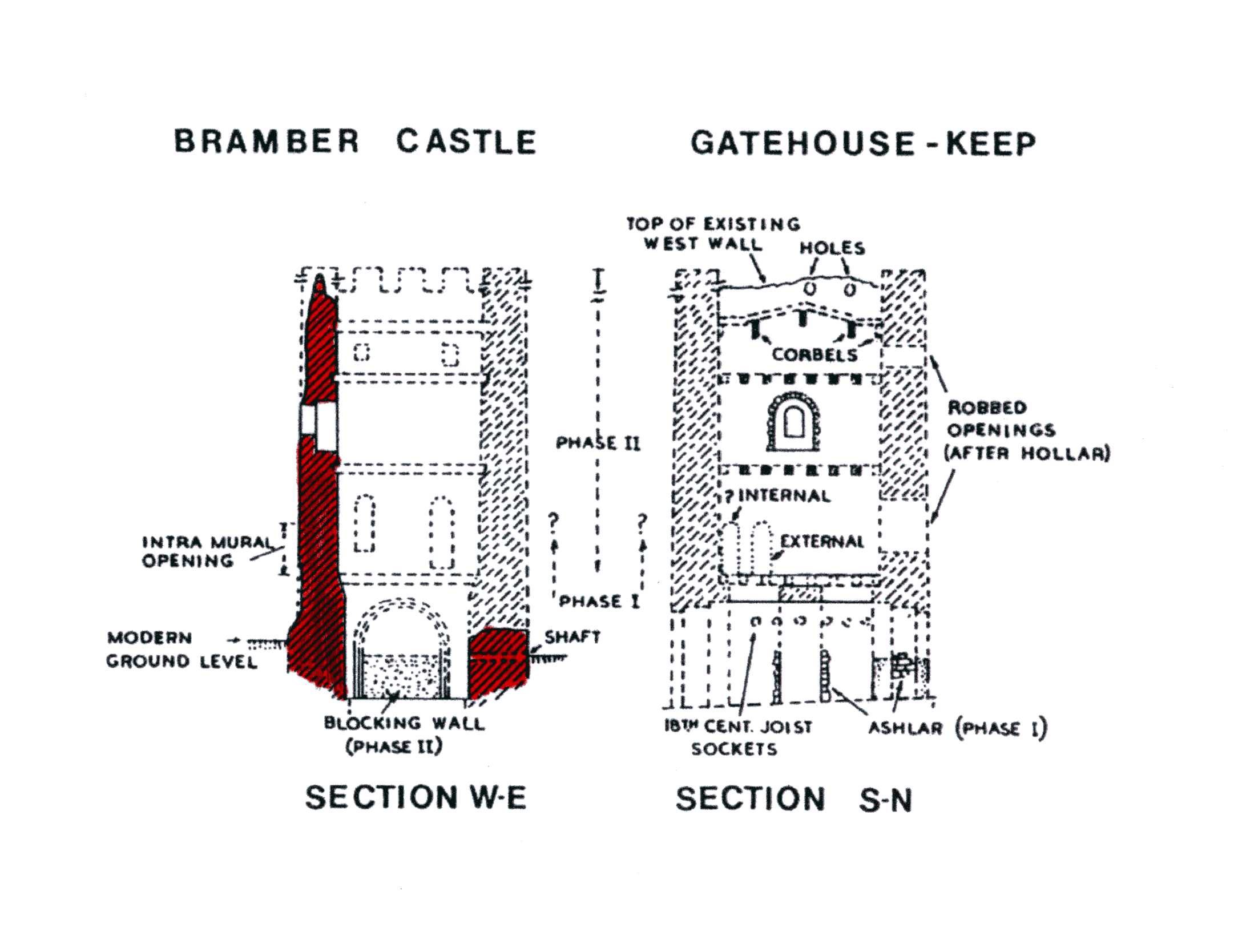
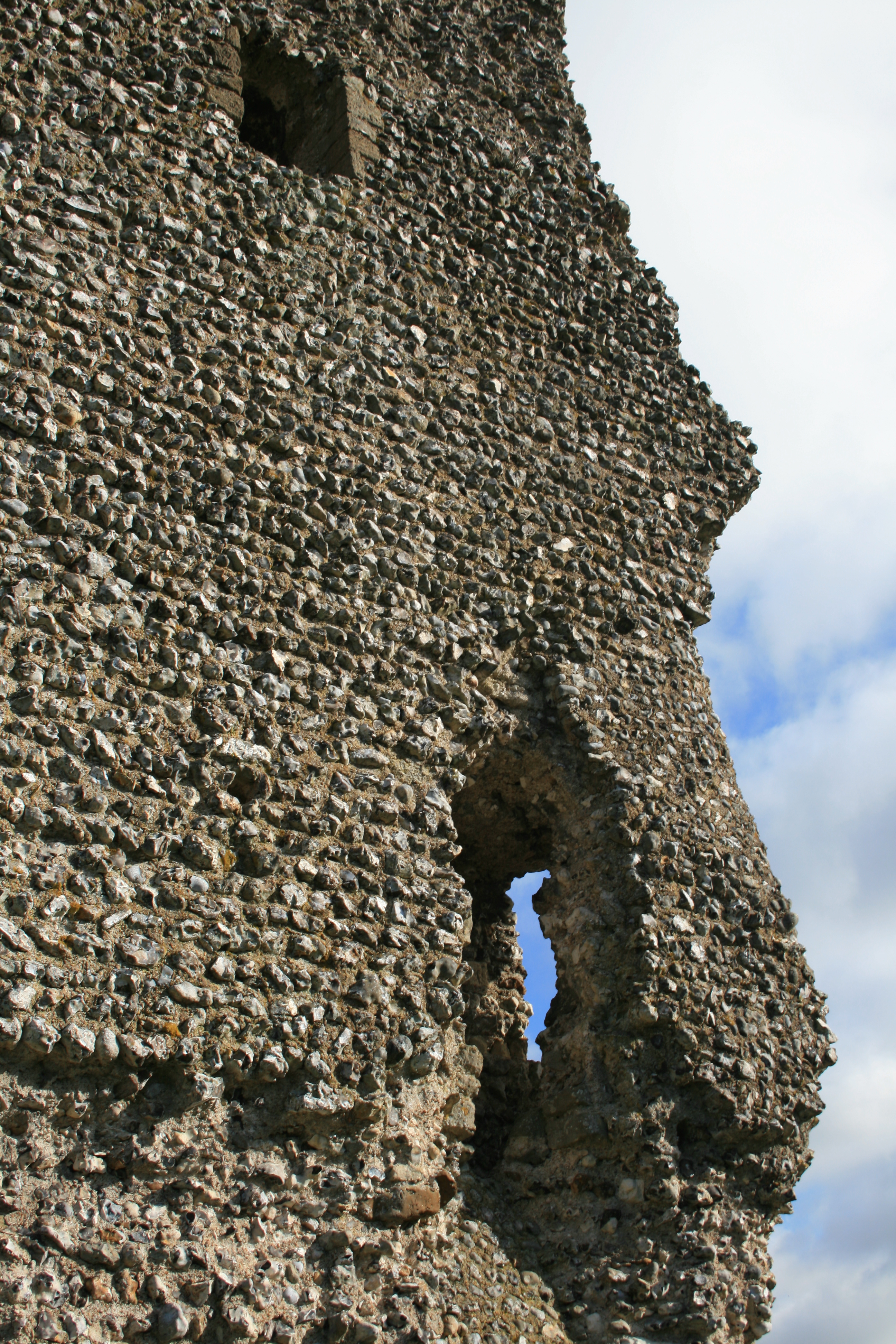
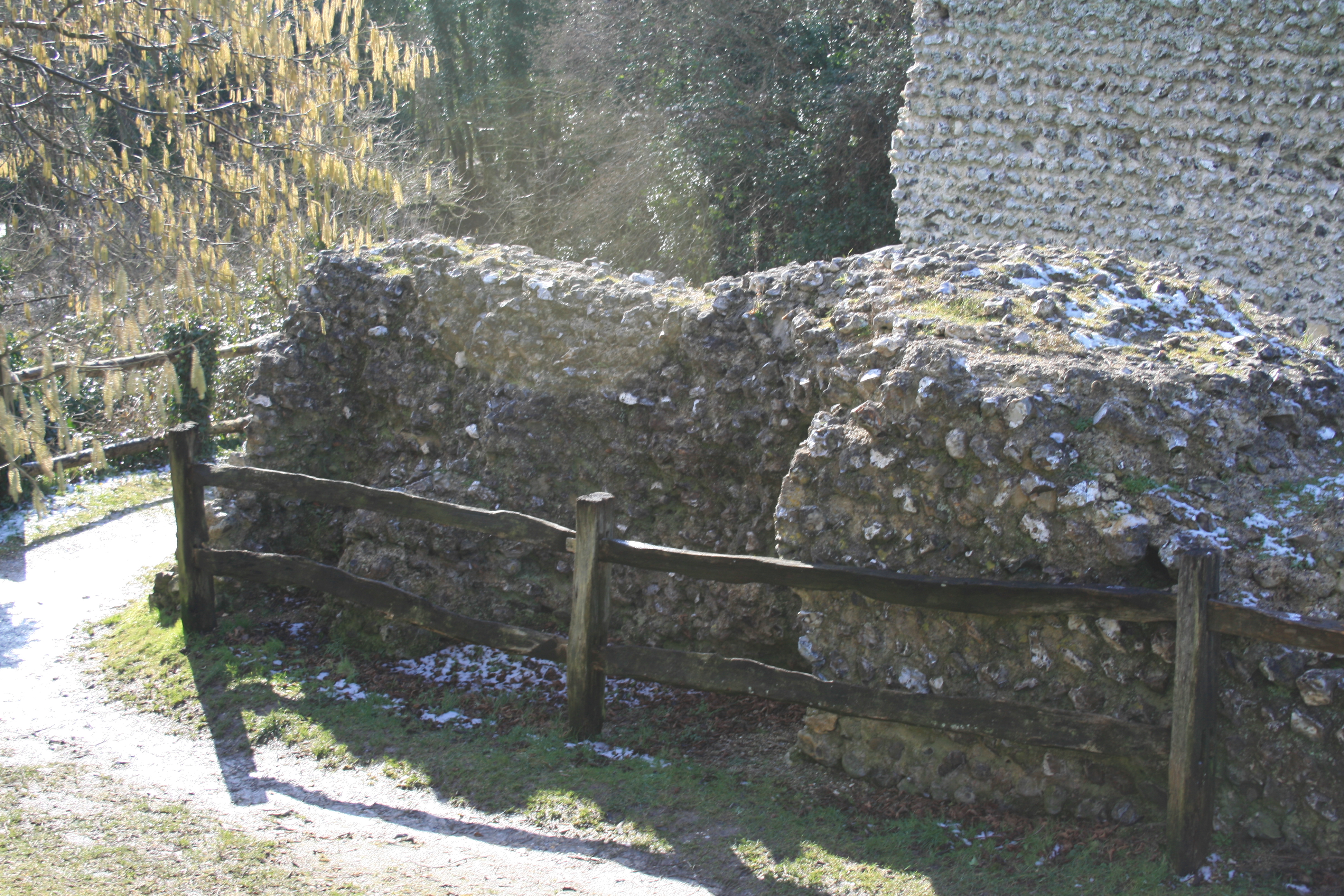
However, the keep or gatehouse to the Castle (stonework to the right of the steps) appears to have been built in two phases.   Firstly, in the 11th century (c.1075), it was simply a gatehouse about 38 ft in height, 9ft thick and consisting of a north and south gate.  This would have been the main entrance.  Secondly, during the 12th century, possibly Philip de Braose, or his son William, said, “I want it BIGGER”. It was transformed into a tower in excess of 50 feet in height (as it – well, the west wall – is today).  The south gate was blocked up (to make it more secure from invaders) and the north gate half blocked by a blocking wall.  The internal ground floor was filled to the top of this blocking wall (the depth of the floor is about 10 feet below the present ground level).  The entrance to the keep would have been from this north side but also by an intra-mural opening to the side of the west wall (still standing – see photo below).  There was a semi-circular stone base beneath this opening, perhaps indicating the base to the stairway to the entrance.  The main entrance to the Castle moved to the curtain wall west of the keep, in line with the present entrance and moat ‘bridge’.  It is likely that the moat would have been dry except the lower east side.

plan003

Plan of  gatehouse (keep) – areas shaded red exist today (Barton & Holden, ‘Excavations at Bramber Castle’ Sussex 1966-7′, Archaeological Journal, 1977: 37)

There is evidence of two ovens adjacent to the outside of the west wall indicating that some building structure existed albeit for only a short period of time (due to lack of evidence of repairs).  Oven 1 (to the north) had an easterly opening close to the keep wall.  Oven 2 had an ashened westerly opening but a clean northerly one – the draw hole. Pottery associated with these ovens was 12th century. Oyster shells and a pit (tank) were found immediately to the north of the keep. Exciting isn’t it …..?

IMG_0589

The intra-mural opening to the side of the west wall

The south wall of the keep collapsed into the moat in or about the 16th century due to erosion of its foundations (some of it is still there) whereas the north wall and the east wall suffered flint and stone robbing.

On the external side of the east stub wall of the keep is a fireplace and a curving stairway.  Late in the 17th century, early 18th, timber buildings were constructed to the east of this stub wall.  These were temporary humbled dwellings.

IMG_0579

East stub wall where the later wooden structures would have been

To the east of the motte are the remains of a 13th/14th century domestic building.  The entrance from a courtyard to the east (below the mound) led into a central chamber or hall (see very first plan above).  To the right there was possibly a guardroom; directly in front of the entrance steps lead to perhaps a chapel and semi-circular lookout area (photo below). To the left of the entrance is the kitchen area with two fireplaces and an oven (please don’t try cooking there today).

IMG_0583 Possibly a guardroom – get that view!

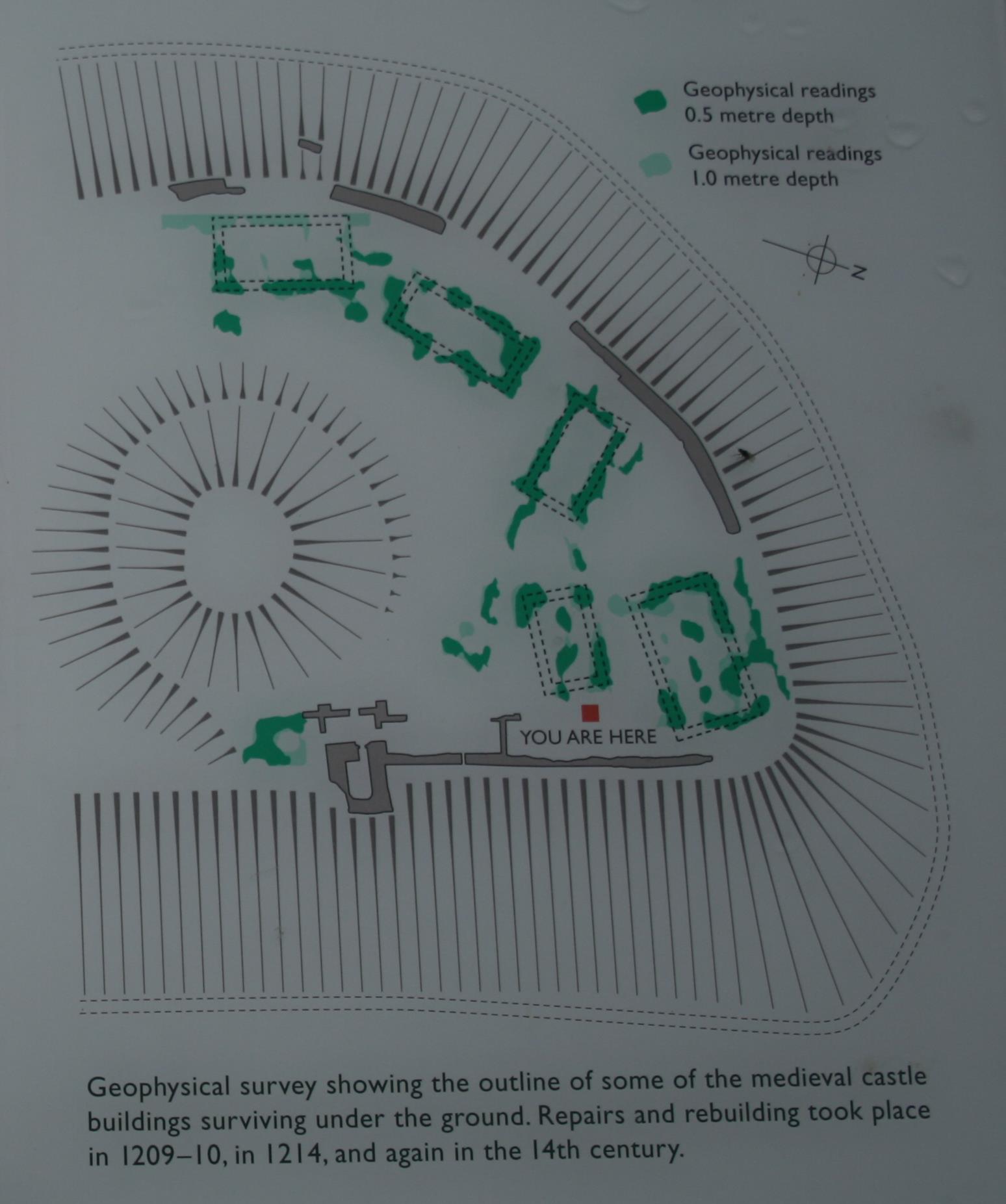
South of the motte evidence of temporary wooden structures was found along with a hearth, iron and bronze waste, nails and slag indicating a smithing area and workshop during the 14th century.  South of the workshop were two lime kilns, again 14th century but probably after the workshop ceased to function.  The lack of structure indicates temporary use and probably erected for repair work to the Castle. However, around the north end of the motte, geophysics has shown foundations of several buildings (pic below). Busy place once upon a time.

castle geophiz

 Visitor Board from Castle site (English Heritage)

And that’s Bramber Castle in a nutshell!  Not boring at all …….

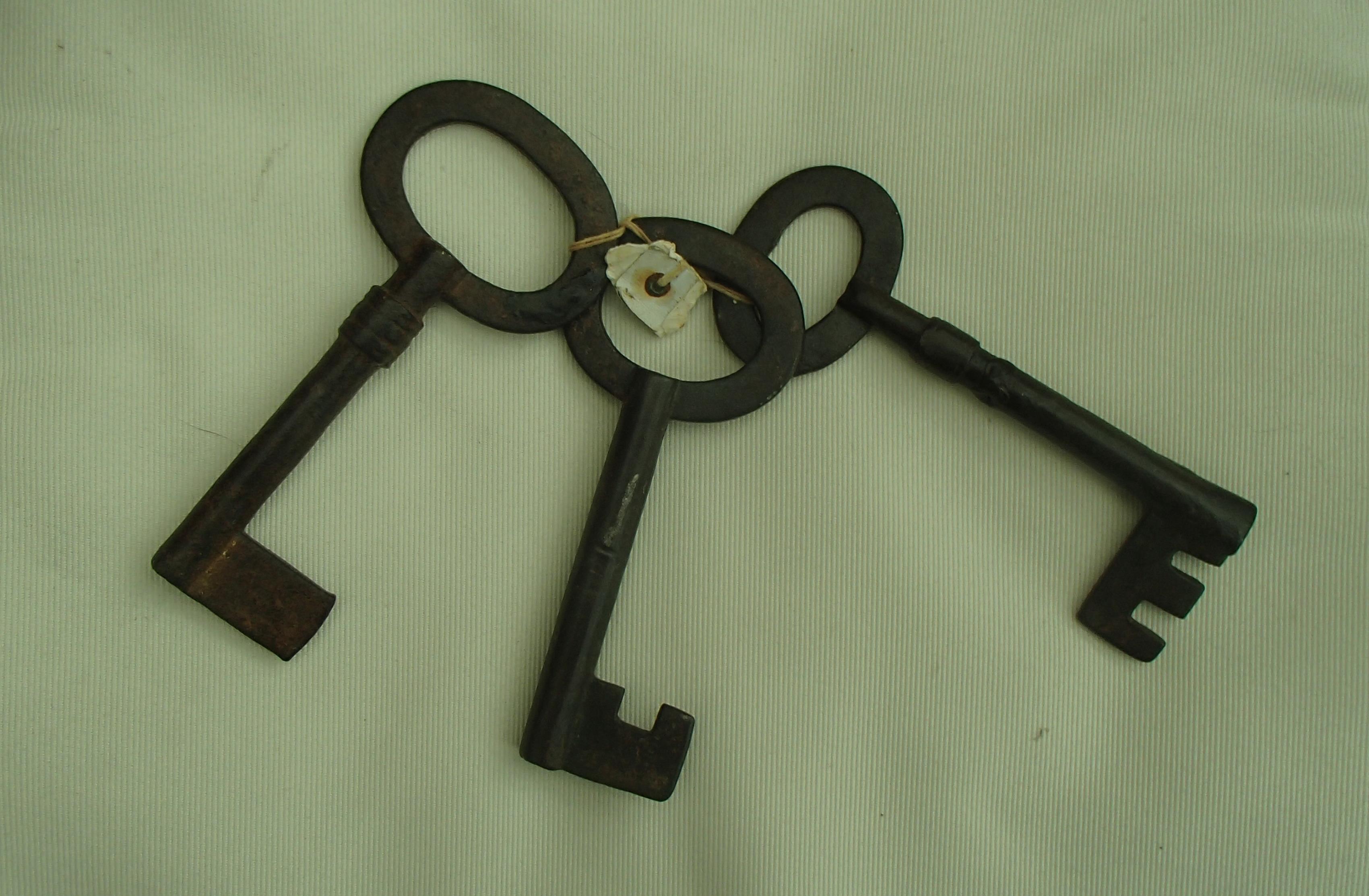
Oh, and you know I said in the last blog that I was ‘Keeper of the Keys’ of the Castle – well, here are the keys (scale: each is 6 ins [15cm] in length):

keys


Next time: I’ll introduce you to Dr Artemus Smith – archaeologist of great courage, determination and fiction – Britain’s very own Indiana Jones (apologies to USAS members who have already met him)

Coming soon: St Nicholas’ Church (Bramber Castle); Ghosts of Bramber Castle; St Mary’s, Bramber. (Good old Bramber!).

Bramber Castle – history

I know in my profile I said my main interest was Aegean archaeology but more of that some other time. I also said I was interested in medieval history so let’s start the blog nearer to home – my home in Bramber. Come and visit this great little village at the foot of the South Downs in West Sussex. It is halfway between Brighton and Worthing (near to Steyning). It has a great pub (and hotel), The Castle Inn, a superb Chinese restaurant, The New Bramber Dragon, and a fabulous Indian restaurant, The Maharajah. What more could one want!  How about a medieval ruin?  How about Bramber Castle …..

ONCE UPON A TIME a greedy king came to England from Normandy. His name was William (nothing against King Williams generally of course or there goes my future knighthood). It was in the year of our Lord, 1066. And so it came to pass that William smote King Harold of England and laid claim to his lands.

William divided Sussex into five Rapes:  Hastings, Pevensey, Lewes, Bramber and Arundel (Chichester was not made a Rape until the mid-13th century), all running north to south to protect the coast and communications with Normandy.  Bramber was given to William de Braose who built the castle (and the still extant St Nicholas Church) in or around 1073 and it  was retained by his family until the early 14th century.  In 1324, William VI de Braose ‘leased’ the Castle and town of Bramber to the King (Edward II).  On William’s death, in 1326, he left no male heirs and his co-heirs were his daughter, Aline  (who had, in 1298, married John de Mowbray) and John de Bohun, son of Joan, William’s other daughter (who had married James de Bohun).  On the accession of Edward III (1327), Aline recovered her manors and the Castle was restored to her son, John de Mowbray. And rightly so.

It remained in the de Mowbray family until Thomas de Mowbray’s daughter, Margaret, married Sir Robert Howard.  Their son John Howard, was created Duke of Norfolk in 1483 (Thomas de Mowbray being the first Duke) and the Castle remained in the Howard/Norfolk family (as does Arundle Castle to this day) until it was sold privately to Dr. F. Penfold in 1926.  On Penfold’s death, in 1946, it was purchased by the National Trust (and  is now maintained by English Heritage).  During the Victorian period it became something of a ‘leisure park’ when it was leased to the brewery of the local pub, the White Lion (now the Castle Inn).

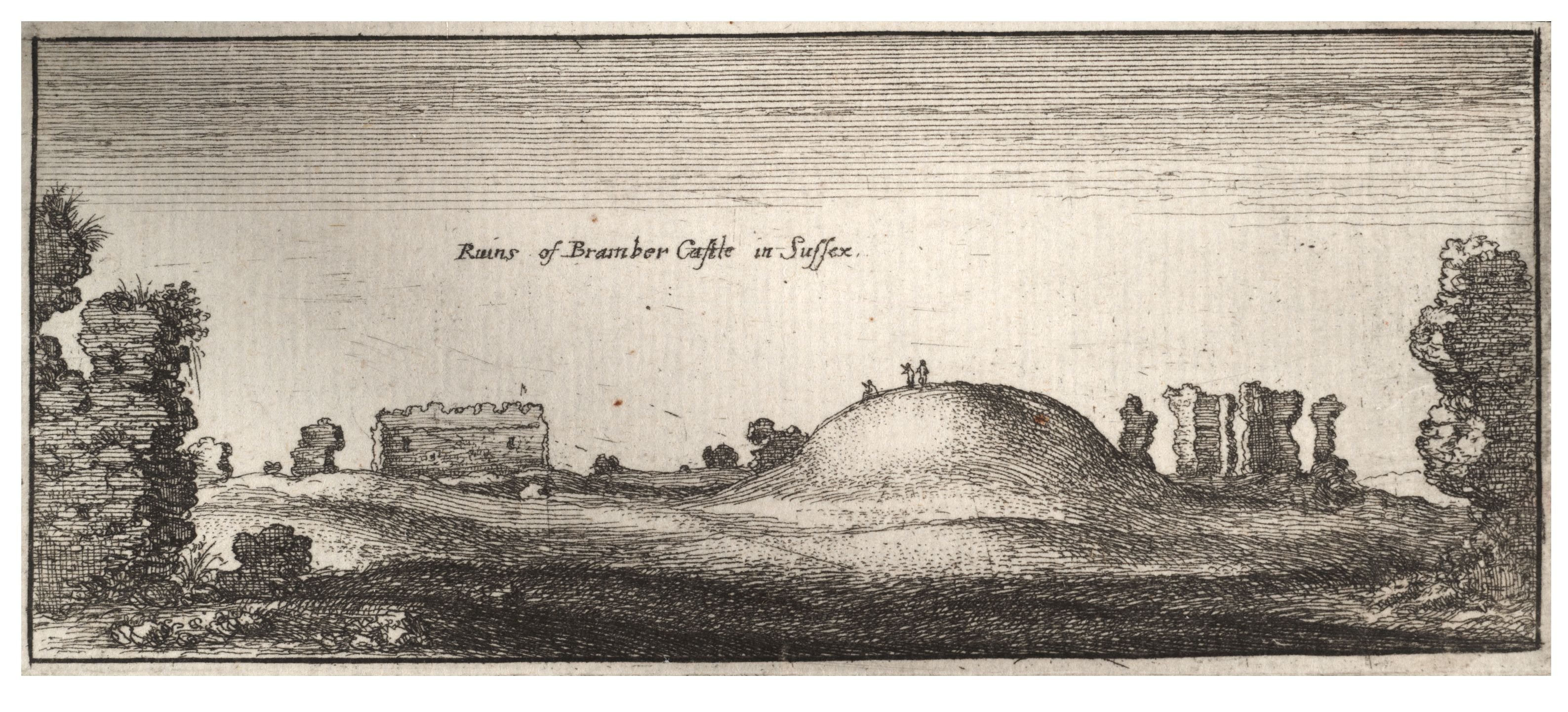
It would appear that the Castle was not used to any great extent once it had passed to the de Mowbray family.  There is a record of two pirates being held there in 1355.  Archaeological evidence suggests that the Castle was no longer in use (as a castle) after the mid 15th century, whereafter a lack of maintenance and robbing of stone for building material use elsewhere has caused its decline.  In William Camden’s survey of Britain of 1586, he reported that the Castle was a ruin. As can be seen from the Hollar drawing below (existing gatehouse wall is right foreground), it was certainly a ruin in the 17th century. All very sad of what was once such a grand complex.

 holier pic

‘Ruin of Bramber Castle in Sussex’  by Wenzel Hollar (1607-1677)

When William VI de Braose handed the Castle over to the king in 1324, it underwent repairs, the work of which terminated in November 1326 – on the death of William.  There are no further reports of repair work.  During the reign of Richard II (1377-99), there was concern amongst the Sussex locals that the county would be in threat of destruction should the French invade.  The king was petitioned to garrison the Castle but there is no record that this occurred.

There has been a suggestion that it was fortified during the Civil War and blown up by the Parliamentarians.  There is no evidence for this, although there was a skirmish, in 1643, over Bramber Bridge (by St Mary’s House), which the Parliamentarians were defending.  There is reference, in personal letters of the time, of a ‘fort’ and defensive ‘workes’ at Bramber but, although they could be references to the Castle, they could just as well be references to the bridge.  Certainly the bridge would have been an important position to hold (rather than a ruined castle on top of a hill) to prevent the Royalists proceeding east.

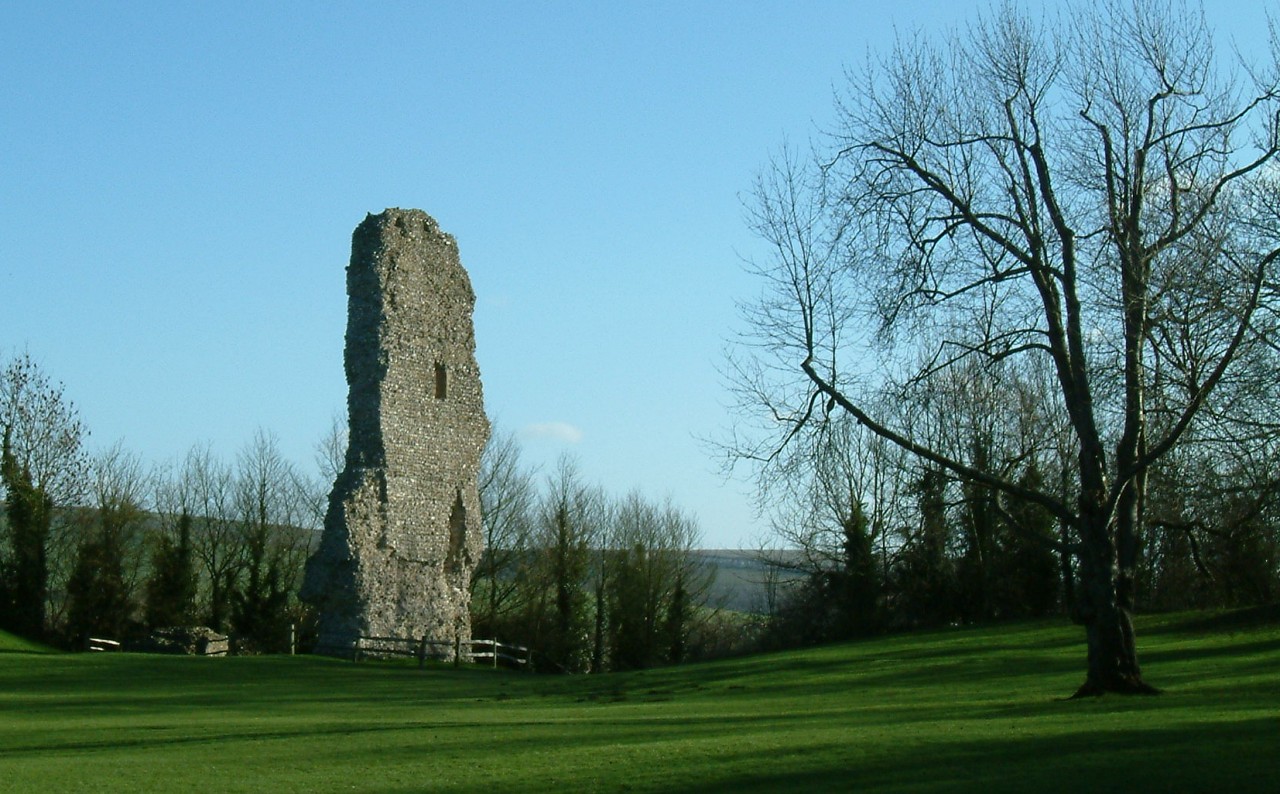
cropped-brambercastle2.jpg  The ruin of the west wall of the gatehouse of the Castle

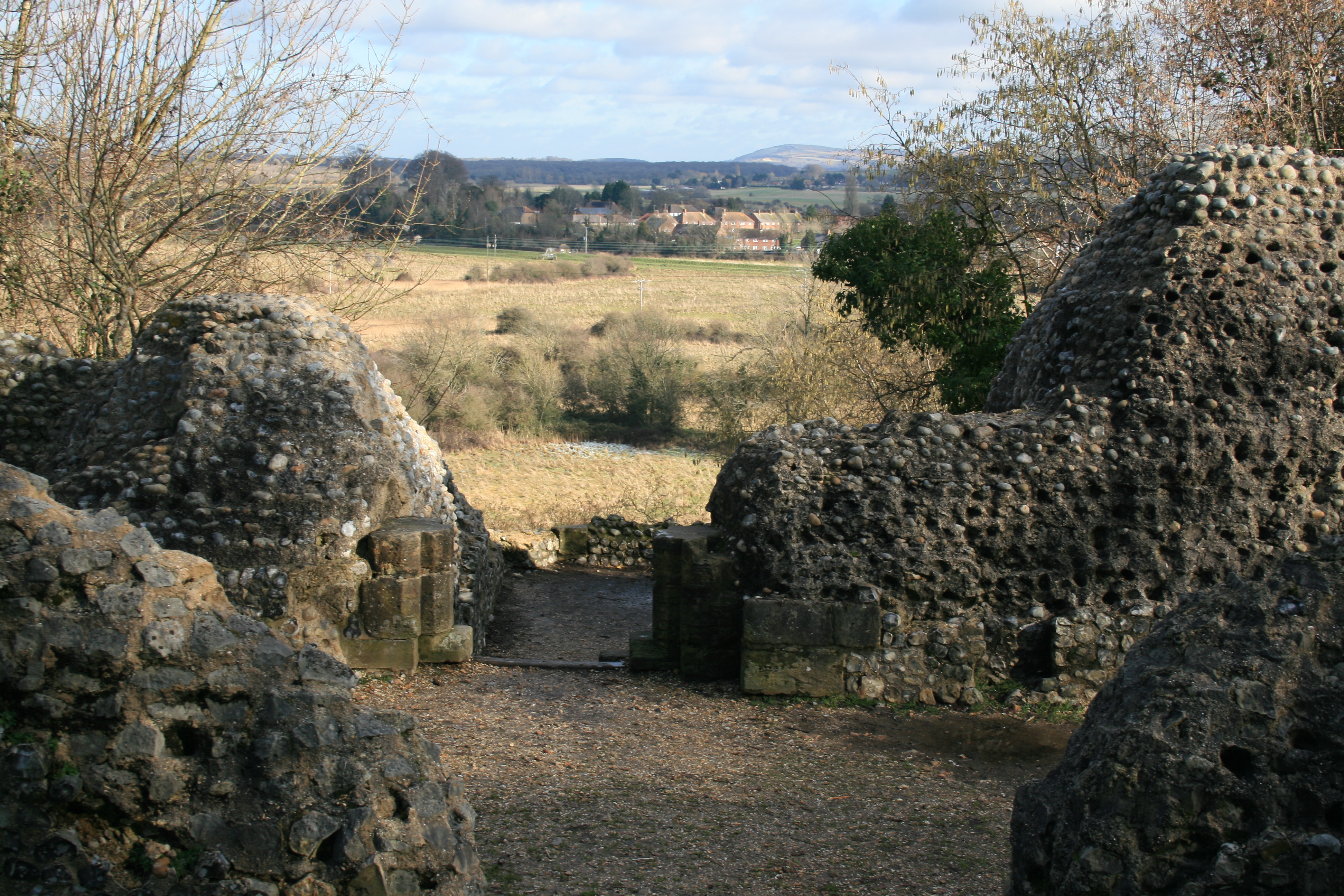
 Despite the Castle’s neglect, it is still a fascinating site to see, with its solitary gatehouse wall, its tree covered motte and its spectacular views over the Sussex countryside – a haunting reminder of what was, nine centuries ago, a formidable bastion of its time.

The title ‘Keeper of the Keys’ of the Castle dates back to 1291. In 1346 the recorded salary was 30 shillings a year. I mention this merely because I am now the ‘Keeper of the Keys’ which sounds very grand (well, I think so) but, although I do have some old keys (I won’t say where they actually came from as that would spoil the mystique) there is no door for them to open.


Next blog: I’ll ramble on a bit about the architecture and archaeology of the Castle.