Glastonbury Abbey: fact and fiction

FACT: Glastonbury Abbey existed in the Middle Ages and still does – to a certain extent.

FICTION (maybe): King Arthur and his two-timing wife, Guinevere, were buried there.

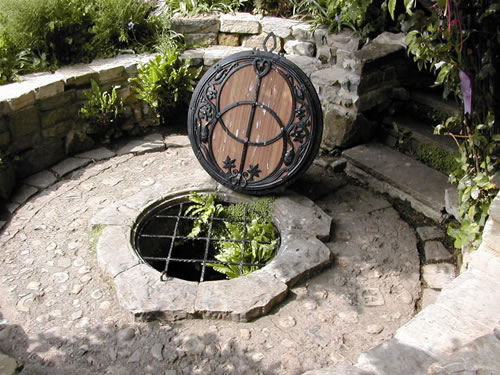
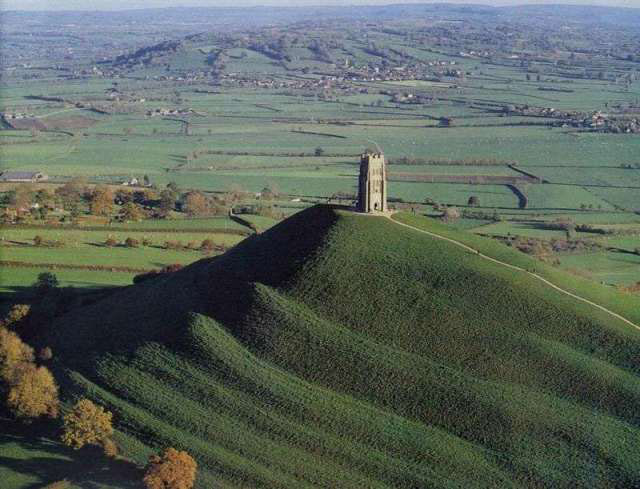
First let’s distinguish between myth, legend and fiction Myth never happened (trust me – e.g. Greek and Roman gods, 6 headed monsters, one-eyed ogres  … actually, I do know someone who might fit that description); legend may have happened (e.g. Geoff Hurst’s 1966 World Cup 2nd goal did go over the line); fiction didn’t happen but some fiction is based on legend (e.g. politicians are honest). Get it? So, legend has it that Glastonbury Abbey was built on the site of a wattle and daub church erected by Joseph of Arimathea when he visited the town with the young boy, Jesus. After the crucifixion of Jesus, Joseph revisited Glastonbury (or the island of Avalon as it was then) with the Holy Grail and buried it below the great hill of Tor – now the site of the Chalice Well.
 glastonbury1 

Hill of Tor, Glastonbury

Chalice Well, Glastonbury, England_JPG

Chalice Well at the bottom of Tor Hill

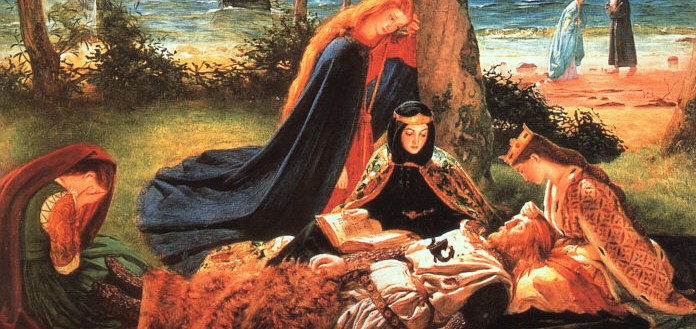
Fiction (as legend) then moves forward to AD 540(ish) and the death of King Arthur. He was reputedly taken, mortally wounded, by boat to Avalon. There he died and was buried – at Glastonbury in the ancient burial ground (3 on plan), maybe.
The_Death_of_King_Arthur-e1354392954343

morte d’Arthur (‘so long Art’)

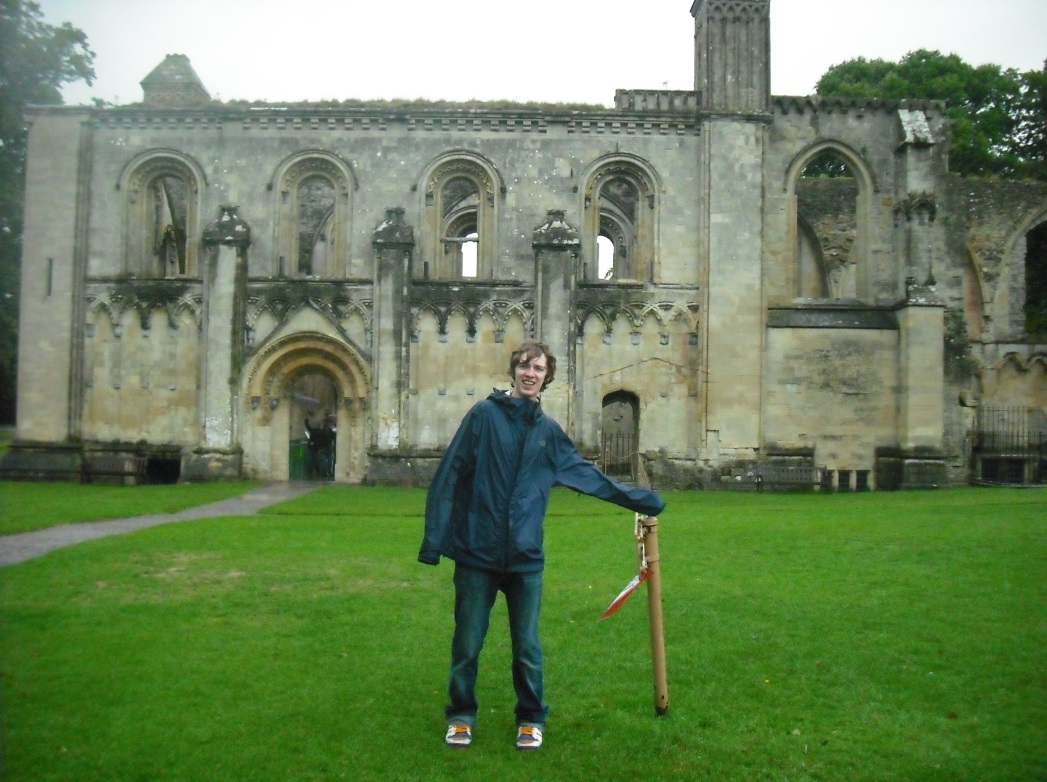
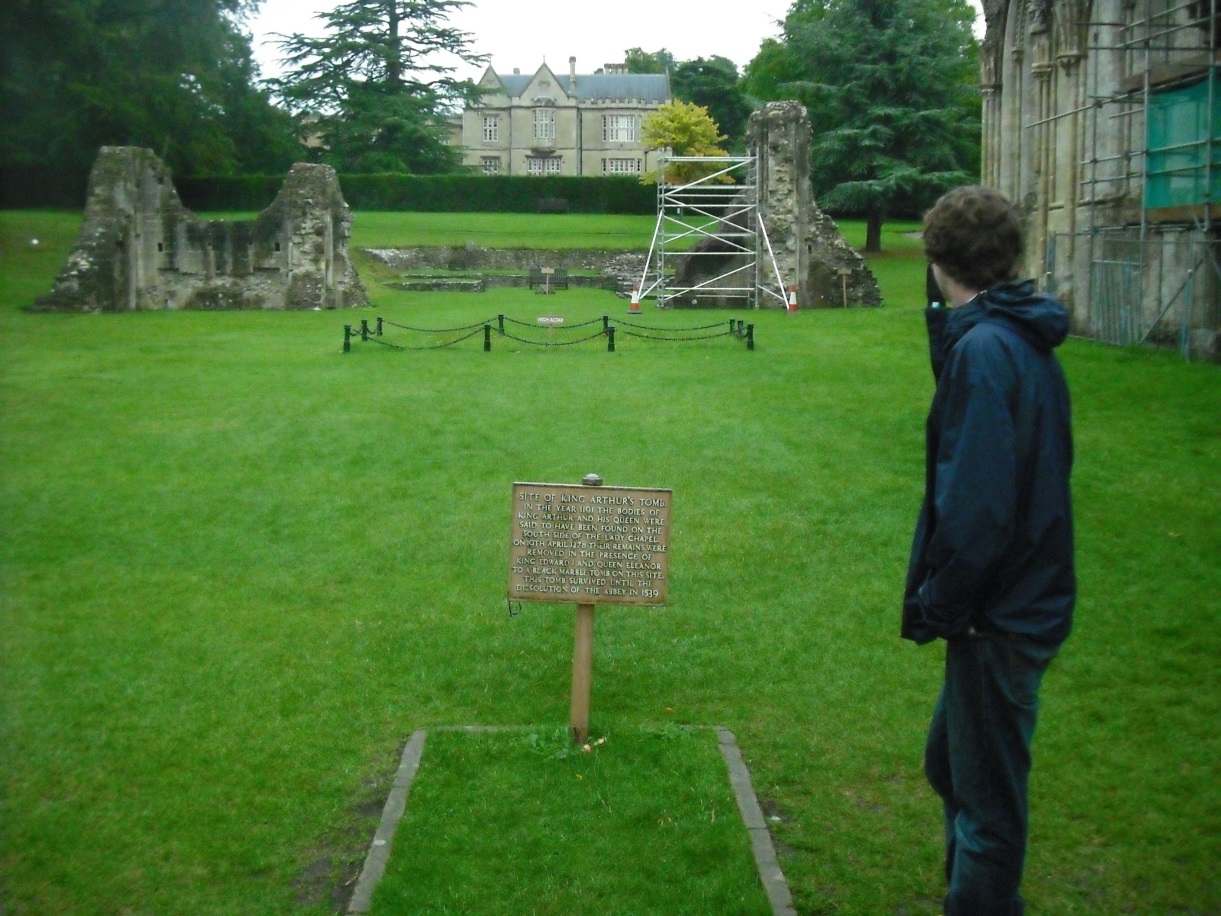
Fact and fiction merge: In 1190 it is recorded that the monks dug up a grave in a cemetery just south of the Lady Chapel (not to mention St Dunstan and Galilee chapels) at Glastonbury Abbey. It contained two skeletons, male and female, and they were deemed to be Arthur and Guinevere. It is not clear what happened to them at that time, but in 1278 they were reburied in a black marbled tomb in the Choir/Chancel of the Nave before the High Altar. King Edward I was present, so it must be true (must it? Bit like reading the Sun or the Daily Mail). After the vandalising of the Abbey in 1539 the bones were no longer to be found.


Plan of Glastonbury Abbey (north at top) (shaded red is what remains)
 glast 1

Toby pointing out the site of King Arthur’s first burial place …. maybe (looking north with Lady Chapel in background)
glast2

King Arthur’s tomb of 1278 in the Chancel (looking east, High Altar chain-linked in background with ruins of Edgar Chapel behind that)

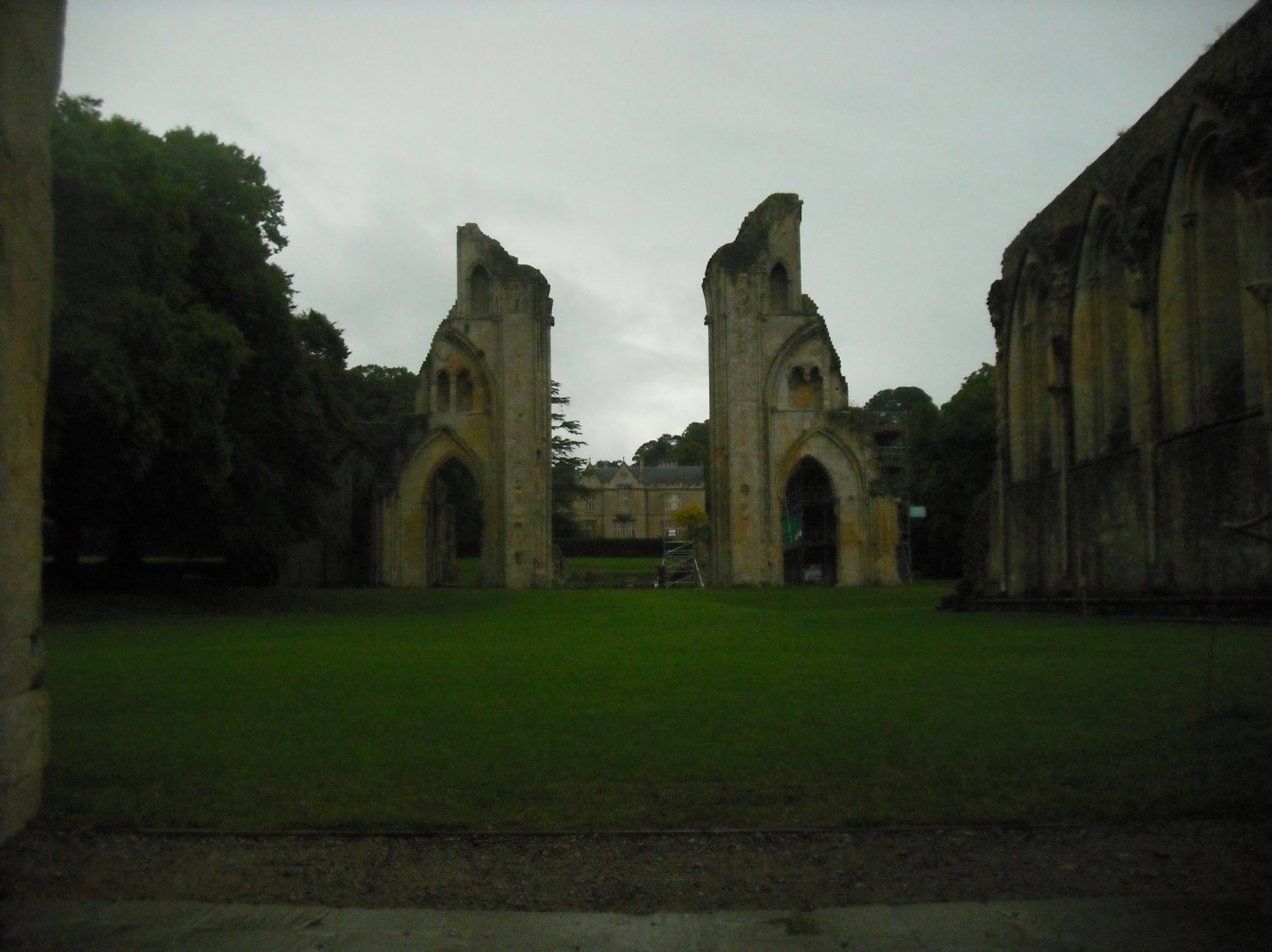
Back to fact: The first stone church at the site of the Abbey was built by the Saxon King, Inde, in AD 712 and it was enlarged (the cloisters) by Abbot Dunstan in 940. In 1077, after the Norman invasion, this church was destroyed and replaced with a larger one by Abbot Thurstin. Then, between 1100-1118, Abbot Herlewin demolished this church and built the main Abbey. The Domesday Book of 1086 records it as the richest monastery in the country. The building was destroyed by fire in 1184 and rebuilt. Historical records tell us that rebuilding went on until 1524 and the archaeology gives physical evidence of these previous buildings. The Abbey was finally ransacked in 1539 after the dissolution of the monasteries by Henry VIII (there’s someone who had a lot to answer for). Regardless, the remains of the Abbey are well worth a visit.glast4
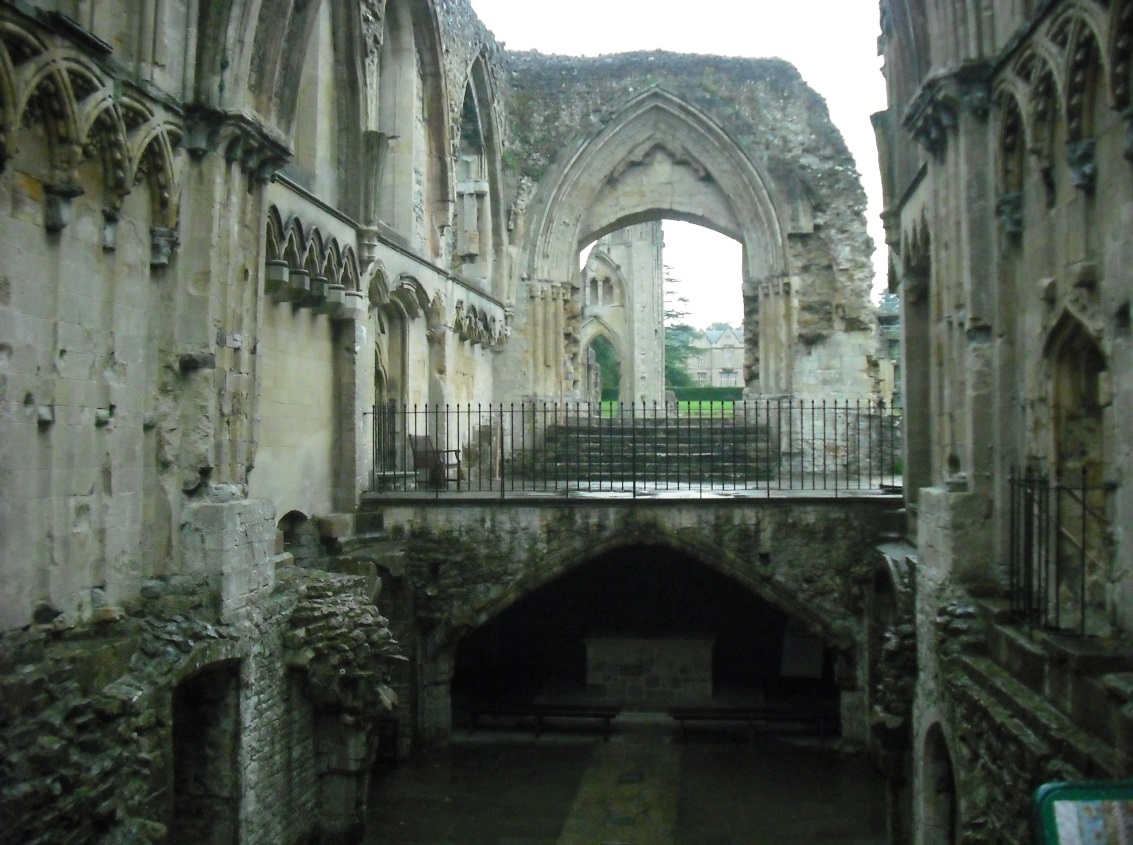
Interior of Lady Chapel (looking east)
glast 3

Nave and Central Tower remains (looking east)

And, of course, Caburn Castle is Camelot …… (it said so in the Sun – or was it the Daily Mail)
knight

.

Next week: The develoment of societies with archaeological interests


Artemus Smith’s Notebooks

I continue my research of the notebooks of Dr Artemus Smith, archaeologist of great courage, determination and fiction. Here is another extract:

met an old American friend of mine the other day in the bar of London hotel of some note. It was Douglas Fairweather Jnr, a famous actor over from Hollywood. He was slumped over a whisky.

“Hi Dougie, what’s the problem?” I enquired detecting a state of morose.

“I’ve come over to make a movie of The Merchant of Venice and they want me to play Shylock.” He responded in some despair.

“But that’s excellent old boy,” I retorted with much enthusiasm, “What’s the problem?”

He replied, “But I want to play the Merchant.”

AT

Travels in Turkey: House of the Virgin Mary

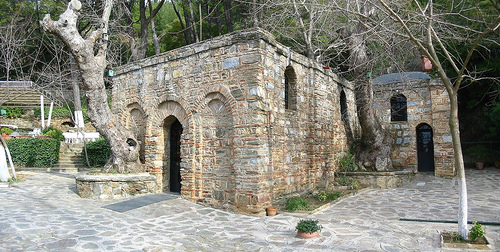
ON THE MENTION OF EPHESUS the impressive Roman town leaps immediately to mind. But everyone knows about that. However, there is another most intriguing place to visit in the vicinity. It is the house of the Virgin Mary. I say intriguing really because I had never known of it. One might say that is not surprising being that I am not particularly religious, but as Mary is a well known celebrity I thought her house would be ‘up there’ on the famous tourist list.

267e7bd2-f56c-4d61-b7da-484b3133a814

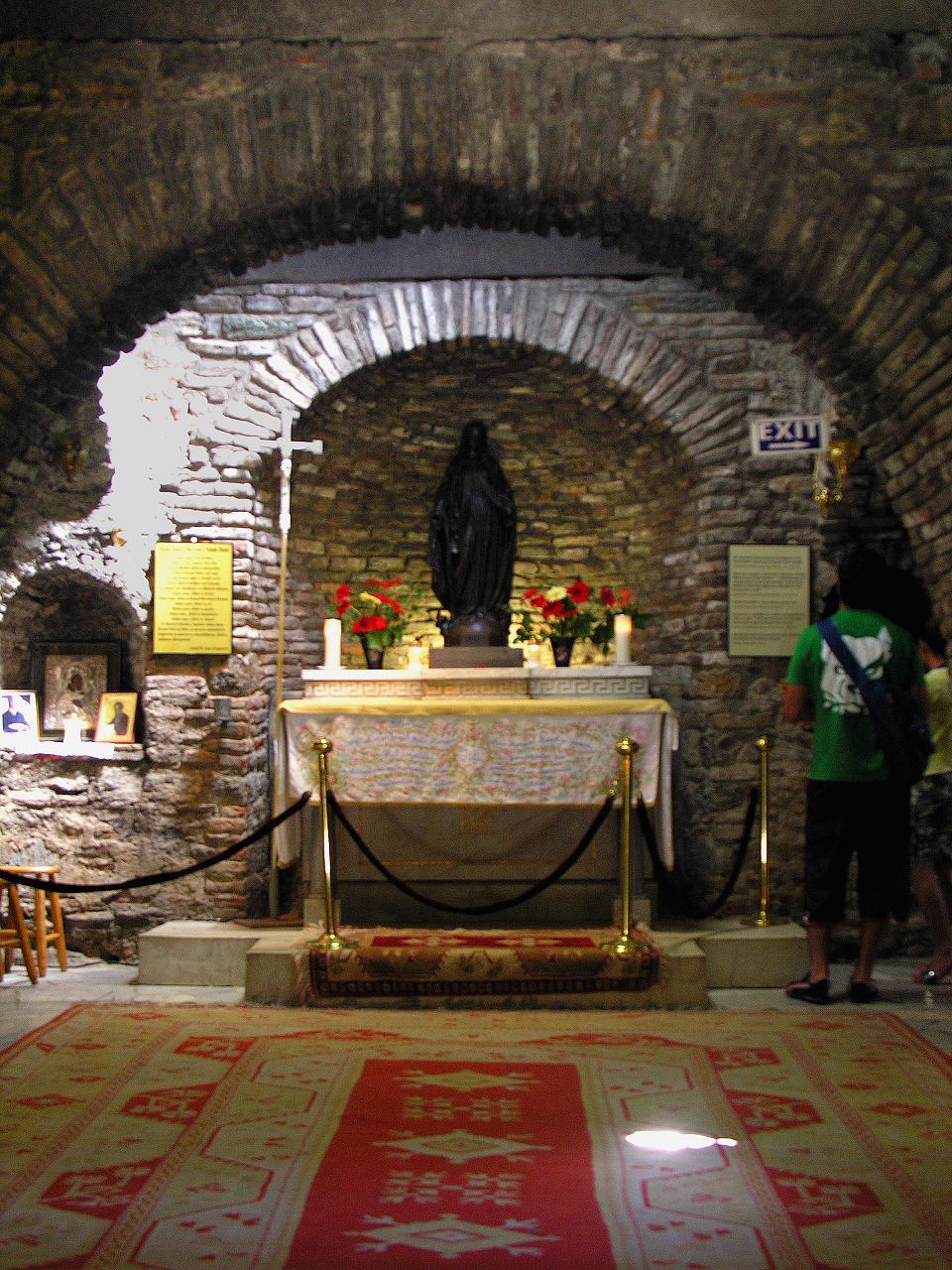
Virgin Mary’s House at Ephesus

Its discovery is an interesting tale but not, perhaps, for the sceptical ‘doubting Thomases’. The starting point, not surprisingly, is the Bible and the last mention of Mary before she disappeared. But it gives us a clue. It comes from St John, 19: 25-27:

“Now there was standing by the cross of Jesus His mother and His mother’s sister, Mary of Cleophas, and Mary Magdalene. When Jesus therefore saw his mother and the disciple standing by, whom he loved, he saith unto his mother, Woman, behold thy son! And from that hour the disciple took her unto his own home.”

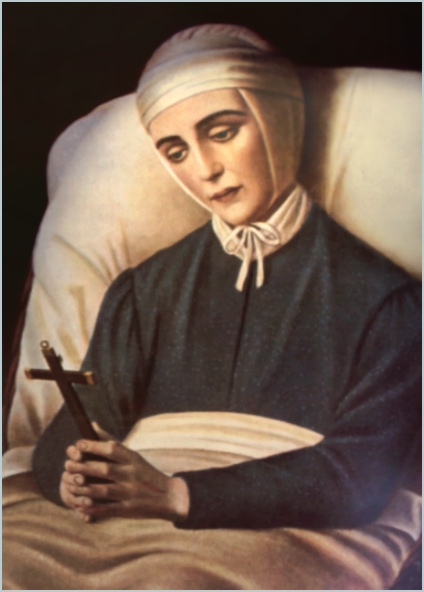
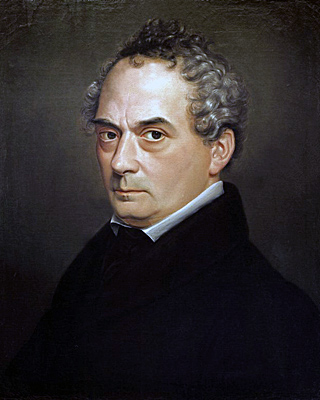
Obviously the disciple was John (as he was writing the Gospel, remember!), and he would have looked after Mary in his ‘own home’ which became Ephesus. Needless to say he would not have made a song and dance of it as Mary would have been in danger and wanted to play a low profile. However, it took until the late 19th century for someone to strike out to find where she might have lived in Ephesus. This someone was a Parisian priest, Father Julian Gouyet. Some may say this is the dodgy bit. His information came from the vision of a bedridden German nun, Sister Anne Catherine Emmerich, who had died some 60 years earlier in 1824. The visions were recorded by a German Romantic poet, Clemens von Brentano, who was at her bedside on and off from 1818 until her death.

emmerich

Sister Anne Catherine Emmerich

Visions, romantic poets. I can hear alarm bells going off. But without some beliefs in the, let’s say, ambiguous, some ‘Tales of the Unknown’ would remain unknown. Look at Heinrich Schliemann’s belief in Homer’s ‘mythical’ Trojan War – it led him to discover Troy. Okay I can’t think of any more (although John Turtle Wood found Ephesus by following a description of a procession found on a stone fragment). But Emmerich was quite remarkable and there are reports that, whilst suffering from high fever, she began bleeding (stigmata) from her hands, feet and side. She had never been to Ephesus but described Mary’s house in some detail and it fits the house believed to be hers today.

brentano-clemens3

Clemens von Brentano

Needless to say Brentano’s publication of Emmerich’s visions were treated with little interest. That is until 1880 when Gouyet came across them. Using Emmerich’s description, he went to Ephesus in search of the house. Indeed he found a ruin of a house and landscape at Panghia Capulu on ‘Nightingale Mountain’, just south of Ephesus, which bore a remarkable resemblance to Emmerich’s portrayal.

Gouyet returned to Paris and informed his superiors and the Vatican of his discovery. They were not so convinced and Gouyet was hushed up. Ten years later, Father Poulin, whilst visiting Smyrna in Turkey, read Emmerich’s visions and, although an anti-mystic, debated the phenomenon with his fellow priests. The sceptics remained in the majority but it was agreed to go and visit the house. This was not an easy task in those days as no road existed from Ephesus into the mountains where the house was situated. However, they were not to be disappointed and the scepticism faded. Old tombs were also in evidence, and one of the priests, Father Jung, asked his guide if he knew the whereabouts the tomb of the Virgin Mary. No, the guide replied, but he could take him to the tomb of Mary Magdalene. The priest was in his element.

House_of_Virgin_Mary2

Inside the House

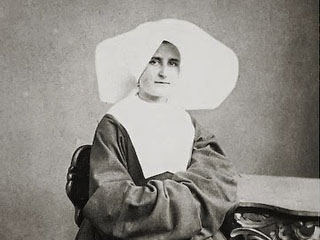
Conservation was the next issue. Isn’t it always. How would they protect it? They had to buy it. The owner, the Bey of Avarai, was found relatively easily – somebody knew somebody who knew somebody who knew him. The money was found relatively easily – Sister Marie de Mandat Grancey, the mother Superior of the Sisters of Charity in Smyrna had always been a believer in the house and produced money (31,000 French Francs) from her own wealth. The Bey messed about a bit but eventually the deal was done in November 1892. The following month, Archbishop Timoni, on behalf of the Church, announced that the house was indeed that of the Virgin Mary.

Sister_Marie_de_Mandat_EWTN_World_Catholic_News_1_26_11

Sister Marie de Mandat Grancey

A road was built up to the site and the building was restored in 1950. With the restoration it was discovered that the house had been restored several times before yet never been expanded on or improved. This led those concerned to believe that it had for many centuries been a unique place of Christian worship (well, maybe). In fact, it transpired that excavations in 1898-9 found many artefacts relating to religion and burials and Ottoman archives refer to the house as ‘The Three-Doored Monastery of the All Holy’.

The house itself is dated to the 5th century AD (from coins found) but its foundations go back to the 1st century AD. In August 1898, excavators working inside the house unearthed soot blackened fragments of stone of the 1st century AD – exactly where Sister Emmerich had said there was a fireplace.

The Vatican (Holy See) has taken no official position on the authenticity of the location yet, but in 1896 Pope Leo XIII declared it a pilgrimage. The first papal visit was by Pope Paul VI in 1967.  The next papal visit was by Pope John Paul II in 1979 who celebrated mass outside the house. Pope Benedict XVI went there in 2006 and treated the house as a shrine.


Next week: The Great Escape: Hollywood fact of fiction?


Artemus Smith’s Notebooks

I continue my research of the notebooks of Dr Artemus Smith, archaeologist of great courage, determination and fiction. Here is another extract:

I have just given evidence at the local assize court, on behalf of a colleague of mine, Jeremiah Archer-Hatchett, who had been quite unjustly accused of removing a small collection of valuable artefacts from an excavation site. On remitting its verdict, the chairman of the jury rose and announced to the judge:

“Not guilty, your Honour, provided he returns the artefacts.”

The judge’s face reddened with anger and he went into an oratory reflecting the purpose and excellence of the justice system which should not be taken lightly. The jury were then instructed, in no uncertain terms, to return a proper verdict.

Having repaired to its room for 10 minutes, the jury reseated itself in the courthouse and the chairman arose again with the reconsidered verdict:

“Not guilty, your Honour – and he can keep the artefacts.”

Art Smth

Crete: the island that tipped


spratt

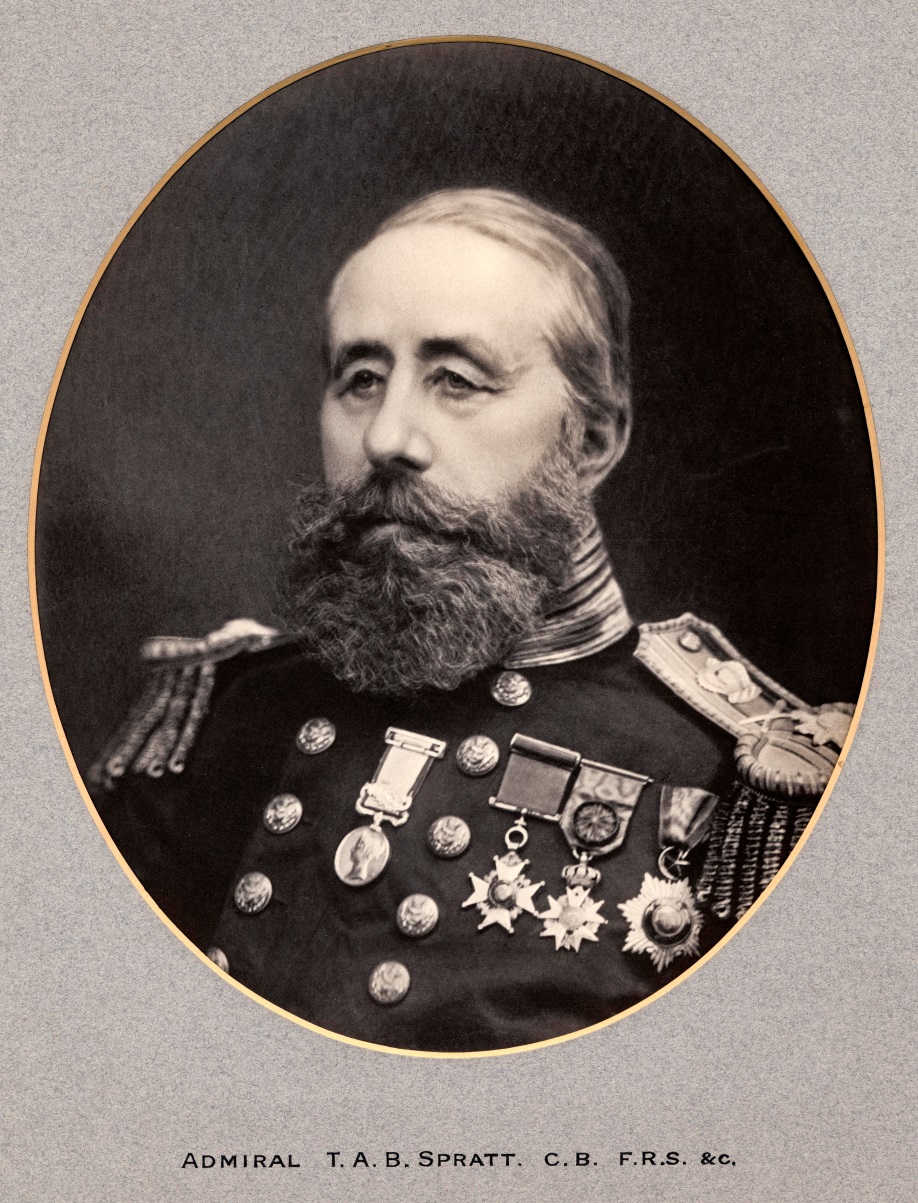
Thomas Spratt

CAPTAIN THOMAS ABLE BRIMAGE SPRATT RN (you’ll know of him by now if you have been paying attention), in 1851, visited Crete for surveying purposes which involved an archaeological exploration of the island. One of his interesting discoveries was the way in which relative levels of land and sea had changed over the island in historic times.  Following a meeting with the geologist, Sir Charles Lyell, he wrote to him to clarify a point about the island’s movement:

“Dear Sir Charles, Fearing you may be impressed with the idea that the eastern end of Crete had gone down as much as the west. I am induced to write a line to rectify it, if so; and to state that movements in the eastern half of the island have neither been as great nor apparently as uniform as the western movement. Both are subsequent to the historic period and the evidences are in both instances indicated by the elevation or partial submergences of some ancient Greek building or city.”

The letter was written on the on the 28th of February 1856, which was a Thursday. The two must have met the previous evening because the following day Spratt wrote again to Lyell confirming the situation, perhaps as an afterthought:

“My dear Sir Charles, You understood me quite right on Wednesday evening in respect to the fact that the western half of Crete having been elevated, and the eastern half depressed or gone down a few feet.”

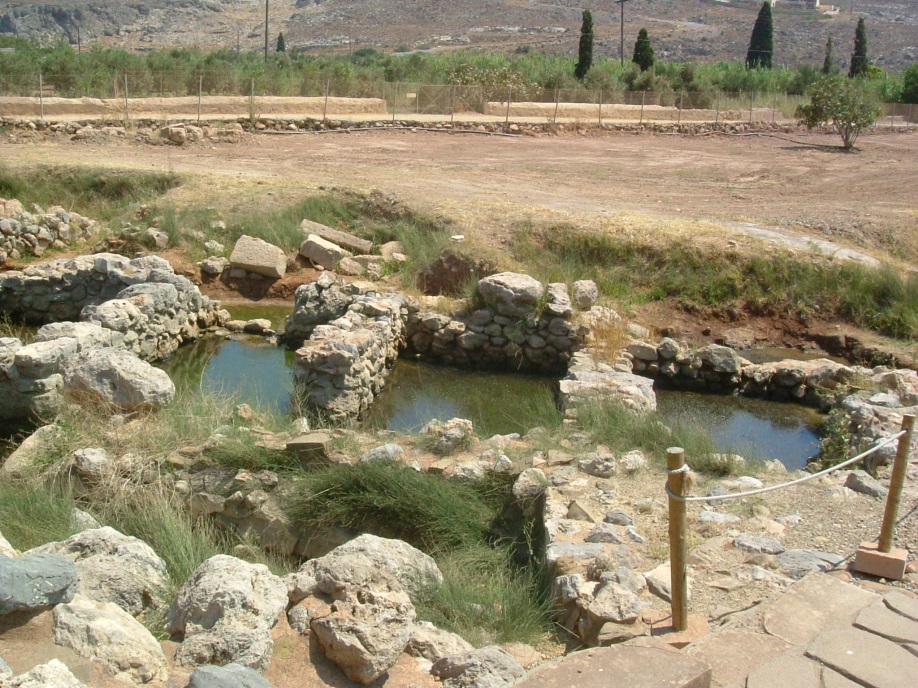
The submergence of the east coast can be seen today at the Minoan palace site of Kato Zakros – part of it is underwater even in mid-summer (pic below).

zakros

Kato Zakros (eastern Crete) flooded store rooms in July

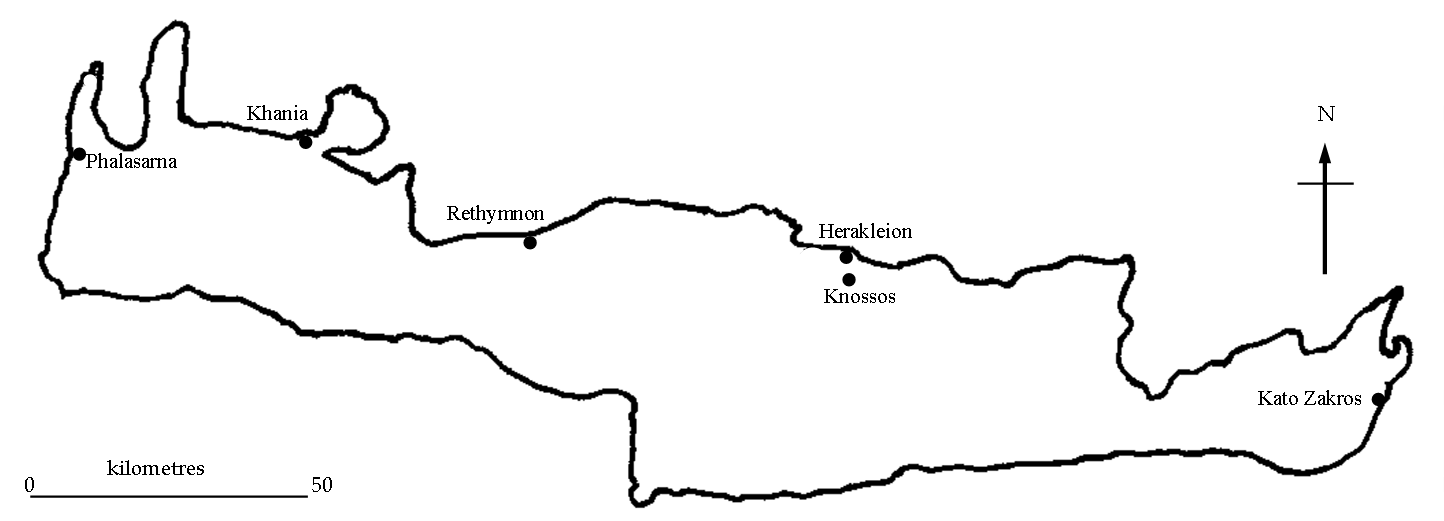
However, the movements were not restricted just to the east and west tips of the island. Spratt observed that there was a maximum elevation of nearly 26 feet occurring on the south coast at the base of the White Mountains to the west of Sphakia, 17 feet to the extreme west of the island and declining to 6 or 7 feet along the north coast to Suda Bay.  He added that “all the ancient cities included in this line of coast have been affected by the elevation by the conversion of their ancient ports into dry land.”

At first, for some reason, he found this puzzling, not thinking until a little later, that the elevation must have “occurred subsequent to the existence of these cites” (all in the letter, Spratt to Lyell, letter, 29th February 1856)

map crete

Crete

Spratt had discovered this movement when searching for evidence of the ancient port of Kutri at Phalasarna on the western end of Crete.  He noticed possible ancient activity, some distance from the sea and wrote to his friend (a seasoned traveller of the Greek mainland), William Leake:

“On going to Phalasarna I looked for its ancient port, mentioned by Scylax … but I could find no artificial work in the sea. There is however, a long ledge of rocks, or rather an islet which lies off it, helping to form a natural but not an artificial harbour. This satisfied me in part, till, on examining the ruins, I saw in the plain a square place enclosed by walls and towers, more massive and solid than those of the city … I was instantly impressed, for several, reasons, that here was the ancient port or artificial port, although full 200 yards from the sea and nearly 20 feet above it. My first idea was, that the ancients had a means of hauling their vessels into it as a dry dock; but at last the coast elevation was uncumbered(sic?) and on measuring the sea mark at its upper level here I found that the bed of this anc[ient] port is now 3 or 4 ft below that level.” (letter Spratt to Leake, letter, 18th September 1853).

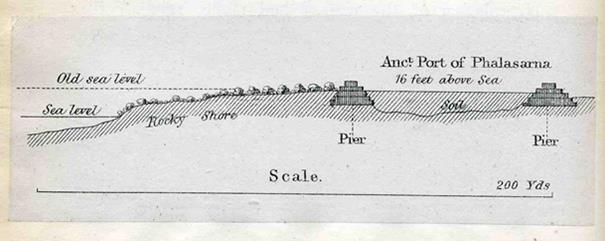
Then Spratt recalled a visit to the island of Cerigotto (Antikythera) where he had noticed an elevation of coastland and it occurred to him that the same may have taken place on Crete. He then measured the sea-marks at Phalasarna which convinced him that it had – the new sea marks were three feet below the old marks (plan below). This justified his theory that the inland “quadrangular space enclosed by the unusually massive Hellenic [Hellenistic] walls upon the plain in front of the chapel of Aghios Giorgis” was, indeed, the port.

Picture1

Spratt’s plan of the Phalasarna harbour with pre-5th century AD and 19th century AD sea levels

In his above letter to Leake, he originally dated this movement of the island to a date prior to history (that will be prior to Greek writing of 776 BC). but was unsure, suspecting a more recent date due to a possible change in the markings on the landscape – concluding with a period “subsequent therefore to the decline of the Roman Empire [5th century AD]”.  In his journal he dated it to the late Roman period. Indeed, the tectonic displacement has been dated to the 5th century AD.

phalas

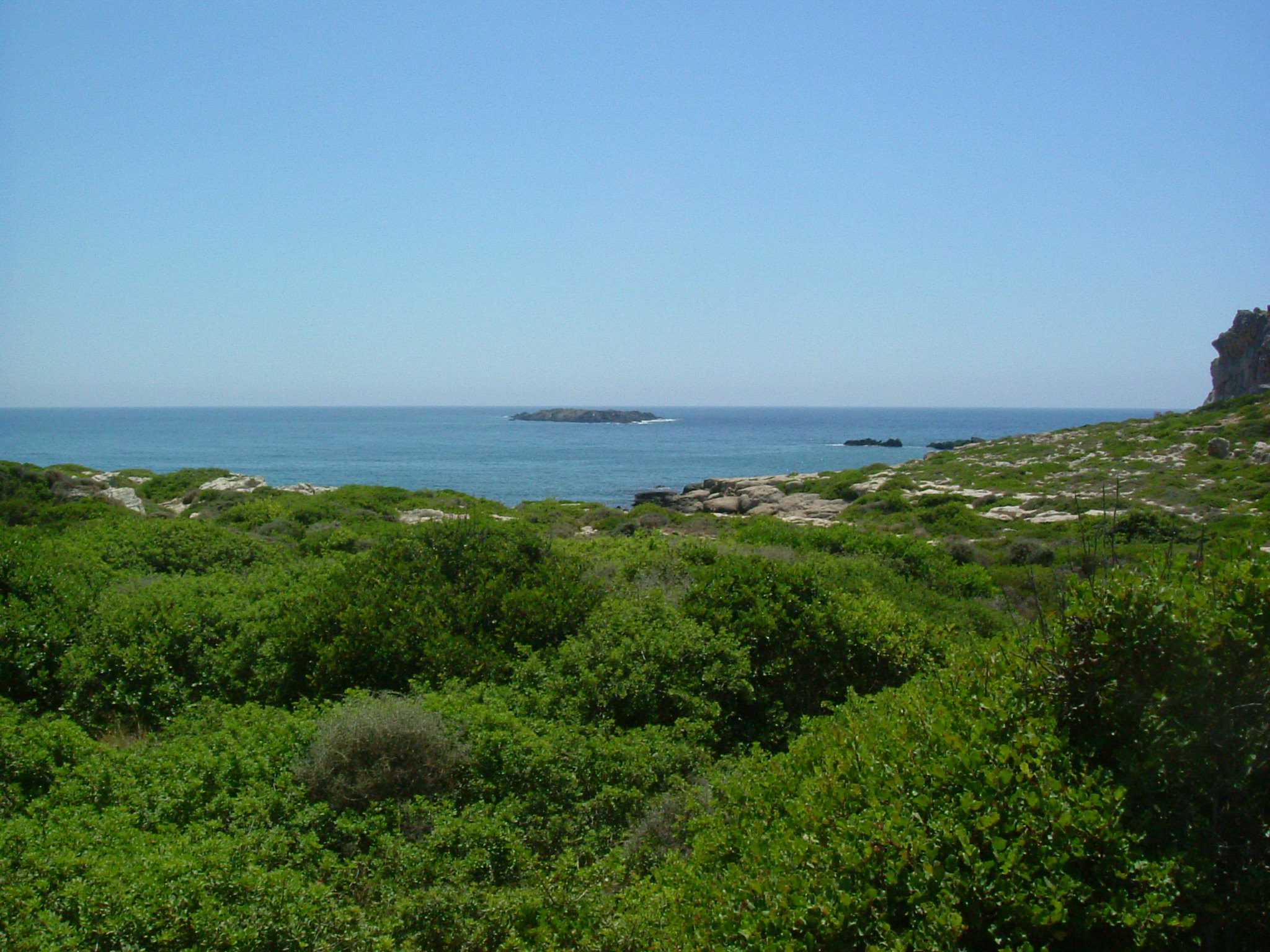
View to coast from the now ‘inland’ harbour at Phalasarna today

Crete being in an earthquake zone it is hardly surprising that it has moved about somewhat over the centuries, much to the initial confusion of earlier ‘investigators’ such as Spratt. But he was made of sterner stuff and was admirably able to resolve the inconsistencies before him.


Next week: Lets’s go to Mycenae


Artemus Smith’s Notebooks

I continue my research of the notebooks of Dr Artemus Smith, archaeologist of great courage, determination and fiction. Here is another extract:

Whilst travelling in Greece, I was invited to play cricket for the British School [of Archaeology] at Athens. My very good friend, Sir Mortimer Double-Dealer (a rival sportsman) needed to contact me and he telephoned the clubhouse where I was playing. He was told that I had just gone in to bat. “That’s all right,” he replied, ”I’ll hang on.”


AT


Travels in Crete 1: Mochlos

LET ME tell you about CRETE. It’s a paradise island and the Cretans are wonderful people (well, most of them ….).

Sarah and I began our adventures in Crete in 2001 in search of the archaeology of the Bronze Age of the Minoans (c.3000-1100BC – I’ll tell you about them next time). Sarah had dragged me ‘shouting and screaming’ (maybe a slight exaggeration) into archaeology when she came home one Friday evening and, over a glass of wine or two, asked me if I wanted to learn about archaeology (she had studied it at university in the 1980s and wanted to start up again). Anyway, I said I might be and she replied, “Good, because I have booked us both into a course on ‘Practical Archaeology’ at Sussex University starting on Monday”…….. the rest, they say, is history – well, ancient history, actually.

CSC_0019

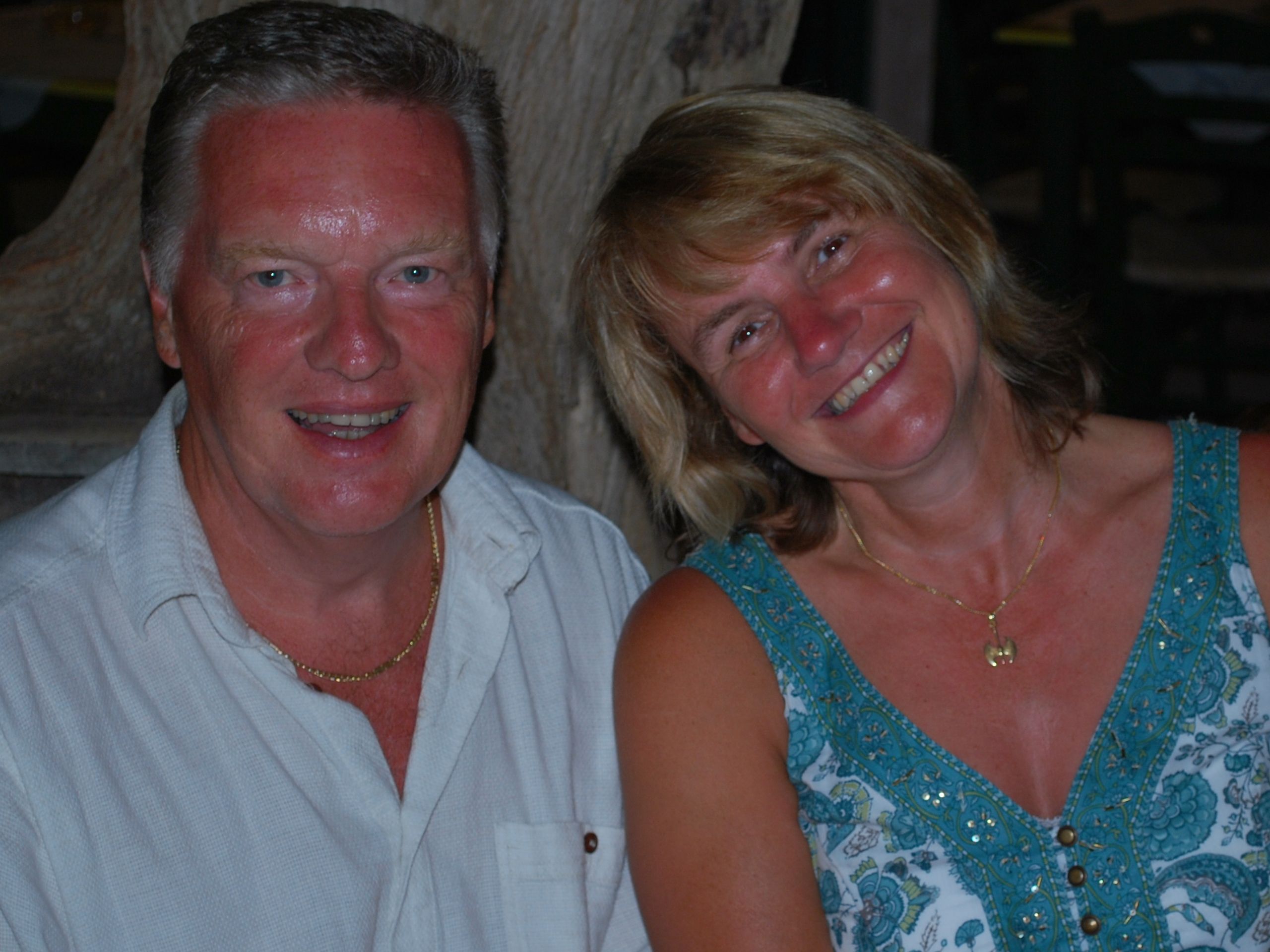
myself and Sarah always smiling in Crete!

We have been visiting Crete almost each year ever since 2001, and in 2005 I began researching early British travellers to the island, particularly Richard Pococke (18th century cleric), Robert Pashley (19th century barrister) and, my favourite, Thomas Abel Brimage Spratt (19th century Royal Naval officer – with a great name!). My plan was to try to establish what, if anything, they may have discovered of the Bronze Age during their visits. Sarah and I spent five summers following these three guys footsteps around the island using their published journals. It was awful work, you understand ….. !! Oh, and you can read my book on my results – see Dawn of Discovery in ‘My Publications’ (or just click here).

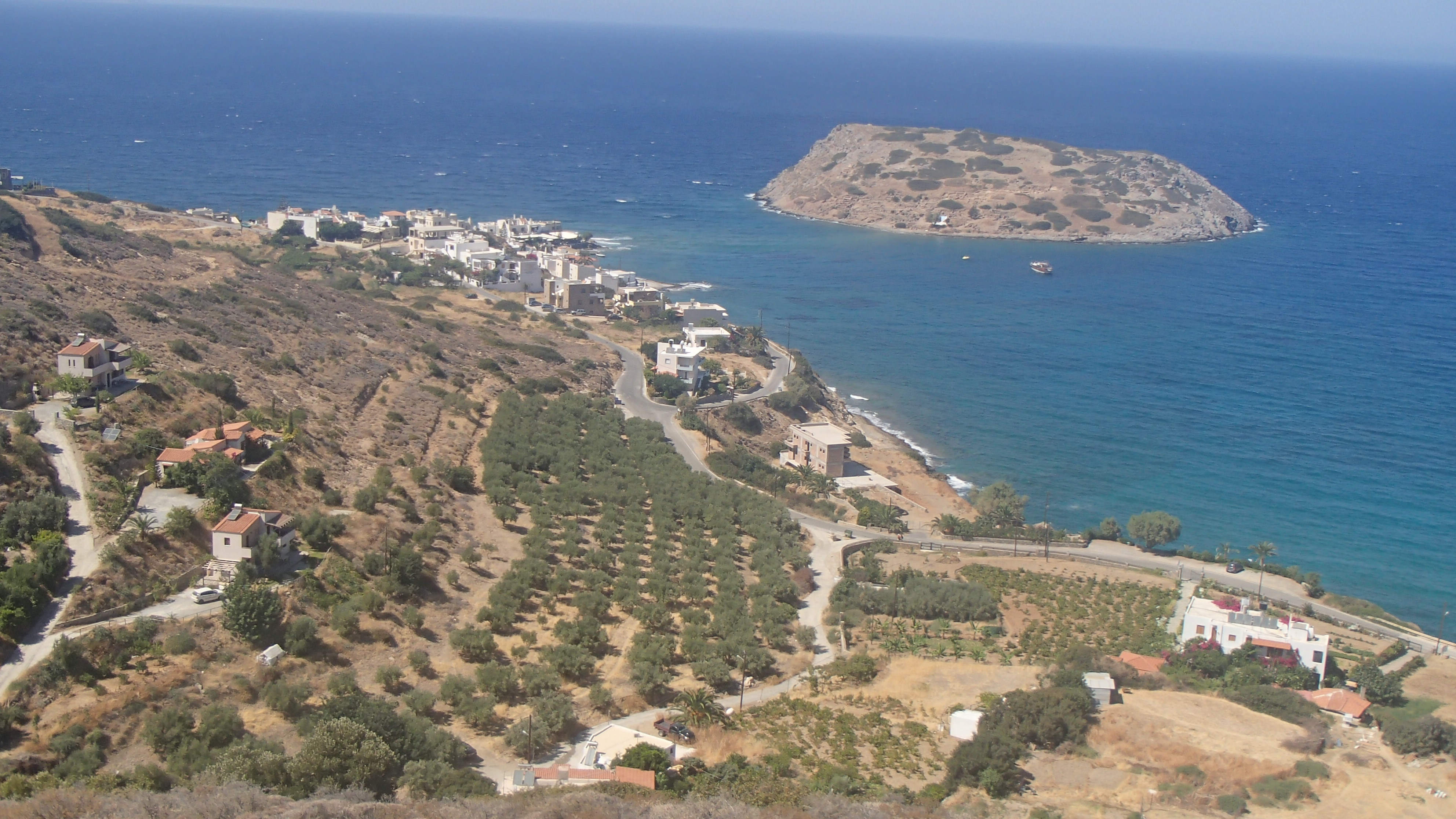
Then we really discovered paradise …. Mochlos. This is a small ‘fishing’ village on the north coast of the island about an hour and a half east of Heraklion and 5km off the main road. It’s no longer a fishing village as such, but, as yet, reasonably unspoiled by tourism. It also dates back to the Bronze Age Minoans when it (and its island just off its shores) was a thriving settlement. We struck it very lucky with our first accommodation, Mochlos Mare (click on name for link). This is a very picturesque set of apartments in a beautiful whitewashed building owned by an incredibly generous and lovely couple, Panayiotis and his wife, Sterie. They have this enormous garden which grows practically anything you can think of and they share everything in it with their visitors.

OLYMPUS DIGITAL CAMERA

Mochlos from the little church on the hill – Mochlos Mare is bottom right

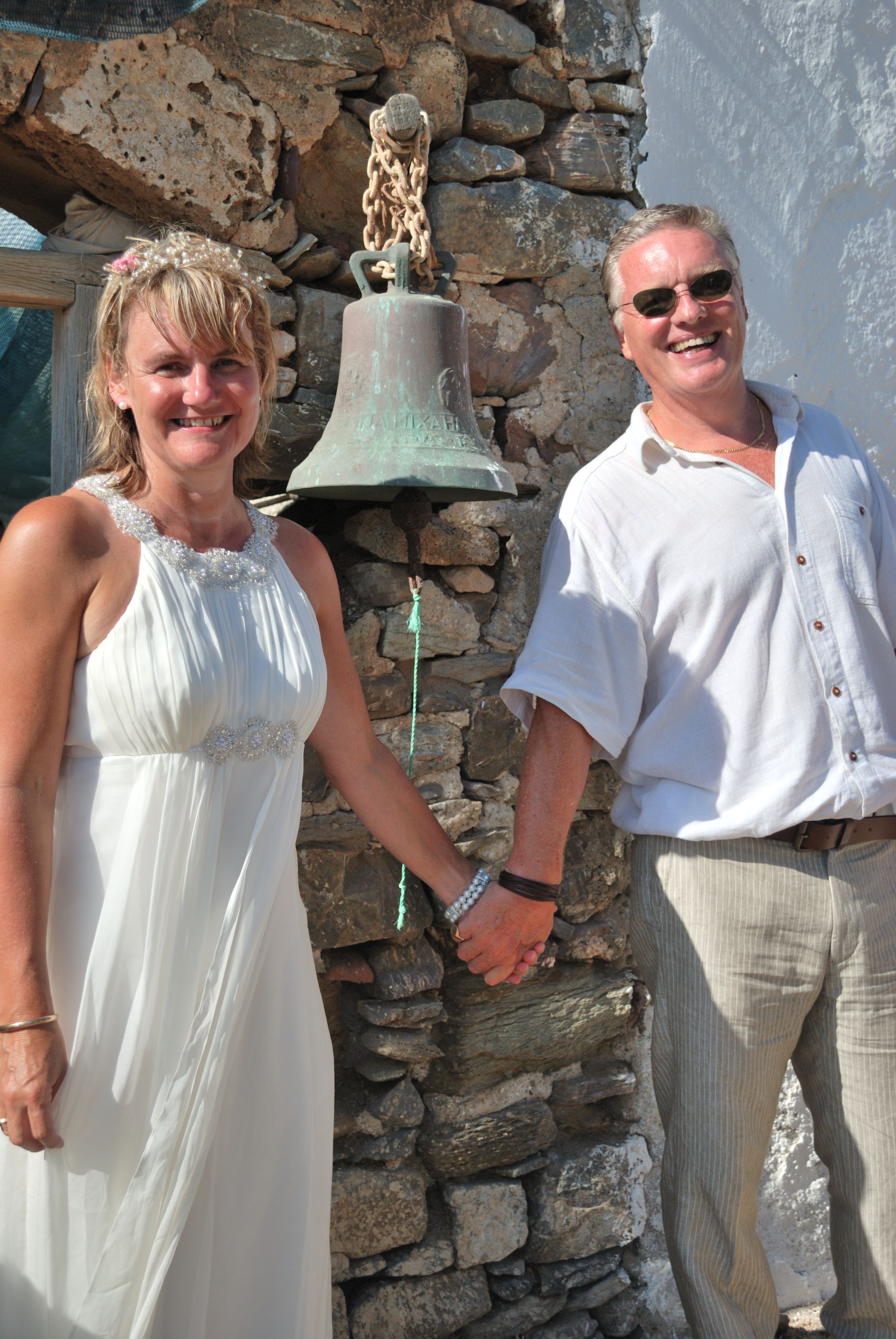
We loved the place so much that we decided to get married in Crete in 2011. We were actually married by the lake in Agios Nikolaos but went back to Mochlos on Nick’s boat to the Minoan island (top right in pic above) just off the mainland for champagne and then to Taverna Kokylia (on the mainland), for the ‘reception’.  (click on name for link) – now there’s a place to reckon with. Owned by the fabulous Yiorgo (George) it is simply the best! He did us proud on our wedding day and has done so ever since on our anniversaries ……. and all the other times we have been there!

 DSC_0244

Celebrating our wedding on Mochlos island 


CSC_0219

Nick’s boat that brought us from our wedding at Agios Nikolaos to the Mochlos island

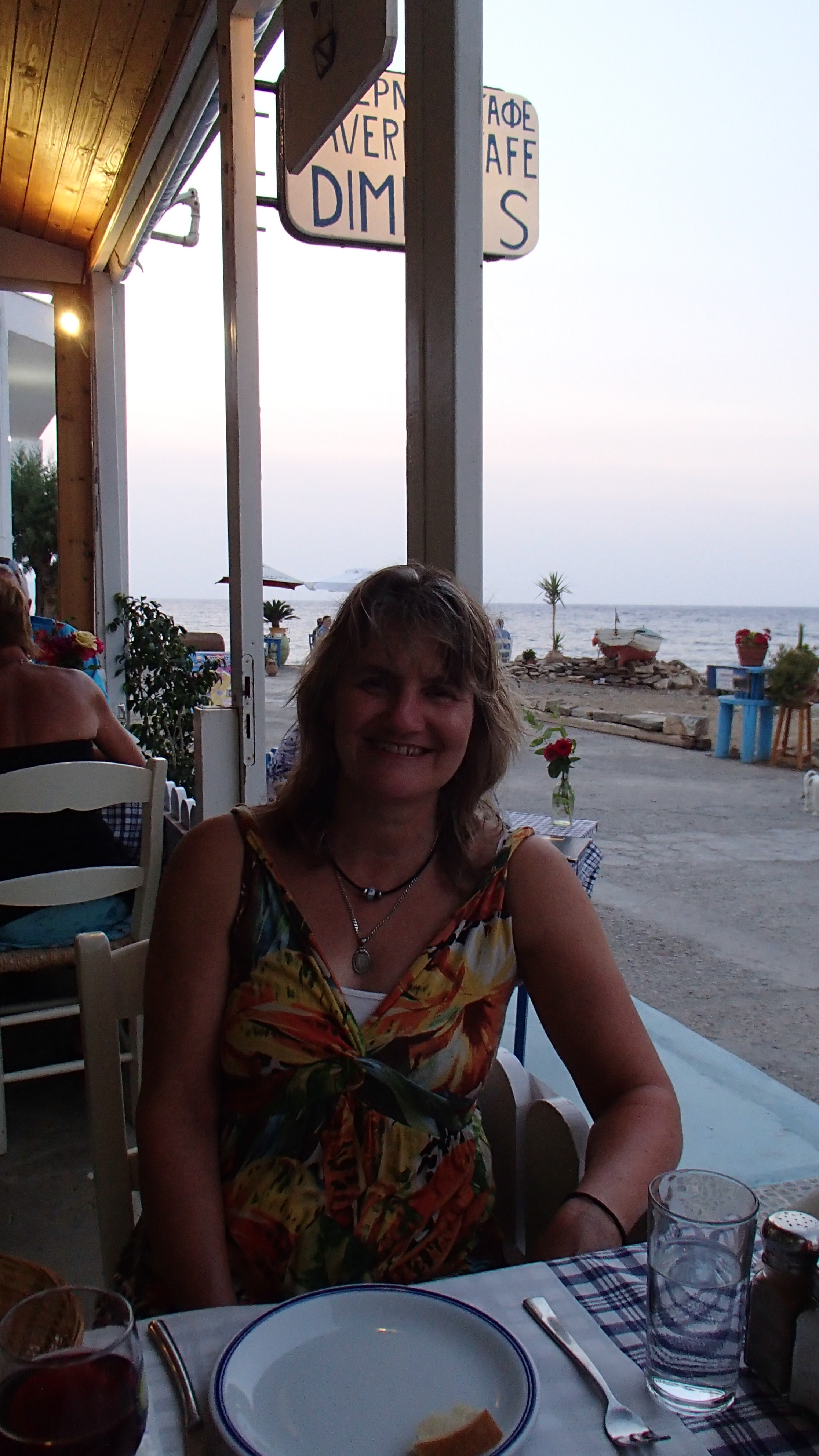
Then there is Dimitri’s (click on name for link), which is also a great taverna. He is a lovely chap and his food is excellent. I recall one wonderfully musical night there last year when our good friend, Warner (visiting us from UK), played his violin, whilst a young chap from Sweden played his guitar and his girlfriend sang. It just wouldn’t happen in the UK!

OLYMPUS DIGITAL CAMERA

at Dimitris’

In 2012 we decided to stay the whole summer holidays in Mochlos (3 months) and came to the conclusion, sadly, that Mochlos Mare was not big enough for a stay of this length of time. We needed a bigger kitchen at least as we planned to cook-in on occasions (had to for this period of time!!). However, we found an absolutely fantastic apartment, Alexandros (click on name for link – you should be getting the idea now), just up the road from Mochlos Mare. It is owned by two lovely Australians, Peter and Rosa – Peter has Cretan connections hence his desire to buy a property on the island. Fortunately for us he and Rosa chose Mochlos!

OLYMPUS DIGITAL CAMERA

Alexandros

OLYMPUS DIGITAL CAMERA

 looking east from balcony of Alexandros

2013 also saw us in Mochlos (and Alexandros) for another 3 months over the summer again – and Nick’s fantastic villa was finally completed (he had bought the plot some 6 years ago!). The last time I had seen Nick and Heather (other than in Mochlos) was over 20 years ago in Wales. Then, 20 years later, I heard they had bought a plot of land in Crete – in Mochlos!! Small world or what?

OLYMPUS DIGITAL CAMERA

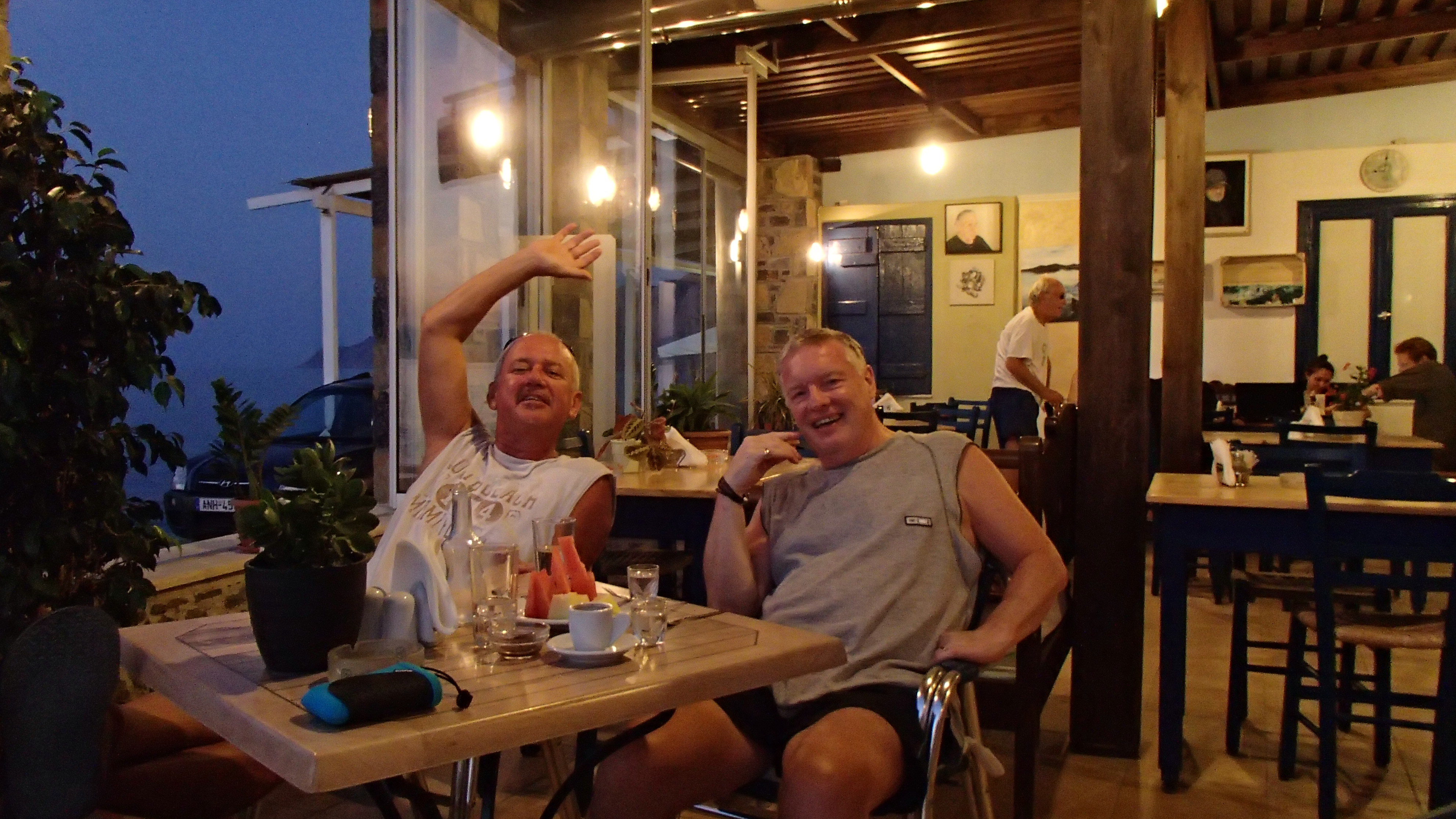
Nick and I relaxing at Kokylia

So that’s how I found Crete.

Sarah produced blogs on our time in Crete in 2012 and 2013 (click on dates if you are really interested or just suffer from insomnia).

Next week let me introduce you to the Bronze Age Minoans of Crete.


Artemus Smith’s Notebooks

I continue my research of the notebooks of Dr Artemus Smith, archaeologist of great courage, determination and fiction. Here is another extract:

I recall as a student, at my weekly tutorials at Oxford, it was a requirement to produce an essay for discussion. One week, I fear I neglected to make such an effort and I decided to ‘blag it’.  On appearing before my tutor, Professor Sir Lucius Bodmin-Wallbanger, I opened my notebook and with, I have to report, some skill and imagination, pretended to read from it, turning the blank pages at appropriate intervals. Following a formidably inventive conclusion, I shut the notebook with great satisfaction, thankful that the performance had passed off smoothly, and awaited Sir Lucius’ comments.

He stared into the open fire for a couple of minutes, then turned to me with a congenial smile and said, “Read it again, Mr Smith.”


AT