The other ‘Great Escape’

LAST August I talked about the Great Escape from Stalag Luft III and the film (‘Hollywood fact or fiction?’). I’ve since found another ‘Great Escape’ which I thought I might share with you. It’s mentioned in the Book of Heroic Failures under ‘The Worst Prison Guards’.

The escape of 124 prisoners from the Alcoentre maximum security prison near Lisbon in Portugal took place in July 1978. This was half the prison’s population and a record for the largest number of convicts to escape simultaneously from a prison (only 70 from Stalag Luft III but they were not, of course, convicts but POWs). If you read my August post on the Stalag Luft III escape you will recall the remarkable list of missing items undetected by the Germans. The Alcoentre list was nothing like as impressive but it did include 220 knives, a large quantity of electric cable, spades, chisels, water hoses and electric drills. A  guard explained, “Yes, we were planning to look for them but never got around to it.”

Estabelecimento Prisional de Alcoentre (the prison)

What else the guards had not noticed were gaping holes in the wall which had been covered over with posters (reminiscent of the The Shawshank Redemption?). The night before the breakout one guard realised that only 13 of his 36 prisoners in his block were present. He said that was normal because inmates sometimes missed roll-call or hid but usually came back in the morning.  (That’s very good of them).

Poster covering hole in wall in The Shawshank Redemption – nothing new with that

A warder then announced, “We only found out about the escape at 6.30 the next morning when one of the prisoners told us.” (I’m surprised there was one left to tell anyone). Then the warder added, “The searchlights were our worst enemy because they had been directed at the guards’ faces and dazzled them making it impossible to see anything around the prison wall.” Easy mistake to make.

Picture2

What escaping prisoners?

By way of explanation, the Portuguese Justice Minister, Dr Santos Pais, claimed that the escape was ‘normal’ and part of the “legitimate desire of the prisoner to regain his liberty.”   Oh, that’s all right then.

.

Then there was the most unsuccessful escape. In Northern Mexico, 75 prisoners carefully planned an escape from Satillo Prison. In the November of 1975 they began digging a secret tunnel designed to bring them up on the other side of the prison wall. 5 months later, and guided by sheer genius, they emerged in the nearby courtroom where most of them had been sentenced. The surprised judge returned them all to their confinement.

DaveDig

We’re free …..Oh


Artemus Smith’s Notebooks

I have discovered another volume of Artemus’ notebooks (followers will recall Dr Artemus Smith was an archaeologist of great courage, determination and fiction). Here is an extract:

Three of us were chatting about funerals and one of my companions asked,”When you are in your casket and friends and family are talking about you, what would you like them to say?

I said, “I would like to hear that I was a great and enterprising archaeologist with outstanding knowledge.” 

My first colleague said, “I would like to hear them say that I was a a wonderful lecturer who made a huge difference to the students of my time.”

My other colleague said, “I would like to hear them say … ‘Look, he’s breathing!'”

art-smth

Outlander – and the Jacobite Rebellion

HAVE YOU been watching Outlander?  It’s on Amazon Prime and I don’t normally watch Sci-Fi but I sort of got drawn into this one. It’s about a woman who, on her honeymoon in Scotland just after the 2nd World War, visits a mysterious ancient stone circle and is transported back to 1743 (I’m sure it happens all the time). She finds herself embroiled in the build-up to the Jacobite Rebellion. Coincidently (or not) she meets up with an ancestor of her husband’s who turns out to be a nasty piece of work (the ancestor not the husband). She ends up with a motley bunch from the Clan Mackenzie but marries Jamie, a member of the Clan Fraser (it’s complicated). The lawyer in me idly wondered if you could be guilty of bigamy if you married ‘again’ but some 250 years before your first husband was born ….


Now, about the future …. 

Just in case one or more of you may also have recently appeared from another time warp, the Jacobites (Jacobus – Latin for James) were supporters of Charles Edward Stuart (aka Bonnie Prince Charlie [1]) and his desire to regain the English/Scottish throne for the Stuarts. The Stuarts came to the English throne under James I (formerly known as James VI of Scotland) following the death of Elizabeth I (who left no Tudor heirs). The Stuarts reigned until the Glorious Revolution of 1688 when Parliament passed legislation prohibiting Roman Catholics from the throne of England, Scotland and Ireland [2]. James II was accordingly deposed as king as a result. The Stuarts sort of continued (as queens) with James’ daughter, Mary (II) and her husband, William III (of Orange) (both Protestants) and thereafter Anne II (Mary’s sister). The Stuart line then came to an end on Anne’s death in 1714 and along came the House of Hanover with George I.  At the time of the Jacobite Rebellion of 1745, George II was on the throne.

Lost Portrait of Charles Edward Stuart.jpg

Bonnie Prince Charlie (1720-1788)

Anyway, back to Outlander. I think I can see where this is all going (although I have not yet finished the 1st series and the 2nd series has not been completed and I have not read any of the 8 books – yes 8!). At some point it’s going to encounter the infamous Battle (or massacre) of Culloden in April 1746 …. and will reflect on who of our Scottish ‘heroes’ gets killed. Will Jamie or wont he?  Will any of the motley Mackenzies survive?  Bearing in mind that the total number of Jacobites killed was between 1500-2000 out of some 6000 (compared to the Government losses of about 50) you may want to work out the odds. There’s just one issue – and I don’t want to spoil it for you so, SPOILER ALERT – for those of you who have not turned away:  none of the Mackenzies were at Culloden. This was because they had already been attacked and defeated by the pro-British Government force, the Mackay and Sutherland Independent Highland Companies, at the Battle of Littleferry (aka skirmish at Golspie). This prevented the Mackenzies from an appearance at Culloden (probably just as well for them). Soon after the Littleferry fracas, George Mackenzie, 3rd Earl of Cromartie, and his son were captured at Dunrobin Castle and the Earl was sentenced to death but pardoned with his title forfeited. Some other Mackenzies, including a Kenneth Mackenzie, Lord Fortrose, actually took the side of the British Government.  No mention of Outlander’s Colum or Dougal Mackenzie.

3rdEarlOfCromarty.jpg

George Mackenzie, 3rd Earl of Cromartie (1703-1766)

The Frasers of Lovat were at Culloden. The Chief, Simon Fraser, the 11th Lord Lovat, was captured, tried for treason and executed in London the following year. His son, also Simon, escaped and was later pardoned (then joined the British forces in the fighting in Canada in 1750 – a ‘turncoat redcoat’).  Charles Fraser was killed at Culloden; David Fraser of Glen Urquhart (who was deaf and mute) was captured and died in prison; John Fraser (‘McIver’) was wounded and put before a firing squad but a sympathetic British officer, Lord Boyd, who had seen enough killing, rescued him. Good man, Boyd. The Fraser’s residential home, Castle  Dounie, was burnt to the ground.  But no mention of Outlander’s Jamie Fraser …..

Stone memorial to the Frasers at Culloden

What do you mean, didn’t I know it’s only fiction? The Jacobite Rebellion was not fiction; Bonnie Prince Charlie was not fiction; time-travel was not ….. okay, some of it may be fiction.

.

Footnotes:

[1] My maternal grandmother was convinced that she was a distant relative of Bonnie Prince Charlie – along with hundreds of others I suspect – but I can’t remember why she had that belief (I thought you would like to know that – now you know were I get it from ….).

[2] The monarchs of England and Scotland came together as monarchs of Great Britain under the Acts of Union 1707 (but you knew that).


ADDENDUM

When I wrote the above post I was about three-quarters the way through the series of Outlander and it was plodding along quite slowly but quite amicably. I have now seen it to the end. Really, the last two episodes are rather unnecessary and not recommended viewing in my opinion. It all ends with somewhat of an anti-climax and we are not yet at Culloden. And yes, our heroine is intent on trying to change the future (or is that the past?); and no, I probably won’t bother with the 2nd series.


Artemus Smith’s Notebooks

I have found a scrap of paper which may have fallen from Artemus Smith’s notebook as it relates to another of his tales (followers will recall Dr Artemus Smith was archaeologist of great courage, determination and fiction):

A police officer colleague of mine told me of a time when he was waiting in a lay-by on the A22 ready to catch speeding drivers. He saw a car puttering along at well under the 30 mile per hour limit. Says he to himself: “This driver is just as dangerous as a speeder!” So he went in pursuit of the car and pulled it over.

In the car he noticed that there are five old ladies, two in the front seats and three in the back …. all wide eyed and white as ghosts. The driver, obviously confused, said to him, “Officer, I don’t understand, I was doing exactly the speed limit! What seems to be the problem?”

“Ma’am,” he replied, “you were not speeding, but you should know that driving slower than the speed limit can also be a danger to other drivers.”

She responded proudly, “Slower than the speed limit? No sir, I was doing the speed limit exactly, 22 miles an hour!”

My colleague, trying to contain a chuckle, explained to her that A22 is the road number, not the speed limit. A bit embarrassed, the lady grinned sheepishly and thanked him for pointing out her error.

He then said, “But before I let you go, Ma’am, I have to ask, is everyone in this car OK? Your passengers seem awfully shaken, and they haven’t made a sound this whole time.”

“Oh, they’ll be all right in a minute officer. We’ve just come off the A120.”

art-smth

Alcibiades the Lad

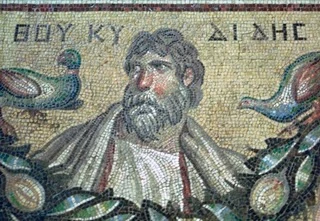
MOVING ON from the 300 Spartans (a couple of posts back), I thought you might be interested in a resourceful, not to mention ambitious, chap called Alcibiades, the nephew of Pericles (see 300 Spartan post). He was an ancient Athenian, who was a prolific general during the Peloponnesian War (between Athens and Sparta) which followed the Persian invasion of Greece and the 300 Spartan defence at Thermopylae. What we know of this three-phase war was written by the Athenian historian, Thucydides, whilst he was in exile in Sparta (for his failing in the first phase of the war).

Thucydides (460-395 BC)

Alcibiades came to one’s notice in the second phase of the war – the Sicilian expedition. He was keen to invade Sicily as he considered it easy prey. Syracuse (eastern Sicily) was exerting its power and was threatening Segesta (western Sicily), who was at war with Selinus (southeast Sicily), an ally of Syracuse. Segestia called to Athens for help, warning the Athenians that if Syracuse overran Segesta it would soon rule Sicily and ally with Sparta (fellow Dorians).  However unlikely, it gave Athens ‘food for thought’ that assisted Alcibiades in his cause for war (and glory). The cautious Athenian general, Nicias, was against the war. He considered it unnecessary to seek another conflict (after the first phase of the war) and asked how a government could work successfully so far away; how a revolution could be controlled; and how an army could be sent such a distant with an antagonistic Sparta already on the doorstep? He added that there was no danger from the Sicilians and so why provoke it. The money could be better utilised on home improvements.  Sensible chap.

Bust Alcibiades Musei Capitolini MC1160.jpg

Alcibiades (450-404 BC)

The assembly was swayed by Alcibiades and, with fellow generals, Nicias and Lamachus, preparations were made for the expedition.  However, each had a different plan of attack. Nicias simply wanted to make a show of strength and scare the enemy but there was little point in this idea as it would achieve nothing (basically boring).  Lamachus felt an outright attack on Syracuse to be more appropriate, particularly while Athenian morale was high. In principle, this was a good plan but it was discarded because there was no base from which to moor the ships and gather supplies. Alcibiades suggested that the most sensible way to defeat Syracuse was to incite riot with other cities and gain Messana (northeast coast of Sicily) as an ally.  Lamachus was persuaded to support this notion and so it won the vote.  Unfortunately, it gave Syracuse an opportunity to prepare itself, although, initially, it did not really believe Athens would embark upon such a venture (probably a pretty sensible belief even if to prove false).

Nicias (470-413 BC)

In 415 BC, a force of one hundred and thirty ships and thirty thousand men set sail for Rhegium, in southern Italy. However, immediately prior to the departure certain statues of Hermes were mutilated.  Alcibiades, with his reputation of indifference to the gods, was blamed and recalled to Athens for trial. This left a very shy and unimaginative Nicias in command, with only Segestians as allies.  Realising he had no support in Athens (all his democrats were with him on the expedition), Alcibiades eluded his escort and fled to Sparta (possibly by invitation from the already exiled Athenian historian, Thucydides).

Sicily during the Peloponnesian War

Syracuse sought Spartan assistance against Athens. The Spartans turned to Alcibiades for his opinion (well, why not!).  He commented that Athens was looking to conquer Sicily, Italy and then Carthage, followed by the rest of the Greek world. He suggested that a force should be sent to assist Syracuse, otherwise it would be lost when reinforcements arrived from Athens. King Agis of Sparta sent Gylippus to Syracuse in 414 BC.

Cutting a longish story short, Lamachus was killed and, basically, Nicia messed up and the Athenians suffered an embarrassing defeat in Sicily (Nicias was executed by the Sicilian mobsters despite protests from Gylippus). This led to the third and final phase of the Peloponnesian War, called the Ionian war – because it took place in Ionia (west coast of Asia Minor aka Turkey), which skirted the Persian Empire.

Possibly King Agis of Sparta (reigned 427-401 BC)

In 413 BC, following Alcibiades’ advice, Agis occupied Decelea, north of Athens. This caused the closure of the Athenian silver mines of Laurium and the corn route from Euboea. This loss of silver and the drop in tributes from the Aegean cities meant that Athens was in serious financial difficulties, particularly as it needed to rebuild its fleet and pay its crews. Sparta realised that the only way to finish off Athens was at sea as this had been the main Athenian lifeline in the past. Sparta attempted to build a fleet of its own but even with the help of its allies it was still short on resources and so it turned to Persia. Family squabbles had weakened Persia and its king, Darius II, had left Asia Minor in the hands of his satraps, Tissaphernes and Pharnabazus, who were seeking repossession of the Ionian cities lost after the invasion. In Sparta, Alcibiades was not receiving the honour he believed due to him and decided to join Tissaphernes, in Sardis, on the pretence of an alliance with Sparta (although there was a rumour that he had been indiscreet with the wife of Agis and considered it prudent to make haste from Sparta – sounds like Alc). Tissaphernes did agree to contribute finances for ships and a Phoenician fleet in return for Spartan assistance in recapturing the Ionian states. However, he was very casual with the payments and the Phoenician fleet only sailed as far as Crete.  Although Tissaphernes was intent on an Athenian defeat, he did not wish for a completely victorious Sparta for fear that it became too ambitious and a threat to Persia. On Alcibiades’ advice, Tissaphernes chose to sit back and let the Greeks wear each other down. Cutting another longish story short, this is exactly what they did and Athens suffered the most.

Map of the Peloponnesian War (436-404 BC) (Sardis is just east of Ephesus)

In Sardis, Alcibiades suggested that Tissaphernes should support the now weaker Athenians, reminding him of the danger of an ambitious Sparta growing in strength. It is unlikely that Tissaphernes would have supported Athens as he knew it too was ambitious and he could have as much trouble with the Athenians as he could with the Spartans. It was his intention to continue to play the two sides off with each other. It would appear that Alcibiades was trying to regain favour in Athens. Then, in 410 BC, Sparta attempted to regain the Propontis (Sea of Marmara east of the Hellespont) but, on the arrival of Alcibiades, the Spartan fleet was overcome at the battle of Cyzicus. Within two years Alcibiades had recaptured Byzantium and re-established Athenian control over the Propontis.  Despite his successful war-mongering he did not actually return to Athens until 407 BC, at which time he was received with honour.

Propontis (Asia Minor)

Alcibiades had proven his worth on behalf of Athens but he had his enemies who were waiting for any mistake that he may make. This came in 406 BC. He was at Notium watching the Spartan fleet, under Lysander, moored at Smyrna. Leaving instructions to his commander, Antiochus, not to engage the Spartans in battle, he made a brief expedition to reinforce Thrasybulus at Phocea. In his absence, Antiochus sailed too close to the Spartans who came out from the harbour to meet him. Lysander was victorious and destroyed fifteen Athenian ships. The news reached Athens and Alcibiades was blamed by his enemies for the defeat and for not counter attacking and was duly exiled.

The Athenian empire had now collapsed. Alcibiades decided to go to Persia as there was no point in returning to Athens. On his way through Asia Minor he was murdered, possibly on the Persian king’s instructions, as he had no time for a man who was responsible for the Athenian recovery.

Death of Alcibiades (by Michele de Napoli, c 1839)

The treatment of Alcibiades had a great bearing on the outcome of the Athenian quest for power. To the Greek people he could be described as an enigma, but his enigmatic changes all had basic reasoning about them.  He was, without doubt, a supreme commander with every intention of gaining glory for himself and, in an unscrupulous manner, for whichever power was to support him. He played a part on the sides of all three major powers, but on each occasion he was only attempting to find a position of high esteem which was to result in the downfall of the Athenian empire and the end of an era of Athenian dominance in Greece.  So, there you are: I told you he was ambitious – playing for all three teams!


Greek Drama-rama

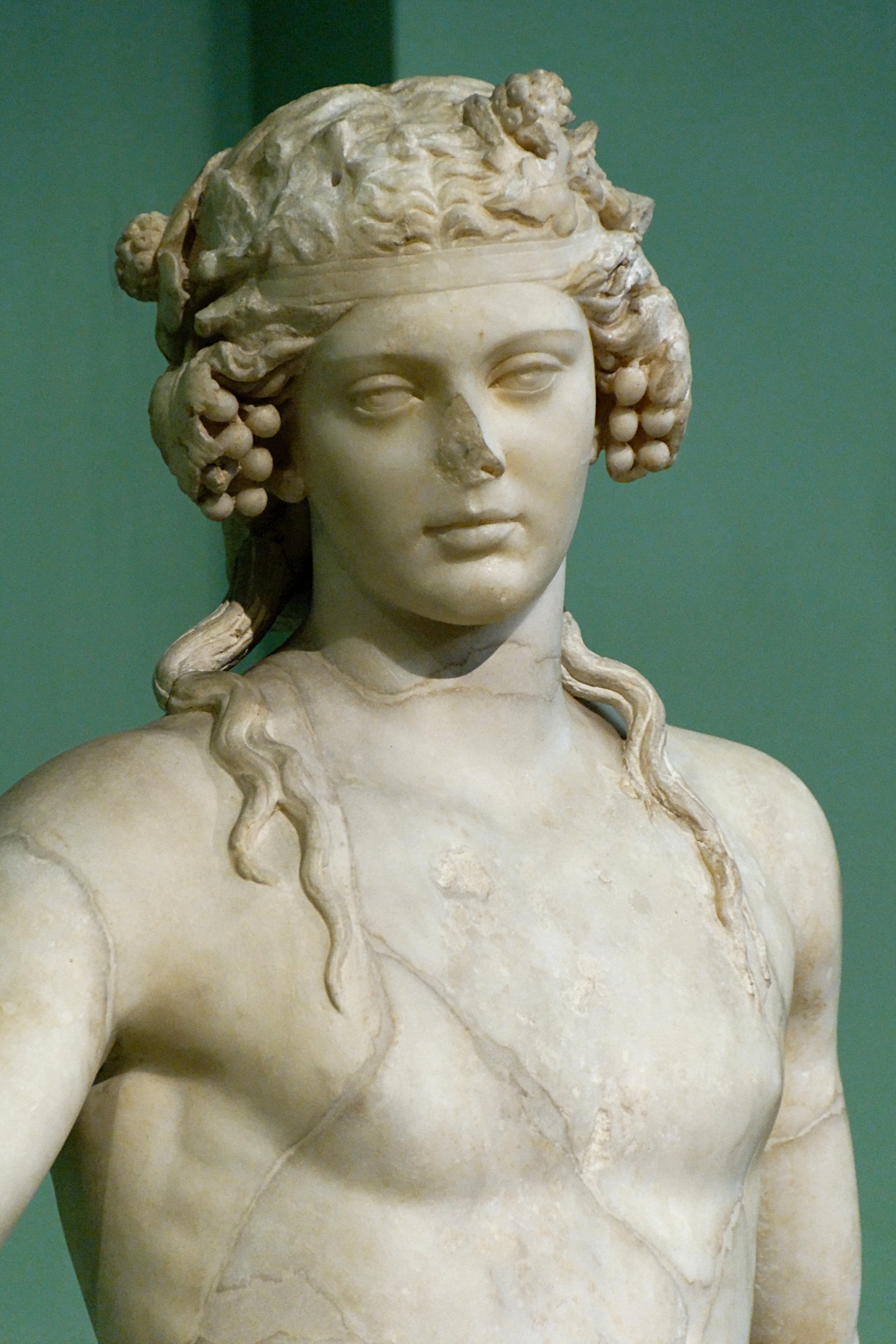
GREEK THEATRE in Athens began some 2,500 years ago – around 600 BC – but its form, technique and terminology have lasted into modern theatre. Greek festivals evolved from religious rites going back to about 1200 BC when the cult of Dionysus led to somewhat emotional displays of dancing (those of you who were part of the 60s/70s era will know what I mean). Dionysus was the son of Zeus and Semele and so was one of the 12 Olympian gods (he was god of wine, fertility, grapes, ecstasy, madness, pleasure, festivity, etc – you get the drift).

dionysus-with-grape-hair

Dionysus

Initially the rites of Dionysus were led by the dithyramb (‘choric hymn’). This was sung/chanted by a Greek chorus of up to fifty men or boys (no women or girls in ancient Greek theatre). They may have been dressed as satyrs (men with horses’ ears and tail, servants of Dionysus) and some probably played the flute, lyre and drums. The gist of the hymn would relate to some incident in the life of Dionysus or just be celebrating wine and fertility in his name. Good a reason as any.

dionysiacworshipers

Dithyramb from ancient Greek vase

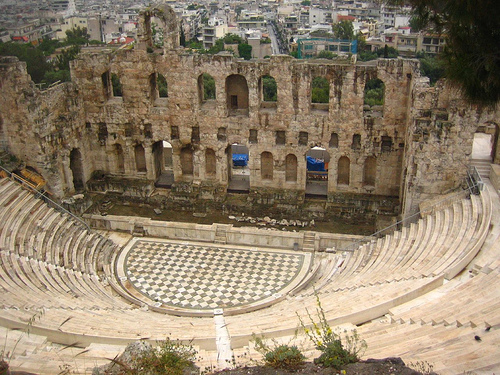
Circa 600 BC, Arion of Mehtymna (Corinth) wrote down formal lyrics for the dithyramb. Then, sometime during the next 75 years, Thespis of Attica added an actor who interacted with the audience. And that is where the word thespians (actors) today comes from. This actor was known at the protagonist, meaning the main character of a drama. In 534 BC, Pisistratus (the Athenian ‘tyrant’) changed the Dionysus festivals and introduced drama competitions. Thespis is said to have won the first competition. Around this time the Theatre of Dionysus was built in Athens (what remains today is mainly from the 4th century BC).

dionysus

Theatre of Dionysus, Athens – seated 17,000 people

The Theatre at Epidaurus, in the east Peloponnese of Greece, is still used today for Greek plays (but not always in Greek – Sarah I went there a few years ago when four Greek plays were presented in German and to a modern setting – it just didn’t work for either of us). The theatre was designed by Polykleitos the Younger in the 4th century BC and originally had 34 rows of seats which were extended at the top to another 21 rows by the Romans. The view of a lush landscape behind the skene was an integral part of the theatre itself and not to be obscured.

Theatre of Epidaurus ‘today’ – seats 14,000 people, viewing a lush landscape background

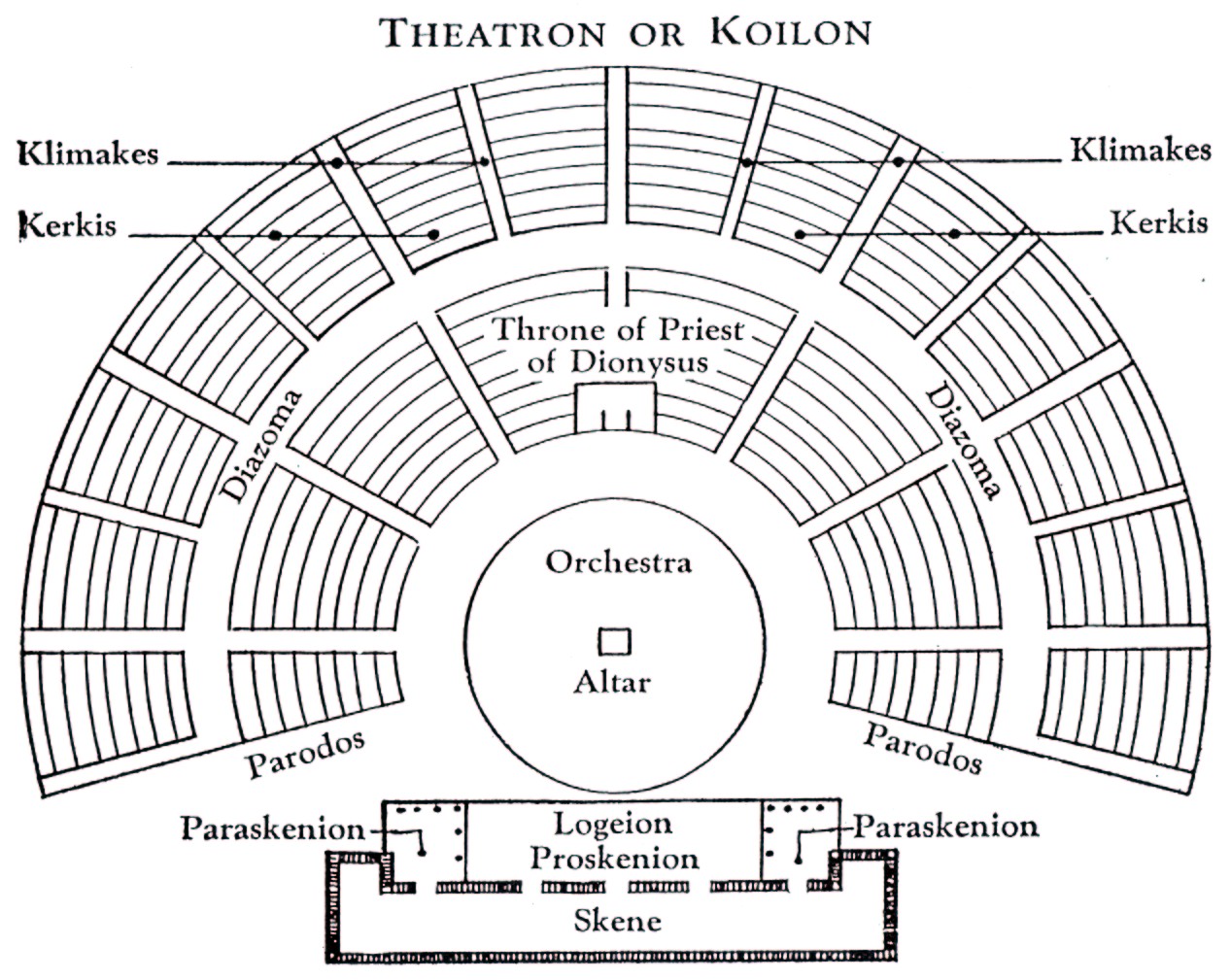
The government authority (the archon) chose the competitors and a wealthy patron (choregos) financed the production. In return, the patron paid no taxes that year. So funding the arts was a way of tax avoidance (not evasion – apparently that is something different). You can see from the diagram below how the theatre was set up and how the names were used:

greek theatron

               Theatron: ‘seeing space’;  Orchestra: ‘dancing place’;  Skene: ‘scene building’; Parados: ‘entrance’

Plays were performed in the daytime and were spread over several days in Athens. There was little or no scenery and most the action took place in the orchestra by the ‘chorus’. When there came an important shift from chorus to characters, the action moved to the skene (then became ‘the stage’). The chorus literally means ‘dance’ and most Greek choruses blended music, dance and song. The chorus entered the orchestra during the parados (‘entrance speech’) and remained there for the whole play. Its purpose was to create ‘doom and gloom’ to come (‘foreshadowing’) and some suspense to help the audience understand what was happening (although with the  later tragedies, the audiences already knew the plots).

Types of plays

Tragedy (Tragodia) comes from tragos and ode meaning ‘goat song’. The reason the word is used is obscure but it could either mean that the chorus was dressed in goat skins, or a goat was the prize for the best song/play (hmmmm …. ok). Tragedies, usually trilogies, were centred around the rise and downfall of the ‘hero’ (from Homeric epic or mythology) and the conclusion was usually a messenger coming out to tell the audience of the tragic consequences of the characters action (never good). The main tragedy poets of the 5th century BC were Aeschylus (who added a second actor, the antagonist, and reduced the chorus from 50 to 12); Sophocles (who added a third actor and put more emphasis on interaction between humans rather than humans and gods); and Euripides (whose plays were more about real people). Due to the limited number of main actors, masks were worn by all at all times (that way one or two actors could play different parts – also, masks may have amplified the voice).


Aeschylus (525-456 BC)                  Sophocles (496-406 BC)                  Euripides  (484-406 BC)

Satyr had to be submitted to a magistrate (archon eponymos) along with three tragedies for a competition. A satyr play, although implies comedy, was actually somewhere between tragedy and comedy – sort of tragicomedy – and, again, taken from epic or mythology. The only satyr play to survive in its entirety is Euripides’ Cyclops based on Odysseus’ encounter with the cyclops, Polyphemus (not exactly an hysterical tale). They were performed at the end or between the 2nd and 3rd Tragedy play for a bit of ‘light’ relief. You needed a break!

Papposilenus_crotals_Louvre_CA942

Papposilenus playing the crotals, type of the satyr play

Comedy was slapstick and crude humour and appeared for the Festival of Lenaia in March. Such plays had happy endings and the characters usually found a solution to the original conflict of the play (rather like farce). Aristophanes (old satirical comedy) and Menander (new farcical comedy) were the best known comic playwrights of the 5th-4th centuries BC. The democracy of Athens allowed for free speech and these guys made good use of that. Aristophanes particularly disliked warmongers and made that clear in his plays (occasionally finding himself in court for defamatory remarks against a pro-war fanatic called Cleon).

                                Bust of Menander

                            Aristophanes (446-386 BC)                             Menander (342-290 BC)

Athenian drama waned somewhat around 404 BC with the defeat of the Athenians by the Spartans at the end of the Peloponnesian War. Athens was never the same again. In fact, nor was drama …….. until a chap called Shakespeare came along some two thousand years later in the 17th century. So there you have it.  Don’t you feel better informed? ……… No. Okay.

300 [Spartans]: Hollywood fact or fiction?

Gerard Butler as King Leonidas of Sparta in 300

The 2014 film 300 relates to the tale of the 300 Spartans who fought and fell at the hands of the Persians. How much of the film was fiction? Well, the inclusion of the ‘monster rhino’ in the battle towards the end rather gave the answer to this question away! And the portrayal of Xerxes, the king of Persia, was a bit ‘punk rock’ to say the least. However, the film did have some truth in it – somewhere. What ‘truth’ of the conflict we may know comes from the 5th century BC Greek historian, Herodotus and his Histories.

Herodotus (485-425 BC)

The 300 Spartans (see also the rather less bloody-thirsty 1962 film version of that name) is about the Battle of Thermopylae (‘The Hot Gates’ in the film) which enjoyed a cameo role in the second Persian invasion of Greece in the 5th century BC. But that is not where it all began. The small island of Naxos in the Aegean is where it all began. During most of the 6th century BC (and before) Athens had been controlled by oligarchs – aristocratic families. Then around 510 BC, it became a democracy courtesy of a chap called Cleisthenes. The democratic rule spread among the colonies of Athens – except the island of Naxos. There the oligarchs hung onto power until they were finally thrown out by the democrats in 503 BC. And rightly so.

The less blood-thirsty 1962 film version of the events

That’s when the trouble started. The Naxos oligarchs headed in search of sympathy to fellow Ionians (Greeks) on Miletus (Myletus) on the east  coast of Persia (now Turkey). This place was governed by Aristagoras who sought assistance for his beleaguered oligarchs from Artaphernes, the Persian satrap of Sardis. Artaphernes saw ‘£ or $ signs’ (actually darics) and control of Naxos ahead so he sent a Persian fleet to give Naxos a seeing-to. The Naxians were expecting the intrusion and defeated the Persian invaders.

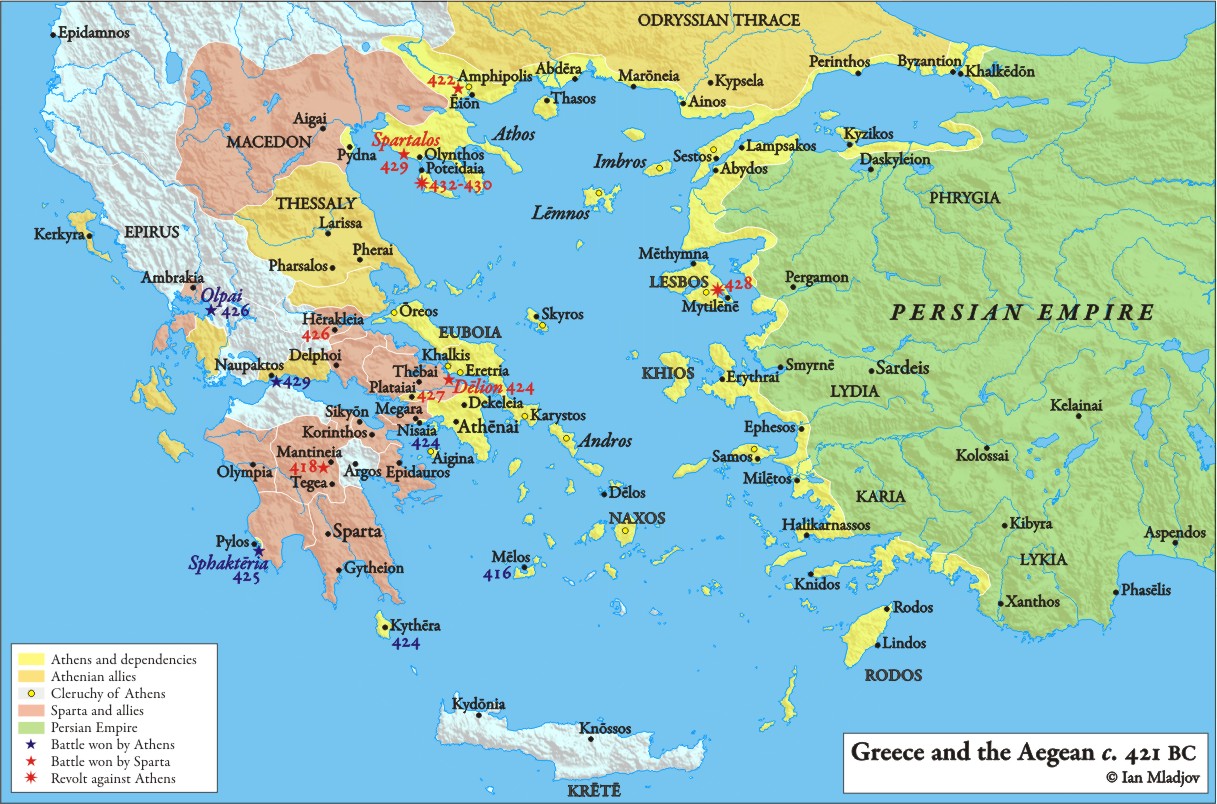
peloponnesianwars

Map of Aegean showing Naxos (centre) 

Aristagoras panicked as he thought Artaphernes would be severely vexed and take it out on him, so he called for Athenian help. Cleisthenes sent a force and took Sardis but, hearing of a large Persian army heading their way, the Athenians hastened home. This was the Ionian revolt of 500 BC and the remaining Ionian fleet was defeated by the Persians at Lade off the coast of Miletus (see map) in 495 BC. So ended the revolt.

1st Persian invasion

Darius I, king of Persia was none too pleased with the Athenian interference and so began the 1st Persian invasion in 490 BC . Now, looking at the map below, who do you think is going to be victorious?

 The Persian Empire is shaded brown. Greece is up there top left (in white) opposite Lydia – William Hill were offering odds 300 to 1 against a Greek victory

Darius’ force, under Artaphernes and Datis, first overpowered Naxos (well, it started it) then landed at Marathon, on the Greek mainland (see 1st map above) with about 600 hundred ships and some 30,000 soldiers (estimates vary). There were only around 9,000 Athenians and 1,000 Plataeans opposing this Persian force. This is where the marathon runner comes in. He, Phidippides (or Philippides), was sent to summon Spartan assistance [1]. Unfortunately Sparta was otherwise engaged in a religious festival and declined the summons until the festival was over (in about 10 days). The battle could not wait that long but it is not entirely clear why the engagement then took place. The odds were certainly against the Greeks. Herodotus makes no mention of Persian cavalry, so one suggestion is that they (the cavalry) were embarking onto ships to sail around to attack an undefended Athens. The Athenian generals, Callimachus and Miltiades, took advantage and attacked the Persians whilst they were preoccupied with this manoeuvre. Whatever the strategies, the Athenians were victorious with only 192 losses (plus 11 Plataeans) to some 6,400 Persians. The Spartans turned up the next day! [2].

Darius I

2nd Persian invasion

After Darius’ death, his son Xerxes decided that it was time the Greeks were punished for their audacity at Marathon. In 481 BC he set out with another vast army of possibly 150,000 men (we don’t know the exact figure), under Mardonius. In fact, there were two Persian forces – one travelling by land and one by sea. The latter sailed towards Athens and the former came around the mainland and crossed the Hellespont by way of a ‘bridge’ of ships – the first was destroyed by storm but Xerxes persevered and built another. Then the land force marched into Greece and headed for Thermopylae.

Xerxes’ bridge of ships across the Hellespont

At Thermopylae, in 480 BC, Xerxes came up against Leonidas, king of Sparta, along with 300 Spartans, 4,500 Peloponnesians, 1,000 Phocians and 1,000 Lacedacmonians. For several days Leonidas held the pass at Thermopyae to allow the remaining Greeks to gather forces to defend Athens. Eventually, a treacherous Malian, Ephilialtes, led 10,000 of Xerxes ‘immortals’ (his top soldiers – sort of ninjas in the film) around a goats’ path in the mountains and came up behind the Spartans. Leonidas had been aware of this track and had position the Phocians to defend it but they were surprisingly surprised by the Persians and fled.  Great!  (Leonidas had sent the other Greeks away by now realising his task was doomed and was just a delaying tactic). Leonidas and his fellow Spartans were all killed at Thermopylae (all except one, Aristodemus who let the field with an eye infectious – bless – but you knew that if you had seen the film [3]) and Xerxes marched into Attica and to Athens.

Persian routes 480 BC

Xerxes entered Athens unobstructed and burned the city to the ground. Believing the Athenians to be in a state of despondency he then attacked their fleet in the Salamis. To his surprise the Athenians were ready and waiting for him. Themistocles was able to keep the Athenian fleet together, engaging the enemy within a confined space, cancelling out the Persian superior number advantage (3:1 advantage over the Greeks – even though a large portion of the Persian fleet had been destroyed by storm on route to Athens – just not their day!). The Greek ships, although smaller in size were less crowded and more skilfully managed. This resulted in the defeat of the Persian fleet, watched by the anxious Xerxes. Retreating Persian ships collided with each other and those soldiers/sailors that managed to escape sought refuge on Psyttaleia, the only Persian occupied island in the vicinity. The Athenian, Aristides, was able to land on the island and disposed of these survivors. As with the previous invasion, Greek loses were small compared to the enormous loses from the Persian camp. A touch of deja vu for the Persians. The Persian land force under Mardonius was finally defeated at the battle of Plataea in Boeotia by the Greeks under Pausanias (not the Greek traveller – he was much later, in 2nd century AD). Plataea, although the major victory by the Greeks over the Persians, does not get the same press as Thermopylae as it does not conjure up the same heroic imagination as Leonidas and the 300 Spartans. Such is life ….. or death.

Leonidas I of Sparta.jpg

Leonidas, king of Sparta

Statue of Leonidas at Thermopylae – the mountains in the background show the barrier the Persians were up against

The remainder of the Persian fleet was destroyed at Mycale, in the eastern Aegean, rumoured (by Herodotus) to have taken place on the same day as the battle at Plataea. It was, in fact, a battle on land not sea, as the Persians, worried about their naval defeat at Salamis, beached their ships at Mycale and awaited the Greeks. The ensuing fight resulted in the total destruction of the Persian force, ending the Persian threat against the Grecian states …….. all because of Naxos.

So all’s well that ends well …… if you were Greek. Under Pericles, Athens went on to build the Parthenon and associated buildings on the Acropolis as a result of Xerxes’ destruction of the city. This, of course, led on to another battle – that of the ‘Elgin’ Marbles (sorry Greek Marbles) which is yet undecided (see post in February).


Footnotes:

[1] The actual marathon running race was introduced to the first modern Olympics Games in 1896. It gets its length of 26 miles (around 40 km) from the distance from Marathon to Athens – the other story is that the runner ran this route to announce the Athenian victory at Athens, then dropped dead. The distance from Marathon to Sparta is 150 miles (240 km) which is pushing it a bit even for an Olympic race, so the Marathon-Athens story is the link the Olympic ‘authorities’ stick to.

[2] Whilst visiting Athens in 1972, I dragged my parents and brother to the Marathon site. There is just a mound and a monument there. “We’ve all this way for this!” complained my brother.

[3] In fact, Herodotus tells us that two were sent away with eye infections but one, Eurytus, returned to the battle and his death.

17th century British Travellers to Crete

I have introduced you to some early British travellers to Crete (Spratt and Pashey in the 19th century, Pococke in the 18th century – see January posts) but now let’s go back even further to the 17th century and give you a taster of a couple of others.


William Lithgow (1582-1645)

Although the son of a wealthy burgess and educated at Lanark grammar school, Lithgow was not destined to be a scholar. Possibly to escape the ill-treatment by his brothers, he chose to travel and earn a living from his writings. He visited Crete in 1609 and recorded his travels in his Painefull Peregrinations (1632) but his tales and experiences on the island are mainly of woe. On his very first day he was robbed and nearly killed; he then rescued a French slave only to be chased and nearly slain by the slave’s ‘owners’; he was nearly bitten by three snakes having been led to believe that no such venomous reptiles could live on the island; and was to be the near-victim of an Englishman’s desire for the revenge of his brother killed at the hands of a Scotsman (Lithgow was a Scot). His action-filled narrative is somewhat exaggerated at times and it is never very clear which incidents, if any, are actually invented.

William Lithgow, by Hector Gavin, circa 1800 - NPG D28046 - © National Portrait Gallery, London

Lithgow dressed as a Turk whilst at ‘Troy’ (well, Old Illium)

He was disappointed with Greece having believed it to be a land of heroes now subdued by the Ottoman Turks and the same could apply to his view of Crete. He commented (keeping his early spelling):

“In all this countrey of Greece I could finde nothing to answer the famous relations, given by auncient Authors, of the excellency of the land, but the name onely; the barbarousnesse of Turkes and Time, having defaced all the Monuments of Antiquity: No shew of honour, no habitation of men in an honest fashion, nor possessours of the Countrey in a Principality. But rather prisoners shut up in prisons, or addicted slaves to cruell and tyrannicall Maisters.”

Title page to his 1632 book

If you go back to one of my June posts, you’ll see my reference to the labyrinth at Gortyns. Lithgow was there and he saw the entrance into ‘the labyrinth of Daedalus’ but did not venture into the cavern: “… I would gladly have better viewed, but because we had no candle-light we durst not enter, for there are many hollow places within it. So that if a man stumble or fall he can hardly be rescued.” He positioned it “on a face of a little hill, joining with Mount Ida, having many doors and pillars.” This must have been the site at Gortyns which is in the south east foothills of the Mount Ida range.

Lithgow and his attendant

In his Travelers to an Antique Land (1993), Robert Eisner said of Lithgow’s writing, “he does not, as they say in creative-writing curricula, bring scenes alive, but instead summarizes, ignores the particulars of the ruins he visits, generalizes, adds historical commentary, and then digresses.” In fact, his description of his fifty-eight days, travelling four hundred miles, is exceedingly brief and uninformative as far as any information regarding the island historically. His work was entertaining but not offering much to the learned traveller. But there we go, can’t all be perfect.


George Sandys (1578-1644)

Son of an Archbishop of York, Sandys was educated at Oxford as a gentleman of the University at the age of 11 in 1589, entering St Mary’s Hall but soon after transferring to Corpus Christi. He ‘grew into a gentleman famed for his learning in Classics and foreign languages.’ He was, as were several of his brothers and cousins, admitted to membership of Middle Temple (see one of my December posts) but he was not Called to the Bar as a barrister. Then, he would have had to have trained as a clerk for seven years but it appeared that he left after about a year to marry Elizabeth Norton. His uncle, Myles Sandys, was Treasurer of Middle Temple from 1588-1595. He travelled to Crete two years after Lithgow, in 1611.

                                                                                     George Sandys

R.B. Davis (George Sandys, poet-adventurer: a study in Anglo-American culture in the seventeenth century, 1955) was of the opinion that Sandys did not actually visit Crete, “the ship did not put into any port on Crete, though Sandys does describe country dancing on the island as though he had seen it.” Davis possibly took this view because Sandys’ brief but stylistic report on the island made several references to ancient sources but no mention of visiting any sites or actually landing on the island. Sandys said he was “Much becalmed, and not seldom crossed by contrary winds … until we approached the South-east of Candy, called formerly Creta.”

Replica of 17th century Dutch East India Company ship – in search of Crete(?)

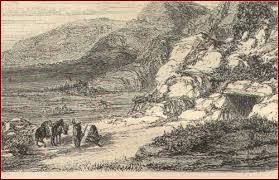
However, Sandys must have gone the island as, in his book,  A Relation of a Journey Begun An. Dom 1610 … etc (1615), he described certain specific areas, such as Mount Ida and Gortyns and its labyrinth. He visited the labyrinth in 1611 but was a little vague as to whether it was actually at Knossos or Gortyns, although his reference to Ida would imply Gortyns as (as mentioned above) the latter is in the foothills of the former:

“For between where once stood Gortina and Gnossos at the foot of Ida, under the ground are many Meanders hewn out of rock turning this way & now that way … But by most this is thought to have been a quarry where they had the stone that built both Gnossos and Gortina being forced to leave such walls for the support of the roof, and by following of the veines to make it so intricate.”
labyrinth

Entrance to Gortyns Labyrinth around the 18th/19th century

Warren believed that Sandys was the first investigator of the cave when he remarked, “Sandys appears as the first British traveller actually to enter the Labyrinth.” Warren obviously didn’t count Lithgow’s visit in 1609 as he didn’t go into the cave (and rightly so – can’t get credit for doing things by halves).

Sandys’ references to other sites are rather limited and Warren’s comment of Sandys leaving a “full description of Crete in his book of 1615, packed with Classical scholarship and ancient history …” is somewhat of an exaggeration. He was certainly interested in Classical literature, having translated Ovid’s Metamorphoses and Book One of Virgil’s Aeneid, but of his travels, generally, he had little to say of antiquities, being more interested in mythology.

Mythology of Theseus and the Minotaur in the Cretan labyrinth

.


Artemus Smith’s Notebooks

I have now come to the end of my research of the notebooks of Dr Artemus Smith, archaeologist of great courage, determination and fiction. Here is the last extract:

I was obliged to write a reference for a member of my archaeological unit.  It read as follows:


Casper Dempsey-Smythe can always be found

hard at work. He works independently, without

wasting the unit’s time talking to colleagues. He never

thinks twice about assisting a fellow employee, and always

finishes given assignments on time. Often he takes extended

measures to complete his work, sometimes skipping coffee

breaks. He is a dedicated individual who has absolutely no

vanity in spite of his high accomplishments and profound

knowledge in his field. I firmly recommend that he be

promoted to executive field officer, and a proposal will be

executed as soon as possible.


Addendum: The darn fool was standing over my shoulder whilst I wrote this reference, which I sent to you earlier today. Kindly re-read it, referring only to the odd numbered lines.
art-smth


Travels in Crete 2: Bramber Tours

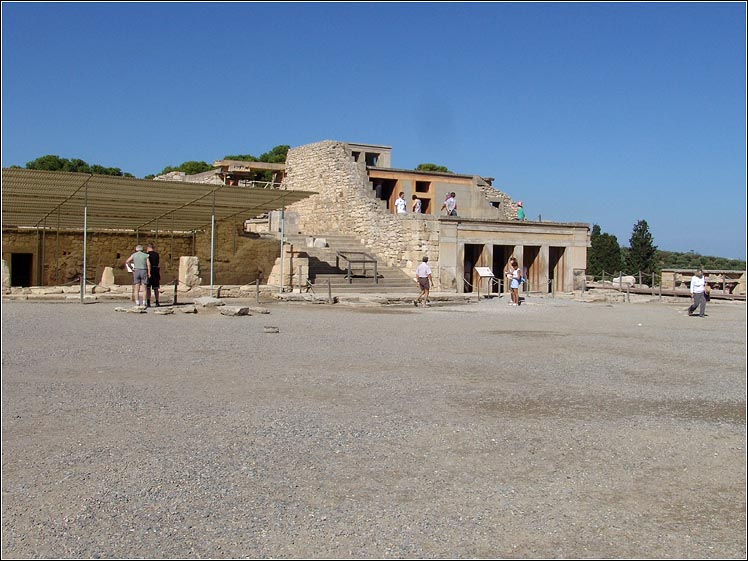
I FEAR the weekend interlude into historical trivia has, this week, been interrupted by my expedition to Crete. On such visits Sarah and I sometimes conduct a ‘Bramber Tours’ (that’s what we call it) of a small portion of the island on behalf of whoever comes to join us – in this instance, John and Mavis. Our visitation was for ten days of which John & Mavis were with us for eight. We collected them from the airport at Heraklion and proceeded to the well-trawled Minoan site of Knossos (check out previous posts in June). The Bronze Age ‘palace’ of Knossos (c 1700-1450 BC) is situated just south of the airport and so is, of course, an essential first trip as it is probably the most famous site on the island (well, it is if you are interested in ancient history and/or archaeology). For April the weather was very agreeable, the sun revealing itself without interruption.

knossos_centralcourt_01

Knossos in the Central Court – the buildings are nearly all Sir Arthur Evans’ reconstructions – to the left, the cult rooms (front walls are genuine Minoan); in the centre, Evans’ staircase to his speculative first floor; and to the right (ground floor), the Throne Room

The ‘Bramber Tours’ itinerary for the week consisted of just three trips including the one to Knossos and two from Mochlos, the small village where we all stay (see end of May post last year – the part 1 of ‘Travels in Crete’). The other two visitations were focused on such places tourists are less likely to visit – for reasons, usually, of their obscurity.

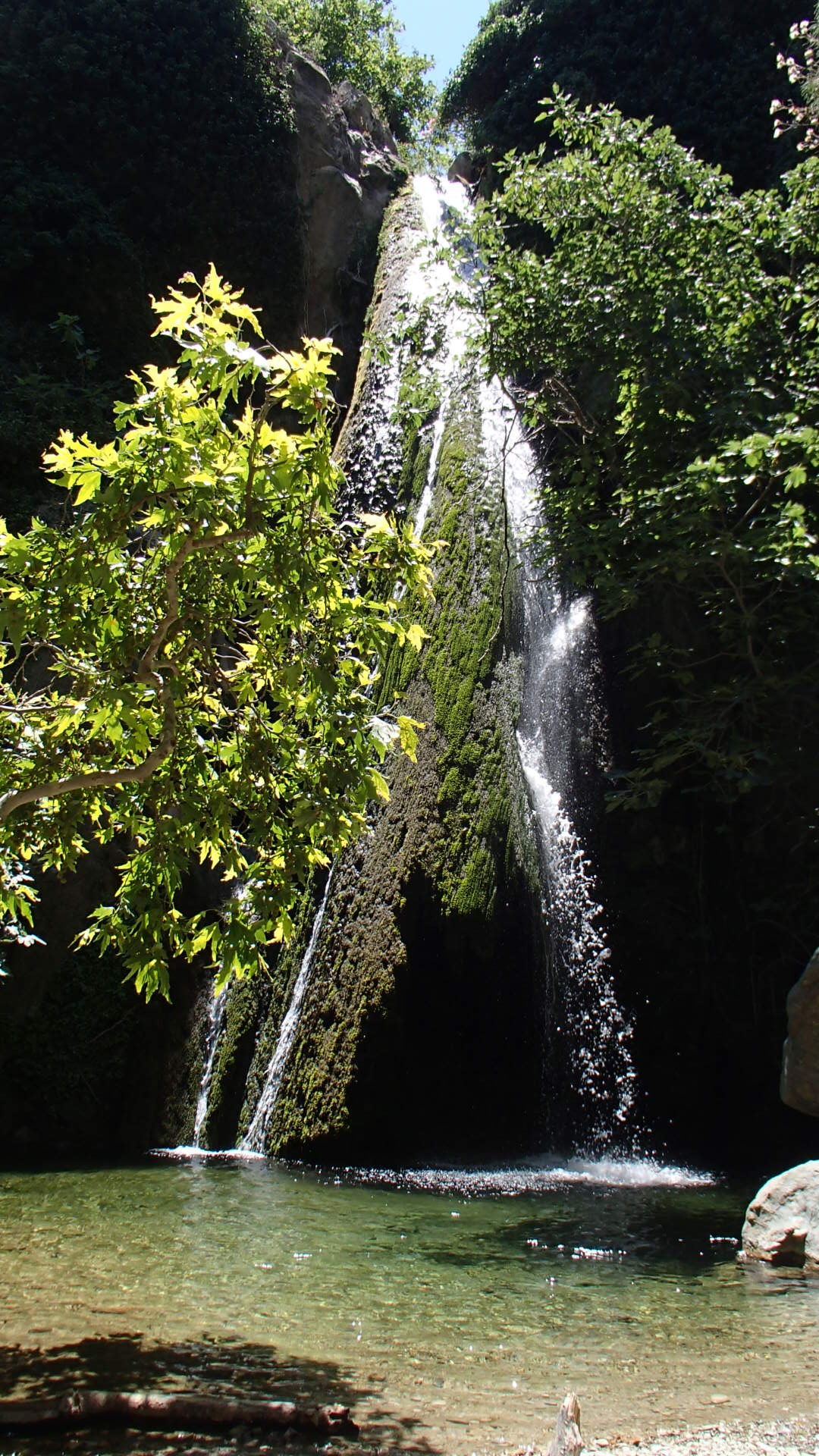
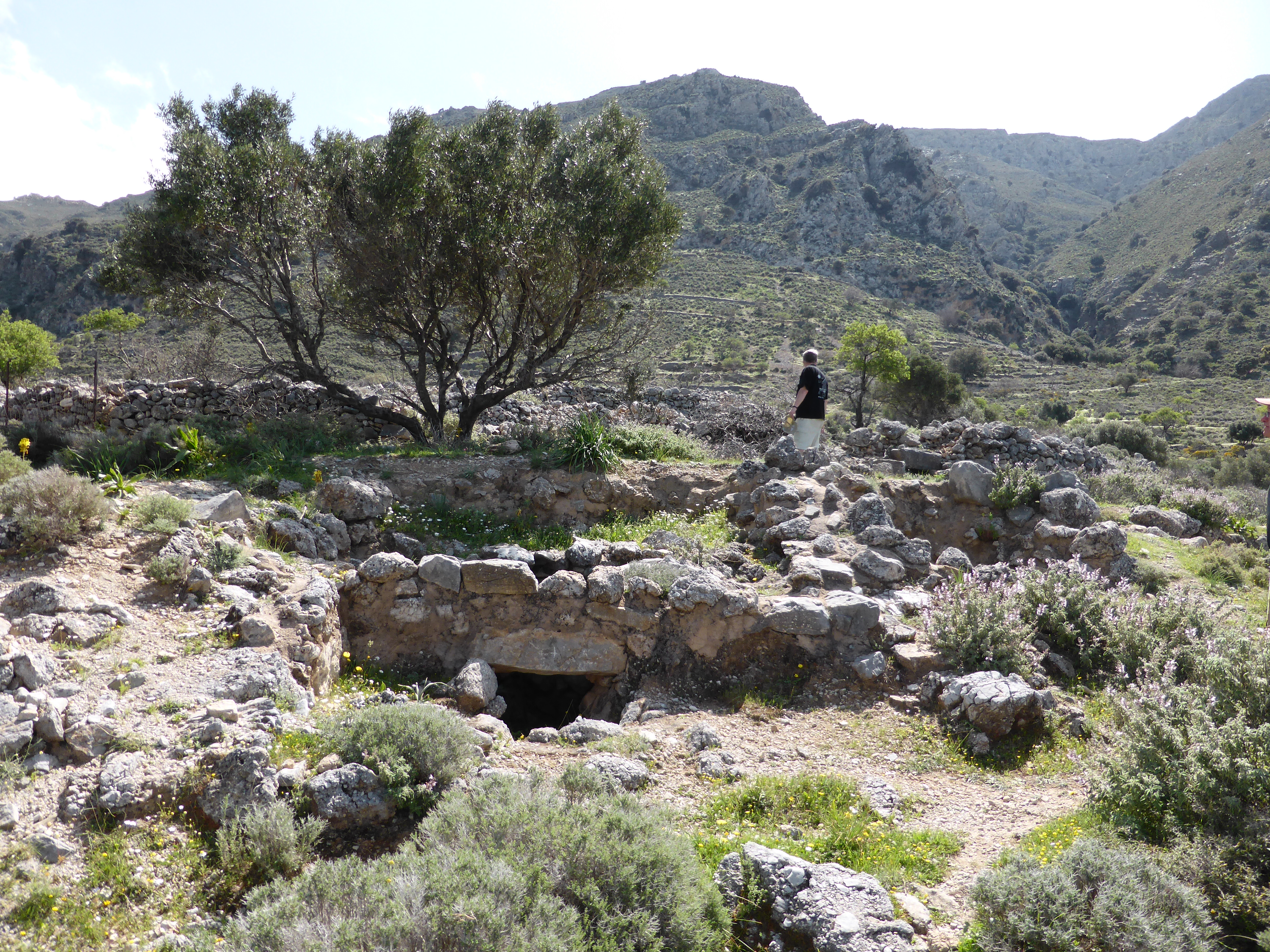
The first of these was the Richtis Waterfall. An impressive natural location if you can ever find it. The journey took us eastwards from Mochlos to Exo Mouliana. Here we turned off the village at a sign ‘Richtis Beach’ (which you can only see coming from the other direction!) and drove down hairpin bends (John referred to it as a white-knuckle ride ….. but I knew what I was doing!!).  After about 15 minutes we came to the beach – we ignored that (it’s nothing very much) and turned right into a car park area for the waterfall (although you wouldn’t know it was for the waterfall). Some common sense has to prevail to follow an ‘almost’ obvious path to the waterfall. It took us up and down a rocky terrain, through woodland, occasionally crossing very narrow but shallow parts of the river itself – so it is useful to wear shoes/sandals that you don’t mind getting wet. The excursion through the ‘enchanted forest’  took about 40-45 minutes but depends upon how fast you are proceeding of course. The end result, when the waterfall reveals itself, is worth the effort. We concluded the day, still in glorious sunshine, with a beer or two back in Mochlos at Taverna Kochylia (see, again, end of May post last year).

OLYMPUS DIGITAL CAMERA

OLYMPUS DIGITAL CAMERA

Richtis Waterfall (some 30 m in height)

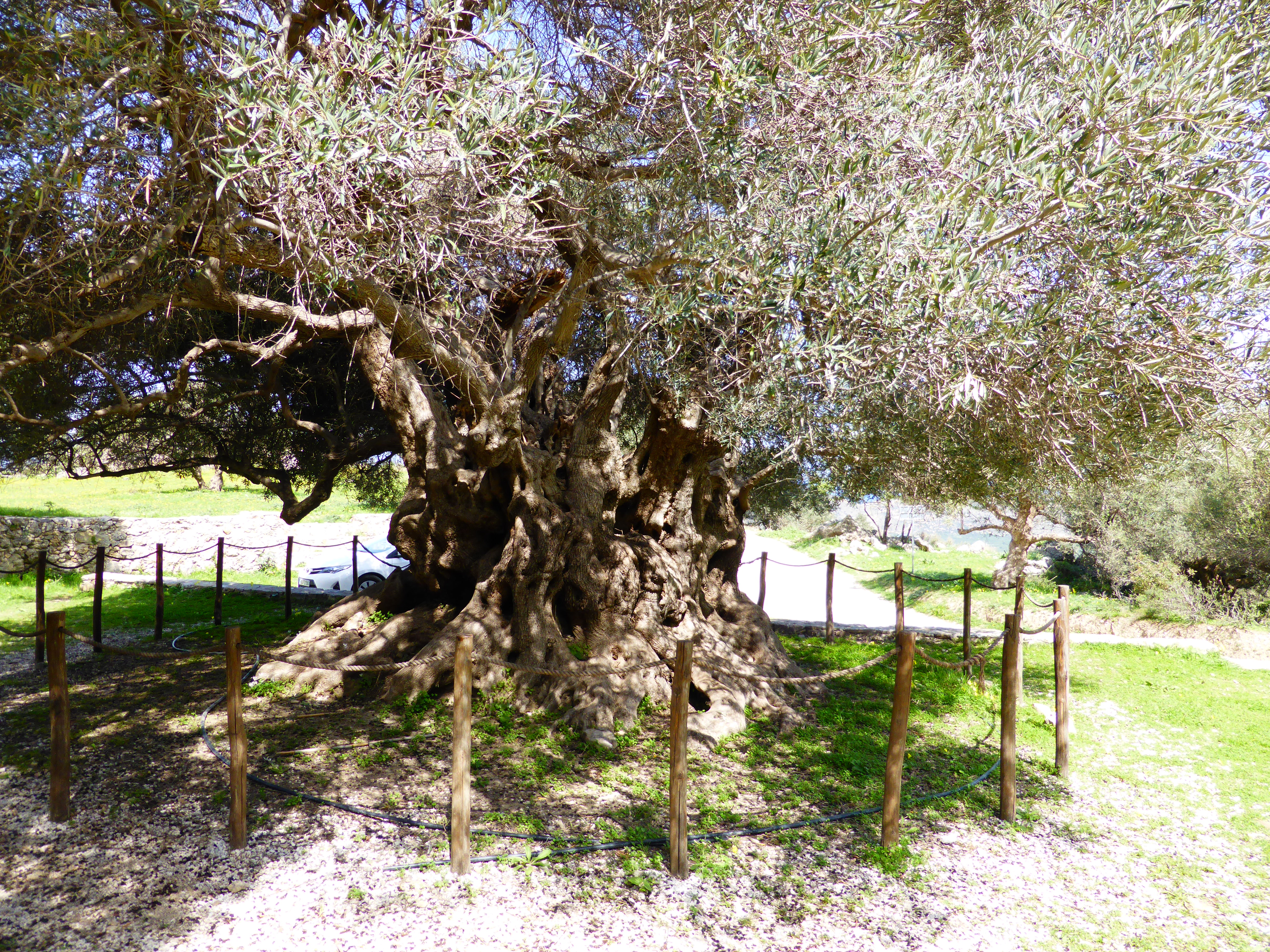
The next trip was up into the mountains from Karvousi, just west of Mochlos. Further hairpin bends were are encountered but the ‘road’ (you can just about call it that) is not too bad and, after turning left at the first fork, it leads to the 3000 year old olive tree of Vouves. This tree dates back to the Minoans and is still going strong. It cannot be exactly dated by radioisotopes because its heartwood (naturally occurring chemical transformation …. oh, look it up) has been lost over the years but has been roughly dated by its size and general annual ring growth. This makes it approximately 2000 years but scientists from the University of Crete date it around 4000 years old (well, better for tourism). Anyway, let’s split the difference at 3000 years (which seems to be the general consensus of opinion).  In 2009 it was declared a protected natural monument and was classed as ‘monumental’ by the Association of Cretan Olive Municipalities due to the large size of its trunk. The trunk has a perimeter of 12.5 m (41 ft) and a diameter of 4.6 m (15 ft).

 P1000394

‘3000’ year old olive tree 

Image result for oldest olive tree in crete

Different view of  ‘3000’ year old olive tree (not my photo but gives you a better idea of scale)

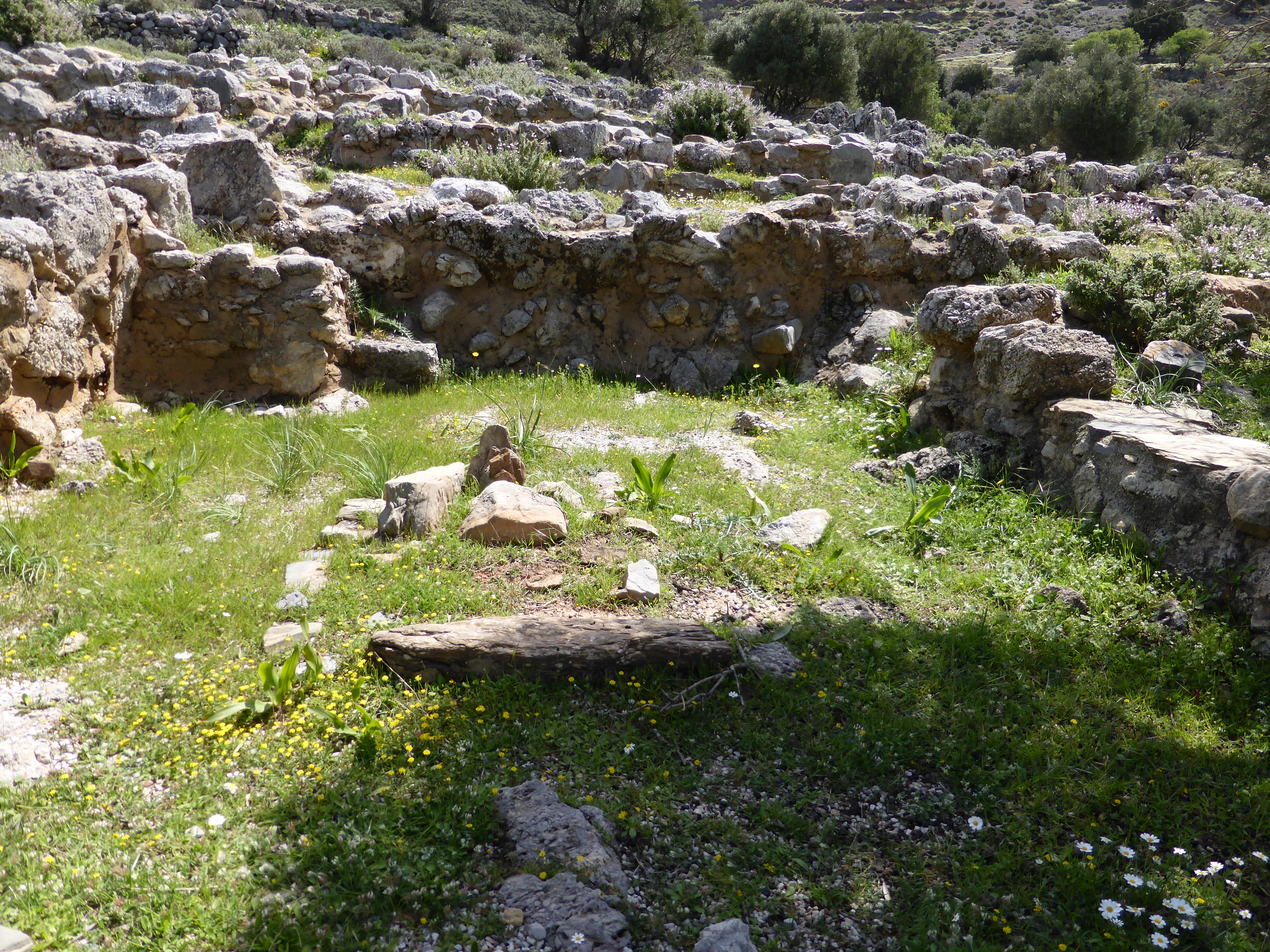
Part of this same trip was the Late Minoan IIIC site of Vronda (okay, that’s four trips in all). We returned to the fork (mentioned above), and took the right turn and on up into the mountain. The Minoans headed into the hills after the invasion of the Mycenaeans from mainland Greece around 1450 BC and this is one such site in which they settled. It is interesting to wonder how they actually got there as it’s hard enough by car! The rocky ‘road’ (you can hardly call it that now) is a somewhat difficult terrain to travel. I recall the last time I did it was in a four-wheel drive jeep – much more sensible than a Toyota saloon weighed down by four people. To make matters worse I missed the site and carried on up the ‘road’ that became less and less agreeable. Realising my error it was time to turn back. Well, that was easier said than done on this narrow track. Fortunately I found a small inlet to enable me to carry out the manoeuvre but not before all three of my passengers decided to exit the vehicle and volunteer to walk back down the rubbled pathway to the sought-after Minoan settlement.

Most of Vronda is very late Minoan, 1200-1025 BC (the ‘IIIC’ part of Late Minoan above) and has a fair share of hearth and oven occupied buildings and several small tholos tombs (see those of Mycenae in one of last July’s post). The pattern of buildings suggests the nuclear family as a basic social unit with each family cooking and eating together in large rooms. So now you know.

P1000401
      Vronda – large building with hearth in the middle 

   P1000408

 Vronda tholos tomb entrance (centre) with lintel above

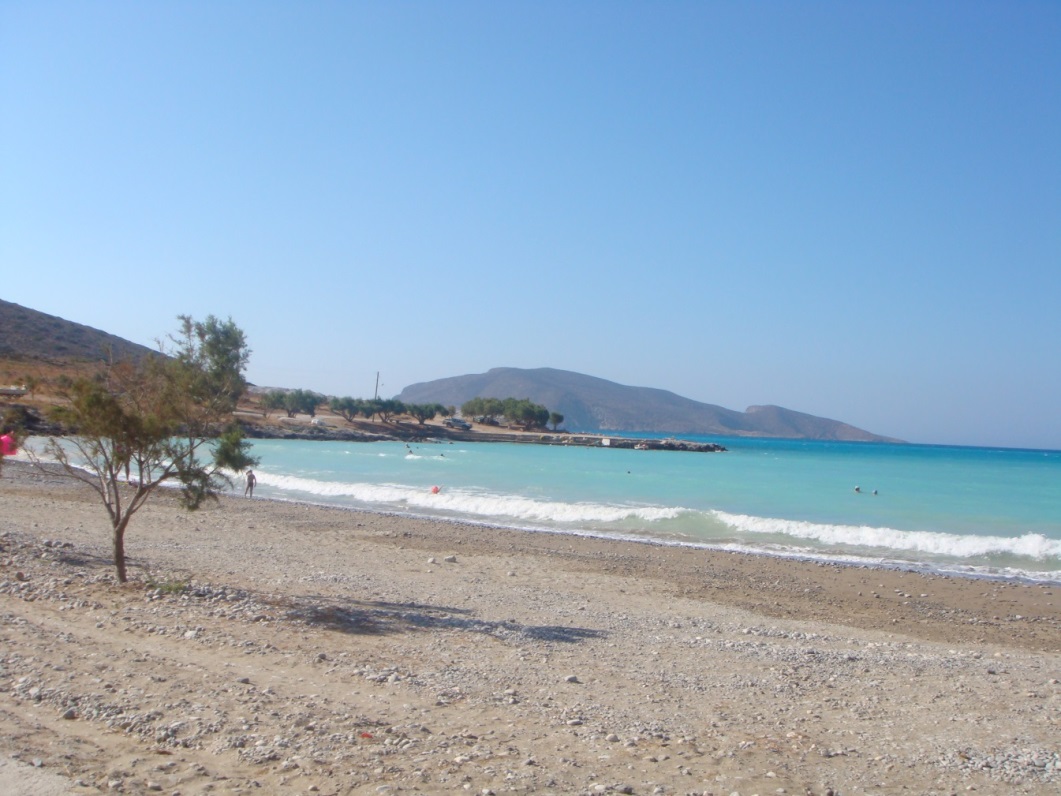
The day was completed with a visit to the Tholos beach down from Kavousi so John could go for a swim before embarking back to Mochlos and Taverna Kochylia for another beer or two (sound familiar?).

tholos beach 2

Tholos beach, Kavousi

P1000380

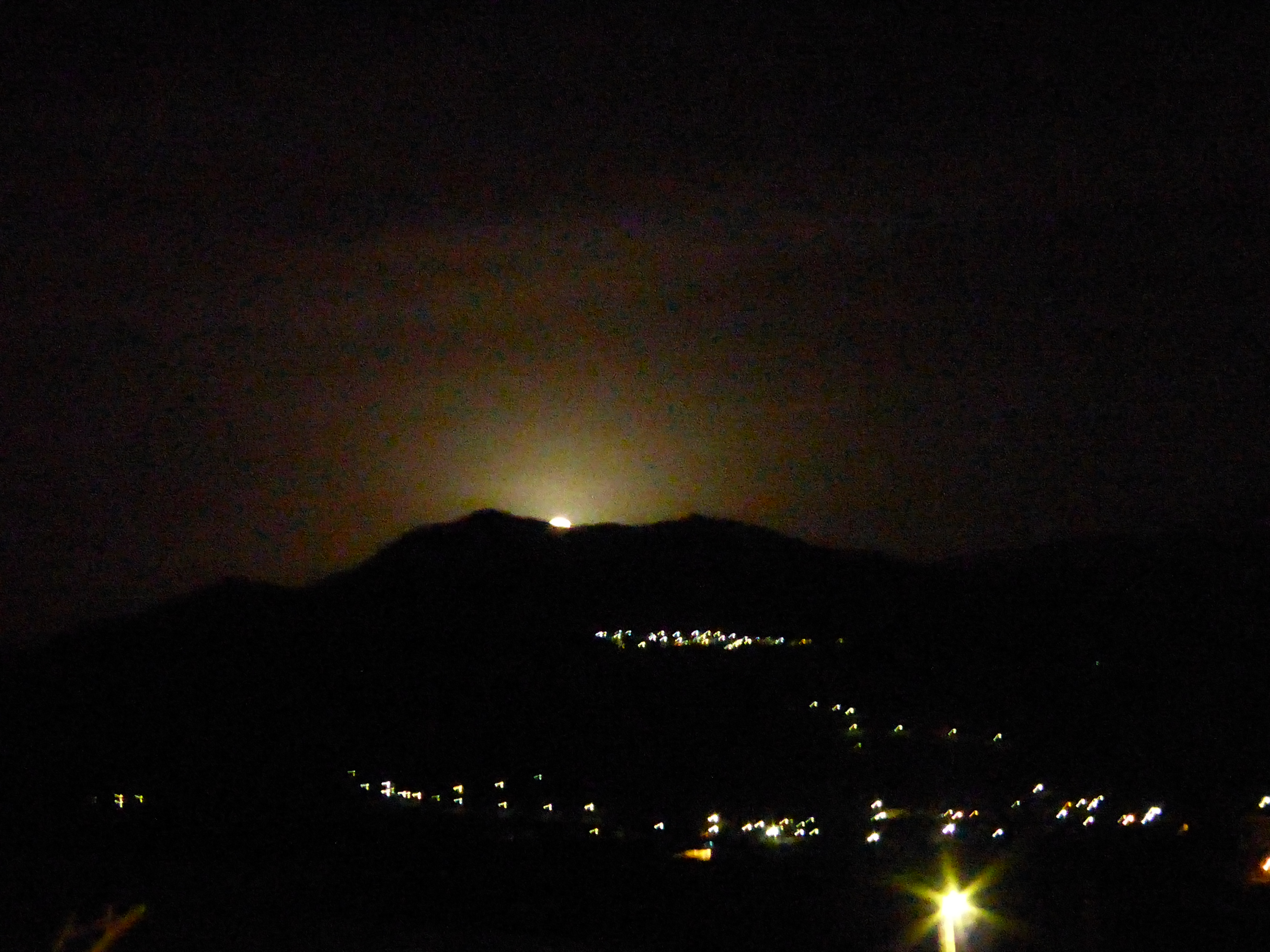
From Mochlos – I forget which evening this was but the full moon delighted us by rising up from behind the hills 

.


Artemus Smith’s Notebooks

I continue my research of the notebooks of Dr Artemus Smith, archaeologist of great courage, determination and fiction. Here is another extract:

I decided to introduce a very good friend of mine to my wife the other day and so took him home, unannounced, for dinner at 6:30 pm, after work.
My wife was not impressed. She screamed her head off while my friend sat open-mouthed and listened to the tirade which (cutting it a little short) went a follows  ….

“My hair and makeup are not done.  The house is a mess and the dishes are still in the sink.  Can’t you see I’m still in my pajamas and I certainly can’t be bothered with cooking tonight!  Why the heck did you bring him home unannounced you darned fool?”

I replied with the truth, “Because he’s thinking of getting married.”

art-smth

Charles I – above the Law?

SHOULD Charles I have been tried by a Court of Law or is the Monarch above the law? His trial – well, it wasn’t much of a trial – in January 1649 lasted three days, but not three full days; it was  a bit of a non-event actually. Basically he refused to enter a plea against the charges arguing that ‘the Court’ had no authority to charge him as he was top dog being king. Today, if you refuse to enter a plea it is assumed you are saying you are not guilty and the State (aka the Crown Prosecution) must prove you ‘done it’. In the days of Charley boy, in the 17th century, it was the reverse – if you didn’t enter a plea it was assumed you were guilty.

charles-i-

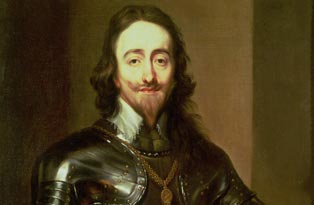
Charley boy (1600-1649)

The Court in question was the High Court of Justice (not the same High Court as we have today) sitting at Westminster Hall. The judges were the Parliamentary Commission and its President was John Bradshaw who did most of the talking (when the king wasn’t). Bradshaw was a barrister, called to the Bar at Grays Inn (one of the Inns of Court – see my previous blog in December on another one, Middle Temple). The prosecution was led by John Cook, also a barrister from Grays Inn, and it was his task to read out the charges. He would then have had to prove the case against Charles but that was to be unnecessary as Charles saved him the bother.

John Bradshaw (1602-1659)

The trial began on the afternoon of Saturday 20th January. Cook was continually interrupted by the king in his attempts to read out the charges. Cook: “My Lord, on behalf of the [House of] Commons of England and of all the people thereof, I do accuse Charles Stuart here present of high treason and high misdemeanours, and I do, in the name of the Commons of England, desire the charge may be read unto him.” As Cook was about to read the charges, Charles tapped him with his silver-headed cane, saying, “Hold on.” Cook declined to hold on but, instead, carried on reading the charges.  ‘Tap, tap’. Cook ignored the tapping. ‘Tap, tap’ – then the silver head of the cane fell off. Cook ignored it and continued reading. It’s a bit like a comedy show……. Then Bradshaw gave the king a telling off, insisting that the charges had to be read without further interruption. Charles obeyed like a good little king.

‘Fictitious portrait called John Cook’ by Robert Cooper

When the charges had been completed the king was ask how he pleaded to them. He simply replied, “I would know by what power I am called hither. I would know by what authority, I mean lawful… Remember I am your King.” He rattled on a bit more but basically he was saying that this Court had no authority to try him.

Bradshaw responded, “In the name of the people of England, of which you are elected king.” Ooooops, mistake. Charles came back, “England was never an elective Kingdom, but a hereditary Kingdom for near these thousand years.” This went on awhile – same questions on authority by Charles, same answers by Bradshaw. Eventually Bradshaw called an end to the proceedings and adjourned the Court until Monday, at which time he hoped the king would answer the charges. Well, Monday came and went with the same results – the king demanding on whose authority was he being charged and Bradshaw responding with “We are satisfied with our authority…They [the members of Commission] sit here by the authority of the Commons of England.” Charles objected, “The Commons was never a Court of Judicature, I would know how they came to be so.”  Whoa, good point Charley; indeed, the House of Commons was not a Court but Parliament was (and the Commons is part of Parliament). Anyway, stalemate. So Bradshaw adjourned again to the next day to give the king one last chance. Tuesday came and Charles didn’t relent on his point of view so Bradshaw, along with his fellow judges, treated his obstinacy as a guilty plea.

Charles (sitting, wearing hat, with back to you) in ‘the dock’ at Westminster Hall

On the 27th January, the Commissioners (68 of them) reassembled to pass sentence. It was at this stage that Charles attempted to refute the allegations made against him, saying, “I would desire only one word before you give sentence; and that is that you would hear me concerning those great imputations that you have laid to my charge.” A bit late now – and Bradshaw told him so. The clerk (possibly Andrew Broughton) rose to his feet and began reading the Commissioners’ decision, “Charles Stuart, as a Tyrant, Traitor, Murderer and public enemy, shall be put to death, by the severing his head from his body.”  Again the king tried to speak but was told he could not be heard after sentence. On the 30th January 1649 the king was executed. Regicide rules OK.

The idea of criminal law in the UK is that we are judged by our equals. Hence judgements by members of the public (generally) in the Magistrates Court (magistrates are not lawyers, they are members of the public) and likewise with juries (12 members of the public)  in the Crown Court (what do you mean you don’t know about these courts? – to be enlightened, click here). And ‘in the ‘good old days’ aristocratic peers (Lords) had to be tried by the House of Lords. So who is equal to the Monarch to try him/her? Is the Monarch above the law? Obviously not in the 17th century. It hadn’t been tried (excuse the pun) before or since.


POSTSCRIPT

John Bradshaw died in 1659, aged 57. Charles II came to the throne in 1660 and the following year, on 30th January, the 12th anniversary of his father’s execution, he had Bradshaw’s and Oliver Cromwell’s (he had died in 1658) remains exhumed and displayed in chains at the gallows at Tyburn where official hangings took place. The following day, their heads were put on spikes outside Westminster Hall and their bodies thrown into a common pit. Charles also had his father’s prosecutor, John Cook, put on trial for high treason for which he was found guilty and hung, drawn and quartered. There’s justice for you.

.


Artemus Smith’s Notebooks

I continue my research of the notebooks of Dr Artemus Smith, archaeologist of great courage, determination and fiction. Here is another extract:

I met my good friend Dr Armani Haberdasher the other day. He said his wife had been complaining about him going to the pub every night so she decided to join him. When they arrived he asked her what she would like to drink. Not being much of a drinker she said she didn’t know so would have whatever he was having. He ordered two whiskeys. When they arrived he knocked his back in one. She took a sipped and exclaimed, “Aaaagh, that’s horrible!”

He turned to her and said, “Well there you go. And you thought I was down here enjoying myself every night.”

art-smth


Stonehenge and the druids


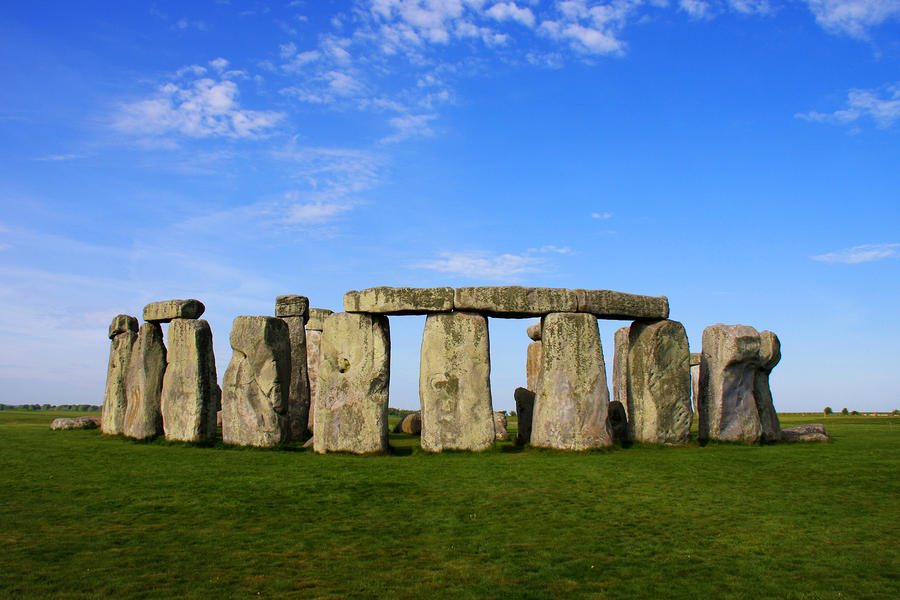
AMONGST other places that I had failed to visit until relatively recently was Stonehenge. Before I became enthralled with the massive ruins of Bronze Age Greece and Crete, large stones were …. well, just large stones. And in the UK they were large stones surrounded by bleak and inclement weather. Anyway, my son, Toby, and I went on an ‘historical’ weekend away visiting Glastonbury (previous blog in October) and Stonehenge. There is a new centre and museum there (well, sort of ‘there’ – it’s about a mile away and you are  transported by bus to the site which I’m not too sure about).

 stonehenge

Stonehenge 

Anyway, Stonehenge is a fascinating place. Supposedly constructed around 2600 BC (Neolithic period) – evidenced by cremated remains – it spanned for about 1,500 years. In the 17th century, John Aubrey was a pioneer of observation and imagination and in 1666 he investigated and recorded the site.  His work was taken up by William Stukeley in the 18th century  who made accurate plans, by way of engravings, of Stonehenge and he was the first to associate the site with the Druids.

William Stukeley (1687–1765)            John Aubrey.jpg

William Stukeley (1687-1765)                                    John Aubrey (1626-1697)

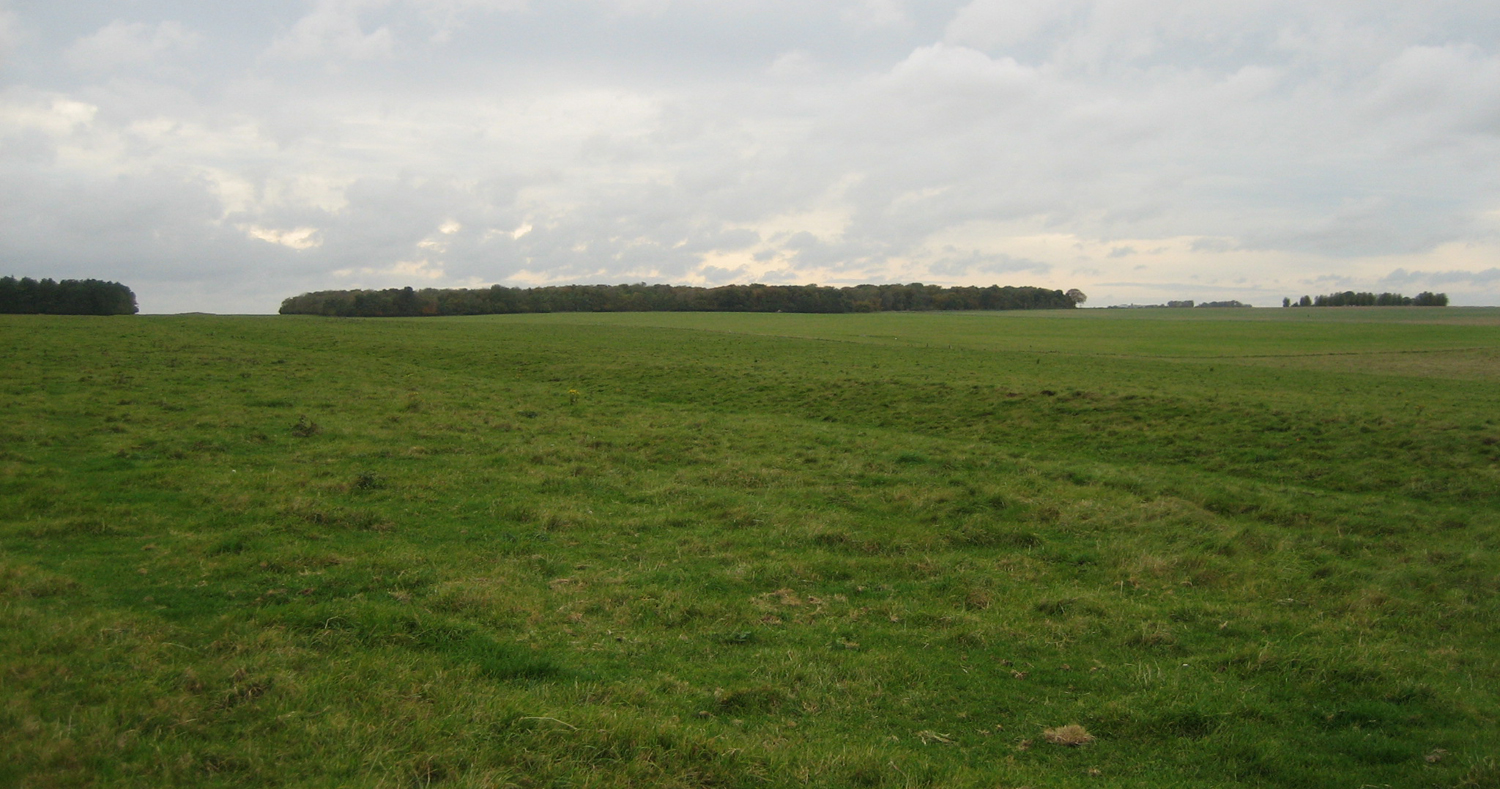
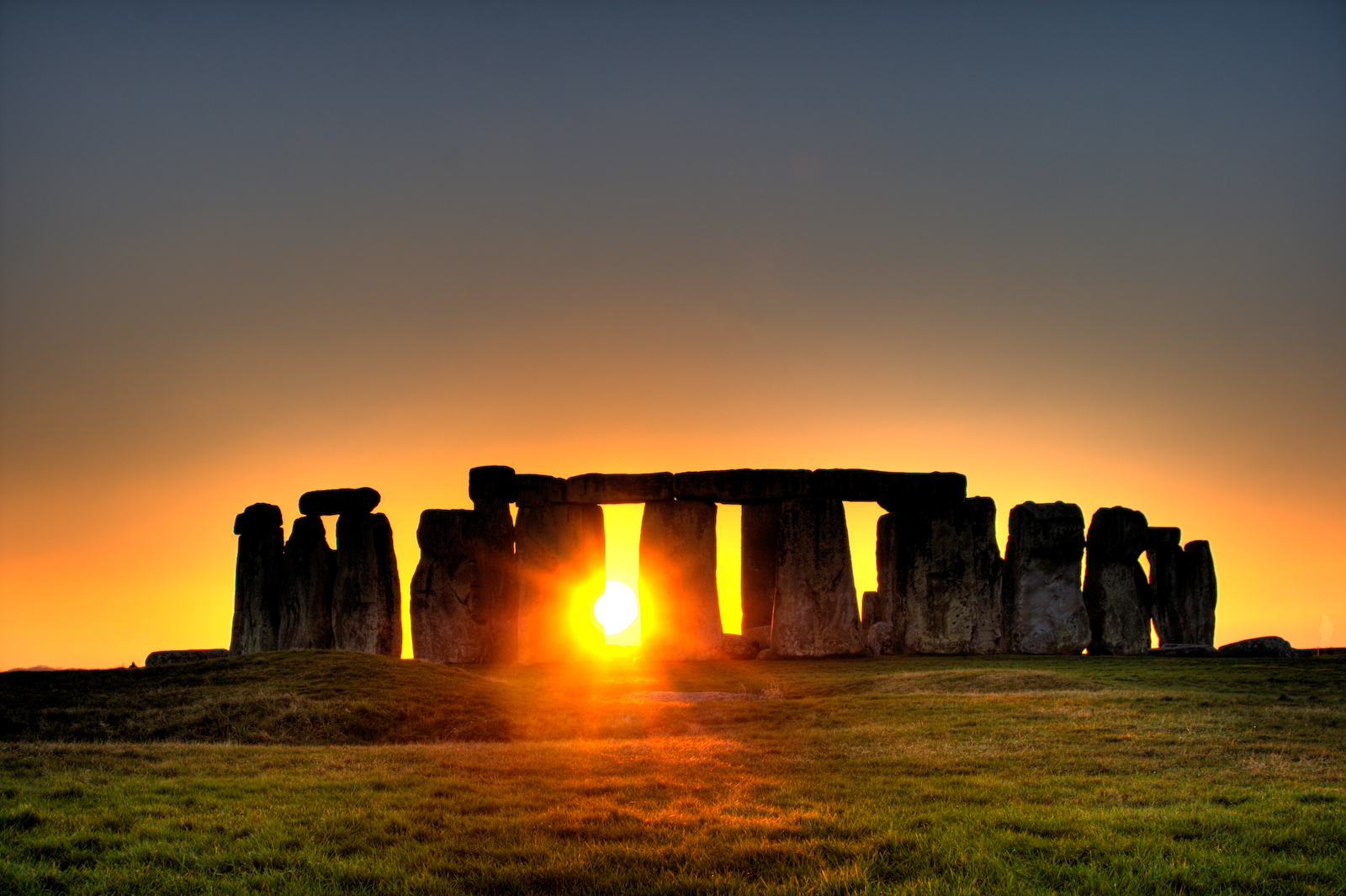
Many others have been involved in archaeological work on the area over the years (I’m not planning to go into them as Wikipedia will reveal all their names and achievements). All I will say is that the latest work has been carried out by the University of Birmingham and its task force has discovered two large pits within the Stonehenge Cursus (large parallel lengths of banks with external ditches – 2.5 km in length).  The pits are aligned in celestial position towards midsummer sunrise and sunset when seen from the Heel Stone. I always find this celestial stuff fascinating – and spooky! In fact, the University has also found adjacent stone and wooden structures and burial mounds around the area which could date back some 1000 years or more before the initial construction of Stonehenge (actual hunter gatherer activity goes back the Mesolithic – 10,000 BC). Many more small ceremonial shrines have been discovered in the area around Stonehenge – see Birmingham Uni’s and Austria’s Ludwig Boltzmann Institute’s Stonehenge Hidden Landscapes Project – click here.

 Stonehenge_Cursus
Cursus at Stonehenge – doesn’t look like much but holds many secrets

Talking of the Heel Stone – it has always intrigued me. It is situated just north of the stone circle and rises to 4.9m (16ft) and leans towards the circle. What is it doing there?? Mind you, one can say that about any of the stones. Clearly ritual (archaeologists’ classical explanation for anything they can’t explain). In this case, however, it probably really is ritual and associated with burial.

The Heel Stone

The other factor that amazes me is the mortice and tenon joints on top of the circle stones. This is carpentry work as we know it today, yet ‘they’ were doing it 5000 years ago! Who were ‘they’? Neolithic men with technical abilities – aka Stone Age architects, surveyors and builders.


See the tenon on the top of the stone                                          How it works

Okay, ‘they’ had the construction know-how but just how was the stone circle physically built? And by whom? Giants of course. The first known depiction of the stones shows this. It is from Roman de Brut (c 1150) which was a verse literary of Britain by a poet called Wace. This, itself, was based on another 12th century work, Historia Regum Britanniae (c 1136), by Geoffrey of Monmouth. According to Monmouth’s historical tale and Wace’s depiction, King Arthur’s very own Merlin built the circle with the help of giants. Just the man, and men, for the job. But seriously, we can only assume that the builders had good knowledge of blocks and pulleys.

Drawing of a giant helping Merlin build the circle (from the 12th century manuscript, Roman de Brut)

Ownership: Henry VIII took control of it when he dissolved the monasteries between 1536 and 1540 which included Amesbury Abbey on whose land the stone circle lay. Henry gave the Abbey and its land to the Earl of Hertford in 1540. It was later owned by none other than the Marquess of Queensbury but he didn’t turn it into a boxing ring. Eventually the site was auctioned off in 1915 and purchased by one Cecil Chubb for the grand sum of £6,600. It has been suggested that he purchased the stones as a present for his wife but she was less than pleased with the gesture. He donated it to the nation in 1918. Good man. It’s now owned by English Heritage.

The new visitors’ centre at (near) Stonehenge …. hmmmm, bit weird

Stonehenge was revived as a religious site by the Neo-druids at the beginning of the 20th century. The Ancient Order of Druids carried out an initiation ceremony in 1905 but it was not well-received by the press. I imagine that Neo-pagansim would have been frowned upon by a Britain just emerging from the Victorian Age. But Stonehenge and Druids seem to me to go together rather like bread and butter. I mentioned the Druid, William Price (he who ‘invented’ cremation), a few blogs ago in January, and, although he lived in Wales and died in 1893, I wonder if he knew of Stonehenge? It seems he did not visit it after becoming a druid in 1840 as I have found no mention of him leaving Wales after that date, but I may be wrong. I believe ritual use of the circle by druids is now very much restricted.

Druids at Stonehenge

We know very little about the ancient druids as there are no written records of their activities or any archaeological finds relating to them. We know they existed because Julius Caesar tells us in his Commentarii de Bello Gallico around 50 BC but it was the Romans who suppressed them following the invasion of Britain in AD 43 (under Emperor Cl..Cl..Cl..Claudius). In fact it was Julius Caesar who suggested that druids went in for human sacrifice. Well, the Romans would know all about needless human ‘sacrifice’ even if not in the name of a god. Some human remains recently found indicate possible human sacrifice (violent death at least) but who were involved is not known.

So there you are – just a dip into the ancient stone circles to whet your appetite should you wish to visit the place. Bearing in mind the complexity of archaeological activity around the area, Stonehenge was a very important and significant site during its existence. For more info on it, click here.

Stonehenge_sun

.


Artemus Smith’s Notebooks

I continue my research of the notebooks of Dr Artemus Smith, archaeologist of great courage, determination and fiction. Here is another extract:

A TV documentary presenter was with me and my colleague, the esteemed maritime archaeologist, Dr Jack Custarde, when we were diving a Bronze Age wreck off the coast of Mochlos in Crete. Whilst in the dive boat the presenter asked Jack, “Why do the divers always fall backwards into the water?”  Jack thought for a minute then replied, “It`s quite simple really, if they fell forwards they would still be in the boat.”

  art-smth

The Mary Rose

I KNOW, quite a lot has been written about the Mary Rose, but I haven’t written it and you may not have read it. However, I feel bound to say something of this great ship because I’m one of her Flag Officers (sounds grand but it just means I’ve donated some money to her conservation) and I think she is a fab project …. and I give talks on her every so often (or when anyone wants to listen).

The only image we have of the Mary Rose from the Anthony Roll of 1546

As for her history, she was built on the order of Henry VIII when he came to the throne in 1509 and completed in 1511 and named after his favourite sister (Mary not Rose). Then she was of 500 tons and one of the first war ships to have on board  heavy canons. Before such usage of heavy guns, naval warfare was simply sailing up to your opponent, boarding and battling it out hand to hand (‘fighting-by-the-sea’, I expect you could get postcards). Anyway, two French Wars came and went and then, in 1536, the Mary Rose was refurbished and uprated to 700 tons. The third French War arrived in 1544 and a year later, at the Battle of the Solent (although not much of a battle), the Mary Rose went to the bottom of the sea.

cowdray2

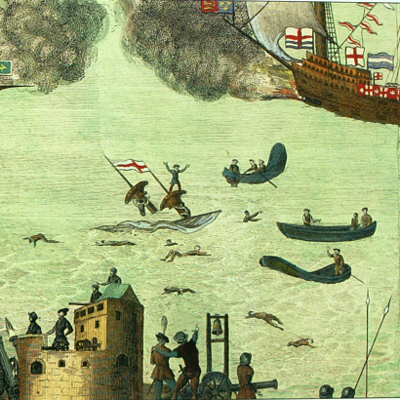
The Cowdray engraving of the sinking of The Mary Rose – you can just see the top of her mast circled in red (see pic below)

KONICA MINOLTA DIGITAL CAMERA

Cowdray engraving: mast of the Mary Rose (centre) with a survivor raising his arms

Why did she sink?  Good question. There are a couple of theories. The first is that she was hit by a French canon ball from one of the French barges firing on the British fleet. We reject this out of hand as in no way will we accept that the French can take any credit for the ship’s demise.  The second, and more feasible, is that she turned abruptly, was caught by the wind and veered over so far that her open gunports filled with water causing her to sink. That her gun ports were still open during this manoeuvre must have been a human error. Either she turned too quick for the orders to be given to close them or orders were given but ignored (wouldn’t a captain wait until such orders were fulfilled before turning?). Her admiral, Sir George Carew, was reported as saying to his uncle, Gawen, “I have the sort of knaves I cannot rule”. This would imply that his crew were far from organised – and isotope analysis (science stuff) of human bones recovered suggests that some were from around Spain and so may not have understood orders in English (a minor difficulty one might imagine!). Regardless, some 450 crew drowned, including Carew and his captain, Roger Grenville (the anti-boarding netting over the open deck area prevented most of the crew from abandoning ship). There were only around 30-40 survivors.

George Carew-painting by Holbein.jpg

Sir George Carew

Tudor attempts to raise her failed and she succumbed to a watery grave, being covered, over the years, by silt. She was briefly discovered in 1836 by John Deane who had invented diving equipment and was investigating fishing nets being caught under the sea – they were being caught on the Mary Rose. Over four years Deane recovered some guns and other artifacts but the location of the wreck was soon forgotten.

John Deane’s diving gear

In 1965, Alexander McGee went in search of the wreck. He had found her rough location in 1966 on an Admiralty chart and by using a newly invented sub-profiling apparatus (science stuff again) he eventually discovered the wreck’s exact whereabouts in 1971. The site of the wreck was subsequently protected from ‘treasure seekers’ by the Protection of Wrecks Act 1973. It was surveyed between 1971 and 1979 whereafter the Mary Rose Trust was set up to consider bringing her to the surface. This happened on the 11th October 1982 and watched on television by some 60 million people.

Portrait of Alex McKee OBE (1918-1992)

a A  a B    a C

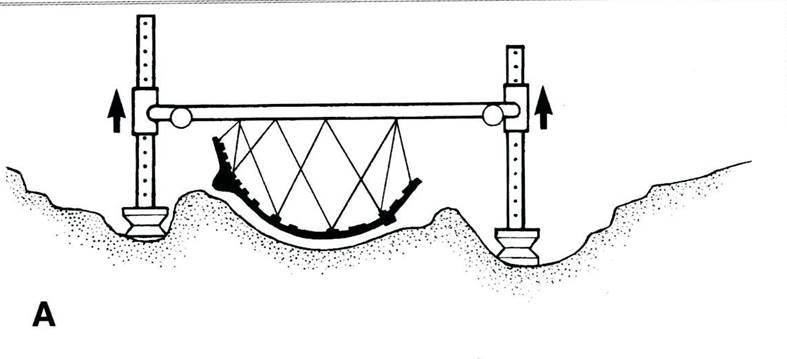
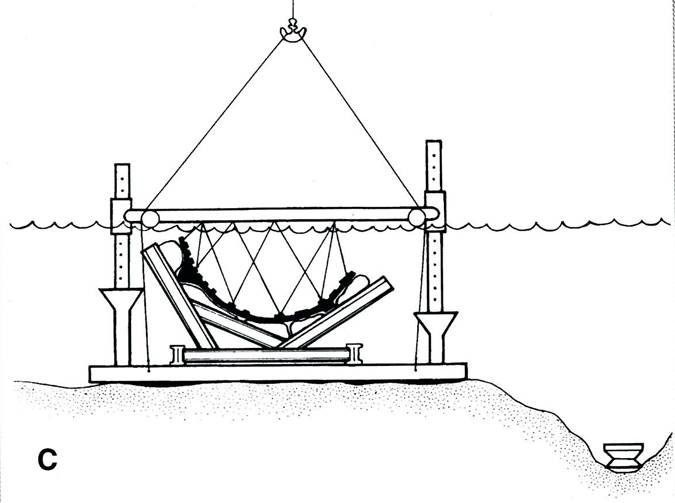
Raising of the Mary Rose: A. attaching it to the lifting gear; B. lifting it towards the frame, C. lowering it into frame which was then raised to the surface

In the region of 3000 timbers were recovered from the Mary Rose. Once out in the fresh air the wood of the ship had to be preserved. Under the water the centre cells of wood are eaten away and so the wood is hollow. Left too long in the air the wood will just collapse. So these hollows had to be filled. From 1982 t0 1995, the hull was sprayed with chilled water; from 1995 to 2004, it was sprayed with low grade polyethylene glycol (PEG) to penetrate inner layers; from 2004 to 2012, it was sprayed with high grade PEG to penetrate outer layers; in the the final phase, from 2012 to 2016, it is undergoing air drying.

Mary Rose undergoing wood preservation treatment

The Mary Rose has produced some phenomenal artifacts – a real taste of the Tudors which we knew nothing about until the discovery of the wreck. Over 130 Tudor longbows (no Tudor longbow had ever been seen before) and something like 3500 arrows were part of some 19,000 finds – a real ‘treasure chest’ of Tudor life. You can see many of them on the internet.

bow_sg

Sarah and I were lucky enough to be able to ‘go behind the scenes’ at the original museum and handle some of the rare finds including a Tudor longbow

The new Mary Rose Museum which opened on 31st May 2013  – well worth a visit

Prince Charles officially opening the new Mary Rose Museum on 26th February 2014 – I put this photo in because I was invited to this opening and was standing right in front of him ……

Find out how to support the Mary Rose – or go and see her – by clicking here

.

Next week: Stonehenge and the Druids


Artemus Smith’s Notebooks

I continue my research of the notebooks of Dr Artemus Smith, archaeologist of great courage, determination and fiction. Here is another extract:

I watched with astonishment as a farmer of my acquaintance, Gerald G. Giles, was feeding his pigs. He held a pig in his arms and lifted it to an apple tree whilst it ate sufficient apples to satisfy its appetite. When the pig’s appetite was satisfied Gerald put it down and held another to the tree to eat. I said to him, “Gerald, old boy, why don’t you just shake the tree, let the apples fall and allow the pigs to eat them at their leisure. What you are doing is a terrible waste of time.” He turned to me with frowned expression and replied, “What’s time to a pig?”

art-smth